
Why finish choices matter for a restaurant private dining movable partition
Quick project answer
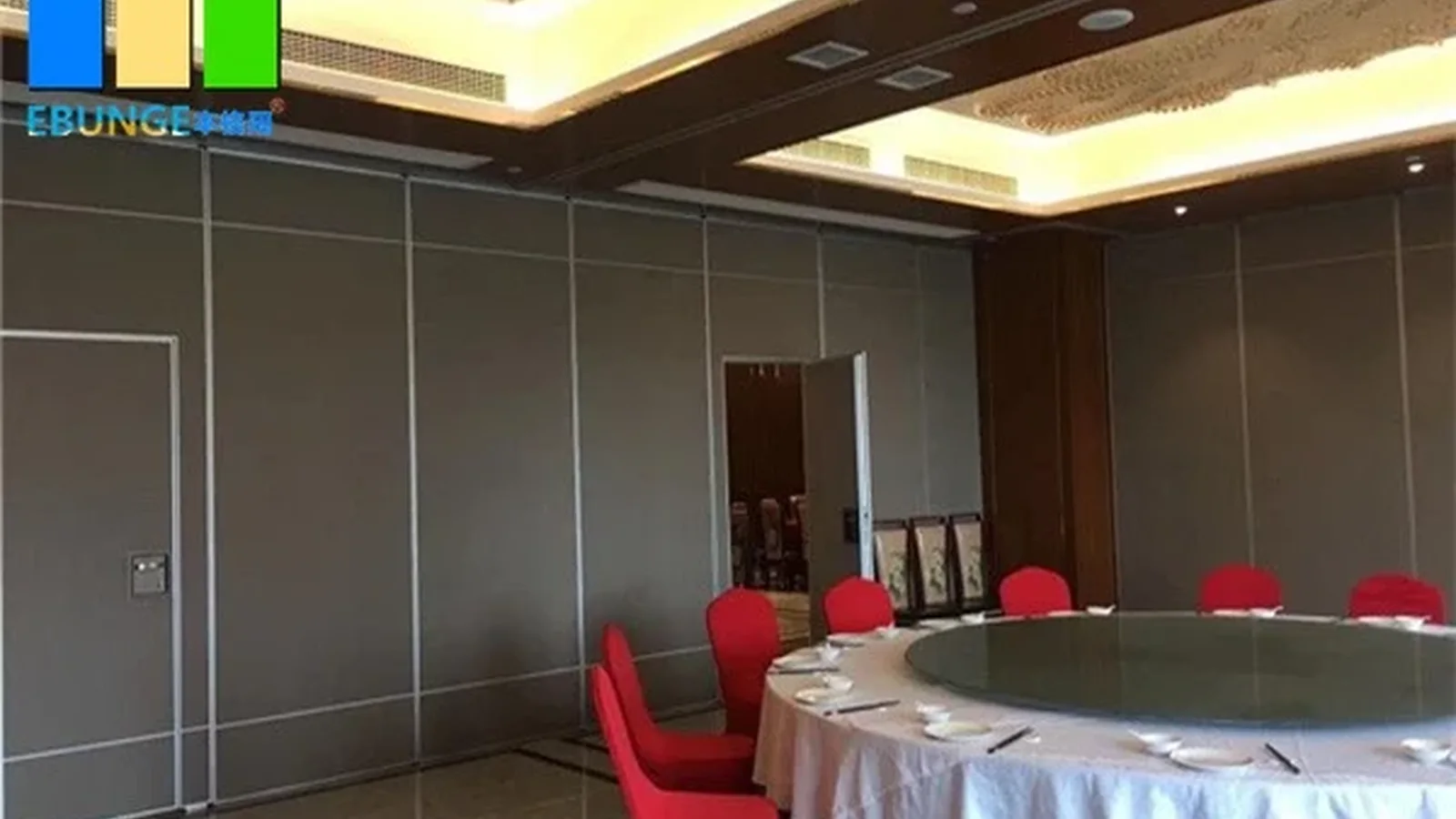
A restaurant private dining movable partition is often specified around atmosphere, durability and how the room will be reset between services. Finish selection affects the visual character of the divided space and the cleaning method that staff will follow. It also influences how the partition integrates with adjacent dining areas when the room is opened or closed.
This article compares finish considerations without naming specific materials or cores. It focuses on the confirmed top-hung principle, the physically uninterrupted floor, parking planning, care coordination and the inputs a buyer should prepare for drawing approval.
The top-hung principle behind a restaurant private dining movable partition
The EBUNGE movable partition system is top-hung. That means the operating hardware is carried overhead rather than in the finished floor along the partition line. There is no continuous floor running track or operating hardware in the finished floor along the partition line.
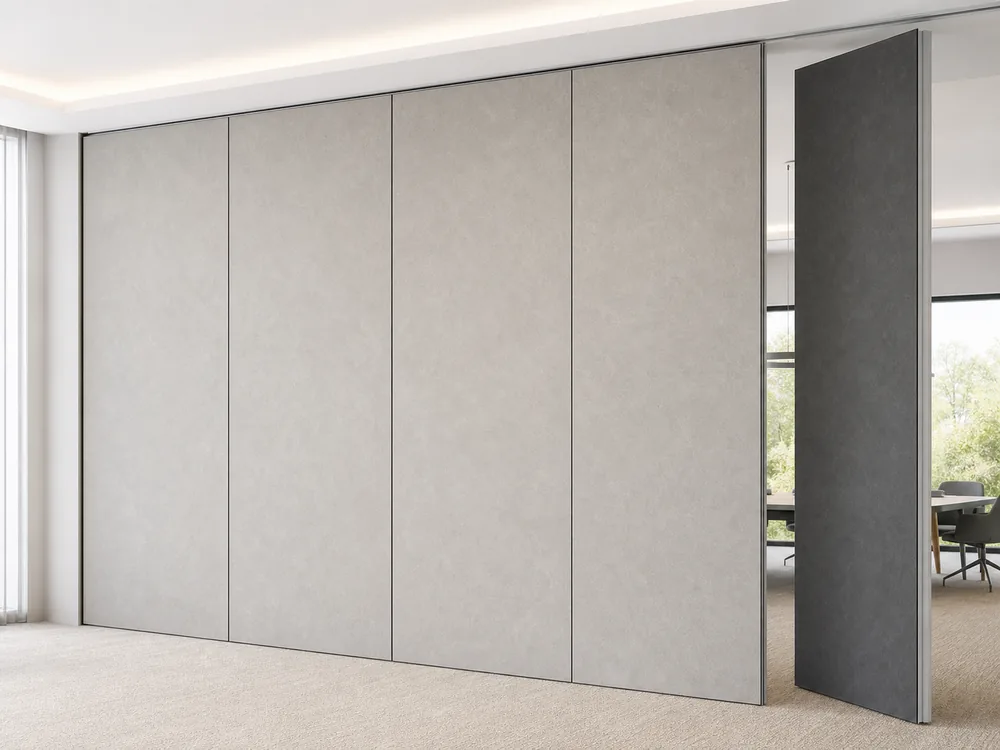
For a restaurant private dining movable partition, this principle matters because the dining floor remains physically uninterrupted. The floor is not cut or damaged for a floor track. Guests and staff do not encounter a continuous floor channel where the partition line crosses the room.
The exact route, junction arrangement, continuous overhead path and parking position must be confirmed from the coordinated project drawings. Finish comparisons should therefore begin after the overhead path and parking concept are understood, not before.
Physically uninterrupted floor and finish coordination
Because the maintained EBUNGE top-hung system leaves the floor physically uninterrupted, the floor finish can be planned as a continuous surface. A restaurant private dining movable partition can then sit above a tiled, timber or stone dining floor without a floor track cutting through it.
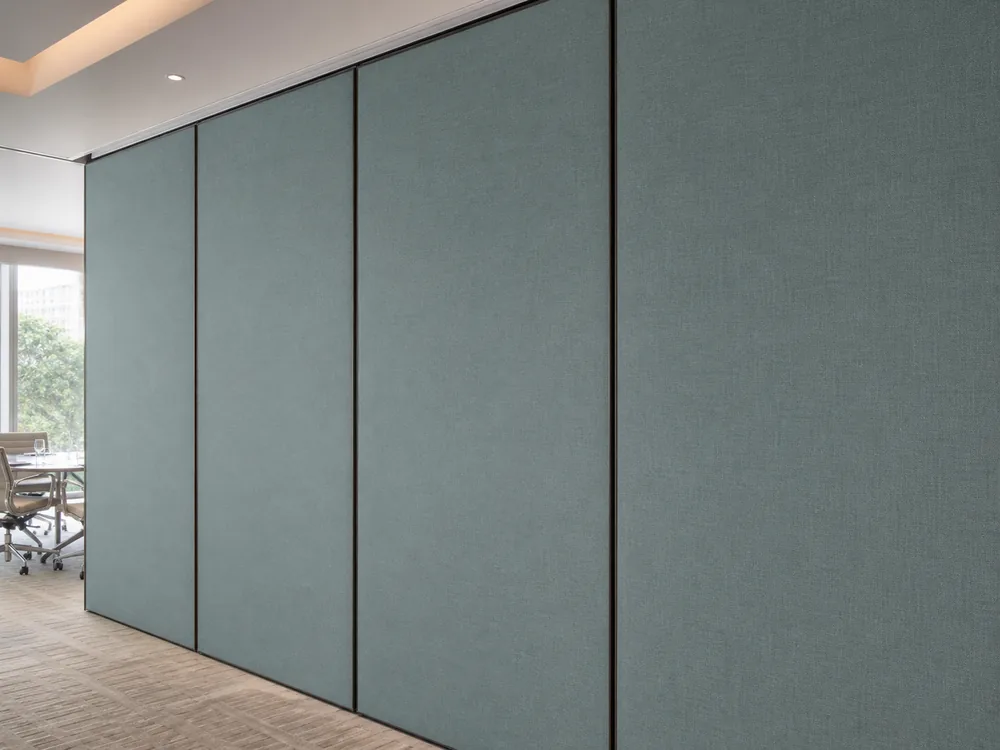
Finish materials for the partition itself can be customized. Cleaning and maintenance methods vary with the selected finish. A finish that suits a formal private dining room may call for a different care routine than a finish used in a busier multifunction area.
Buyers should treat the floor finish and the partition finish as two related decisions. The partition finish should be reviewed alongside the floor surface, the surrounding wall treatments and the lighting conditions in the private dining area.
Parking planning for a restaurant private dining movable partition
Panel parking style can be customized to the customer layout and project requirements, subject to coordinated drawings. A suitable approved parking arrangement can use the stacking area more compactly and coordinate with the space design.
For a restaurant private dining movable partition, parking may need to respect service routes, table layouts and the sightlines from the main dining room. The parking position is not a generic detail; it belongs to the coordinated drawing set.
The exact track, support and panel layout still require project drawings. Buyers should confirm how the stacked panels will relate to adjacent finishes, columns, wall returns and ceiling features before finalizing the finish schedule.
Comparing finish and care implications
Finish materials can be customized, and cleaning and maintenance methods vary with the selected finish. That single confirmed fact drives the comparison. A finish review should ask how the surface will be cleaned, what care products are appropriate and how often the care routine will be performed.
Different finishes also read differently under restaurant lighting. A private dining room may use warm, dimmed lighting, while a multifunction area may use brighter general lighting. The same partition finish can appear different across those conditions.
Because cleaning and maintenance methods vary with the selected finish, the operations team should be involved early. Their input helps align the finish choice with the care routine that the venue can realistically follow.
Non-limiting applications for movable partitions
Movable partitions can be used wherever flexible space division, combination or reconfiguration is required. Application examples are not limiting. A restaurant private dining movable partition is one example among many.
EBUNGE has completed many types of hotel-related movable-partition projects. Ballrooms, wedding halls and multifunction halls are non-limiting examples. No customer names, locations, quantities, ratings, certifications or outcomes may be inferred from those examples.
For restaurant projects, the same top-hung principle can be considered wherever a private dining area needs to open into a larger room or divide into smaller zones. The finish comparison should follow the operational need, not precede it.
Buyer inputs before comparing finishes
Before comparing finishes for a restaurant private dining movable partition, buyers should gather the room plan, the intended division patterns and the parking concept. They should also note the floor finish, wall finishes and ceiling conditions around the partition line.
Finish samples should be reviewed in the actual lighting conditions where possible. Because cleaning and maintenance methods vary with the selected finish, the venue’s care team should review the proposed finish alongside its care instructions.
Buyers should also identify who will approve the coordinated drawings. Finish selection is part of that approval process, not a separate decision made after the drawings are complete.
Drawing approvals and finish sign-off
The exact route, junction arrangement, continuous overhead path and parking position must be confirmed from the coordinated project drawings. Finish choices should be recorded against those approved drawings.
For a restaurant private dining movable partition, the drawing set should show how the top-hung system relates to the ceiling structure and how the panels will park. Finish selections can then be matched to the approved panel layout.
Because finish materials can be customized, the finish schedule should be reviewed together with the parking arrangement and the floor finish. The suitability of each route and parking arrangement depends on the approved layout, circulation, ceiling interfaces and operating sequence.
Scannable comparison module
| Comparison point | What to confirm |
|---|---|
| Floor condition | No continuous floor running track or operating hardware in the finished floor along the partition line |
| Finish selection | Finish materials can be customized |
| Care routine | Cleaning and maintenance methods vary with the selected finish |
| Parking | Panel parking style can be customized, subject to coordinated drawings |
| Drawing approval | The exact route, junction arrangement, continuous overhead path and parking position must be confirmed from the coordinated project drawings |
Checklist for finish and parking review
- Confirm the room plan and the intended division patterns for the restaurant private dining movable partition.
- Review the floor finish and confirm that no continuous floor running track is required along the partition line.
- Collect finish samples and review them under the lighting conditions used in the private dining area.
- Ask how cleaning and maintenance methods vary with the selected finish.
- Confirm the parking concept and how the stacking area coordinates with the space design.
- Record finish selections against the coordinated project drawings.
Frequently asked questions
Does a restaurant private dining movable partition need a floor track?
The EBUNGE movable partition system is top-hung. There is no continuous floor running track or operating hardware in the finished floor along the partition line. The floor is not cut or damaged for a floor track.
Can the partition finish be customized?
Finish materials can be customized. Cleaning and maintenance methods vary with the selected finish, so the care routine should be reviewed alongside the finish choice.
How is parking planned for a restaurant private dining movable partition?
Panel parking style can be customized to the customer layout and project requirements, subject to coordinated drawings. A suitable approved parking arrangement can use the stacking area more compactly and coordinate with the space design.
Where can movable partitions be used?
Movable partitions can be used wherever flexible space division, combination or reconfiguration is required. Application examples are not limiting, and a restaurant private dining movable partition is one example.
What must be confirmed from the coordinated project drawings?
The exact route, junction arrangement, continuous overhead path and parking position must be confirmed from the coordinated project drawings. The exact track, support and panel layout still require project drawings.
What should buyers prepare before comparing finishes?
Buyers should prepare the room plan, intended division patterns, parking concept and surrounding finishes. They should also confirm who will approve the coordinated drawings before finish sign-off.
Next steps for specifying a restaurant private dining movable partition
Start with the operational need: how the private dining area will divide, combine or reconfigure. Then review the top-hung principle and confirm that the floor will remain physically uninterrupted along the partition line.
Compare finishes only after the parking concept and overhead path are understood. Because cleaning and maintenance methods vary with the selected finish, involve the care team in the finish review.
For related product information, see movable partition wall. For completed project references, see projects. The exact route, junction arrangement, continuous overhead path and parking position must be confirmed from the coordinated project drawings.
Continue Exploring
More Materials and Finishes Guides
- Newer guideRestaurant Movable Partition Finishes: Impact Mapping for Serving Carts
- Earlier guideCompare Hotel Movable Partition Finishes for Ceiling Height
- Related guideWho Verifies Partition Handover Records When Trades Finish at Different
- Related guideMovable Partition Finish Sample Coordination Guide for Interior