
Why university auditorium partition seals split lecture planning starts with the top-hung principle
Quick project answer
University auditoriums often need to change between one large gathering and two or more teaching groups. The phrase university auditorium partition seals split describes the planning task rather than a single product. The goal is to divide a hall for split lectures while keeping the room usable for other events.
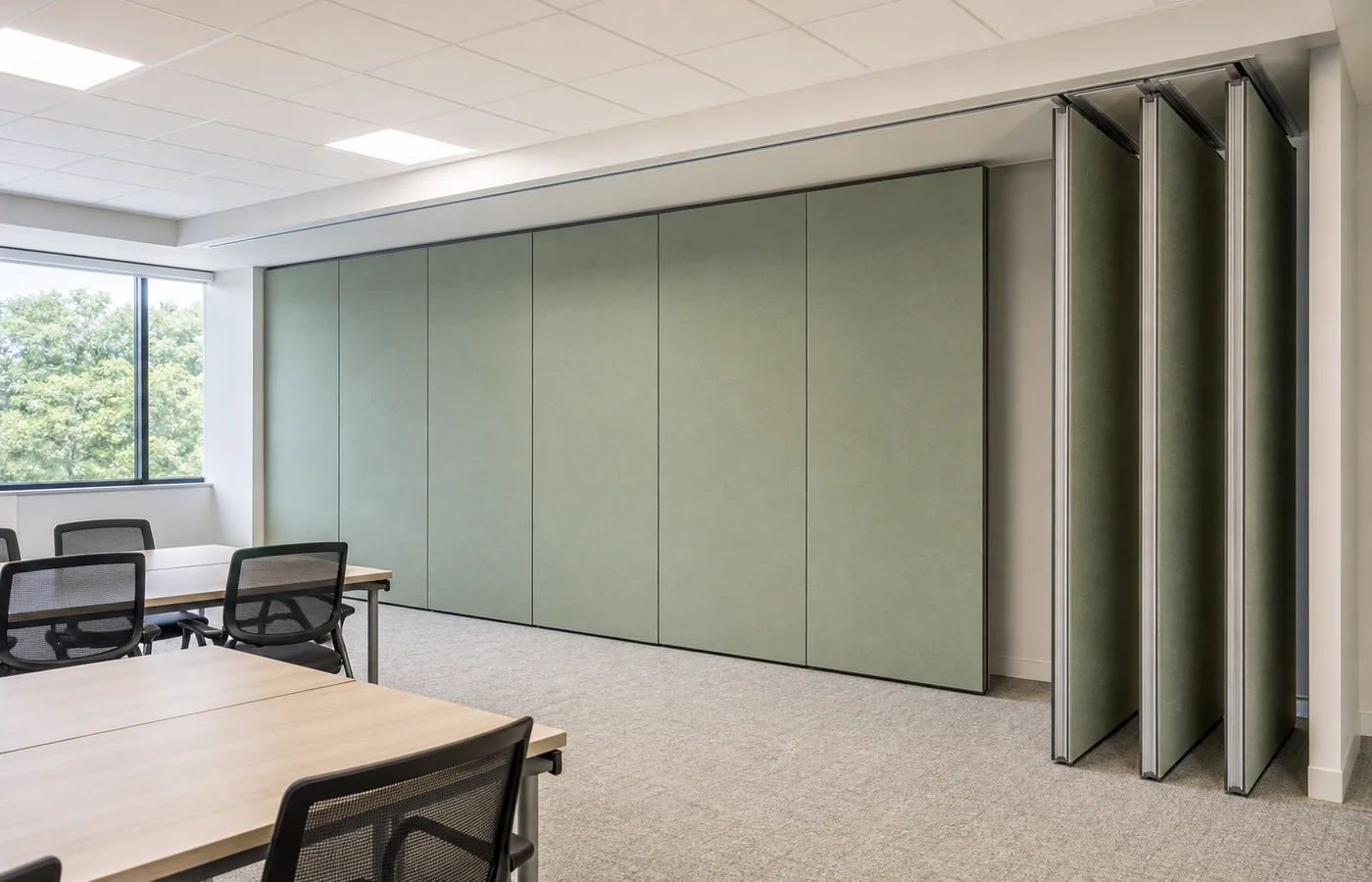
The EBUNGE movable partition system is top-hung. That means the operating hardware is carried above the partition line, not in the finished floor. For a university auditorium, this principle shapes how the room is surveyed, how the floor is protected and how the parking area is planned.

This article covers the top-hung principle, the physically uninterrupted floor, parking planning, finish and care coordination, non-limiting applications, buyer inputs and drawing approvals. It does not describe a generic operating procedure or claim performance outcomes.
What a top-hung system means for the auditorium floor
In a top-hung arrangement, the partition panels are supported from an overhead track. There is no continuous floor running track or operating hardware in the finished floor along the partition line. The floor is not cut or damaged for a floor track.
For a university auditorium, that matters because the floor may be used for seating, staging, circulation or equipment. A maintained EBUNGE top-hung system keeps the floor physically uninterrupted along the partition line. The room can still be divided for split lectures without a floor channel becoming part of the finished surface.
The exact route, junction arrangement, continuous overhead path and parking position must be confirmed from the coordinated project drawings. This boundary sentence applies to every engineering detail that is not part of the confirmed system description.
When the phrase university auditorium partition seals split is used in early planning, it is useful to separate the overhead path from the floor finish. The overhead path belongs to the coordinated drawings. The floor finish belongs to the room design and the selected finish schedule.
Planning the parking position for split lecture layouts
Panel parking style can be customized to the customer layout and project requirements, subject to coordinated drawings. A suitable approved parking arrangement can use the stacking area more compactly and coordinate with the space design.
For a university auditorium, the parking area may sit near a side wall, a rear zone or another location that suits the room. The exact track, support and panel layout still require project drawings. The parking position is not a universal default.
Planners should compare the parking zone with seating rows, sightlines, circulation routes and adjacent rooms. The aim is to coordinate the stacking area with the space design rather than assume a fixed location. The phrase university auditorium partition seals split can help keep the discussion focused on the split-lecture use case.
Because the system is top-hung, the parking area does not require a floor track along the partition line. The exact overhead route and support arrangement must be confirmed by the responsible project team from coordinated drawings.
Finish and care coordination for auditorium partitions
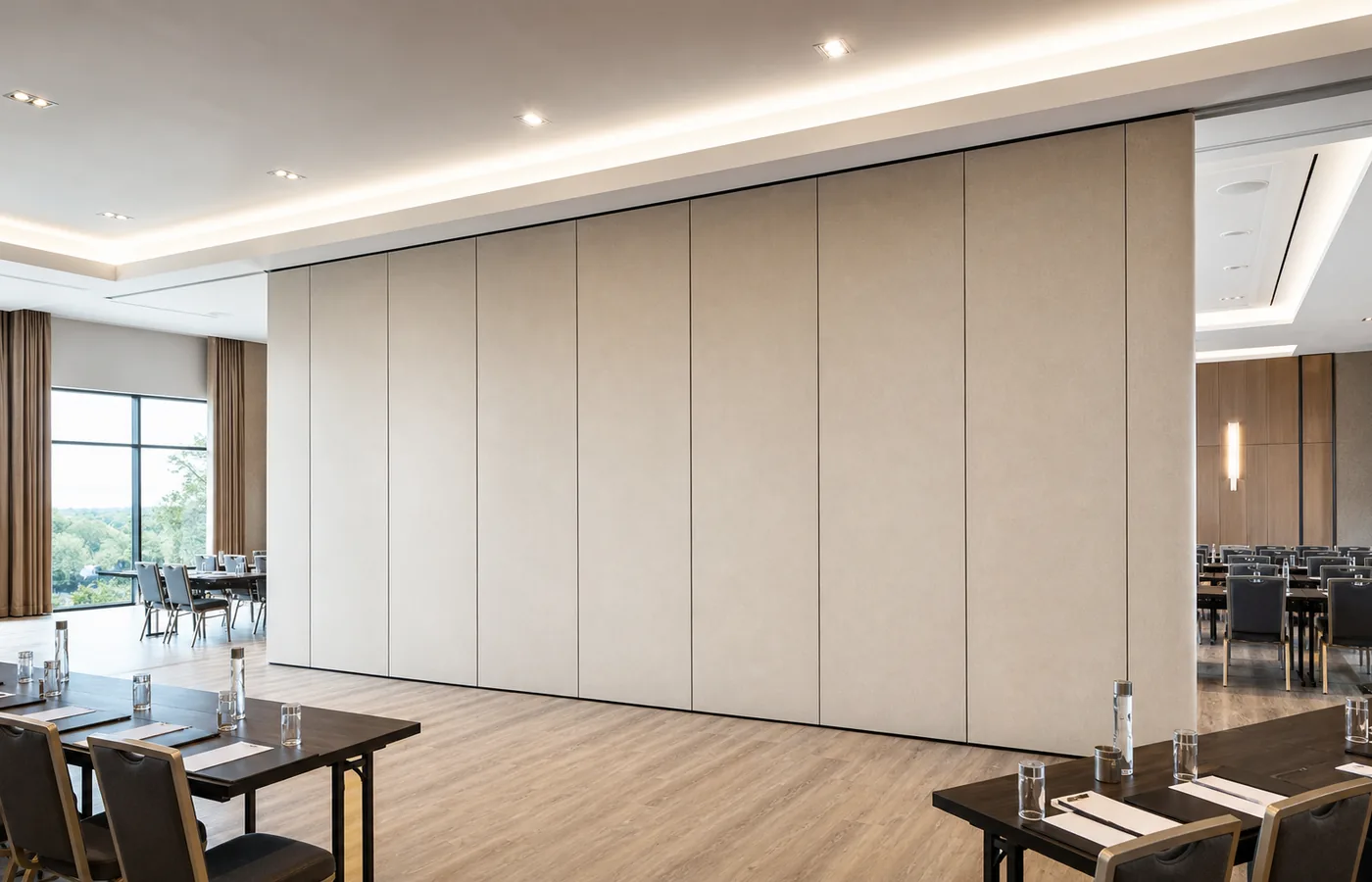
Finish materials can be customized, and cleaning and maintenance methods vary with the selected finish. That means the finish choice and the care routine should be coordinated together during planning.
For a university auditorium, the finish may need to suit the room’s visual character and the way the space is used. The confirmed position is that finishes are customizable. The care method follows the finish that is selected.
Do not assume a single cleaning method applies to every finish. The correct approach depends on the chosen material. The phrase university auditorium partition seals split should not be treated as a reason to skip finish coordination.
Where a project has specific care requirements, those requirements should be recorded in the project documents. The confirmed facts do not include cleaning outcomes or universal maintenance routines.
Non-limiting applications for movable partitions
Movable partitions can be used wherever flexible space division, combination or reconfiguration is required. Application examples are not limiting. A university auditorium is one possible setting among many.
EBUNGE has completed many types of hotel-related movable-partition projects. Ballrooms, wedding halls and multifunction halls are non-limiting examples. No customer names, locations, quantities, ratings, certifications or outcomes may be inferred from that statement.
For a university, the same planning logic can apply to lecture theatres, halls and multipurpose rooms. The phrase university auditorium partition seals split describes one planning context, not a restricted product family.
Because applications are not limiting, the project team should define the room’s actual use pattern. The drawings then reflect that pattern rather than a generic template.
Buyer inputs to prepare before drawing approval
A smooth drawing review depends on clear buyer inputs. The following list covers the main items to prepare before the coordinated drawings are approved.
- Room plan showing the intended split-lecture layout and the parking zone.
- Preferred finish direction, so care and cleaning can be coordinated with the selected finish.
- Confirmation of how the auditorium is used outside split lectures.
- Any project-specific requirements that affect the stacking area or space design.
- A named contact for drawing review and approval.
These inputs help the project team align the top-hung system with the room. They do not replace the coordinated drawings. The exact route, junction arrangement, continuous overhead path and parking position must be confirmed from the coordinated project drawings.
Drawing approvals and the limits of this guide
Drawing approval is the point where the planning assumptions become project-specific. The confirmed facts cover the top-hung principle, the physically uninterrupted floor, customizable parking style and customizable finishes.
Other engineering details remain open until the drawings are coordinated. The exact route, junction arrangement, continuous overhead path and parking position must be confirmed from the coordinated project drawings.
When the phrase university auditorium partition seals split appears in a brief, it should trigger a review of the floor, the parking zone, the finish and the drawings. Each item belongs to the project record, not to a generic assumption.
Frequently asked questions
For further context, review related project guidance and additional planning resources before preparing the coordinated project brief.
Does a top-hung partition require a floor track?
No continuous floor running track or operating hardware is placed in the finished floor along the partition line. The floor is not cut or damaged for a floor track with the maintained EBUNGE top-hung system.
Can the parking area be adapted to the auditorium layout?
Panel parking style can be customized to the customer layout and project requirements, subject to coordinated drawings. A suitable approved parking arrangement can use the stacking area more compactly and coordinate with the space design.
Are finishes and cleaning methods fixed for every project?
Finish materials can be customized, and cleaning and maintenance methods vary with the selected finish. The care approach should be coordinated with the finish that is chosen for the project.
Can movable partitions be used outside university auditoriums?
Yes. Movable partitions can be used wherever flexible space division, combination or reconfiguration is required. Application examples are not limiting.
What must be confirmed from the coordinated project drawings?
The exact route, junction arrangement, continuous overhead path and parking position must be confirmed from the coordinated project drawings. The exact track, support and panel layout also require project drawings.
Does this guide state acoustic or fire performance?
No.
Continue Exploring
More Acoustic Partition Guides
- Newer guideTraining Center Partition Seals and Wall-Mounted Whiteboard Interfaces
- Earlier guideTraining Center Operable Wall Seals: HVAC Cross-Talk Acoustic Planning
- Related guideAcoustic Partition Ceiling Interface Zone Confirmation
- Related guideWho Confirms Ceiling Grid Line Before Acoustic Partition Track