
Quick project answer
Hotel teams often ask how to prepare for staff training manual operable wall operation when the partition system is top-hung. The answer starts with the confirmed principle: the EBUNGE movable partition system is top-hung and has no continuous floor running track or operating hardware in the finished floor along the partition line. This changes what staff need to understand before daily use.
This article develops useful sections around the top-hung principle, the physically uninterrupted floor, parking planning, finish and care coordination, non-limiting applications, buyer inputs and drawing approvals. It does not describe a generic step-by-step operating procedure, because the exact route, junction arrangement, continuous overhead path and parking position must be confirmed from the coordinated project drawings.
Why the Top-Hung Principle Shapes Staff Training Manual Operable Wall Practice
In a top-hung system, the panels are carried from above rather than supported by a floor track. The EBUNGE movable partition system is top-hung and has no continuous floor running track or operating hardware in the finished floor along the partition line. Staff training manual operable wall sessions should begin with this principle.
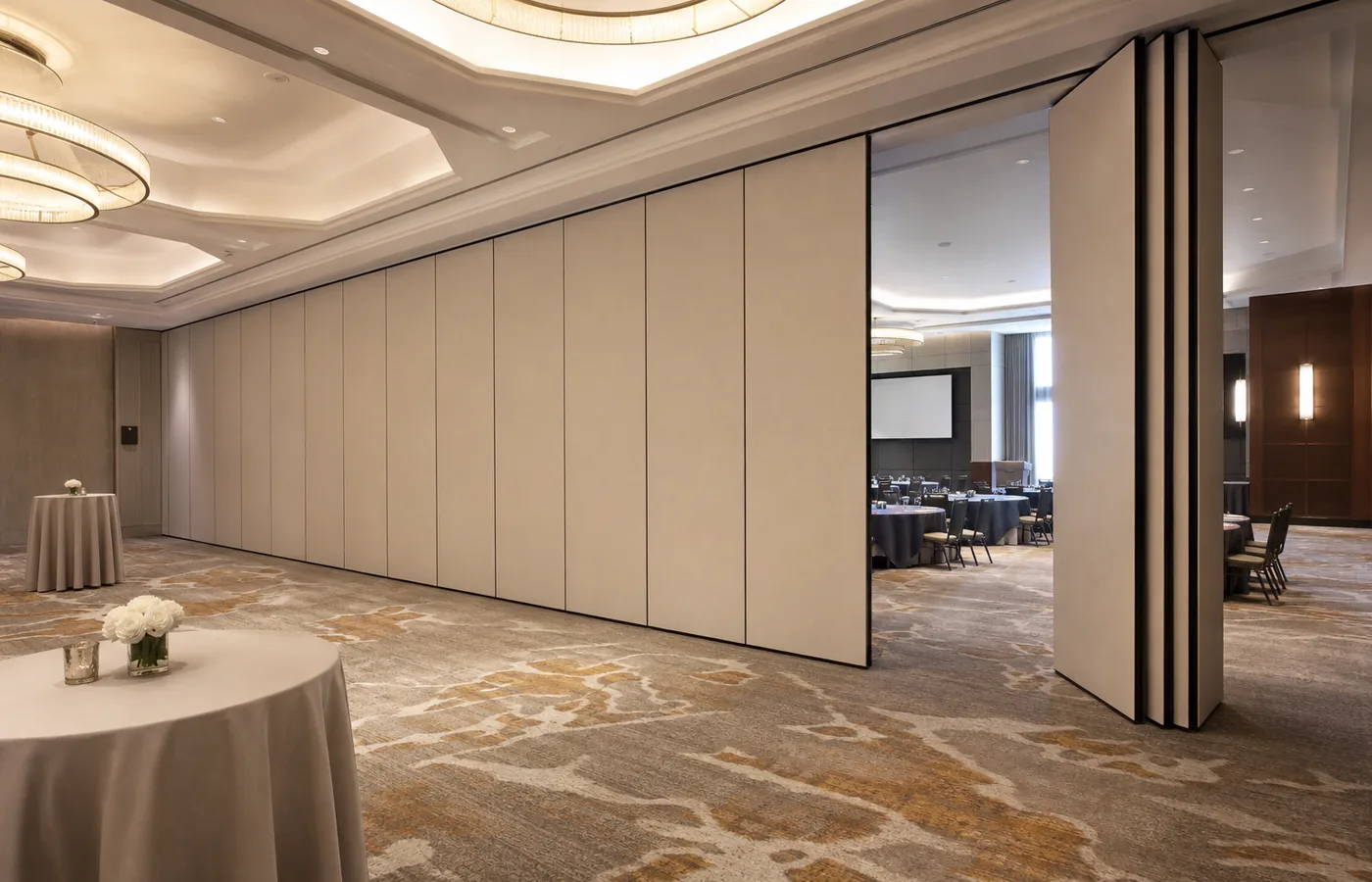
Because there is no continuous floor running track, the finished floor is not cut or damaged for a floor track. The floor remains physically uninterrupted by the maintained EBUNGE top-hung system. This is a key fact for hotel housekeeping and event teams to understand during staff training manual operable wall briefings.
Hotel spaces are used for many purposes, and movable partitions can be used wherever flexible space division, combination or reconfiguration is required. Application examples are not limiting. Staff training manual operable wall content should therefore focus on the specific layout and approved drawings for each venue.
The Physically Uninterrupted Floor and What It Means for Hotel Teams
The floor is not cut or damaged for a floor track and remains physically uninterrupted by the maintained EBUNGE top-hung system. For hotel operations, this means the finished floor along the partition line is not interrupted by operating hardware. Staff training manual operable wall guidance should reflect this confirmed condition.
This does not mean that every project has identical conditions. The exact route, junction arrangement, continuous overhead path and parking position must be confirmed from the coordinated project drawings. The suitability of each route and parking arrangement depends on the approved layout, circulation, ceiling interfaces and operating sequence.
Hotel teams should also understand that finish materials can be customized, and cleaning and maintenance methods vary with the selected finish. The physically uninterrupted floor does not remove the need to follow finish-specific care instructions. Staff training manual operable wall content should connect floor condition with finish care.
Parking Planning for Manual Operable Walls in Hotels
Panel parking style can be customized to the customer layout and project requirements, subject to coordinated drawings. A suitable approved parking arrangement can use the stacking area more compactly and coordinate with the space design. The exact track, support and panel layout still require project drawings.
For staff training manual operable wall sessions, parking planning is a practical topic. Hotel teams need to know where panels are intended to be parked and how that area is coordinated with the room design. The exact route, junction arrangement, continuous overhead path and parking position must be confirmed from the coordinated project drawings.
Because parking style can be customized, no single parking description applies to every hotel. Staff training manual operable wall briefings should use the approved parking arrangement for the specific venue. This helps teams understand the intended use of the stacking area without assuming a universal method.
Finish and Care Coordination in Staff Training Manual Operable Wall Programs
Finish materials can be customized, and cleaning and maintenance methods vary with the selected finish. This confirmed fact is central to staff training manual operable wall programs in hotels. Housekeeping and event staff should know which finish is installed and which care method applies.
Because care methods vary, a single cleaning instruction cannot be applied across all partitions. Staff training manual operable wall content should direct teams to the finish-specific guidance for each installation. The exact route, junction arrangement, continuous overhead path and parking position must be confirmed from the coordinated project drawings.
Finish coordination also affects how the partition relates to the surrounding hotel interior. Since finish materials can be customized, the selected finish should be documented for the team. Staff training manual operable wall sessions can then include the correct care references without inventing universal rules.
Non-Limiting Hotel Applications for Movable Partitions
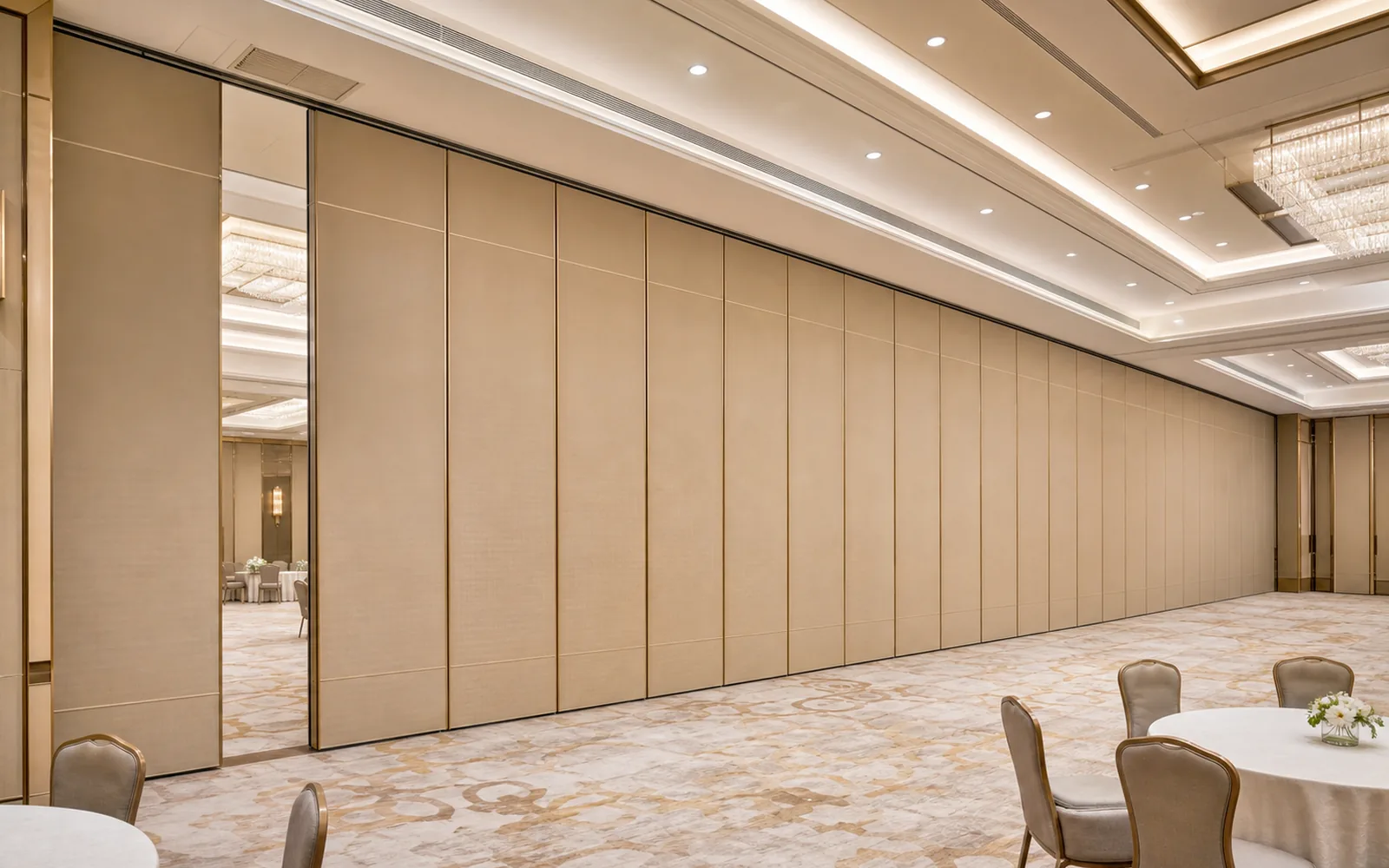
Movable partitions can be used wherever flexible space division, combination or reconfiguration is required. Application examples are not limiting. EBUNGE has completed many types of hotel-related movable-partition projects; ballrooms, wedding halls and multifunction halls are non-limiting examples.
No customer names, locations, quantities, ratings, certifications or outcomes may be inferred from that statement. Staff training manual operable wall content should therefore avoid naming specific hotels or claiming performance results. The focus stays on the confirmed top-hung principle and the project drawings.
Hotel teams may work across ballrooms, wedding halls and multifunction halls, but each space has its own coordinated drawings. Staff training manual operable wall sessions should be tailored to the venue rather than assuming that one application example defines another. The exact route, junction arrangement, continuous overhead path and parking position must be confirmed from the coordinated project drawings.
Buyer Inputs and Drawing Approvals Before Staff Training Manual Operable Wall Use
Buyers and project teams provide layout requirements that shape the coordinated drawings. Panel parking style can be customized to the customer layout and project requirements, subject to coordinated drawings. Finish materials can be customized as well. These inputs support later staff training manual operable wall preparation.
Drawing approvals matter because the exact track, support and panel layout still require project drawings. Staff training manual operable wall sessions should not proceed from assumptions about route, junction or parking. The exact route, junction arrangement, continuous overhead path and parking position must be confirmed from the coordinated project drawings.
Hotel operators can review the approved drawings with their teams before daily use. This helps connect buyer inputs, customization choices and the confirmed top-hung condition.
Scannable Planning Checklist for Hotel Teams
- Confirm the partition is the maintained EBUNGE top-hung system with no continuous floor running track.
- Verify that the finished floor along the partition line is not cut or damaged for a floor track.
- Review the approved parking arrangement and stacking area for the specific venue.
- Identify the selected finish and the finish-specific cleaning and maintenance method.
- Check that the coordinated project drawings confirm route, junction, overhead path and parking position.
Drawing Approval Sequence for Coordinated Projects
- Collect customer layout and project requirements for the intended hotel space.
- Coordinate panel parking style and finish material choices with the project team.
- Confirm the exact track, support and panel layout through project drawings.
- Review the approved parking arrangement and its coordination with the space design.
- Use the approved drawings as the reference for staff training manual operable wall preparation.
The exact route, junction arrangement, continuous overhead path and parking position must be confirmed from the coordinated project drawings.
Frequently Asked Questions About Staff Training Manual Operable Wall Topics
What is the main principle behind staff training manual operable wall operation in hotels?
The main principle is that the EBUNGE movable partition system is top-hung and has no continuous floor running track or operating hardware in the finished floor along the partition line. Staff training manual operable wall sessions should begin with this confirmed condition.
Does the floor need to be cut for a floor track?
No. The floor is not cut or damaged for a floor track and remains physically uninterrupted by the maintained EBUNGE top-hung system. Staff training manual operable wall content should reflect this confirmed fact.
Can panel parking style be customized for a hotel layout?
Yes. Panel parking style can be customized to the customer layout and project requirements, subject to coordinated drawings. A suitable approved parking arrangement can use the stacking area more compactly and coordinate with the space design.

Do cleaning methods vary with the selected finish?
Yes. Finish materials can be customized, and cleaning and maintenance methods vary with the selected finish. Staff training manual operable wall programs should reference the finish-specific care method for each installation.
Which hotel spaces can use movable partitions?
Movable partitions can be used wherever flexible space division, combination or reconfiguration is required. Application examples are not limiting. EBUNGE has completed many types of hotel-related movable-partition projects; ballrooms, wedding halls and multifunction halls are non-limiting examples.
What must be confirmed from the coordinated project drawings?
The exact route, junction arrangement, continuous overhead path and parking position must be confirmed from the coordinated project drawings. The exact track, support and panel layout also require project drawings.
For related system information, see the operable wall system page. For project context, review the projects page.
Continue Exploring
More Operable Wall System Guides
- Newer guideWhat Staff Training Covers for Manual Partition Track and Trolley Care
- Earlier guideExhibition Hall Partition Stacking: Door Swing Clearance
- Related guideEvacuation Chair Routes Where Operable Walls Cross Accessible Paths
- Related guidePhase Operable Wall Work When a Renovation Adds a New Wing