
Understanding the Top-Hung Principle in Staff Training
Quick project answer
Staff training manual partition track begins with the core principle of the EBUNGE movable partition system. The system is top-hung, meaning the panels are supported from an overhead structure rather than from the floor. This distinction shapes every care routine and every operational expectation that staff should understand.
Because the system is top-hung, there is no continuous floor running track or operating hardware in the finished floor along the partition line. The floor is not cut or damaged for a floor track. It remains physically uninterrupted by the maintained EBUNGE top-hung system.
Training should explain that the overhead path carries the movement and support function. Staff do not need to inspect hidden hardware or follow a generic operating sequence. Instead, they learn to recognize the top-hung configuration and to report any visible concern to the responsible project contact.
The exact route, junction arrangement, continuous overhead path and parking position must be confirmed from the coordinated project drawings. This boundary sentence should be part of every training conversation about layout and operation.

Why the Physically Uninterrupted Floor Matters for Care
A physically uninterrupted floor changes how staff approach daily care. There is no floor track to clean, no recess to sweep and no operating hardware embedded along the partition line. Cleaning routines can focus on the visible floor surface and the selected panel finish.
Training should clarify that the floor is not cut or damaged for a floor track in the maintained EBUNGE top-hung system. This fact helps staff avoid unnecessary work and prevents incorrect assumptions about floor maintenance.
Staff should also understand that the absence of a floor track does not remove the need for careful handling. Panels still require attention during movement and parking, and the finish materials selected for the project determine the appropriate cleaning method.
Because finish materials can be customized, cleaning and maintenance methods vary with the selected finish. Training should therefore connect floor care and panel care to the specific finish schedule confirmed for the project.
Parking Planning and Trolley Care in Staff Training
Panel parking style can be customized to the customer layout and project requirements, subject to coordinated drawings. Staff training manual partition track should include a clear explanation of where panels park and how the parking area is organized.
A suitable approved parking arrangement can use the stacking area more compactly and coordinate with the space design. The exact track, support and panel layout still require project drawings. Training should not assume a universal parking method.
Trolley care, where a trolley is part of the approved arrangement, should follow the same discipline. Staff should know which surfaces are finished, which cleaning methods are approved and which actions are outside the trained routine.
The exact route, junction arrangement, continuous overhead path and parking position must be confirmed from the coordinated project drawings. This sentence should be repeated whenever parking or trolley movement is discussed.
Finish and Care Coordination for Manual Partition Track
Finish materials can be customized, and cleaning and maintenance methods vary with the selected finish. Staff training manual partition track should therefore be tied to the finish schedule rather than to a single generic method.
Training can group care instructions by finish type and by location. Panels in a busy circulation area may need a different routine from panels in a quieter zone, even when the same finish family is used.
Staff should learn to identify the approved cleaning materials and to avoid methods that are not confirmed for the selected finish. They should also know whom to contact when a finish question falls outside the training scope.
Because the system is top-hung and the floor remains physically uninterrupted, care coordination can focus on panel surfaces, parking areas and the visible overhead path. The exact route, junction arrangement, continuous overhead path and parking position must be confirmed from the coordinated project drawings.
Non-Limiting Applications and Training Context
Movable partitions can be used wherever flexible space division, combination or reconfiguration is required. Application examples are not limiting, so training should prepare staff for the specific spaces in their building rather than for a single room type.
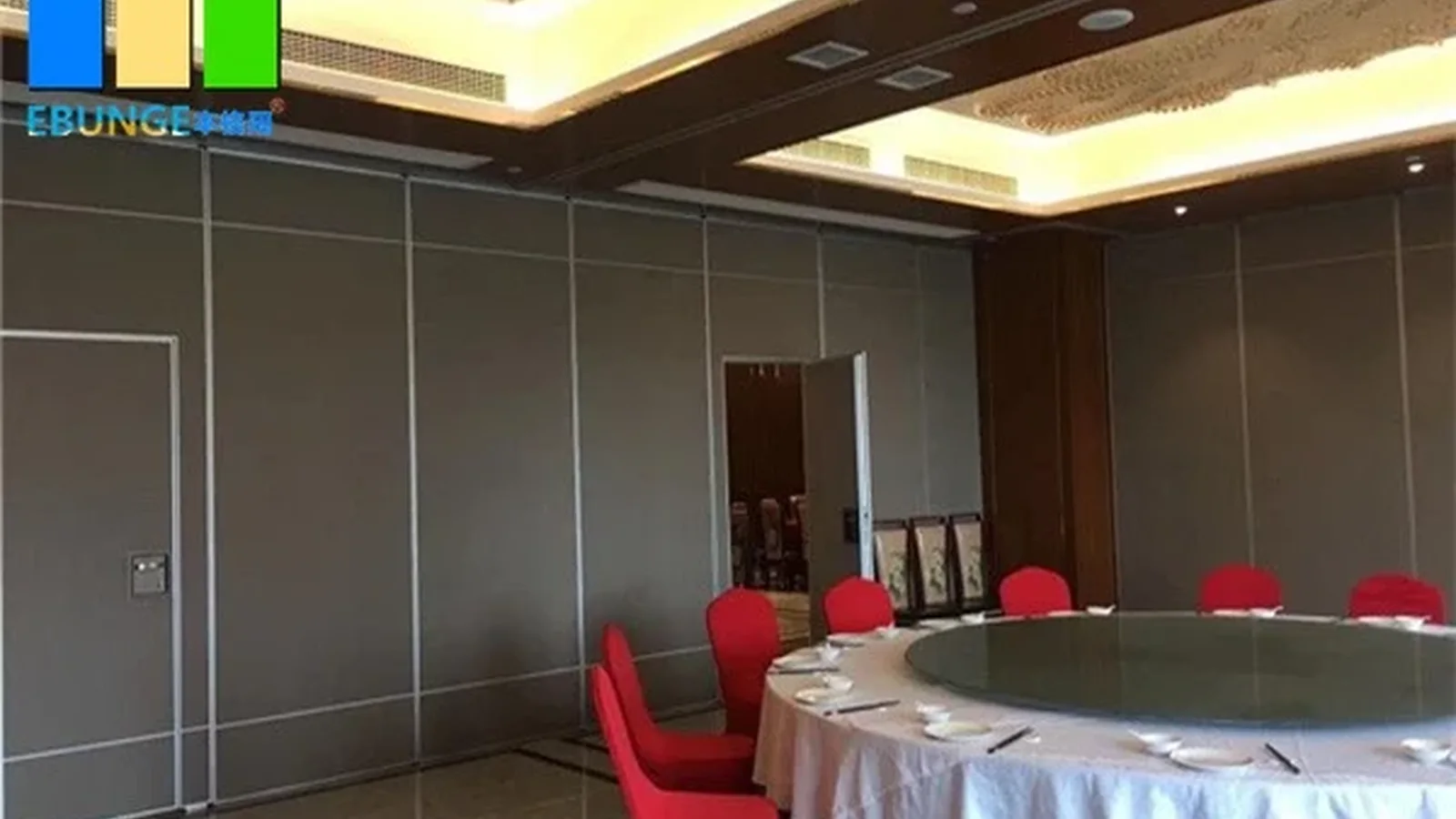
EBUNGE has completed many types of hotel-related movable-partition projects. Ballrooms, wedding halls and multifunction halls are non-limiting examples. No customer names, locations, quantities, ratings, certifications or outcomes may be inferred from this statement.
Staff training manual partition track should therefore be adapted to the approved layout, the selected finishes and the parking arrangement shown in the coordinated drawings. Training content should not be copied from one project to another without review.
The exact route, junction arrangement, continuous overhead path and parking position must be confirmed from the coordinated project drawings. This boundary keeps training aligned with the actual project rather than with assumptions.
Buyer Inputs and Drawing Approvals for Training
Effective staff training manual partition track depends on buyer inputs that are confirmed before training is delivered. The approved layout, parking style and finish selections should be available to the trainer and to the staff who will use the system.
Panel parking style can be customized to the customer layout and project requirements, subject to coordinated drawings. Buyers should confirm the parking approach and the finish schedule so that training can address the actual conditions.
A suitable approved parking arrangement can use the stacking area more compactly and coordinate with the space design. The exact track, support and panel layout still require project drawings, so training should reference those drawings directly.
Finish materials can be customized, and cleaning and maintenance methods vary with the selected finish. Buyers should provide the finish information needed for care instructions and should confirm who approves any change to the trained routine.
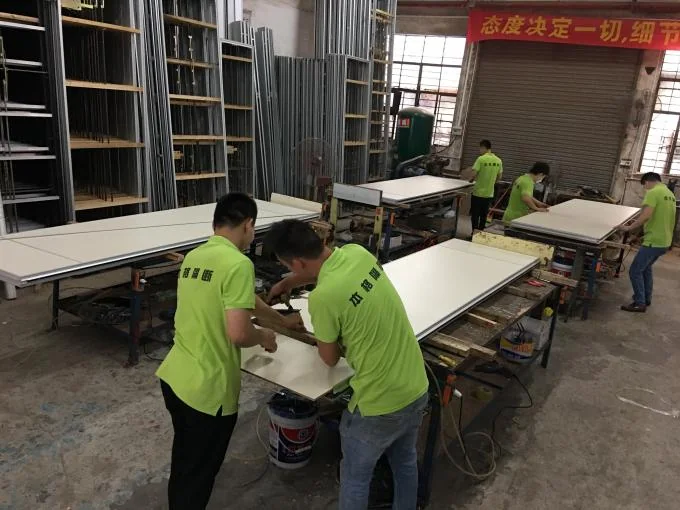
The exact route, junction arrangement, continuous overhead path and parking position must be confirmed from the coordinated project drawings. Training should be scheduled after the relevant drawings are available and reviewed.
Scannable Training Checklist for Staff
- Confirm that the system is top-hung and that the floor is not cut or damaged for a floor track.
- Review the approved parking style and the stacking area shown in the coordinated drawings.
- Identify the selected finish materials and the cleaning method confirmed for each finish.
- Locate the project contact for questions about layout, parking or finish care.
- Reference the exact route, junction arrangement, continuous overhead path and parking position from the coordinated project drawings.
Training Topics at a Glance
| Topic | What Staff Should Know |
|---|---|
| Top-hung principle | The system is supported from overhead and has no continuous floor running track or operating hardware in the finished floor along the partition line. |
| Floor condition | The floor is not cut or damaged for a floor track and remains physically uninterrupted by the maintained EBUNGE top-hung system. |
| Parking planning | Panel parking style can be customized to the customer layout and project requirements, subject to coordinated drawings. |
| Finish care | Finish materials can be customized, and cleaning and maintenance methods vary with the selected finish. |
| Drawing reference | The exact route, junction arrangement, continuous overhead path and parking position must be confirmed from the coordinated project drawings. |
Staff training manual partition track should always be tied to the approved project drawings, the confirmed parking arrangement and the selected finish schedule.
Frequently Asked Questions
What does staff training manual partition track cover first?
Training begins with the top-hung principle. Staff learn that the EBUNGE movable partition system is supported from overhead and that there is no continuous floor running track or operating hardware in the finished floor along the partition line.
Does the floor need special preparation for a track?
No floor track is required. The floor is not cut or damaged for a floor track and remains physically uninterrupted by the maintained EBUNGE top-hung system. Care routines can focus on the visible floor surface and the selected panel finish.
How is parking addressed in staff training manual partition track?
Panel parking style can be customized to the customer layout and project requirements, subject to coordinated drawings. A suitable approved parking arrangement can use the stacking area more compactly and coordinate with the space design.
Are cleaning methods the same for every finish?
No. Finish materials can be customized, and cleaning and maintenance methods vary with the selected finish. Training should connect care instructions to the finish schedule confirmed for the project.
Can training be based on a generic operating sequence?
No. The exact route, junction arrangement, continuous overhead path and parking position must be confirmed from the coordinated project drawings. Training should reference those drawings rather than a generic sequence.
Where can buyers find related project context?
Buyers can review the operable wall system overview and the projects section for general information. Specific training content still depends on the approved drawings and finish selections.
Continue Exploring
More Operable Wall System Guides
- Newer guideConvention Center Partition Stacking: Exhibit Halls vs Meeting Rooms
- Earlier guideManual Operable Wall Operation in Hotels Staff Training
- Related guideEvacuation Chair Routes Where Operable Walls Cross Accessible Paths
- Related guidePhase Operable Wall Work When a Renovation Adds a New Wing