
Why Service Carts Matter for Hotel Banquet Partition Finish Service
Quick project answer
Service carts move through banquet halls during setup, service and breakdown. Their wheels contact the floor and can affect the finish along partition lines. For hotel banquet partition finish service, the key question is whether the partition system places any operating hardware in the finished floor.
The EBUNGE movable partition system is top-hung. It has no continuous floor running track or operating hardware in the finished floor along the partition line. This design choice shapes how service carts interact with the floor and the partition finish.
This article explains the top-hung principle, the physically uninterrupted floor, parking planning, finish and care coordination, non-limiting applications, buyer inputs and drawing approvals. It focuses on hotel banquet partition finish service without prescribing a universal installation sequence.
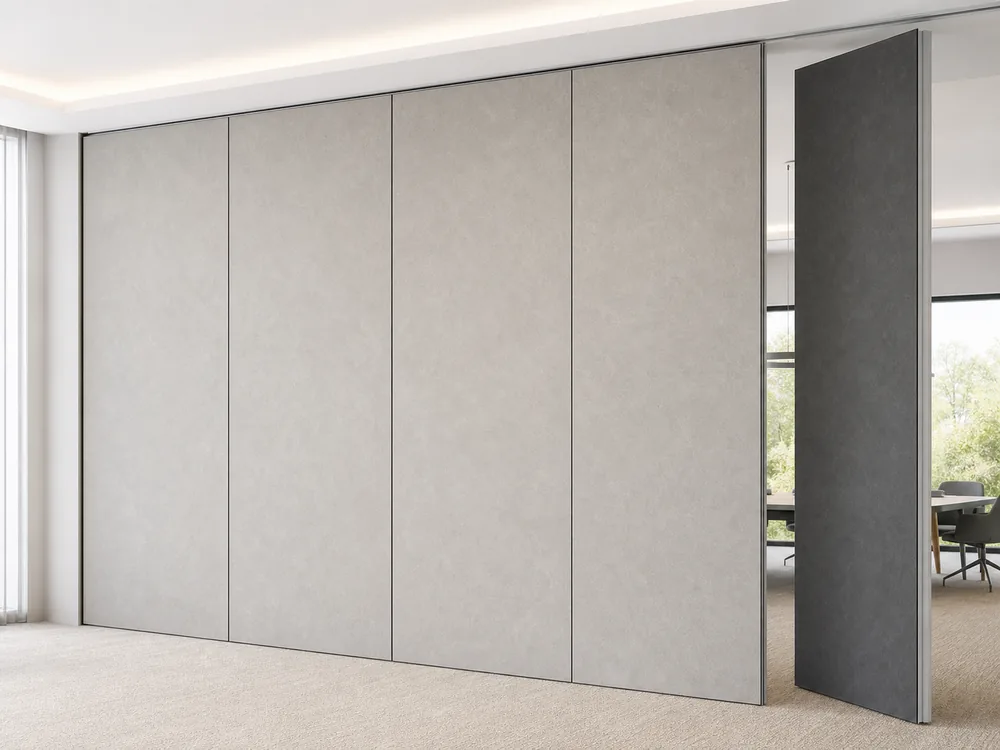
The Top-Hung Principle and the Physically Uninterrupted Floor
In a top-hung system, the panels are supported from above. The floor is not cut or damaged for a floor track. The floor remains physically uninterrupted by the maintained EBUNGE top-hung system.
Because there is no continuous floor running track or operating hardware in the finished floor along the partition line, service carts do not encounter a track profile at floor level. This can influence how hotel banquet partition finish service is planned around cart routes and staging areas.
The exact route, junction arrangement, continuous overhead path and parking position must be confirmed from the coordinated project drawings.
For hotel banquet partition finish service, the absence of a floor track means the floor finish can remain continuous across the partition line. That continuity is a physical property of the maintained EBUNGE top-hung system, not a performance claim about abrasion resistance.
How Service Carts Interact with Partition Finish
Service carts typically have hard or soft wheels, depending on the cart type and hotel operation. Wheel material, load and route frequency can influence floor finish wear. The partition finish itself is a separate surface that may be contacted by carts during tight maneuvering.
When planning hotel banquet partition finish service, consider where carts turn, park and pass near partition panels. The finish materials can be customized, and cleaning and maintenance methods vary with the selected finish.
Because finish materials can be customized, the care approach for hotel banquet partition finish service should match the selected finish. A finish-specific care method helps address routine marks from carts and handling without assuming a universal cleaning outcome.
The exact route, junction arrangement, continuous overhead path and parking position must be confirmed from the coordinated project drawings.
Parking Planning for Panels and Carts
Panel parking style can be customized to the customer layout and project requirements, subject to coordinated drawings. A suitable approved parking arrangement can use the stacking area more compactly and coordinate with the space design.
For hotel banquet partition finish service, parking planning should account for both partition panels and service carts. The stacking area may need to accommodate cart movement during setup and breakdown.
The exact track, support and panel layout still require project drawings. The exact route, junction arrangement, continuous overhead path and parking position must be confirmed from the coordinated project drawings.
When parking is coordinated with the space design, hotel banquet partition finish service can be planned around defined cart routes. This planning is about layout coordination, not about a universal operating sequence.
Finish and Care Coordination
Finish materials can be customized, and cleaning and maintenance methods vary with the selected finish. For hotel banquet partition finish service, the finish selection and the care method should be coordinated together.
Service carts may contact partition finishes during events. The appropriate care method depends on the finish selected for the project. Because methods vary, hotel banquet partition finish service should reference the finish-specific care guidance rather than a single universal procedure.
The exact route, junction arrangement, continuous overhead path and parking position must be confirmed from the coordinated project drawings.
Coordination between finish selection and care planning supports hotel banquet partition finish service over the life of the installation. It does not imply a cleaning outcome or a performance rating.
Non-Limiting Applications in Hotel Environments
Movable partitions can be used wherever flexible space division, combination or reconfiguration is required. Application examples are not limiting. EBUNGE has completed many types of hotel-related movable-partition projects.
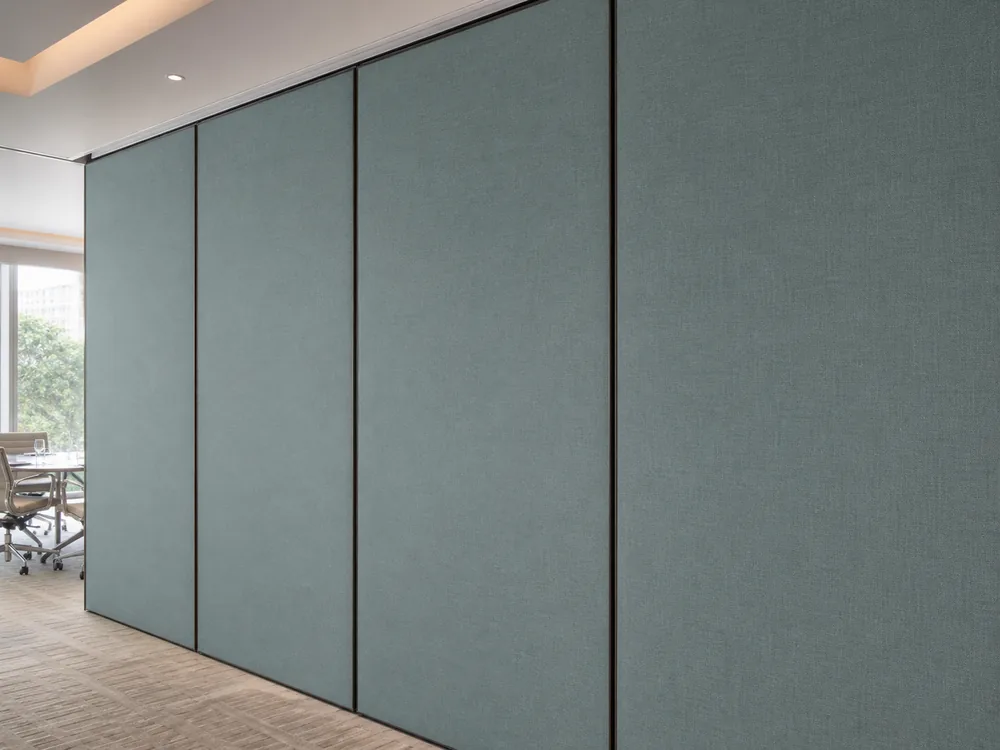
Ballrooms, wedding halls and multifunction halls are non-limiting examples. In these spaces, hotel banquet partition finish service may involve service carts moving through areas near partition lines.
Because applications are not limiting, the same top-hung principle and uninterrupted floor can apply across different hotel layouts. The exact route, junction arrangement, continuous overhead path and parking position must be confirmed from the coordinated project drawings.
For hotel banquet partition finish service, the non-limiting application list means each project should be assessed on its own coordinated drawings and layout requirements.
Buyer Inputs for Hotel Banquet Partition Finish Service
Buyers planning hotel banquet partition finish service can prepare inputs that support coordination. These inputs help align the partition system with the space and the service cart routes.
- Layout drawings showing partition lines and adjacent areas
- Service cart routes and staging zones
- Preferred parking style and stacking area
- Finish preferences and finish-specific care requirements
- Project requirements for flexible space division, combination or reconfiguration
These inputs support hotel banquet partition finish service planning. They do not replace coordinated project drawings. The exact route, junction arrangement, continuous overhead path and parking position must be confirmed from the coordinated project drawings.
For related product information, see movable partition wall and projects.
Drawing Approvals and Coordination
Panel parking style can be customized to the customer layout and project requirements, subject to coordinated drawings. A suitable approved parking arrangement can use the stacking area more compactly and coordinate with the space design.
The exact track, support and panel layout still require project drawings. For hotel banquet partition finish service, drawing approvals confirm how the top-hung system, parking and finish care align with the space.
The exact route, junction arrangement, continuous overhead path and parking position must be confirmed from the coordinated project drawings.
Because the EBUNGE system is top-hung and has no continuous floor running track or operating hardware in the finished floor along the partition line, the floor remains physically uninterrupted. This confirmed fact supports hotel banquet partition finish service planning around service cart routes.
Frequently Asked Questions
Does the EBUNGE movable partition system use a floor track?
The EBUNGE movable partition system is top-hung and has no continuous floor running track or operating hardware in the finished floor along the partition line. The floor is not cut or damaged for a floor track.
How do service carts relate to hotel banquet partition finish service?
Service carts move through banquet halls and may contact floor and partition finishes. For hotel banquet partition finish service, cart routes and staging areas can be considered alongside finish selection and care planning.
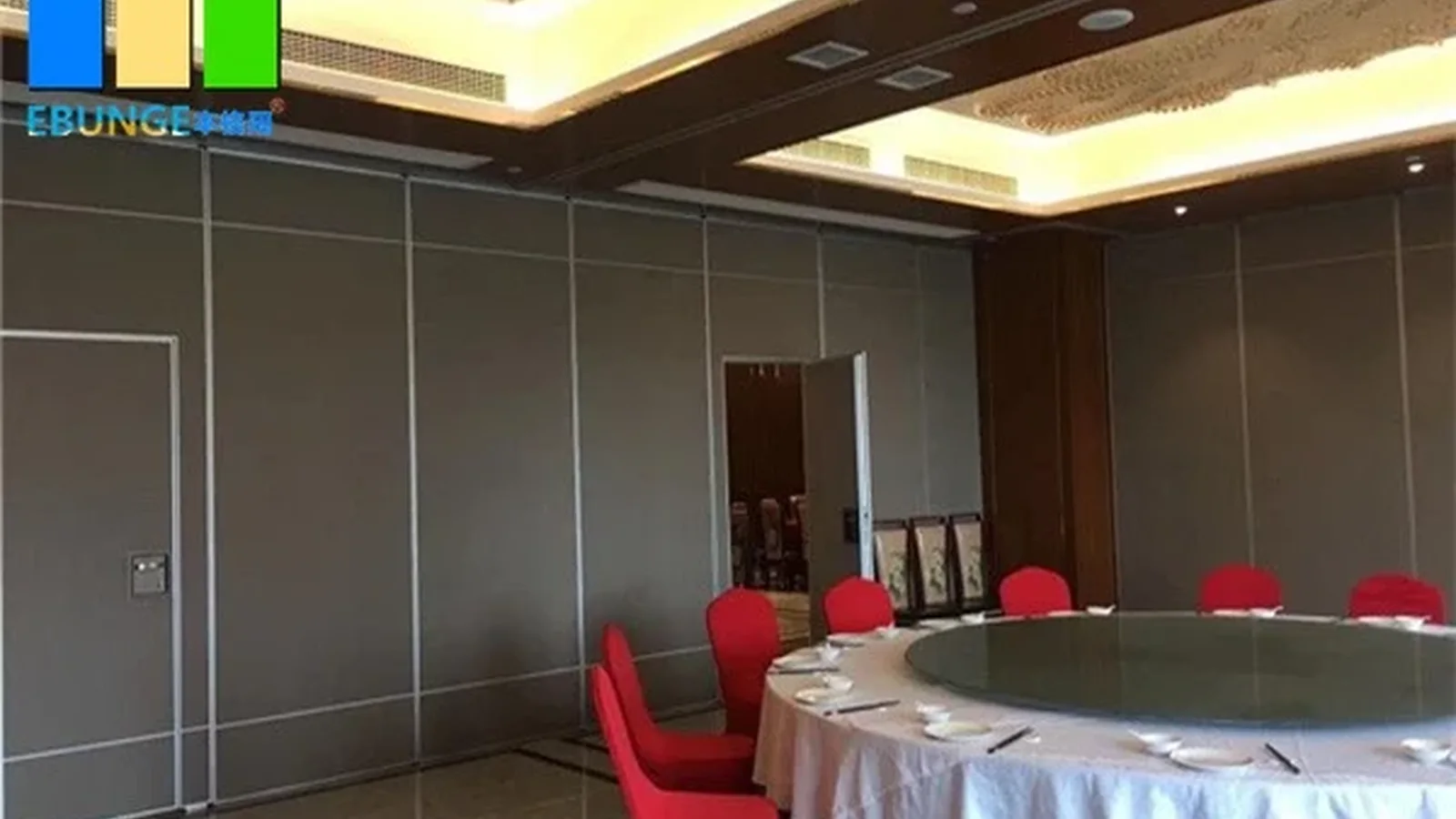
Can finish materials be customized for hotel banquet partition finish service?
Finish materials can be customized, and cleaning and maintenance methods vary with the selected finish. The care approach for hotel banquet partition finish service should match the selected finish.
How is panel parking planned for hotel banquet partition finish service?
Panel parking style can be customized to the customer layout and project requirements, subject to coordinated drawings. A suitable approved parking arrangement can use the stacking area more compactly and coordinate with the space design.
Which hotel spaces can use movable partitions?
Movable partitions can be used wherever flexible space division, combination or reconfiguration is required. Ballrooms, wedding halls and multifunction halls are non-limiting examples of hotel-related projects.
What must be confirmed from coordinated project drawings?
The exact route, junction arrangement, continuous overhead path and parking position must be confirmed from the coordinated project drawings. The exact track, support and panel layout still require project drawings.
Continue Exploring
More Materials and Finishes Guides
- Newer guideOffice Suites Operable Wall Finish: Ceiling Light Fixtures
- Earlier guideAirport Partition Finish: Luggage Cart Impact vs Passenger Traffic
- Related guideWho Verifies Partition Handover Records When Trades Finish at Different
- Related guideMovable Partition Finish Sample Coordination Guide for Interior