
- Community hall partition finishes abrasion is a practical topic for venues that host markets, rehearsals, dinners and performances in the same room.
- Mobile stage platforms add another layer of movement across the same floor.
- The way a partition is supported affects how much of that floor stays intact.
Why the top-hung principle matters for finish wear
Quick project answer
The EBUNGE movable partition system is top-hung. The panels are carried from an overhead structure rather than from a track set into the finished floor. That single decision shapes how the hall floor behaves under daily use.
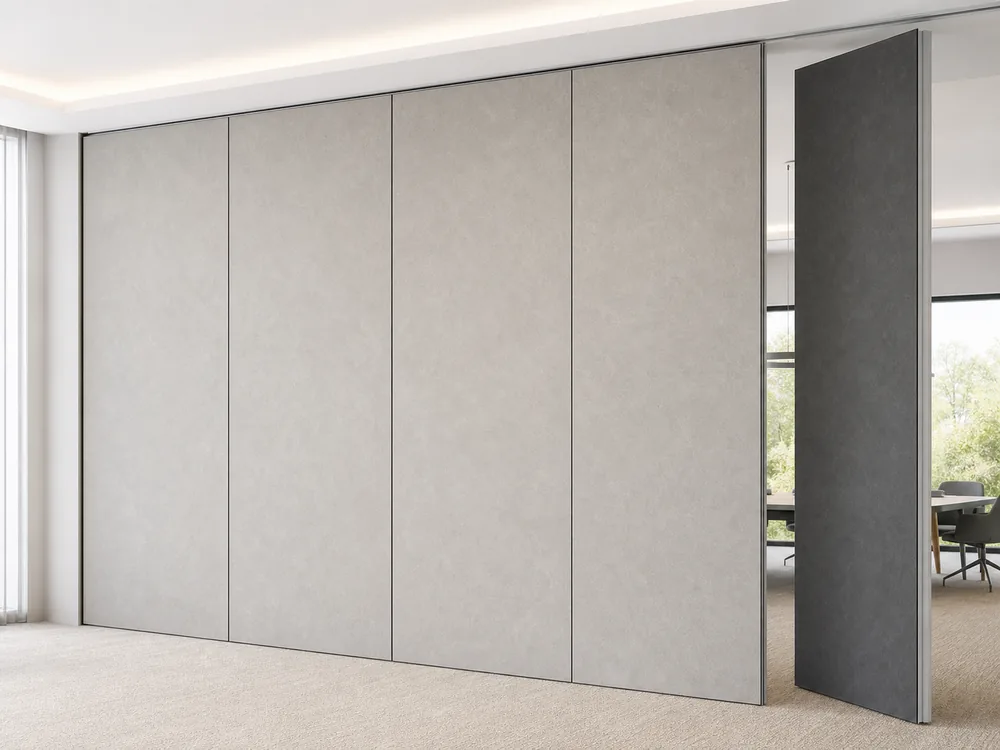
Because there is no continuous floor running track and no operating hardware in the finished floor along the partition line, the floor is not cut or damaged for a floor track. The floor remains physically uninterrupted by the maintained EBUNGE top-hung system.
For community hall partition finishes abrasion, this matters because wear points tend to concentrate where surfaces are interrupted, patched or edged. A continuous floor gives the finish one consistent surface to protect.
Mobile stage platforms are moved across the same floor. Their wheels, feet and handling routines interact with the finish, not with a recessed track. The partition line itself does not add a floor gap for debris or trolley traffic to catch.
What a physically uninterrupted floor means in daily use
The suitability of each route and parking arrangement depends on the approved layout, circulation, ceiling interfaces and operating sequence. Cleaning crews, stage crews and event teams all cross the same area. When the partition line has no floor track, those teams do not need to work around a channel.
Community hall partition finishes abrasion is often reported near edges and transitions. With a top-hung system, the partition line is not one of those transitions. The finish runs continuously beneath the panels.
This does not mean the floor is immune to wear. Mobile stage platforms, tables, chairs and trolleys still contact the surface. The difference is that the partition system does not introduce a cut line of its own.
Finish materials can be customized, and cleaning and maintenance methods vary with the selected finish. The care routine therefore follows the floor specification, not a fixed rule for every hall.
Parking planning and the stacking area
Panel parking style can be customized to the customer layout and project requirements, subject to coordinated drawings. A suitable approved parking arrangement can use the stacking area more compactly and coordinate with the space design.
For halls that also store mobile stage platforms, parking planning is a shared exercise. The stacking area, the stage storage position and the circulation route all compete for the same perimeter. Early coordination keeps those demands visible.
Community hall partition finishes abrasion can be influenced by how often panels and platforms are moved through the same doorway. A parking position that suits the room layout can reduce unnecessary handling distance.
The exact track, support and panel layout still require project drawings. The exact route, junction arrangement, continuous overhead path and parking position must be confirmed from the coordinated project drawings.
Finish and care coordination
Finish selection and care planning belong together. A finish that suits a dining layout may behave differently under stage-platform traffic. The confirmed position is that finish materials can be customized and that care methods vary with the selected finish.
This is why community hall partition finishes abrasion should be discussed with the finish supplier and the partition supplier at the same time. Each party can then state what the surface needs and what the partition system does at floor level.
The top-hung principle removes one common abrasion source: a floor track and its associated hardware. It does not remove the need to plan how mobile equipment crosses the room.
Care instructions should be recorded for the finish actually installed. Because methods vary, a generic cleaning routine is not a substitute for the finish-specific guidance supplied with the selected material.
Non-limiting application examples
Movable partitions can be used wherever flexible space division, combination or reconfiguration is required. Application examples are not limiting, and the same principles apply across many room types.
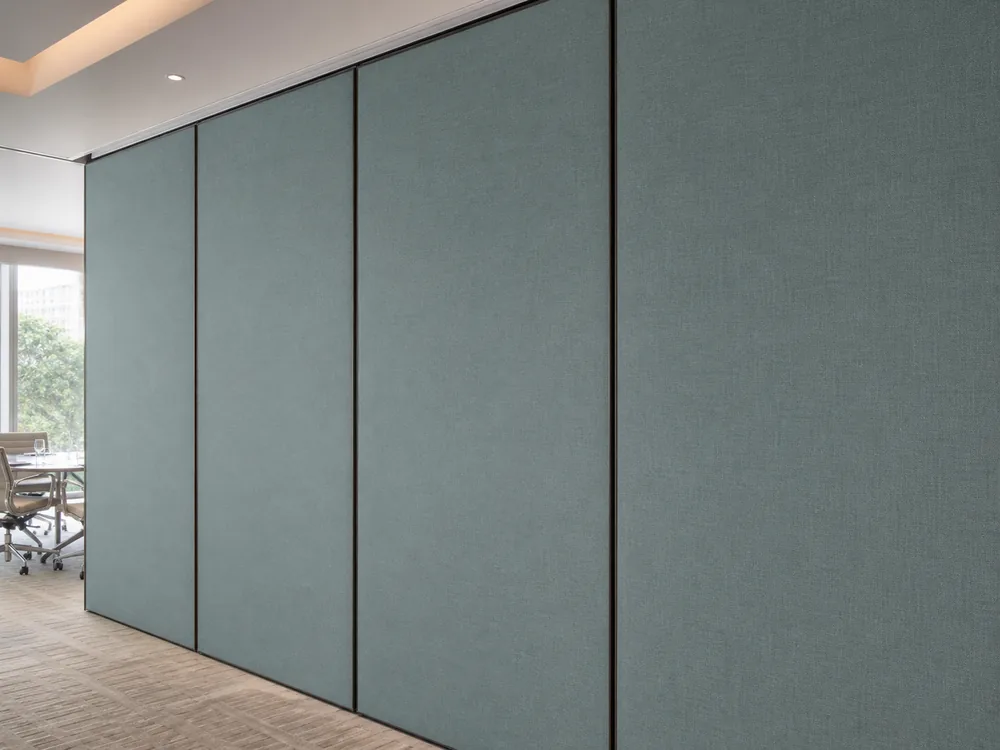
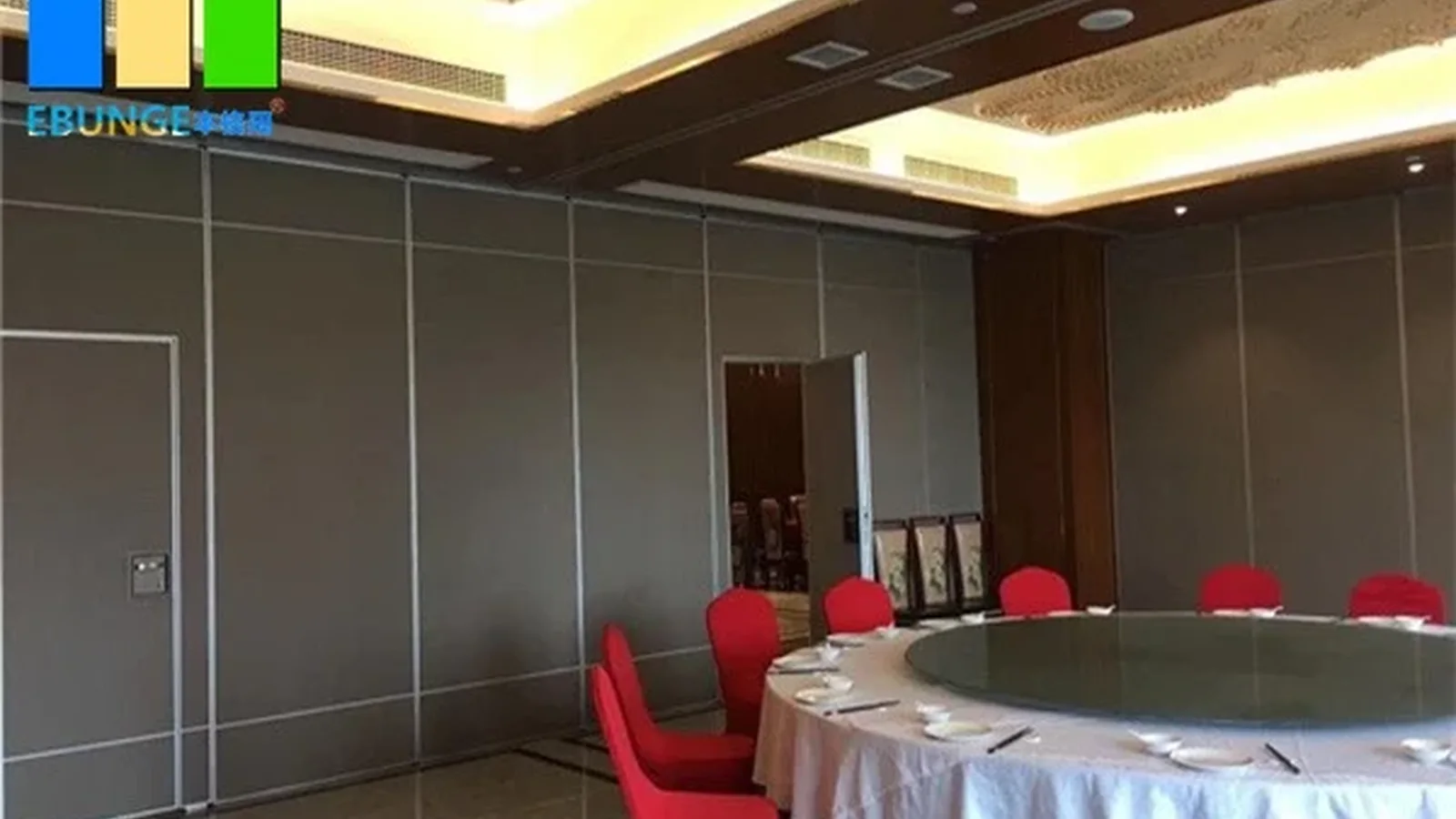
EBUNGE has completed many types of hotel-related movable-partition projects. Ballrooms, wedding halls and multifunction halls are non-limiting examples. No customer names, locations, quantities, ratings, certifications or outcomes may be inferred.
Community halls that host mobile stage platforms follow a similar logic. The room changes use through the day, and the partition supports that change without cutting the floor along its line.
For related background on flexible room division, see movable partition wall information and the projects section.
Buyer inputs before drawings are issued
Useful drawings start with useful inputs. Buyers can gather room dimensions, the intended parking zone, the position of mobile stage platforms when stored, and the finish already specified for the floor.
The partition supplier can then show how the top-hung arrangement relates to that floor.
Panel parking style can be customized to the customer layout and project requirements, subject to coordinated drawings. That flexibility depends on clear inputs rather than assumptions.
The exact track, support and panel layout still require project drawings. The exact route, junction arrangement, continuous overhead path and parking position must be confirmed from the coordinated project drawings.
Drawing approvals and finish sign-off
Approval is a sequence of confirmations. The coordinated drawings confirm the overhead path, the parking position and the relationship between the partition and the room layout.
The finish specification confirms the surface and its care method. Community hall partition finishes abrasion is then managed through the selected finish routine rather than through a universal instruction.
Because the EBUNGE system is top-hung, the finished floor along the partition line is not cut for a floor track. That confirmed point can be checked against the approved drawings before work proceeds.
Mobile stage platforms remain a separate operational item. Their storage and movement should be coordinated with the same drawings so that the stacking area works for both needs.
Frequently asked questions
Does a top-hung partition cut the finished floor?
No. The EBUNGE movable partition system is top-hung and has no continuous floor running track or operating hardware in the finished floor along the partition line. The floor is not cut or damaged for a floor track.
How does this affect community hall partition finishes abrasion?
The partition line does not introduce a floor cut or a recessed channel. Wear from mobile stage platforms and other traffic still depends on the selected finish and its care method.
Can the finish be chosen for the hall?
Finish materials can be customized, and cleaning and maintenance methods vary with the selected finish. The care routine should follow the finish actually installed.
Can panel parking suit a hall that stores stage platforms?
Panel parking style can be customized to the customer layout and project requirements, subject to coordinated drawings. A suitable approved parking arrangement can use the stacking area more compactly and coordinate with the space design.
What must be confirmed from the drawings?
The exact track, support and panel layout still require project drawings. The exact route, junction arrangement, continuous overhead path and parking position must be confirmed from the coordinated project drawings.
Where can movable partitions be used?
Movable partitions can be used wherever flexible space division, combination or reconfiguration is required. Application examples are not limiting.
Continue Exploring
More Materials and Finishes Guides
- Newer guideComparing Auditorium Partition Finishes: Chalk Dust vs Marker Ink
- Earlier guideCompare Restaurant Partition Finishes: Grease vs Abrasion Surfaces
- Related guideWho Verifies Partition Handover Records When Trades Finish at Different
- Related guideMovable Partition Finish Sample Coordination Guide for Interior