
Why Pre-Installation Checks Matter for Convention Hall Partition Track
Quick project answer
Convention halls host events that change in size and layout from one day to the next. A movable partition system supports that flexibility when the overhead track and parking area are planned before any partition installation begins. The EBUNGE movable partition system is top-hung, so the finished floor along the partition line remains physically uninterrupted.
This article covers pre-installation checks for rigging points that carry the top-hung track. It focuses on the top-hung principle, floor continuity, parking planning, finish coordination, non-limiting applications, buyer inputs and drawing approvals. For engineering details outside confirmed facts, use this boundary: The exact route, junction arrangement, continuous overhead path and parking position must be confirmed from the coordinated project drawings.

The Top-Hung Principle and What It Means for the Floor
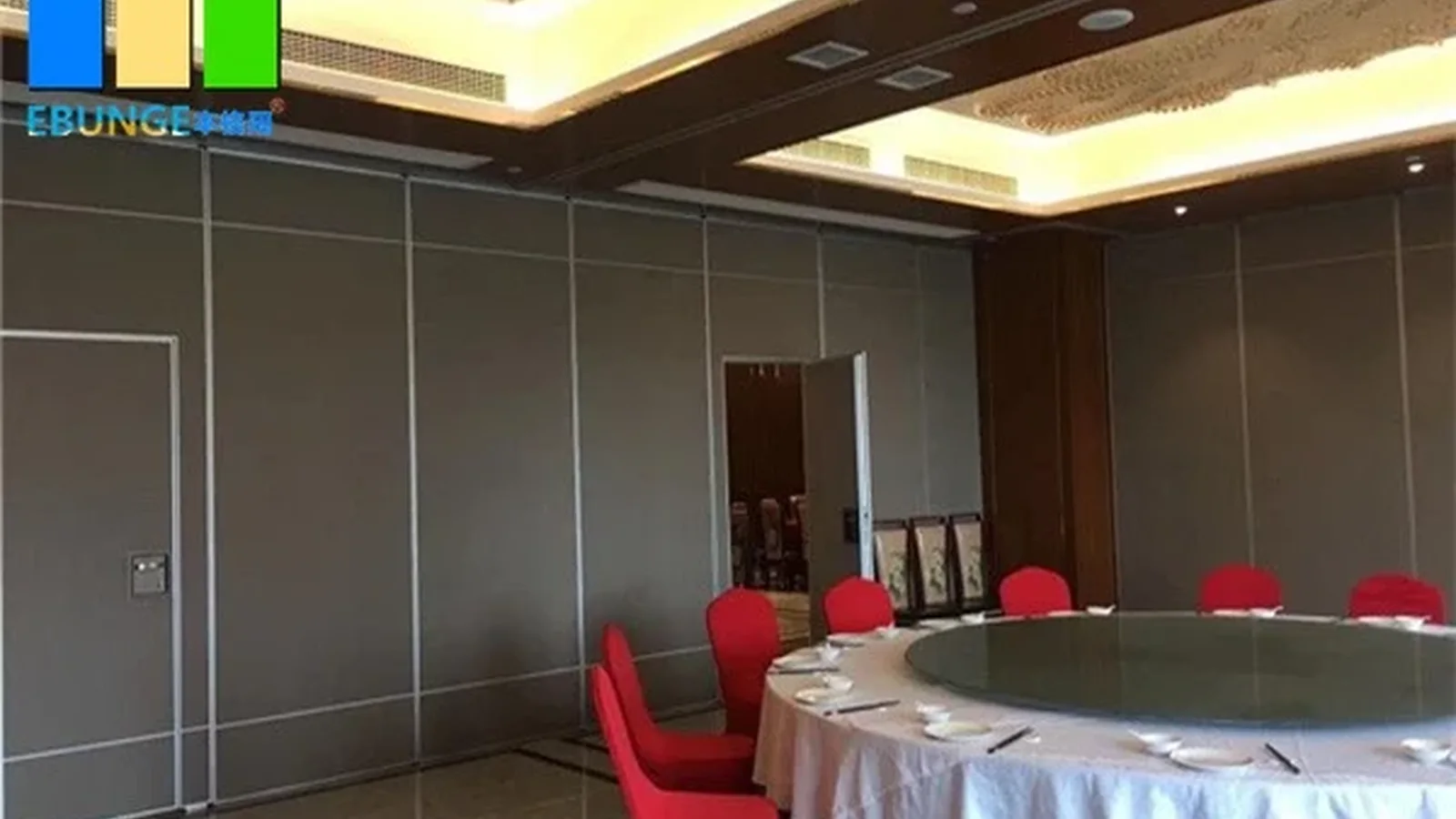
In a top-hung system, the panels hang from an overhead track. The EBUNGE movable partition system is top-hung and has no continuous floor running track or operating hardware in the finished floor along the partition line. That single fact changes how a convention hall floor is treated during partition installation planning.
Because there is no floor track, the floor is not cut or damaged for a floor track. The floor remains physically uninterrupted by the maintained EBUNGE top-hung system. This matters in halls where the floor finish is part of the event experience and where cutting would create a permanent change to the room.
Rigging points therefore relate to the overhead path, not to the floor. The exact route, junction arrangement, continuous overhead path and parking position must be confirmed from the coordinated project drawings. Pre-installation checks should confirm that the overhead path is coordinated before partition installation proceeds.
Pre-Installation Checks for Rigging Points
Rigging point checks are a drawing and coordination exercise before partition installation. They confirm that the overhead path, support locations and parking position are aligned with the hall layout and the coordinated project drawings. The checks below are planning prompts, not a universal installation sequence.
- Confirm the overhead path against the coordinated project drawings.
- Confirm the parking position and stacking area with the project layout.
- Confirm that the finished floor along the partition line remains uninterrupted.
- Confirm that finish selections and care methods are recorded for the chosen materials.
- Confirm that the exact route, junction arrangement, continuous overhead path and parking position are approved before partition installation.
Each item depends on project-specific drawings. The exact route, junction arrangement, continuous overhead path and parking position must be confirmed from the coordinated project drawings.
Parking Planning and Stacking Area Coordination
Panel parking style can be customized to the customer layout and project requirements, subject to coordinated drawings. A suitable approved parking arrangement can use the stacking area more compactly and coordinate with the space design. This is a planning decision that affects how the hall is used between events.
Parking planning should be reviewed alongside the overhead path. The exact track, support and panel layout still require project drawings. A suitable approved parking arrangement can use the stacking area more compactly and coordinate with the space design, but the final arrangement depends on the coordinated drawings.
For convention halls, parking may sit near a service area or along a wall, depending on the layout. The exact route, junction arrangement, continuous overhead path and parking position must be confirmed from the coordinated project drawings.
Finish Selection and Care Coordination
Finish materials can be customized, and cleaning and maintenance methods vary with the selected finish. This means finish choices should be recorded during pre-installation planning so that care expectations are clear before partition installation. Different finishes call for different care methods.
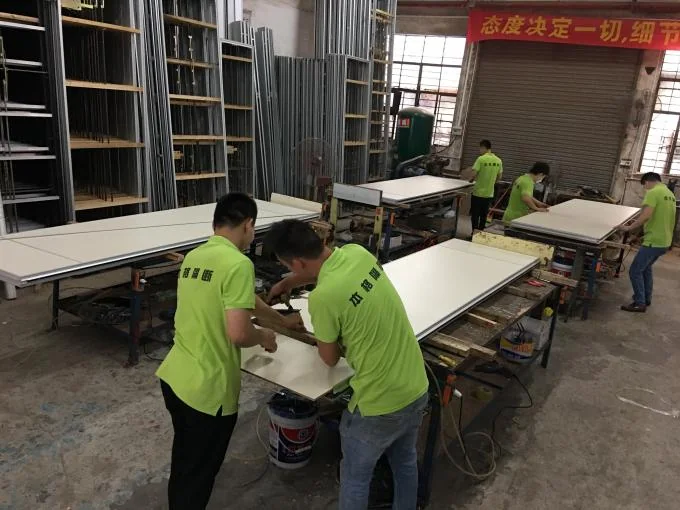
Finish coordination is not a performance claim. It is a practical record of what was selected and how it should be cared for. The exact route, junction arrangement, continuous overhead path and parking position must be confirmed from the coordinated project drawings.
Non-Limiting Applications for Movable Partitions
Movable partitions can be used wherever flexible space division, combination or reconfiguration is required. Application examples are not limiting. EBUNGE has completed many types of hotel-related movable-partition projects; ballrooms, wedding halls and multifunction halls are non-limiting examples.
No customer names, locations, quantities, ratings, certifications or outcomes may be inferred from those examples. The point is that the top-hung principle and the uninterrupted floor apply across many room types, not that any specific project result is promised.
For any application, the exact route, junction arrangement, continuous overhead path and parking position must be confirmed from the coordinated project drawings.
Buyer Inputs and Drawing Approvals
Buyers can prepare for partition installation by gathering layout information, parking preferences and finish selections. These inputs feed into the coordinated drawings that guide the overhead path and parking position. The exact track, support and panel layout still require project drawings.
Drawing approvals should confirm the overhead path, parking position and floor continuity before any partition installation work is scheduled. The exact route, junction arrangement, continuous overhead path and parking position must be confirmed from the coordinated project drawings.
Review the movable partition wall overview and the projects page for general context before finalizing inputs.
Frequently Asked Questions
Does a top-hung partition require a floor track?
No. The EBUNGE movable partition system is top-hung and has no continuous floor running track or operating hardware in the finished floor along the partition line. The floor is not cut or damaged for a floor track.
What should be checked before partition installation?
Pre-installation checks should confirm the overhead path, parking position and floor continuity against the coordinated project drawings. The exact route, junction arrangement, continuous overhead path and parking position must be confirmed from the coordinated project drawings.
Can panel parking be customized?
Panel parking style can be customized to the customer layout and project requirements, subject to coordinated drawings. A suitable approved parking arrangement can use the stacking area more compactly and coordinate with the space design.
Can finish materials be customized?
Finish materials can be customized, and cleaning and maintenance methods vary with the selected finish. Finish selections should be recorded during planning so care methods match the chosen materials.
Where can movable partitions be used?
Movable partitions can be used wherever flexible space division, combination or reconfiguration is required. Application examples are not limiting. EBUNGE has completed many types of hotel-related movable-partition projects; ballrooms, wedding halls and multifunction halls are non-limiting examples.
What must be confirmed from project drawings?
The exact route, junction arrangement, continuous overhead path and parking position must be confirmed from the coordinated project drawings. The exact track, support and panel layout still require project drawings.
Continue Exploring
More Installation and Maintenance Guides
- Newer guidePre-Installation Checks for University Auditorium Partition Track
- Earlier guideDrawings for Community Hall Partition Track and Stage Lighting Controls
- Related guideMovable Partition Handover File Overlapping Trades
- Related guidePhasing Movable Partition Work When Renovation Zones Hand Over Out