
When planning an acoustic movable partition for a school auditorium, the stage pocket is often the most demanding area. It is where the partition disappears when not in use, and it is also where the sealing system must work flawlessly to deliver the acoustic performance the space requires. This is why pre installation checks school auditorium partition seals must be thorough and systematic. Before any panel is delivered, the project team should review the layout, the track system, the pocket dimensions, and the interface between the partition and the surrounding structure. In this article, we outline the essential checks that can help avoid costly rework and ensure that the partition performs as intended.

Understanding the Role of Stage Pockets in Acoustic Partitioning
A stage pocket is a recess in the wall or floor where the movable partition stacks when not in use. For school auditoriums, this is a common configuration because it allows the space to be opened up fully. The pocket must be designed to accommodate the stacked panels and the operating hardware, and it must also allow the partition to be sealed effectively when extended. The seals at the stage pocket are critical because they must close the gap between the partition and the pocket opening, preventing sound leakage.
In the context of acoustic performance, the seal is not just a physical barrier; it is part of the overall system that includes the panel construction, the perimeter seals, and the interfaces. The effectiveness of the seal depends on proper alignment, consistent compression, and the absence of gaps. Therefore, pre-installation checks must focus on the pocket’s dimensions, surface finish, and the integration of the seal system.
Layout Review: The Foundation of Seal Performance
The first step in pre-installation checks is a thorough review of the layout. The movable partition’s route—whether straight, turning, or stacking—must be clearly defined. For a stage pocket, the stacking route is particularly important because the panels must park neatly within the pocket. If the layout is not precise, the panels may not align correctly, leading to gaps that compromise the seal.
Straight vs. Turning Routes
In a straight route, the partition moves in a linear path into the pocket. This is the simplest configuration, but it still requires careful alignment. In a turning route, the partition must navigate a curve, which can affect the sealing at the pocket due to the additional forces and clearances involved. The layout review should confirm that the turning radius is adequate and that the panels can be properly sealed when extended.
Share the track plan, ceiling plan and fixed-service locations.
Stacking Position and Pocket Depth
The stacking position must be precisely planned. The pocket depth must be sufficient to accommodate all panels without interference. If the pocket is too shallow, the panels may protrude, affecting the seal. Conversely, if it is too deep, the panels may not be fully supported, leading to sagging and misalignment. The pre-installation check should verify the pocket dimensions against the panel stack dimensions.
Track System: The Backbone of Movement and Sealing
The top track is the main support for the movable partition. For a stage pocket, the track must extend into the pocket to guide the panels during stacking. The track alignment is crucial for the seal: if the track is not level or is not aligned with the pocket opening, the panels will not be square, and the seals will not compress evenly.
Track Alignment and Levelness
Check that the track is level along its entire length. Even a slight deviation can cause the panels to tilt, affecting the vertical seals. Use a laser level to verify alignment. Also, ensure that the track is securely fixed to the structure, as any movement during operation can lead to seal failure.
No Floor Track: The EBUNGE Advantage
EBUNGE movable partitions are suspended from a top track and cross the opening without a floor track. This design eliminates the need for a floor guide, simplifying the floor finish and reducing trip hazards. However, it also means that the bottom seal must be carefully designed to close the gap between the panel and the floor. Pre-installation checks should confirm that the floor is level and that the bottom seal can accommodate any irregularities.
Stage Pocket Dimensions and Surface Quality
The stage pocket must be built to precise tolerances. The width, height, and depth of the pocket must match the design drawings. Any deviation can affect the stacking and the seal. The surfaces inside the pocket should be smooth and free of protrusions that could damage the panels or the seals.
Pocket Width and Height
The width of the pocket must be sufficient to allow the panels to stack without friction. If the pocket is too narrow, the panels may scrape against the walls, causing damage to the seals. The height of the pocket must be at least the height of the panels, plus allowance for the track and any seals. Verify these dimensions before installation.
Surface Finish and Tolerances
The interior surfaces of the pocket should be finished with a material that is durable and easy to clean. Rough surfaces can abrade the seals over time, leading to premature wear. The edges of the pocket opening should be rounded or chamfered to prevent damage to the seals when the partition is extended and retracted.
Seal Integration: Designing for Acoustic Performance
The seals at the stage pocket are a critical component of the acoustic performance. They must be designed to close the gaps between the partition and the surrounding structure. The type of seal and its placement should be specified in the design, and pre-installation checks should confirm that the seal system is compatible with the partition and the pocket.
Perimeter Seals and Compression
Perimeter seals are typically installed on the edges of the partition panels. When the partition is extended, these seals compress against the floor, ceiling, and walls. At the stage pocket, the vertical seal on the leading edge of the partition must compress against the pocket frame. The compression should be consistent along the entire height. Pre-installation checks should verify the alignment of the pocket frame and the partition to ensure even compression.

Bottom Seal and Floor Interface
The bottom seal is particularly important for a floor-trackless system. It must be able to accommodate minor floor irregularities while maintaining an acoustic seal. The seal should be adjustable to allow for fine-tuning after installation. Pre-installation checks should ensure that the floor is level and that the seal can be adjusted to achieve the required compression.
Check the route, supports and clearances on coordinated drawings.
Pass-Door Requirements and Their Impact on Seals
Many school auditoriums require a pass-door in the movable partition for easy access when the partition is closed. The pass-door introduces additional sealing challenges, as the door must be sealed around its perimeter. Pre-installation checks should confirm the location and size of the pass-door, and that the door frame is square and properly reinforced.
Door Frame Alignment
The door frame must be installed plumb and square to ensure that the door seals correctly. Any misalignment will cause gaps that compromise acoustic performance. The pre-installation check should include a measurement of the door frame diagonals to ensure squareness.
Seal Compatibility with Pass-Door
The seals around the pass-door should be compatible with the main partition seals. They should be able to withstand repeated opening and closing. The pre-installation check should verify that the seals are correctly sized and that the door can be closed without excessive force.
Acoustic Concepts: Understanding STC and Rw
When discussing acoustic performance, terms like STC (Sound Transmission Class) and Rw (Weighted Sound Reduction Index) are often used. These are ratings that indicate how well a partition reduces sound transmission. However, it is important to understand that these ratings are not simply a fixed number of decibels. They are derived from a series of measurements across different frequencies and are influenced by the entire partition system, including the seals. A high STC/Rw rating requires that all components work together seamlessly. Pre-installation checks are essential to ensure that the seal system is properly designed and installed to achieve the desired acoustic performance.
Project Documentation: The Blueprint for Installation
Comprehensive project documentation is essential for a successful installation. This includes detailed drawings, specifications, and installation instructions. The pre-installation check should review all documentation to ensure that it is complete and accurate. Any discrepancies should be resolved before installation begins.
Reviewing Drawings and Specifications
Check that the drawings clearly show the layout, track, and pocket details. The specifications should describe the materials and performance requirements. Verify that the seals are specified correctly and that they meet the project’s acoustic requirements.
Coordination with Other Trades
The installation of a movable partition often involves coordination with other trades, such as electrical, mechanical, and structural. For example, the track may need to be integrated with the ceiling structure, and the pocket may need to be coordinated with the stage lighting. Pre-installation checks should include a review of these interfaces to avoid conflicts.
FAQ
What is a stage pocket in a movable partition system?
A stage pocket is a recess in the wall or floor where the movable partition stacks when not in use. It allows the partition to be hidden, creating an open space when needed.
Why are pre-installation checks important for acoustic seals?
Pre-installation checks ensure that the partition and its seals will fit and function correctly. They help identify potential issues that could compromise acoustic performance, such as misalignment or inadequate pocket dimensions.
How does the absence of a floor track affect the bottom seal?
Without a floor track, the bottom seal must close the gap between the panel and the floor. The seal must be adjustable to accommodate floor irregularities and maintain an acoustic seal.
What is the difference between STC and Rw?
STC (Sound Transmission Class) is a US rating, while Rw (Weighted Sound Reduction Index) is a European rating. Both measure the sound insulation of a partition, but they use different frequency weightings and test procedures.
Can a pass-door be integrated into an acoustic movable partition?
Yes, a pass-door can be integrated, but it requires careful sealing around the door perimeter. Pre-installation checks should ensure the door frame is properly aligned and the seals are compatible.
Conclusion
Pre-installation checks for school auditorium partition seals at stage pockets are essential to ensure the acoustic performance and functionality of the movable partition. By reviewing the layout, track system, pocket dimensions, seal integration, pass-door requirements, and project documentation, you can identify and address potential issues before installation. This proactive approach helps avoid costly rework and ensures that the partition meets the project’s requirements.
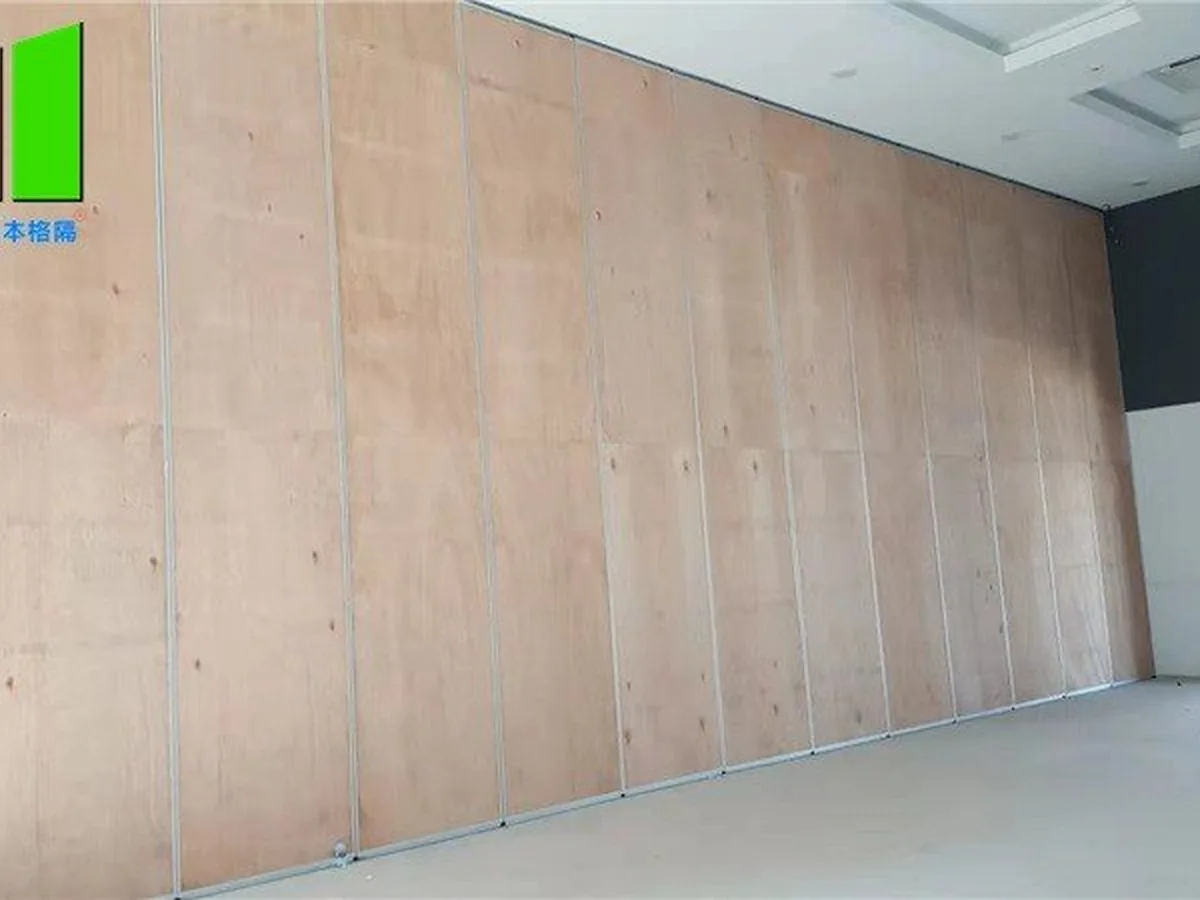
For more information on acoustic movable partitions and to discuss your project’s specific needs, please contact us. Our team is ready to assist with project documentation, layout reviews, and seal design considerations. Explore our acoustic movable partition solutions and see how we can help create flexible, high-performance spaces. For examples of our work, visit our projects page.
Continue Exploring
More Installation and Maintenance Guides
- Newer guideWhat Pre-Installation Checks Matter for Airport Holdroom Partition Stacking with Gate Signs
- Earlier guideWhat Pre-Installation Checks Matter for University Auditorium Partition Track with Ceiling-Mounted Speaker Clusters
- Related guideWhat Pre-Installation Checks Matter for Healthcare Training Room Partition Track at Ceiling-Mounted IV Pump Hooks
- Related guideWhat Pre-Installation Checks Apply to University Lecture Hall Partition Stacking at Ceiling-Mounted Speaker Baffle Zones