
Why Finishes and Digital Directories Must Be Planned Together
In modern convention centers, movable partition walls are not just space dividers; they are integral to the building’s functionality and aesthetics. When planning a flexible event space, convention center partition finishes coordination with wall-mounted digital directories is a critical step that project teams often overlook. The finish of a movable partition—whether laminate, fabric, leather, or glass—must harmonize with the digital screens that guide attendees to sessions, exhibitors, and amenities. Without early coordination, you risk visual clashes, technical conflicts, and operational inefficiencies.
This article provides an evidence-bounded framework for architects, interior designers, and facility owners to navigate this coordination. We will explore how EBUNGE movable partitions, which are top-hung and clear-floor, interact with digital directories, and why project-specific review is essential. By the end, you will understand the questions to ask and the documentation to request, ensuring your next convention center project is both beautiful and functional.
Understanding EBUNGE Movable Partition Systems
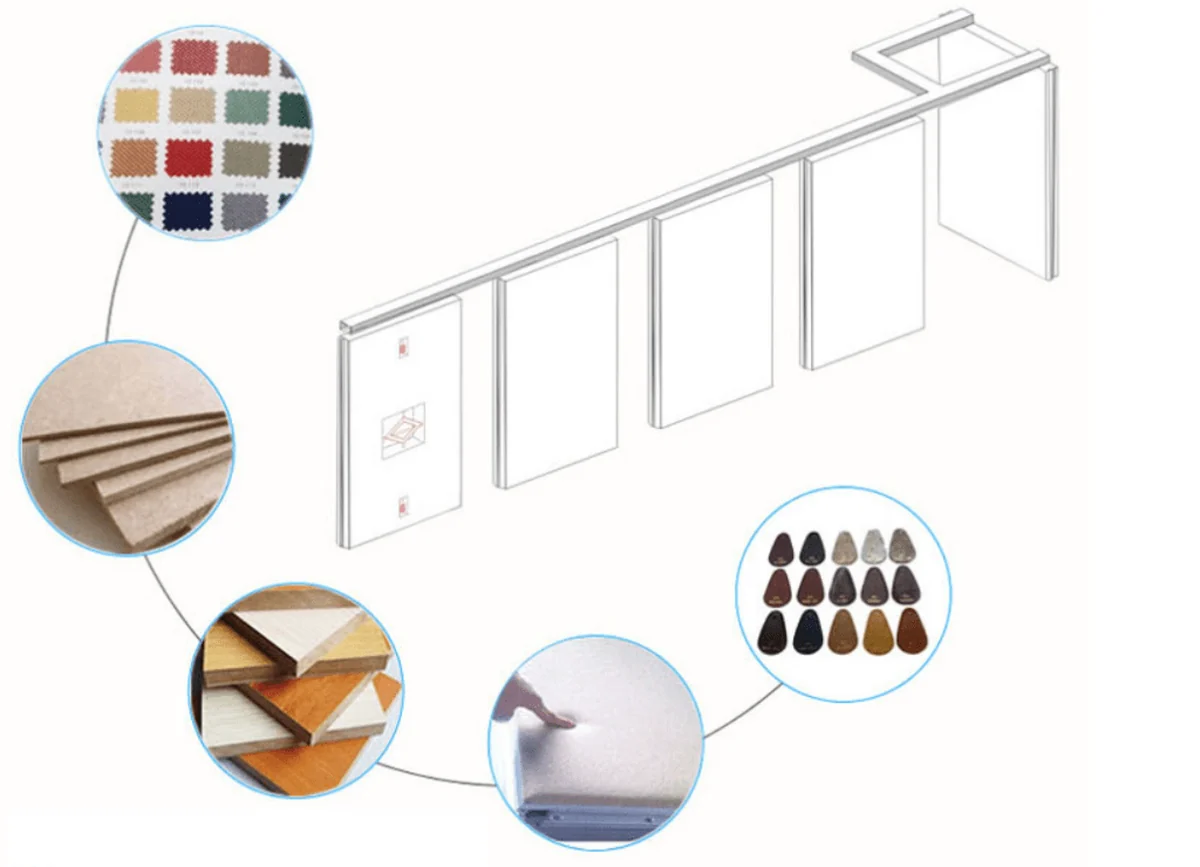
EBUNGE movable partition panels are individually movable and suspended from a top track. They cross the opening without a floor track, leaving the floor clear and unobstructed—a key advantage for convention centers where flexible layouts and clean sightlines are paramount. Panels park at a planned stacking position, customized to the customer’s layout and project requirements. This design allows for compact stacking when the coordinated design permits it, maximizing usable space.

However, the system’s performance depends on careful planning. Every proposed movement path requires a continuous connected overhead route and project-specific support review. Straight, turning, and stacking routes must be reviewed from the layout to ensure the panels can move smoothly and park efficiently. This is where coordination with wall-mounted digital directories becomes crucial: the placement of directories must not interfere with the partition’s travel path or stacking area.
Top-Hung, Clear-Floor Advantages
The absence of a floor track means no floor hardware along the partition line, which simplifies cleaning and reduces trip hazards. The suitability of each route and parking arrangement depends on the approved layout, circulation, ceiling interfaces and operating sequence. For convention centers that host a variety of events, this flexibility is invaluable.
Customized Parking and Stacking
Parking style is customized to the customer layout and project requirements. The exact route, junction arrangement, continuous overhead path and parking position must be confirmed from the coordinated project drawings. But this customization must account for digital directories mounted on adjacent walls. If a directory is placed in a stacking zone, it could obstruct the panels or be damaged during operation.
The Role of Wall-Mounted Digital Directories in Modern Venues
Share the opening dimensions, room layout and intended operating sequence for review.
Wall-mounted digital directories are ubiquitous in convention centers. They provide real-time wayfinding, event schedules, and advertising. Their placement is often determined by foot traffic patterns and visibility. However, when movable partitions are present, these directories must be positioned to avoid conflicts with partition movement and to maintain a cohesive visual environment.
If mounted on a partition, the finish must accommodate the screen’s weight and electrical requirements. If mounted on a fixed wall, the partition’s stacking area must be clear of such obstructions.
Visual and Functional Integration
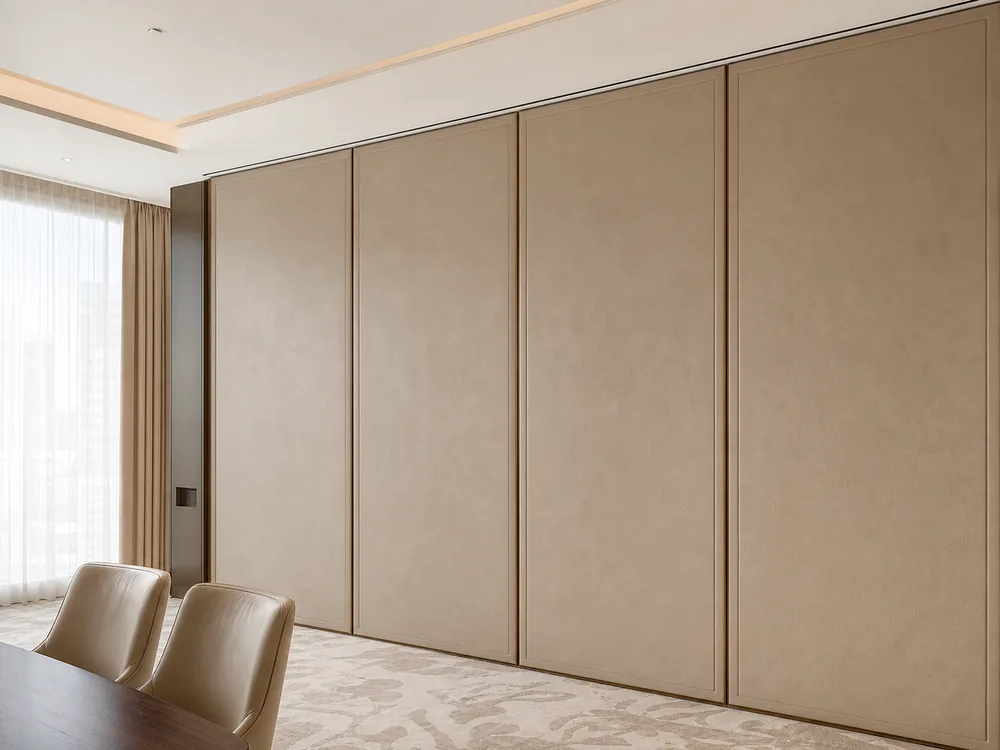
The finish of the partition should complement the digital directory’s bezel and mounting hardware. Visible references can support layout discussion but do not verify hidden construction or performance. The goal is to create a seamless look where the directory appears integrated, not an afterthought.
Electrical and Data Considerations
Digital directories require power and data connections. If they are to be mounted on a movable partition, the partition must have provisions for routing cables, which may affect the panel’s construction and finish. This is a project-specific engineering consideration that requires coordination between the partition supplier, electrical engineer, and technology consultant.
Coordination Challenges and Solutions
Coordination between partition finishes and digital directories involves multiple stakeholders: the architect, interior designer, partition manufacturer, technology integrator, and facility manager. Each has different priorities, and without a structured process, conflicts arise.
Layout and Route Planning
The first step is to review the layout and determine the partition’s travel routes and stacking positions. This should be done early in the design phase. EBUNGE’s project documentation can help, but it must be supplemented with the digital directory layout. Identify all wall-mounted directories and assess whether they fall within the partition’s movement envelope or stacking zone. If they do, you may need to relocate them or adjust the partition’s parking configuration.
Finish Selection and Screen Mounting
Once the layout is set, choose the partition finish. Consider the visual impact of the directory against the finish. For instance, a dark leather finish might make a black-bezel screen disappear, while a light laminate might create contrast. Also, consider the screen’s mounting method. Some finishes, like glass, may require special mounting brackets that penetrate the surface, potentially compromising the finish’s integrity.
Acoustic and Fire Performance
Adding a digital directory to a partition can create penetrations that affect these properties.
Best Practices for Project Documentation and Review
To ensure successful coordination, adopt a documentation-first approach. Request and review all relevant project documents, including partition layout drawings, track route plans, stacking details, and finish specifications. Cross-reference these with the digital directory installation drawings.
Early Engagement with Suppliers
Involve the partition manufacturer and technology integrator early in the design process. Share your digital directory layout and ask for their input on potential conflicts. EBUNGE’s team can review your layout and provide guidance on route planning, but they must have accurate information about directory placements.
Use of BIM and 3D Modeling
Building Information Modeling (BIM) can be a powerful tool for coordination. Create a 3D model that includes the partition system, its travel paths, and the digital directories. Ensure that all parties have access to the model and that it is updated as changes occur.
On-Site Verification
Even with thorough planning, on-site verification is crucial. Before installing the digital directories, confirm that the partition operates correctly and that there are no obstructions. This may involve a mock-up or a full-scale test of the partition movement with the directories in place.
Finish Options and Their Implications
EBUNGE offers a range of finishes, including laminate, melamine, fabric, leather, glass, and other approved surfaces. Each finish has unique characteristics that affect its suitability for spaces with digital directories.
Laminate and Melamine
Laminate and melamine finishes are durable and easy to clean, making them popular for high-traffic areas. They can be matched to the digital directory’s color scheme, creating a cohesive look.
Fabric Finishes
Review the ceiling interface, panel route and stacking position together.
However, fabric can be more challenging to clean and may not be suitable for mounting heavy digital directories. If you must mount a directory on a fabric panel, you may need to reinforce the area or use a different finish for that specific panel.
Leather and Glass
Leather finishes exude luxury and are often used in high-end venues. They are durable and can be cleaned with appropriate products. Glass finishes are sleek and modern, allowing for creative branding or transparency. The exact overhead route and support arrangement must be confirmed by the responsible project team from coordinated drawings. For glass, you might consider using a through-glass mounting system that sandwiches the glass, but this requires precise engineering.
Acoustic Considerations in Coordination
When you add digital directories, you must consider how they affect sound insulation.
To mitigate this, work with your partition supplier to specify sealing systems around any penetrations. If the directory is mounted on a fixed wall adjacent to the partition, ensure that the partition’s edge seals are not compromised.
FAQ: Convention Center Partition Finishes and Digital Directories
What project information is required for convention center partition finishes coordination?
You need detailed layout drawings showing the partition’s travel routes and stacking positions, as well as the locations of all wall-mounted digital directories. Also, provide specifications for the digital directories, including their size, weight, and mounting requirements. This information allows the partition manufacturer to assess potential conflicts and recommend solutions.
Can digital directories be mounted directly on EBUNGE movable partitions?
You must consult with EBUNGE to confirm whether a specific finish can support the weight and mounting method of a digital directory.
How do partition finishes affect the placement of digital directories?
The finish can influence the visual integration and the mounting method. For example, a fabric finish may not be suitable for direct mounting, while a laminate or glass finish might offer a cleaner surface. The finish also affects the overall aesthetic, so choose a finish that complements the directory’s design.
What are the main coordination challenges when integrating digital directories with movable partitions?
These require early collaboration among all stakeholders and thorough documentation.
Do I need to provide special documentation for a project with digital directories and movable partitions?
Yes, you should provide a complete set of drawings that include the partition system layout, the digital directory locations, and any electrical or data plans. EBUNGE can review these documents to ensure compatibility, but you must also coordinate with your technology integrator and electrical engineer.
Can EBUNGE help with the coordination process?
EBUNGE can review your layout and provide guidance on partition routes, stacking, and finish options. They can also discuss project-specific requirements, but they cannot make unsupported claims about performance or compatibility.
Conclusion: A Coordinated Approach for Seamless Spaces
Convention center partition finishes coordination with wall-mounted digital directories is not an afterthought—it is a fundamental design consideration. By engaging all stakeholders early, reviewing project documentation, and choosing finishes that integrate with technology, you can create flexible spaces that are both functional and visually appealing. EBUNGE movable partitions offer a clear-floor, top-hung solution that adapts to your layout, but success depends on meticulous planning and open communication.
If you are planning a convention center or any flexible space, contact EBUNGE to discuss your project. Our team can review your layout, advise on finish options, and help you coordinate with digital directory installations. Visit our movable partition wall page for more information, or explore our projects to see how we have helped others. Remember, every project is unique, and we are here to ensure your space works seamlessly.
Continue Exploring
More Materials and Finishes Guides
- Newer guideHow to Compare Training Center Partition Finishes for Wall-Mounted Projection Screen Glare vs Ambient Light
- Earlier guideHow to Compare Airport Holdroom Partition Finishes for Wayfinding Glare vs Daylight
- Related guideComparing Healthcare Training Room Partition Finishes for Wall-Mounted Whiteboard vs Tackable Zones
- Related guideWhy Sports Hall Partition Finishes Need Abrasion Mapping for Wall-Mounted Hurdle Storage Racks