
When planning a hospital education room partition maintenance checklist nurse call coordination, project teams must understand that movable wall systems are engineered for flexibility, but their long-term performance depends on routine inspection and proper documentation. Visible references can support layout discussion but do not verify hidden construction or performance. The suitability of each route and parking arrangement depends on the approved layout, circulation, ceiling interfaces and operating sequence.
Understanding Movable Partitions in Hospital Education Rooms
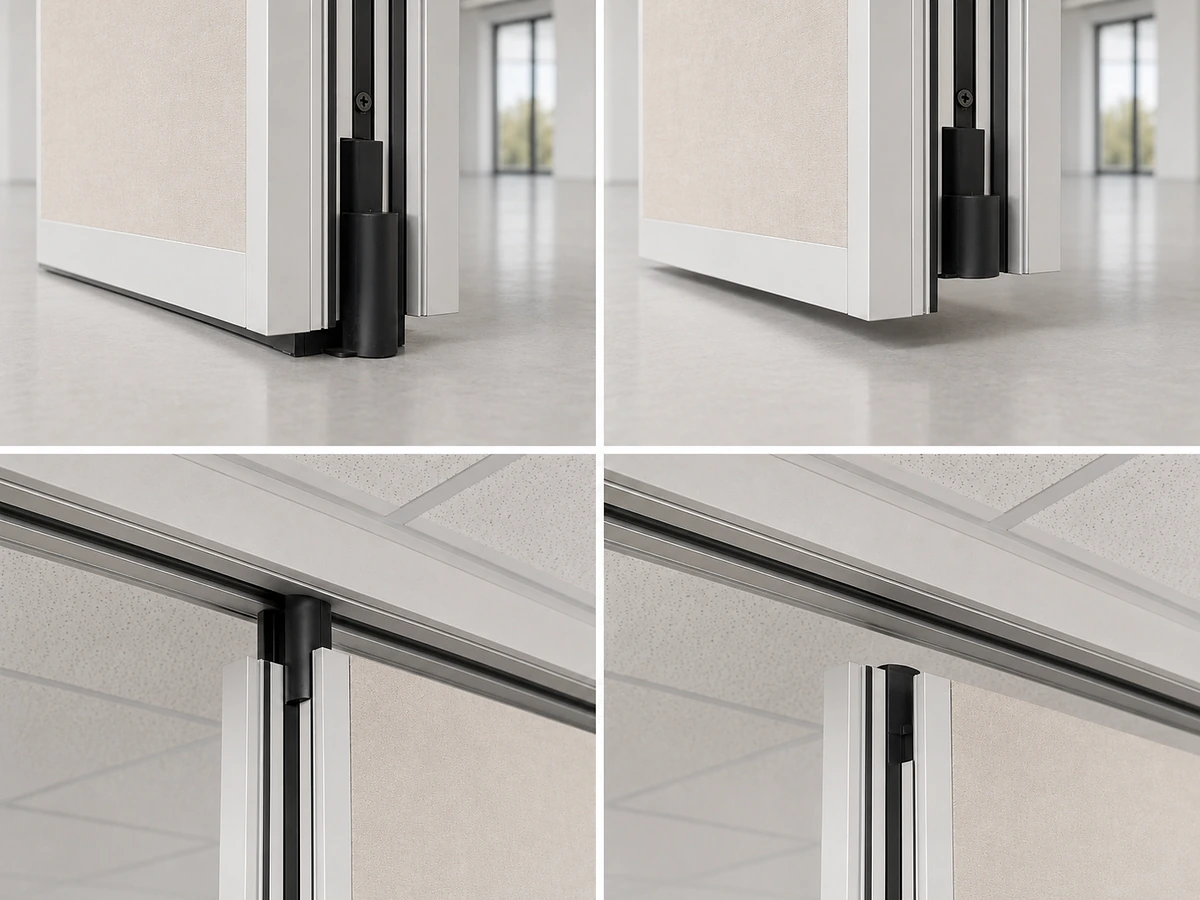
Hospital education rooms often serve multiple functions: training sessions, staff meetings, patient education classes, and sometimes temporary clinical demonstrations. Panel handling and the operating sequence must be confirmed for the selected layout and project conditions. EBUNGE movable wall panels are individually movable and suspended from a top track. They cross the opening without a floor track, which means the floor remains clear and easy to clean—a critical factor in healthcare environments.
However, the absence of a floor track places greater importance on the overhead track and the sealing system at the panel edges and bottom. In rooms with wall-mounted nurse call stations, the partition may need to interface with walls that contain communication devices, electrical outlets, or data ports. This creates specific inspection points that are not typical in standard office partitions.
Why a Maintenance Inspection Checklist Matters
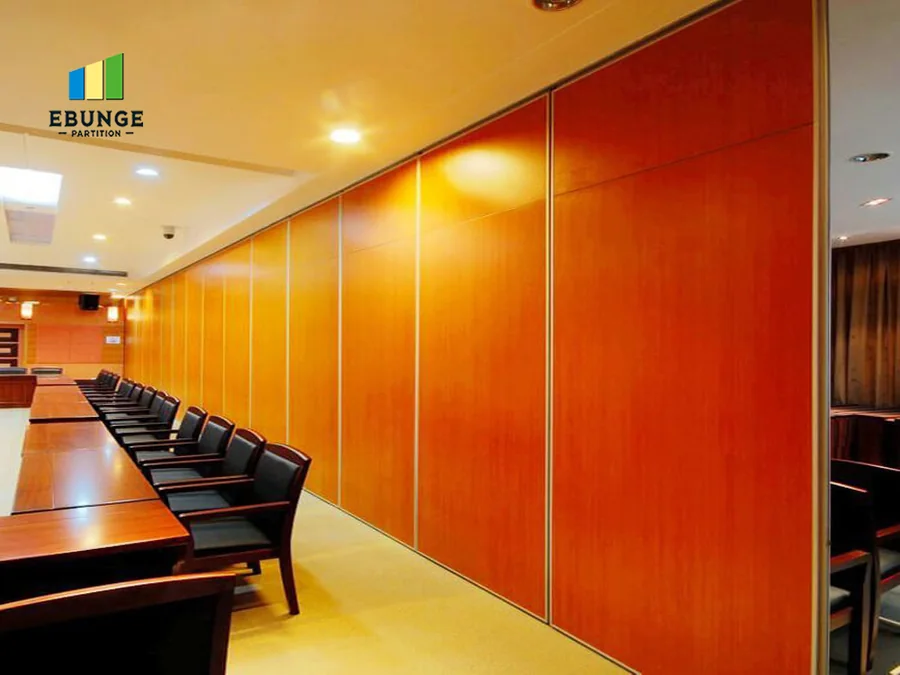
A structured maintenance inspection checklist helps facility teams identify wear, misalignment, or seal degradation before they affect room functionality. For hospital education rooms, where nurse call stations are wall-mounted, the checklist must consider both the partition’s moving parts and the fixed wall interfaces.
Regular inspections also support the longevity of the investment. Cost and maintenance requirements depend on the selected configuration, finish and project conditions and require project-specific confirmation.
Key Components of the Inspection Checklist
While every project is unique, the following components form a baseline for inspecting movable partition seals and related hardware in hospital education rooms.
Overhead Track and Suspension System
Inspect the track for debris, obstructions, or signs of wear. Check that all hangers and trolleys move smoothly along the entire route, including straight and turning sections. Any hesitation or noise could indicate a need for cleaning or adjustment.
Panel Alignment and Gaps
When panels are closed, they should align evenly with adjacent panels and the fixed walls. Use a straightedge to check for gaps at the top, bottom, and vertical edges.
Share the opening dimensions, room layout and intended operating sequence for review.
Seal Condition and Compression
Inspect all perimeter seals, including those at the top, bottom, and vertical edges. Look for cracks, tears, or compression set. Seals should compress evenly when the panel is locked into place. If a seal appears flattened or damaged, it may need replacement. Note that seal materials and core constructions are project-specific; consult the manufacturer for approved replacement parts.
Bottom Seal and Floor Interface
Since there is no floor track, the bottom seal often drops to meet the floor. Check that the bottom seal deploys and retracts fully. Ensure there is no debris under the panel that could prevent a tight seal. In hospital settings, floors are frequently cleaned with chemicals; verify that the seal material is compatible with your cleaning agents, but do not assume compatibility without confirmation.
Wall-Mounted Nurse Call Station Interfaces
When a partition meets a wall that houses a nurse call station, the interface must be inspected carefully. Also, check that the nurse call station’s functionality is not obstructed by the partition’s operation. If the partition stacks near the station, ensure that the stacking area does not interfere with access to the station.
Stacking Area and Parking Position
When not in use, panels park at a planned stacking position. Confirm that the stacking route is clear and that panels do not collide with wall-mounted devices, light switches, or other fixtures. The stacking configuration is customized to the layout, so refer to your project drawings for the exact parking plan.
Developing a Project-Specific Checklist
No generic checklist can cover every installation. The most effective maintenance plan is developed with reference to the application reference layout, track routes, and stacking positions. EBUNGE reviews straight, turning, and stacking routes from the layout to ensure feasibility. For your hospital education room, obtain the as-built drawings and use them to create a checklist that reflects your specific configuration.
Involving the Manufacturer Early
During the planning phase, discuss maintenance requirements with the manufacturer. They can provide guidance on inspection intervals and specific components to check. However, do not expect them to provide a one-size-fits-all checklist; each project has unique interfaces and usage patterns.
Documenting Inspection Findings
Maintain a log of each inspection, noting the date, inspector, findings, and any corrective actions taken. It also helps in planning future maintenance budgets.
Acoustic Considerations and Seal Performance
However, these ratings are determined under laboratory conditions and may not reflect real-world performance. Do not assume that a high rating guarantees a specific level of sound insulation in your room.
The condition of the seals directly affects the partition’s ability to block sound.
Flanking Paths and Nurse Call Stations
Flanking paths are indirect routes through which sound can travel around a partition. Wall-mounted nurse call stations often require penetrations in the wall for wiring, which can create flanking paths. When inspecting, check that any penetrations are properly sealed and that the partition’s connection to the wall is airtight. This is a coordination point that should be addressed during design and installation.
Finish Options and Maintenance
EBUNGE partitions are available with a variety of finishes, including laminate, melamine, fabric, leather, glass, and other approved surfaces. Each finish has different cleaning and maintenance requirements. Choose finishes that are compatible with hospital-grade disinfectants, but verify compatibility with the manufacturer.
Fabric and Leather Finishes
Some fabrics are treated for stain resistance, but not all.
Glass and Laminate Finishes
Glass and laminate are non-porous and generally easy to clean. However, glass can show fingerprints and smudges, requiring regular wiping. Laminate is durable but can be scratched by abrasive cleaners. Use only approved cleaning agents.
Review the ceiling interface, panel route and stacking position together.
Coordination with Nurse Call System Installers
In a hospital education room, the nurse call system is a critical safety feature. The partition must not interfere with its operation. During the design phase, coordinate with the nurse call system installer to ensure that wall-mounted stations are positioned away from the partition’s travel path and stacking area. Also, consider the location of pull cords or call buttons—they should be accessible even when the partition is closed.
Electrical and Data Outlets
If the partition is used to divide a room into two separate spaces, each side may need access to power and data. This often requires floor or wall outlets that are not on the partition line. Coordinate with the electrical engineer to ensure that outlets are placed appropriately. Do not run cables across the partition line, as they would be pinched when the partition is closed.
Developing a Maintenance Schedule
A maintenance schedule should be based on usage frequency. A partition that is moved daily will require more frequent inspections than one that is rarely used. As a general guideline, perform a visual inspection monthly and a more detailed inspection quarterly. However, these intervals are not a substitute for manufacturer recommendations; confirm with EBUNGE for your specific project.
Training for Facility Staff
Ensure that facility staff are trained on how to operate the partition correctly. Improper operation is a common cause of seal damage and misalignment. Provide clear instructions on how to move, lock, and unlock panels. Also, train staff on what to look for during routine inspections.
Common Issues and Troubleshooting
Even with regular maintenance, issues can arise. Here are some common problems and potential causes:
Difficulty in Moving Panels
If panels become difficult to move, check the track for debris or obstructions. Also, inspect the hangers for wear. Do not force the panel; this could damage the track or the panel itself.
Gaps at Panel Joints
Gaps at vertical joints may indicate that the panels are not being closed in the correct order or that the locking mechanisms are not fully engaged. Refer to the operating manual for the correct sequence.
Seal Wear
Seals will wear over time, especially if the partition is used frequently. If you notice cracks or tears, replace the seals promptly.
Conclusion and Contact CTA
Developing a maintenance inspection checklist for hospital education room partitions requires a thorough understanding of the system’s components and the specific challenges of the environment. By focusing on the overhead track, seals, and interfaces with wall-mounted nurse call stations, you can ensure that your movable partition continues to function reliably.
For more information on EBUNGE movable partition products, or to discuss your project’s specific needs, please contact our team. We are ready to assist with layout reviews and documentation. Explore our past projects to see how we have helped other facilities.
Frequently Asked Questions
What is included in a standard maintenance inspection for a movable partition?
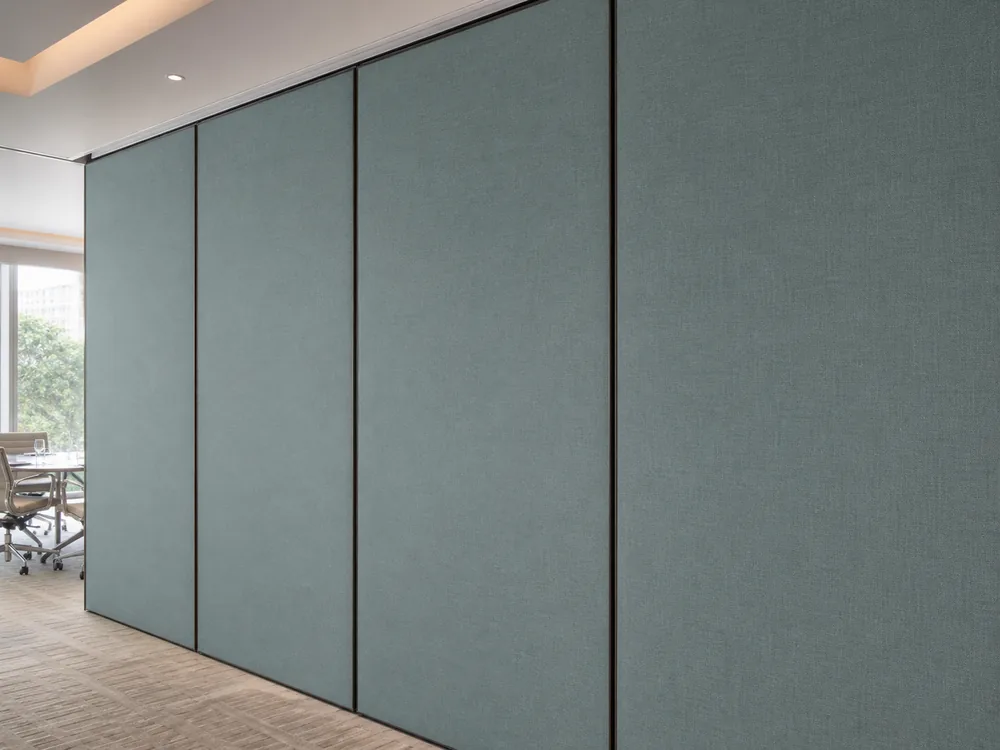
A standard inspection covers the overhead track, hangers, panel alignment, seals, and the stacking area. For hospital education rooms, also inspect interfaces with wall-mounted devices like nurse call stations.
How often should I inspect the partition seals?
Inspection frequency depends on usage. For partitions moved daily, a monthly visual check is advisable. For less frequent use, quarterly may suffice.
Can I use any cleaning product on the partition finishes?
No, cleaning products must be compatible with the finish. EBUNGE offers laminate, melamine, fabric, leather, glass, and other finishes, each with specific cleaning guidelines. Confirm compatibility with the manufacturer to avoid damage.
What should I do if the partition no longer seals tightly?
First, check for obstructions or debris along the seal path. If the seal is damaged, it may need replacement. Also, verify that the panels are aligned and that the locking mechanisms are fully engaged. If issues persist, contact the manufacturer for support.
How do I ensure the partition does not interfere with the nurse call system?
During design, coordinate with the nurse call installer to position wall-mounted stations away from the partition’s travel and stacking paths. During maintenance, inspect that the partition does not obstruct access to the station or its wiring.
Are acoustic ratings guaranteed in real-world conditions?
The exact overhead route and support arrangement must be confirmed by the responsible project team from coordinated drawings.
Continue Exploring
More Acoustic Partition Guides
- Newer guideWhat Pre-Installation Checks Matter for Convention Partition Seals at Floor-Mounted Cable Wells
- Earlier guideWhy Medical Simulation Lab Partition Seals Need Interface Detailing at Ceiling-Mounted Camera Bracket Swings
- Related guideWhat Drawings Specify School Auditorium Partition Seals at Ceiling-Mounted Speaker Cluster Zones
- Related guideHow to Coordinate Office Meeting Suite Partition Seals with Wall-Mounted Video Bar Swing Paths