
Understanding the university lecture hall partition manual comparison
Quick project answer
When a university plans flexible teaching spaces, the choice between a fixed lectern and a mobile lectern interacts with how a university lecture hall partition manual is approached. This article compares those lectern types within the context of a top-hung movable partition system. The focus stays on confirmed principles: top-hung support, an uninterrupted floor, parking planning, finish coordination, and drawing approvals.
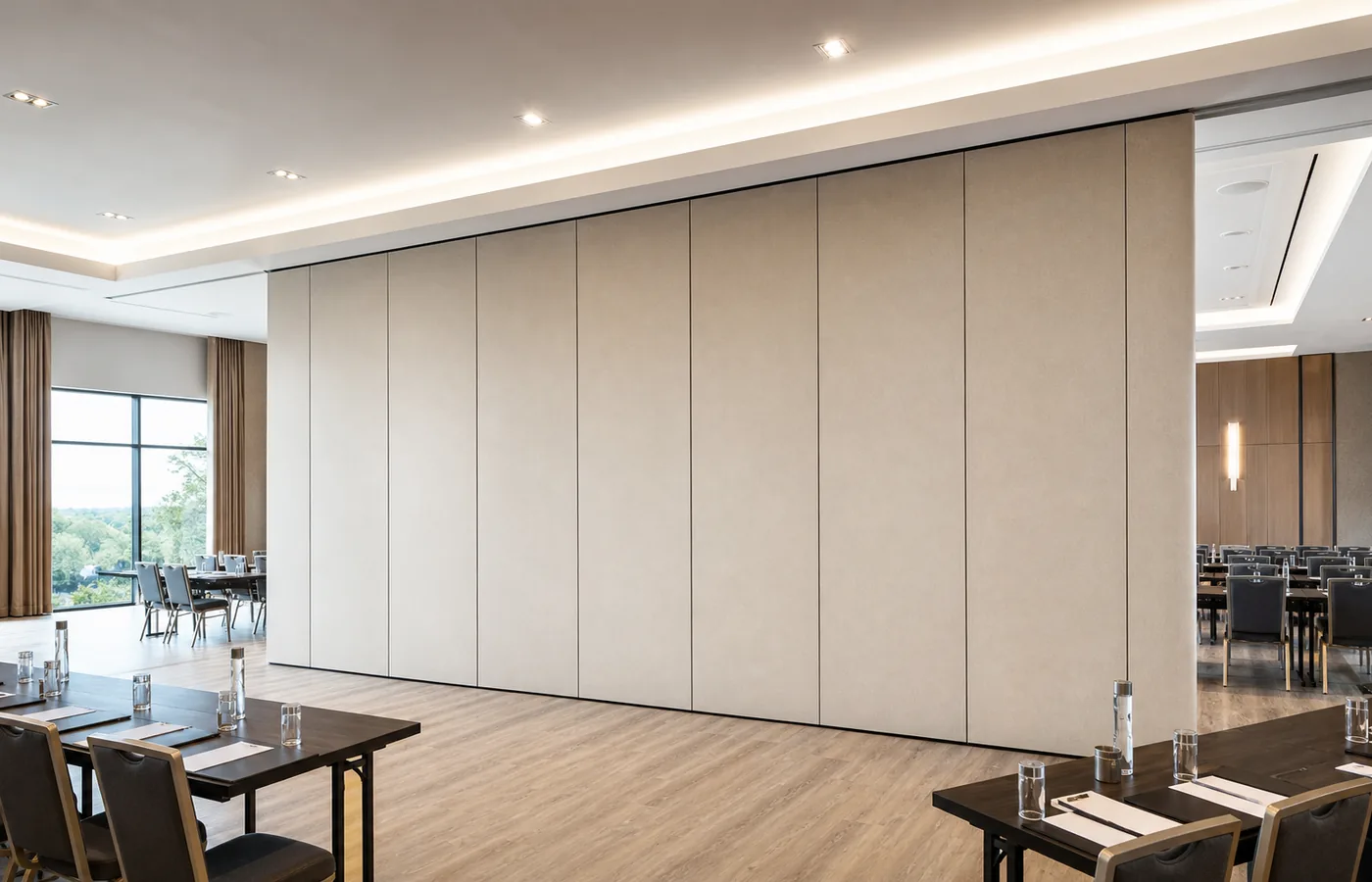
The EBUNGE movable partition system is top-hung and has no continuous floor running track or operating hardware in the finished floor along the partition line. That single fact changes how furniture and lecterns can be arranged. A university lecture hall partition manual comparison should therefore begin with the floor condition, not with a generic operating sequence.
Top-hung principle and what it means for lectern placement
A top-hung partition carries its panels from an overhead structure. Because there is no continuous floor track, the finished floor along the partition line is not cut or damaged for a floor track. The floor remains physically uninterrupted by the maintained EBUNGE top-hung system. This matters when a fixed lectern is positioned near the partition line.
A fixed lectern is anchored in place. Its position must be coordinated with the partition’s overhead path and parking location. A mobile lectern can be repositioned, but it still needs a clear route and a defined parking zone. Neither lectern type removes the need for coordinated drawings.
The exact route, junction arrangement, continuous overhead path and parking position must be confirmed from the coordinated project drawings. This boundary sentence applies to every engineering detail that is not otherwise confirmed in this article.
Physically uninterrupted floor and its practical implications
With a top-hung system, the floor is not cut or damaged for a floor track. That means the floor surface along the partition line stays physically uninterrupted. For a university lecture hall partition manual comparison, this is a central difference from systems that require a continuous floor guide.
A fixed lectern can sit on the uninterrupted floor without a floor track running beneath or beside it. A mobile lectern can be rolled across the same floor area, provided the route is clear. The absence of a floor track does not remove the need to plan where the lectern will rest when the partition is open or closed.
Cleaning and maintenance methods vary with the selected finish. The floor itself remains uninterrupted, but the finish on the partition panels and the lectern surfaces may require different care routines. A university lecture hall partition manual comparison should note that those routines should be coordinated with the selected materials.
Parking planning for panels and lecterns
Panel parking style can be customized to the customer layout and project requirements, subject to coordinated drawings. A suitable approved parking arrangement can use the stacking area more compactly and coordinate with the space design. The exact track, support and panel layout still require project drawings.
For a fixed lectern, the parking area must be planned so that stacked panels do not conflict with the lectern footprint. For a mobile lectern, the parking area must also allow the lectern to be moved aside when panels are stacked. Both cases depend on the approved parking arrangement.
The exact route, junction arrangement, continuous overhead path and parking position must be confirmed from the coordinated project drawings. This is the only boundary sentence used for engineering details outside confirmed facts.
- Fixed lectern: position is permanent and must be coordinated with the overhead path and parking zone.
- Mobile lectern: position can change, but a clear route and a defined parking spot are still required.
- Both types: the floor remains uninterrupted by the maintained top-hung system.
- Both types: the approved parking arrangement determines how the stacking area is used.
Finish and care coordination for partitions and lecterns
Finish materials can be customized, and cleaning and maintenance methods vary with the selected finish. This applies to the partition panels and to the lectern surfaces. A university lecture hall partition manual comparison should note that finish choices affect daily care, not just appearance.
When a fixed lectern is used, its finish may be selected to complement the partition finish. When a mobile lectern is used, its finish may need to withstand movement and repositioning. In both cases, the care method follows the finish, not a universal rule.
Because finish materials can be customized, the project team should confirm which finishes are selected and how each is maintained. The confirmed fact is that cleaning and maintenance methods vary with the selected finish. No specific cleaning outcome or product performance is claimed here.
Non-limiting applications and university contexts
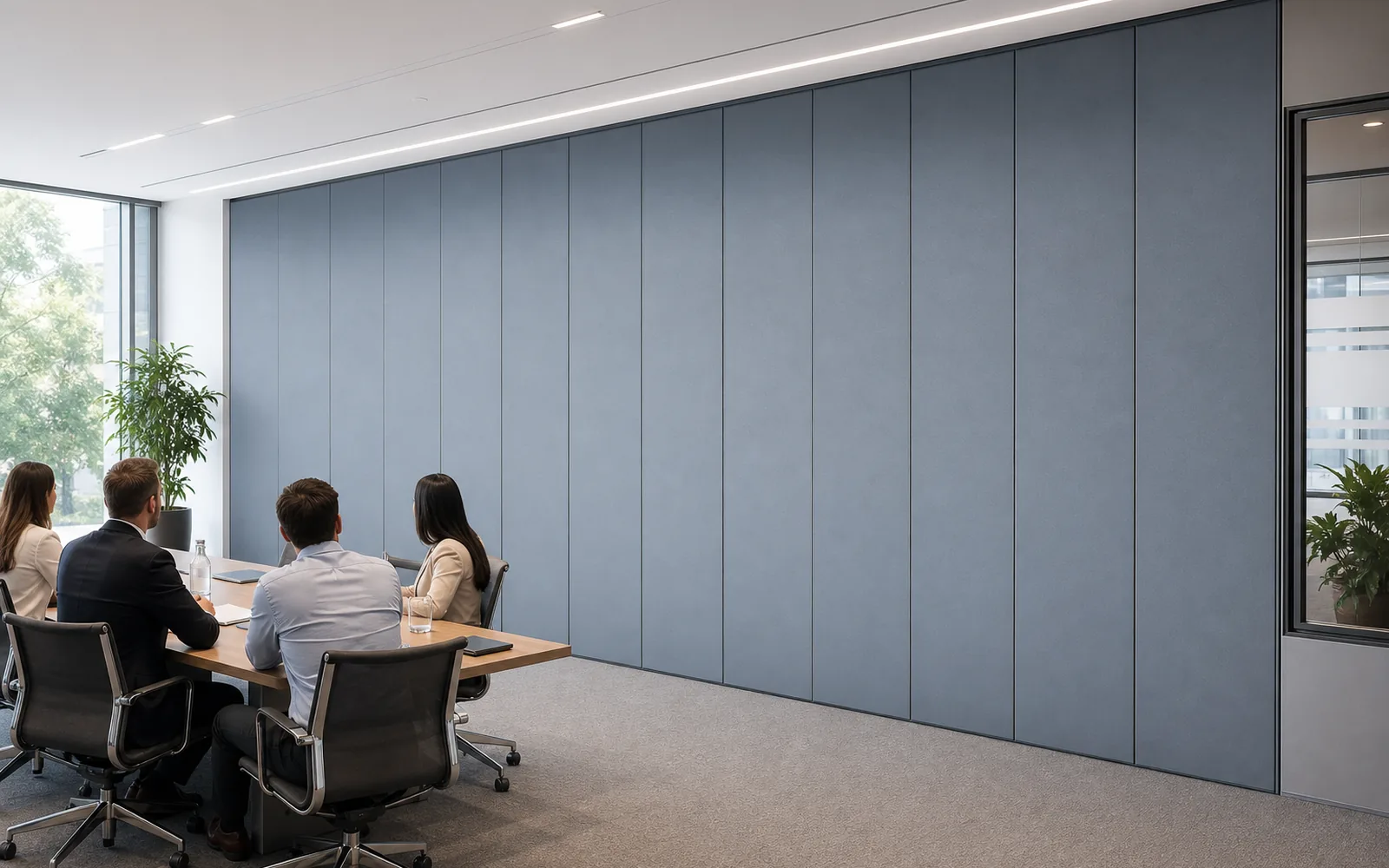
Movable partitions can be used wherever flexible space division, combination or reconfiguration is required; application examples are not limiting. A university lecture hall is one possible context, but the same principles apply to other teaching and assembly spaces.
EBUNGE has completed many types of hotel-related movable-partition projects; ballrooms, wedding halls and multifunction halls are non-limiting examples. No customer names, locations, quantities, ratings, certifications or outcomes may be inferred from those examples. The university context in this article is illustrative, not a claim of a specific completed project.
For any application, the university lecture hall partition manual comparison still depends on the same confirmed facts: top-hung support, no continuous floor track, customizable parking, and finish-specific care. The exact route, junction arrangement, continuous overhead path and parking position must be confirmed from the coordinated project drawings.
Buyer inputs and drawing approvals
Buyers should provide the intended lectern type, the desired parking location, and the finish preferences. These inputs feed into the coordinated drawings. The drawings then confirm the exact route, junction arrangement, continuous overhead path and parking position.
A fixed lectern may require earlier coordination because its position is permanent. A mobile lectern may offer more flexibility in daily use, but it still needs a defined parking position in the approved drawings. Neither type changes the top-hung principle or the uninterrupted floor.
Panel parking style can be customized to the customer layout and project requirements, subject to coordinated drawings. A suitable approved parking arrangement can use the stacking area more compactly and coordinate with the space design. The exact track, support and panel layout still require project drawings.
The exact route, junction arrangement, continuous overhead path and parking position must be confirmed from the coordinated project drawings.
For more on movable partition systems, see movable partition wall. For related articles, visit the blogs section.
Frequently asked questions
Does a top-hung partition require a floor track?
No. The EBUNGE movable partition system is top-hung and has no continuous floor running track or operating hardware in the finished floor along the partition line.
Can a fixed lectern be placed on the uninterrupted floor?
Yes, a fixed lectern can sit on the floor, but its position must be coordinated with the overhead path and parking zone. The exact route, junction arrangement, continuous overhead path and parking position must be confirmed from the coordinated project drawings.
How does a mobile lectern affect parking planning?
A mobile lectern can be repositioned, but it still needs a clear route and a defined parking spot. Panel parking style can be customized to the customer layout and project requirements, subject to coordinated drawings.
Are finish materials customizable for partitions and lecterns?
Yes, finish materials can be customized, and cleaning and maintenance methods vary with the selected finish. No specific cleaning outcome or performance is claimed.
What inputs should a buyer provide for the university lecture hall partition manual comparison?
Buyers should provide the intended lectern type, desired parking location, and finish preferences. These inputs feed into the coordinated drawings that confirm the exact route, junction arrangement, continuous overhead path and parking position.
Can movable partitions be used outside university lecture halls?
Yes. Movable partitions can be used wherever flexible space division, combination or reconfiguration is required; application examples are not limiting.
Continue Exploring
More Operable Wall System Guides
- Newer guideDetailing University Seminar Partition Operation at Wall Panels
- Earlier guideAirport Convention Partition Stacking: Security Light Grid Access Panels
- Related guideWhat Blocks Accessible Circulation When Operable Walls Cross Corridors?
- Related guideEvacuation Chair Routes Where Operable Walls Cross Accessible Paths