
Top-Hung Principle and Maintenance Scope
Quick project answer
The EBUNGE movable partition system is top-hung and has no continuous floor running track or operating hardware in the finished floor along the partition line. This single fact changes how airport operable wall seal maintenance is planned compared with hotel ballroom routines. In a top-hung arrangement, the floor remains physically uninterrupted by the maintained system.
Because there is no floor track, airport operable wall seal maintenance does not involve cleaning or inspecting a floor-mounted guide. The maintenance scope focuses on the overhead support path and the panel finish. The exact route, junction arrangement, continuous overhead path and parking position must be confirmed from the coordinated project drawings.
Hotel ballroom teams often work around carpet transitions, dance floors and temporary staging. Airport teams work around continuous terminal flooring, wayfinding lines and passenger flow. These different floor conditions shape how airport operable wall seal maintenance is scheduled.
Physically Uninterrupted Floor and Cleaning Routines
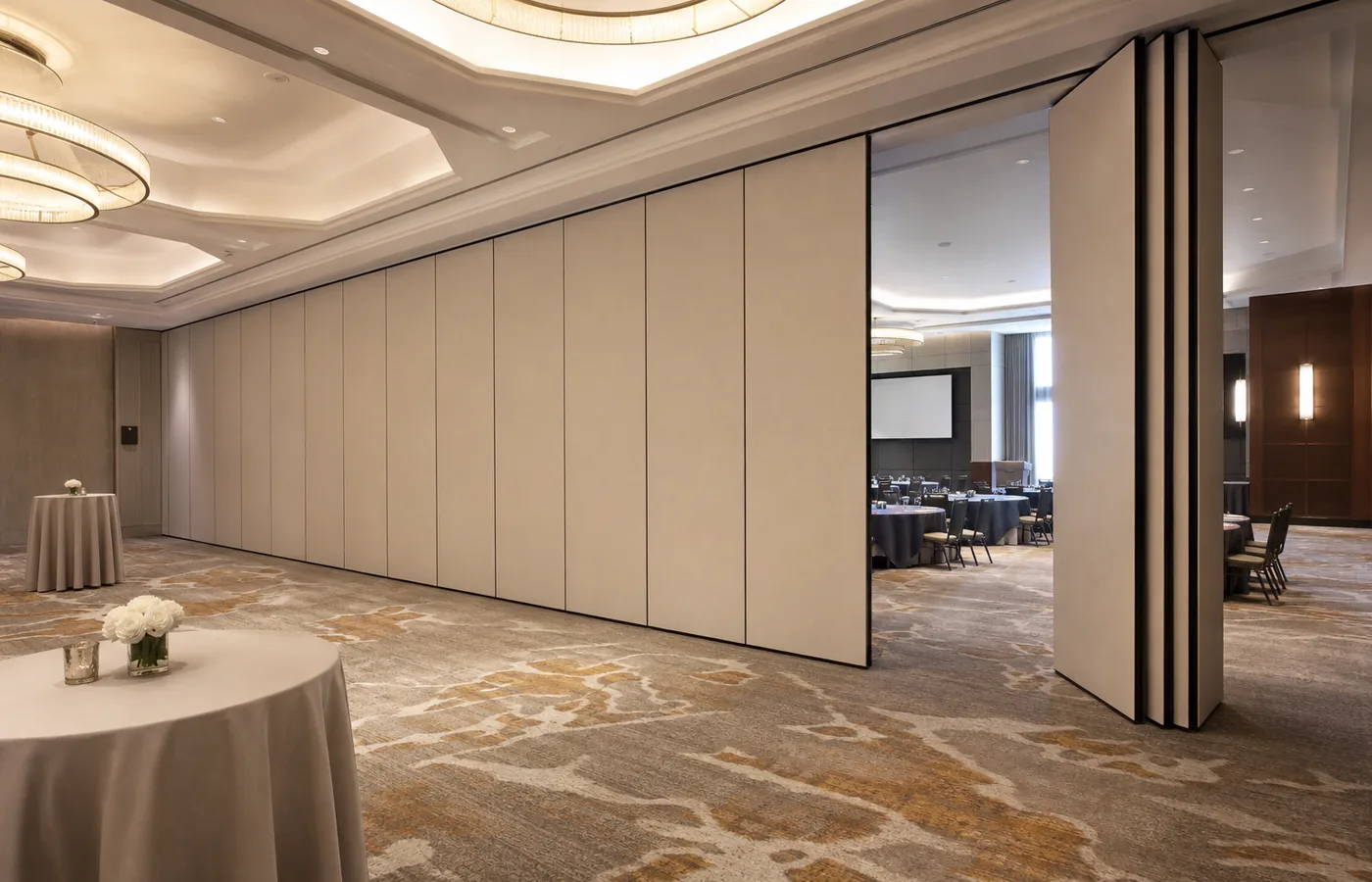
The floor is not cut or damaged for a floor track and remains physically uninterrupted by the maintained EBUNGE top-hung system. This means airport operable wall seal maintenance can be planned without closing floor gaps or protecting a track channel. Cleaning crews can treat the floor as a continuous surface.
In hotels, ballroom floors may include seams, thresholds or decorative inlays that require separate care. Airport floors are usually continuous and subject to heavy foot traffic. The absence of a floor track simplifies daily cleaning but does not remove the need for scheduled checks of the overhead system.
Finish materials can be customized, and cleaning and maintenance methods vary with the selected finish. For airport operable wall seal maintenance, the chosen finish determines which cleaning agents and tools are appropriate. The same finish choice also affects how often surfaces need attention.
Parking Planning and Space Coordination
Panel parking style can be customized to the customer layout and project requirements, subject to coordinated drawings. A suitable approved parking arrangement can use the stacking area more compactly and coordinate with the space design. The exact track, support and panel layout still require project drawings.
Airport parking areas may compete with circulation zones, retail frontage or security corridors. Hotel ballroom parking areas may compete with back-of-house storage or service corridors. These different constraints affect how airport operable wall seal maintenance is sequenced with other facility tasks.
When parking is planned early, maintenance access can be coordinated with the space design. The exact route, junction arrangement, continuous overhead path and parking position must be confirmed from the coordinated project drawings.
Finish and Care Coordination
Finish materials can be customized, and cleaning and maintenance methods vary with the selected finish. Airport operable wall seal maintenance schedules should therefore be built around the approved finish rather than a generic routine. A finish used in a hotel ballroom may need different care than one used in an airport terminal.
Airport environments may involve different cleaning frequencies and different exposure to public contact. Hotel ballrooms may involve event-specific cleaning and setup changes. These differences mean airport operable wall seal maintenance cannot simply copy a hotel ballroom schedule.
Coordination with the finish supplier and the facility cleaning team helps align methods. The exact route, junction arrangement, continuous overhead path and parking position must be confirmed from the coordinated project drawings.
Non-Limiting Applications and Operational Context
Movable partitions can be used wherever flexible space division, combination or reconfiguration is required; application examples are not limiting. Airports and hotels are two different contexts, but the top-hung principle remains the same. EBUNGE has completed many types of hotel-related movable-partition projects; ballrooms, wedding halls and multifunction halls are non-limiting examples.
No customer names, locations, quantities, ratings, certifications or outcomes may be inferred from those examples. The focus stays on how airport operable wall seal maintenance differs from hotel ballroom routines. The difference comes from floor conditions, traffic patterns and finish choices.
Airport operable wall seal maintenance may need to align with terminal cleaning windows. Hotel ballroom maintenance may align with event calendars. Both benefit from a planned schedule that respects the top-hung design.
Buyer Inputs and Drawing Approvals
Buyers should provide layout requirements, parking preferences and finish selections early. These inputs allow the project team to coordinate the top-hung system with the surrounding space. The exact route, junction arrangement, continuous overhead path and parking position must be confirmed from the coordinated project drawings.
Approved drawings should show the parking arrangement and the finish schedule. Airport operable wall seal maintenance planning can then reference the approved finish and the agreed parking position. Without approved drawings, maintenance assumptions may not match the installed configuration.
The exact overhead route and support arrangement must be confirmed by the responsible project team from coordinated drawings.. These pages provide background without replacing project-specific drawings.
Scannable Maintenance Planning Modules
- Confirm the top-hung configuration and the absence of a floor track in the finished floor.
- Review the approved finish and the cleaning method recommended for that finish.
- Coordinate parking access with terminal or ballroom cleaning schedules.
- Reference the coordinated project drawings for the overhead path and parking position.
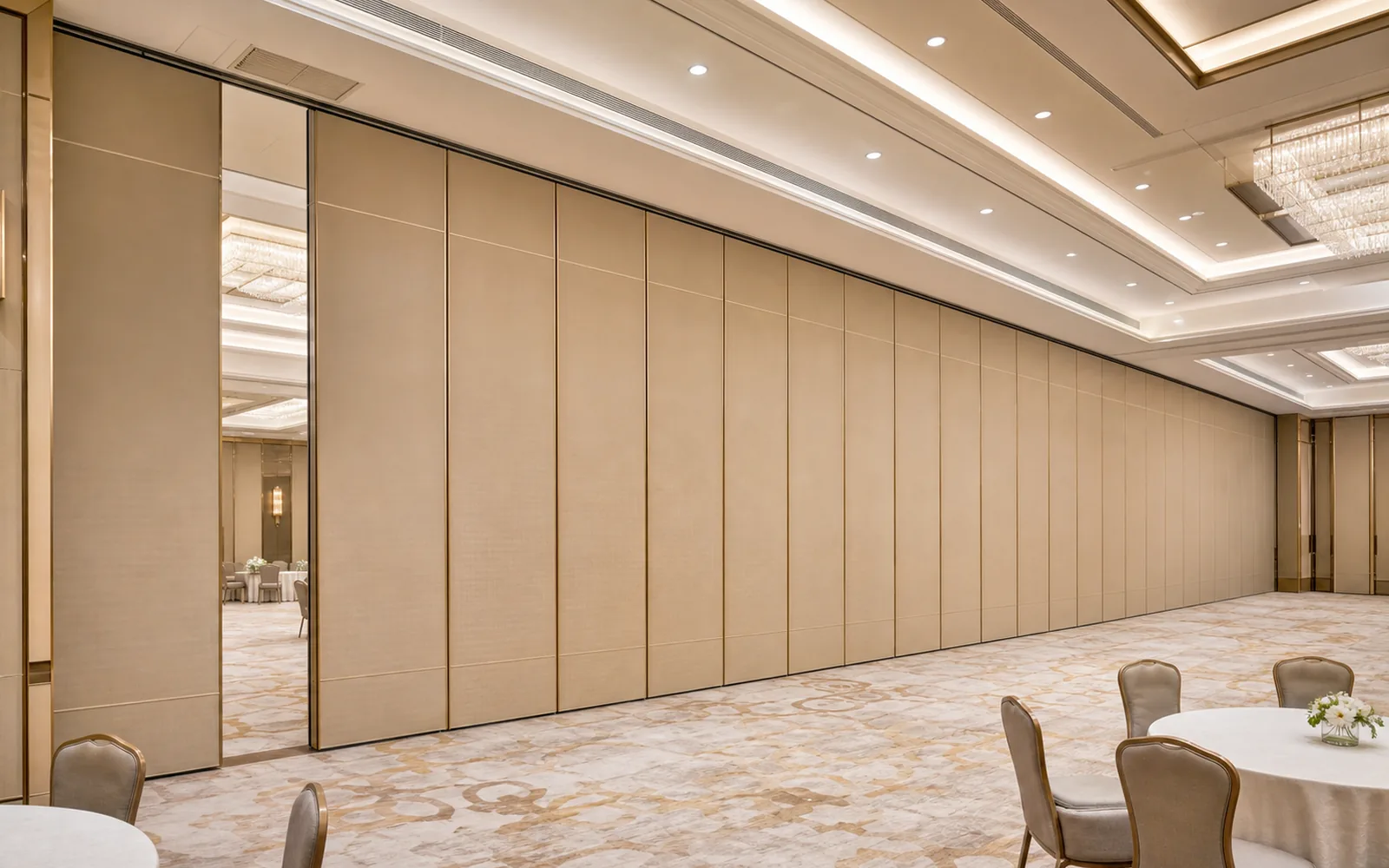
| Consideration | Airport Context | Hotel Ballroom Context |
|---|---|---|
| Floor condition | Continuous terminal flooring | Event flooring with transitions |
| Traffic pattern | Public passenger flow | Event-based guest flow |
| Finish care | Finish-specific cleaning | Finish-specific cleaning |
| Parking coordination | Circulation and security zones | Back-of-house and service zones |
Airport operable wall seal maintenance schedules should follow the approved finish and the coordinated drawings, not a generic hotel ballroom routine.
Frequently Asked Questions
For further context, review related project guidance and additional planning resources before preparing the coordinated project brief.
Why does airport operable wall seal maintenance differ from hotel ballroom maintenance?
Airport operable wall seal maintenance differs because airport floors are usually continuous and subject to different traffic patterns. Hotel ballrooms may have event-specific flooring and cleaning routines. The top-hung EBUNGE system keeps the floor uninterrupted, so maintenance focuses on the overhead path and the selected finish.
Does the top-hung system require a floor track?
No. The EBUNGE movable partition system is top-hung and has no continuous floor running track or operating hardware in the finished floor along the partition line. The floor is not cut or damaged for a floor track and remains physically uninterrupted by the maintained system.

How does finish choice affect airport operable wall seal maintenance?
Finish materials can be customized, and cleaning and maintenance methods vary with the selected finish. Airport operable wall seal maintenance should therefore reference the approved finish schedule. Different finishes may need different cleaning agents and frequencies.
Can parking be customized for airport spaces?
Panel parking style can be customized to the customer layout and project requirements, subject to coordinated drawings. A suitable approved parking arrangement can use the stacking area more compactly and coordinate with the space design. The exact track, support and panel layout still require project drawings.
What should buyers provide before maintenance planning?
Buyers should provide layout requirements, parking preferences and finish selections. The exact route, junction arrangement, continuous overhead path and parking position must be confirmed from the coordinated project drawings. Approved drawings help align airport operable wall seal maintenance with the installed configuration.
Are hotel ballroom examples the only applications?
No. Movable partitions can be used wherever flexible space division, combination or reconfiguration is required; application examples are not limiting. EBUNGE has completed many types of hotel-related movable-partition projects; ballrooms, wedding halls and multifunction halls are non-limiting examples.
Continue Exploring
More Acoustic Partition Guides
- Newer guideWhat Architectural Drawings Specify Movable Partition Seals
- Earlier guideWhy Airport Operable Wall Seals Need Different Ceiling Interface
- Related guideAcoustic Partition Ceiling Interface Zone Confirmation
- Related guideWho Confirms Ceiling Grid Line Before Acoustic Partition Track