
Understanding the top-hung principle for auditorium operable wall seal maintenance
Quick project answer
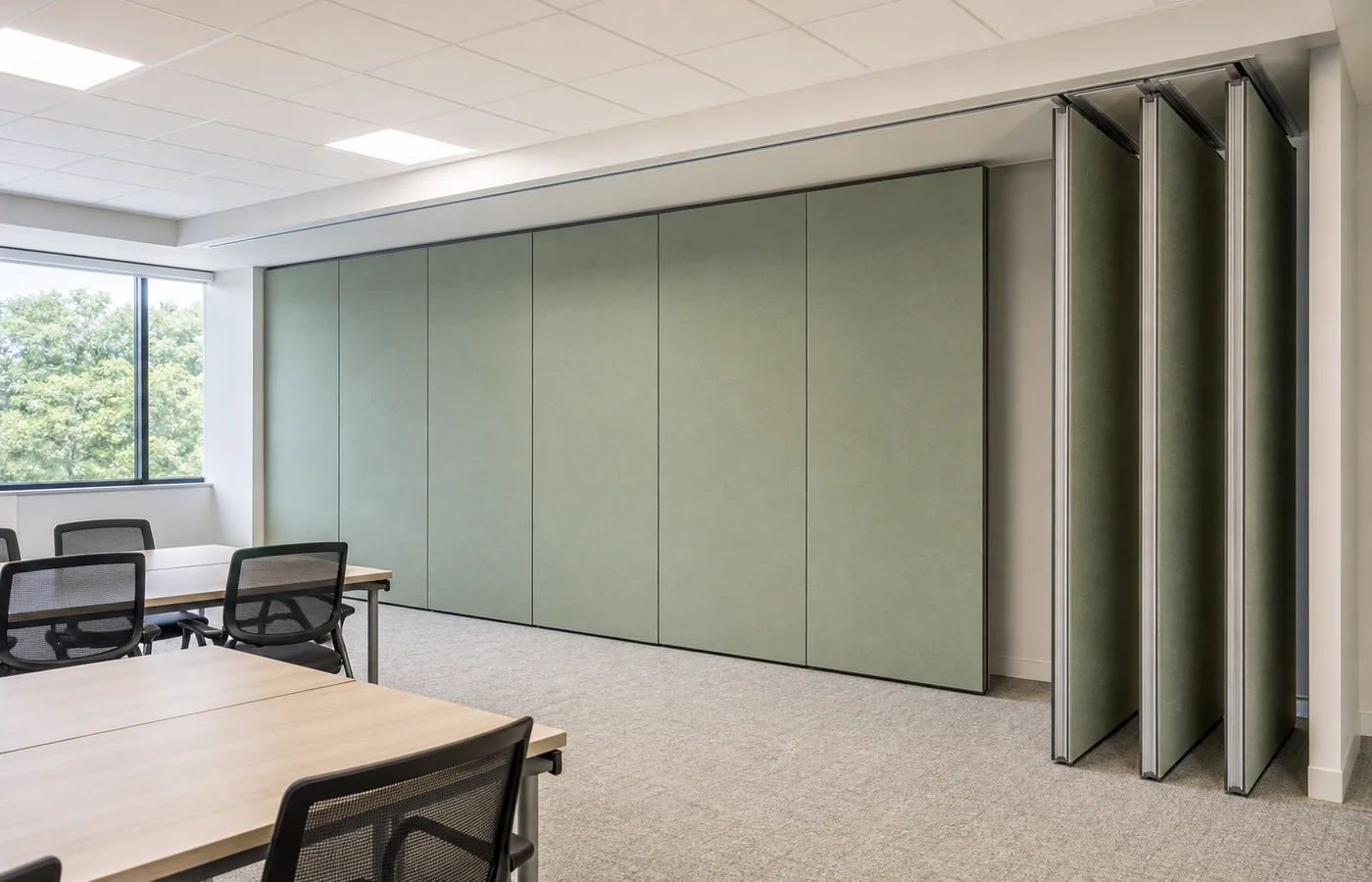
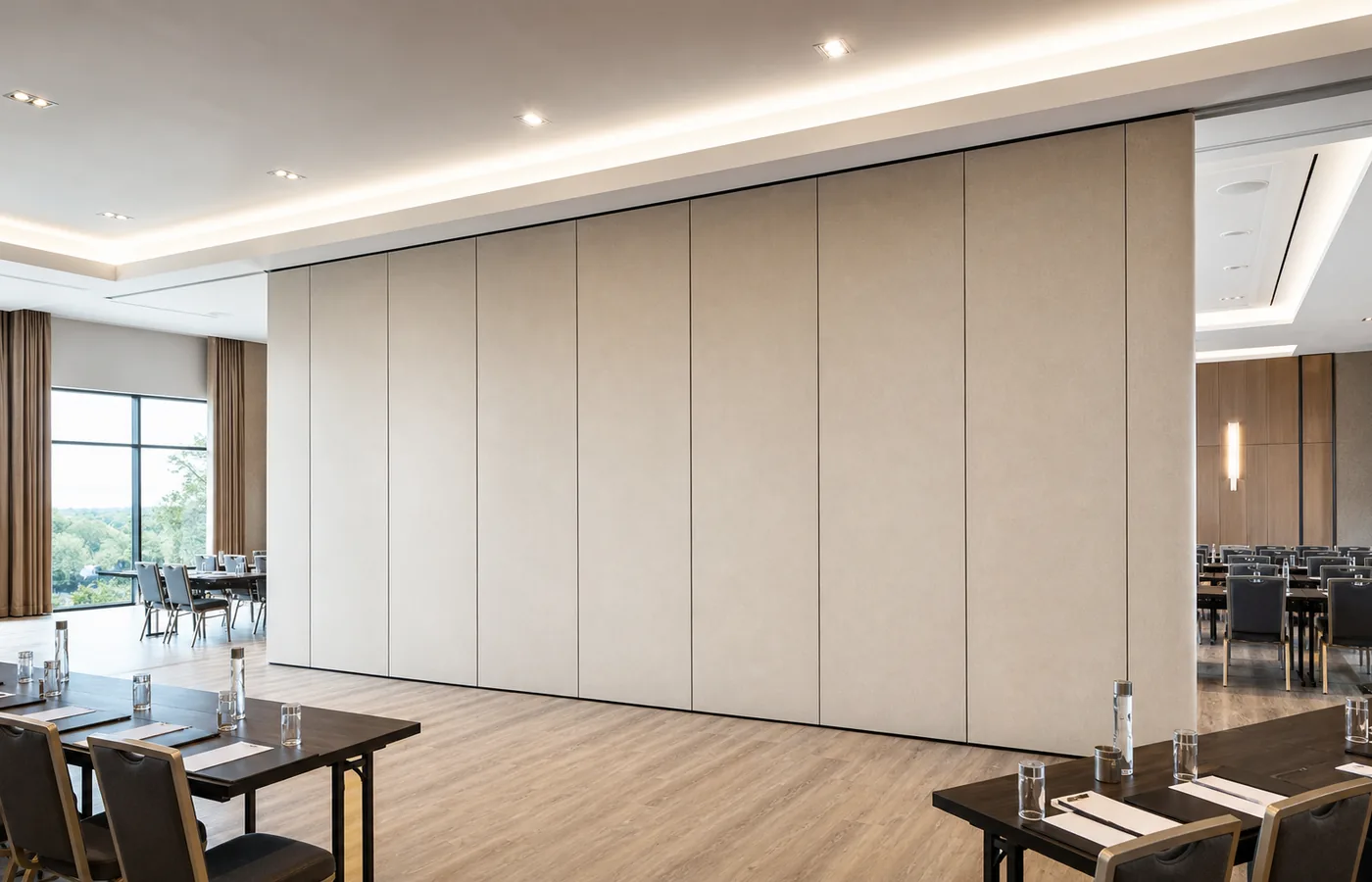
The EBUNGE movable partition system is top-hung and has no continuous floor running track or operating hardware in the finished floor along the partition line. This configuration shapes how auditorium operable wall seal maintenance is planned because the floor remains physically uninterrupted by the maintained EBUNGE top-hung system.
Because the system is top-hung, maintenance planning focuses on the overhead support and the panel assembly rather than on a floor track. The floor is not cut or damaged for a floor track, which keeps the auditorium floor surface continuous along the partition line.
For any engineering detail beyond these confirmed facts, use the following boundary: The exact route, junction arrangement, continuous overhead path and parking position must be confirmed from the coordinated project drawings.
Why a physically uninterrupted floor matters for maintenance planning

A physically uninterrupted floor simplifies some aspects of auditorium operable wall seal maintenance because there is no floor track to clean, inspect, or protect along the partition line. The finished floor remains whole and can be maintained according to its own material requirements.
This does not mean that maintenance is unnecessary. It means that the maintenance scope is directed to the top-hung panels, the overhead path, and the parking area rather than to a floor-mounted track.
When the floor is not cut or damaged for a floor track, auditorium operators can plan floor care without coordinating around a recessed track. The floor remains physically uninterrupted by the maintained EBUNGE top-hung system.
Parking planning for auditorium operable wall seal maintenance
Panel parking style can be customized to the customer layout and project requirements, subject to coordinated drawings. A suitable approved parking arrangement can use the stacking area more compactly and coordinate with the space design.
For auditorium operable wall seal maintenance, the parking position affects how panels are accessed for routine care. The exact track, support and panel layout still require project drawings, so parking decisions should be made with the project team.
The exact route, junction arrangement, continuous overhead path and parking position must be confirmed from the coordinated project drawings.
Finish and care coordination for auditorium operable wall seal maintenance
Finish materials can be customized, and cleaning and maintenance methods vary with the selected finish. This means that auditorium operable wall seal maintenance planning should begin with the chosen finish and its specific care requirements.
Different finishes may call for different cleaning products, tools, or frequencies. The project team should document the finish selection and the corresponding care method so that maintenance staff can follow the correct approach.
Because cleaning and maintenance methods vary with the selected finish, a single generic procedure may not apply across all panels. The finish manufacturer or supplier guidance should be consulted for each selected material.
Non-limiting applications for movable partitions
Movable partitions can be used wherever flexible space division, combination or reconfiguration is required; application examples are not limiting. EBUNGE has completed many types of hotel-related movable-partition projects; ballrooms, wedding halls and multifunction halls are non-limiting examples.
Auditoriums are another context where flexible division may be useful, but the same planning principles apply. The top-hung configuration and the uninterrupted floor are consistent features of the EBUNGE system.
No customer names, locations, quantities, ratings, certifications or outcomes may be inferred from these examples. They are provided only to show the range of project types.
Buyer inputs needed for auditorium operable wall seal maintenance planning
Buyers should provide the intended use of the space, the desired parking style, and the preferred finish direction. These inputs help the project team coordinate the top-hung system with the auditorium layout.
The customer layout and project requirements guide the parking arrangement. A suitable approved parking arrangement can use the stacking area more compactly and coordinate with the space design.
Buyers should also confirm who will handle routine care and what finish-specific methods are required. This information supports a practical auditorium operable wall seal maintenance plan.
Drawing approvals and coordination for auditorium operable wall seal maintenance
The exact track, support and panel layout still require project drawings. Drawing approvals should confirm the overhead path, the parking position, and the interface with the auditorium structure.
For auditorium operable wall seal maintenance, approved drawings provide the reference for accessing panels and understanding the parking arrangement. Any changes to the layout should be reflected in updated drawings.
The exact route, junction arrangement, continuous overhead path and parking position must be confirmed from the coordinated project drawings.
Scannable planning checklist
- Confirm the top-hung configuration and the absence of a continuous floor track.
- Verify that the floor remains physically uninterrupted along the partition line.
- Select a parking style that suits the customer layout and project requirements.
- Document the chosen finish and its specific cleaning and maintenance methods.
- Obtain coordinated project drawings for the exact track, support and panel layout.
Comparison of maintenance considerations
| Consideration | Top-hung EBUNGE system | Planning reference |
|---|---|---|
| Floor track | No continuous floor running track or operating hardware in the finished floor | Confirmed fact |
| Floor condition | Floor is not cut or damaged for a floor track | Confirmed fact |
| Parking style | Customizable to customer layout and project requirements | Subject to coordinated drawings |
| Finish care | Cleaning and maintenance methods vary with the selected finish | Finish-specific guidance |
Key takeaway for auditorium operable wall seal maintenance
Auditorium operable wall seal maintenance planning should center on the top-hung system, the physically uninterrupted floor, the approved parking arrangement, and the finish-specific care method.
Frequently asked questions about auditorium operable wall seal maintenance
For further context, review related project guidance and additional planning resources before preparing the coordinated project brief.
Does the EBUNGE movable partition system require a floor track?
No. The EBUNGE movable partition system is top-hung and has no continuous floor running track or operating hardware in the finished floor along the partition line.
Is the auditorium floor cut or damaged for a floor track?
No. The floor is not cut or damaged for a floor track and remains physically uninterrupted by the maintained EBUNGE top-hung system.
Can the parking style be customized for an auditorium?
Yes. Panel parking style can be customized to the customer layout and project requirements, subject to coordinated drawings.
Do cleaning methods vary by finish?
Yes. Finish materials can be customized, and cleaning and maintenance methods vary with the selected finish.
Where can movable partitions be used?
Movable partitions can be used wherever flexible space division, combination or reconfiguration is required; application examples are not limiting.
What must be confirmed from project drawings?
The exact route, junction arrangement, continuous overhead path and parking position must be confirmed from the coordinated project drawings.
The exact overhead route and support arrangement must be confirmed by the responsible project team from coordinated drawings..
Continue Exploring
More Acoustic Partition Guides
- Newer guideRestaurant Operable Wall Seal Planning for Service Areas
- Earlier guideWhat Acoustic Seal Layout Questions to Ask for University Seminar Room
- Related guideAcoustic Partition Ceiling Interface Zone Confirmation
- Related guideWho Confirms Ceiling Grid Line Before Acoustic Partition Track