
Quick project answer
Review focus: movable partition wall.
Movable partition wall handover evidence is the organised set of records that lets a project team confirm what was supplied, how the system was configured and which items still require project-specific verification. For overseas contractors, architects, interior designers, owners and distributors, handover is not a single certificate. It is a coordination package that connects the approved layout, the delivered panels and the agreed close-out actions.
The purpose of this guide is to outline a realistic evidence framework. The suitability of each route and parking arrangement depends on the approved layout, circulation, ceiling interfaces and operating sequence. Every project should confirm support, acoustic and dimensional requirements with qualified specialists before final acceptance.
Why Handover Evidence Matters for Movable Partition Walls
Project review term: movable partition wall.
A movable partition wall is not a fixed wall. Its panels are individually movable, suspended from a top track, cross the opening without a floor track and park at a planned stacking position. That movement changes what handover must document. The evidence should show that the installed system matches the coordinated routes and parking arrangement, not just that panels were delivered.
For a hotel ballroom, school hall, office meeting floor or training centre, the handover package becomes the reference point for future operation, maintenance planning and renovation. Without it, later teams may struggle to understand how the system was intended to work.
Core Documents That Should Be in the Handover Package
- Approved layout drawings: Plans showing the partition line, turning points, stacking position and any related interface with adjacent construction.
- Route review records: Notes or marked drawings confirming that straight, turning and stacking routes were reviewed from the layout.
- Finish schedule: A record of the confirmed finish options, which may include laminate, melamine, fabric, leather, glass and other approved surfaces.
- Pass-door coordination: Documentation of any pass-door requirements discussed for the project, including location and swing coordination where applicable.
- Open-item register: A clear list of items still requiring project-specific confirmation, such as support details or acoustic requirements.

Evidence note: A finish sample or drawing does not by itself prove acoustic performance, structural capacity or cleaning compatibility. Those topics require separate project-specific confirmation.
Layout, Route and Stacking Evidence
Because panels travel on an overhead route, the handover package should include evidence that the route was reviewed as a connected system. A gap in the overhead route is not a movement path. The review should cover the main opening, any turning sections and the final parking area.
What the route review should show
The route review should reference the approved layout and identify the intended path from the closed position to the stacking position. It should also note any interfaces with columns, services or adjacent finishes that could affect movement. If the layout changes on site, the handover evidence should reflect the revised coordination.
Parking position and stacking coordination
Parking style is customized to the customer layout and project requirements. The handover evidence should record the agreed parking position and any clearance coordination discussed with the design team. Compact stacking may be possible when the coordinated design permits it, but this should be confirmed for each project rather than assumed.
Finish and Surface Documentation
Finish records help the owner understand what was installed and how to plan future cleaning or repair. Confirmed finish options include laminate, melamine, fabric, leather, glass and other approved surfaces. The handover package should identify the finish selected for each panel type or area, ideally with a sample reference or approved submittal.
Do not treat a generic finish example as evidence of durability, fire performance or acoustic behaviour. Those characteristics depend on the project specification and require matching documentation.
Acoustic and Performance Evidence Boundaries
Visible references can support layout discussion but do not verify hidden construction or performance. Seals and acoustic concepts should be explained generically unless project-specific test evidence is available.
Practical Handover Checklist for Project Teams
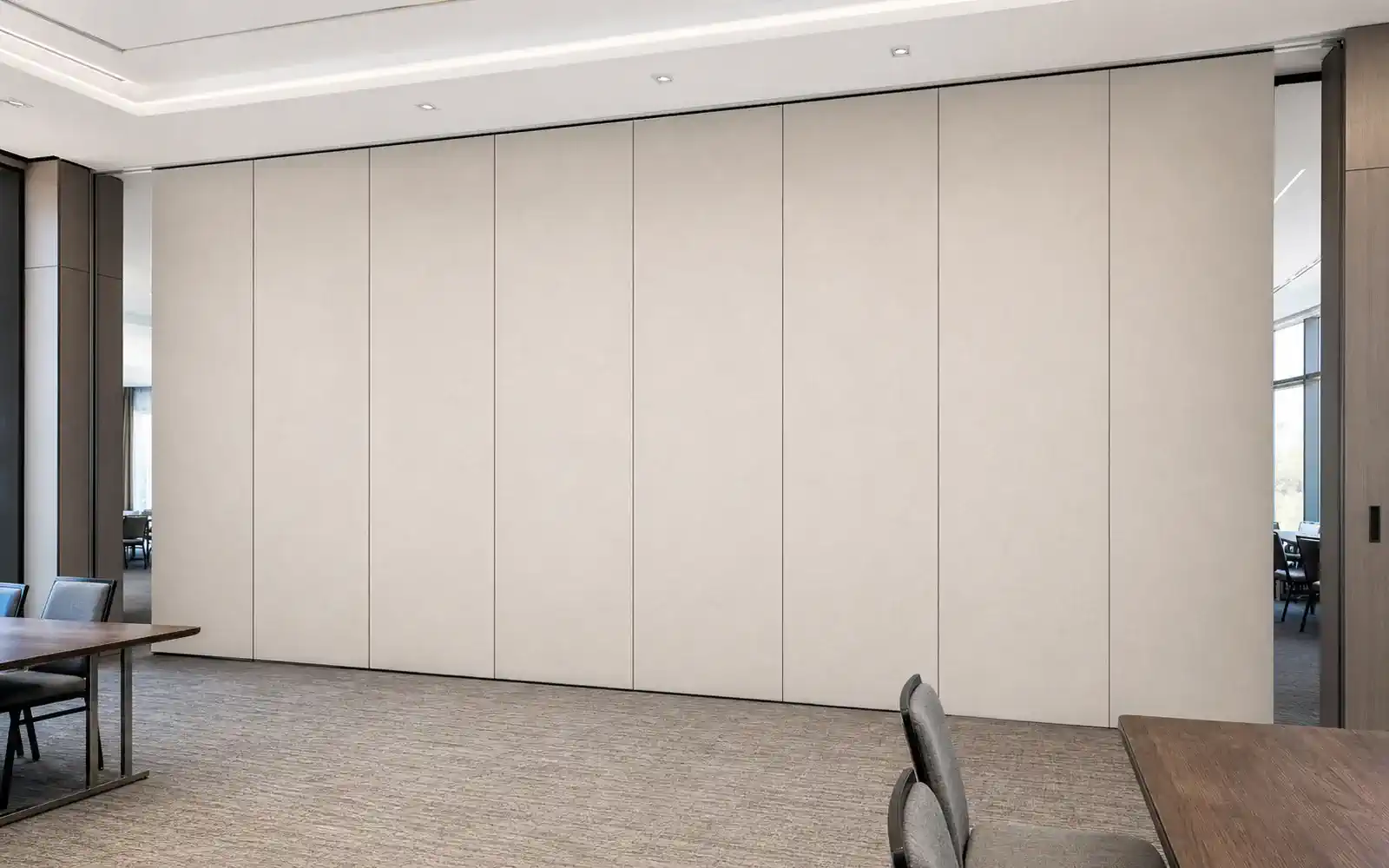
Use this checklist as a coordination aid, not as a substitute for contract documents.
- Confirm the approved layout drawing matches the installed partition line and parking position.
- Verify that straight, turning and stacking routes were reviewed and recorded.
- Collect finish records for every confirmed surface, including approved samples where relevant.
- Document any pass-door requirements and related coordination.
- List all open items requiring project-specific support, acoustic or dimensional confirmation.
- Confirm who will hold the final handover package and how future changes will be recorded.
Common Evidence Gaps and How to Avoid Them
One common gap is a handover package that includes product brochures but not the project layout. Another is a finish schedule that does not match the installed panels.
To avoid these gaps, keep the handover evidence tied to the approved project documents. Where information is missing, record it as an open item rather than filling the gap with an assumption. This approach protects the owner and helps future teams understand the system.
FAQ: Movable Partition Wall Handover Evidence
What is the most important document in a movable partition wall handover package?
The approved layout drawing is often the central reference because it shows the partition line, route and parking position. It should be read together with the finish schedule and open-item register.
Does handover evidence need to include acoustic test results?
Do not assume that a generic product description covers the project.
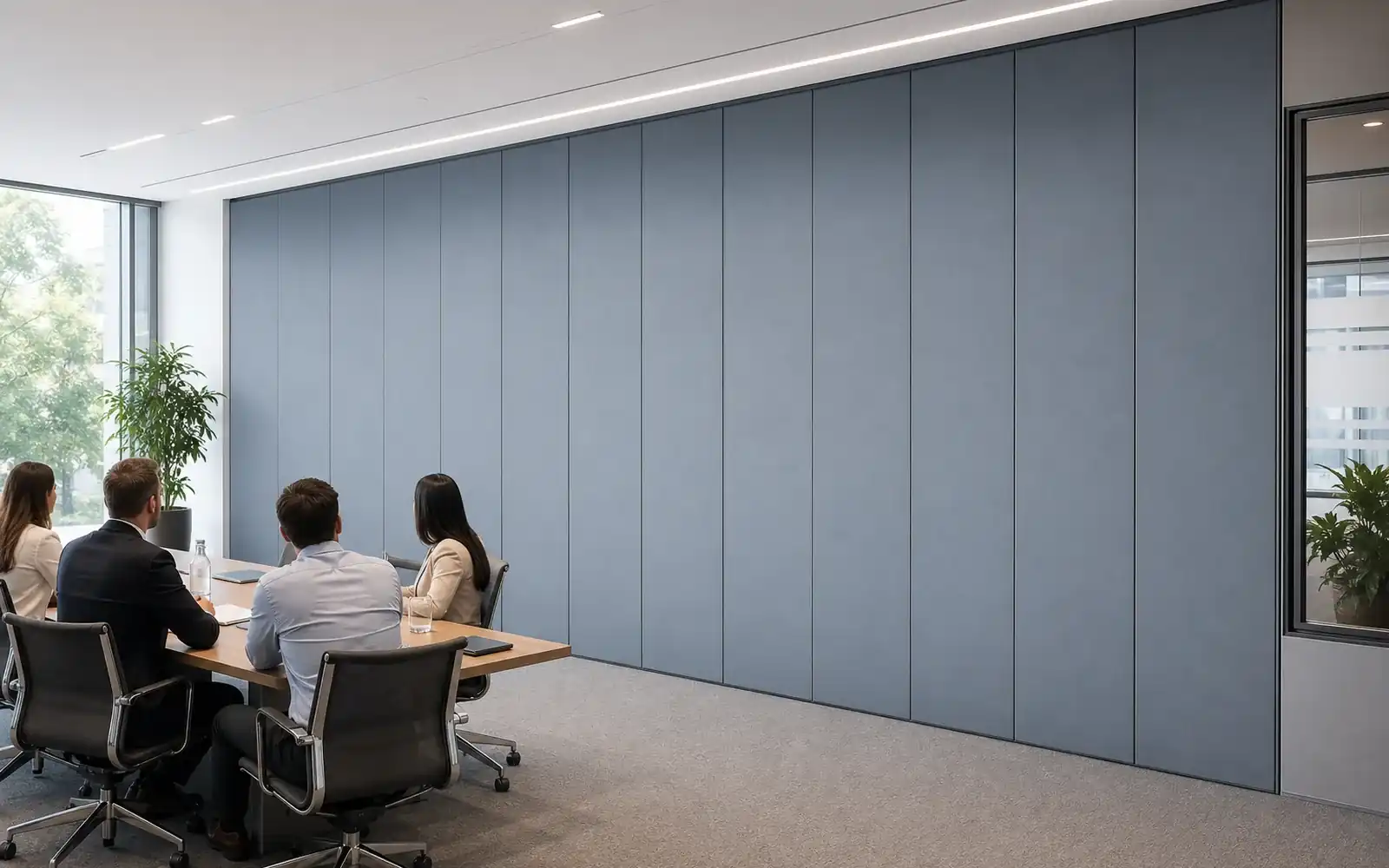
Should the handover package include pass-door information?
Yes, where pass doors are part of the scope. Pass-door requirements and project documentation can be discussed during planning so that the handover record reflects the agreed configuration.
How should finish options be recorded?
Record the confirmed finish for each panel area, using approved samples or submittals where available. Confirmed finish options include laminate, melamine, fabric, leather, glass and other approved surfaces.
What should happen if the layout changes during construction?
The handover evidence should be updated to reflect the revised coordination. Route and parking reviews should be repeated where the change affects movement or stacking.
Can handover evidence guarantee future performance?
No. Handover evidence records what was supplied and agreed. Project-specific support, acoustic and dimensional requirements should be confirmed with qualified specialists.
Conclusion: Build Handover Evidence Around Project Facts
A strong movable partition wall handover package is built from maintained product facts, visible evidence limits and project-specific drawing review. It should help the owner and future teams understand the installed system without overstating performance or hiding open items.
Before sign-off, confirm the approved layout, route review, finish records and open-item register. Where acoustic, support or dimensional questions remain, resolve them through the project’s qualified specialists.
To discuss pass-door requirements, project documentation or coordination for your next flexible-space project, contact EBUNGE. You can also review the movable partition wall product context and see related project references for planning inspiration.
Related decision stage and product context
This is the evidence review at handover, after design and installation decisions. For the product context, see the acoustic movable partition interfaces or the hotel ballroom partition application; neither page establishes project-specific acoustic performance.
Continue Exploring
More Installation and Maintenance Guides
- Newer guideMovable Partition Installation Trade Sequencing
- Earlier guideWho Coordinates the Ceiling Interface When Operable Walls Meet Service
- Related guideMovable Partition Wall Handover Commissioning Records
- Related guideWho Sets the Ceiling Interface Datum When Partition Tracks Meet Curved