
html body.single-post main#content.site-main{box-sizing:border-box!important;width:calc(100% – 32px)!important;max-width:900px!important;margin-left:auto!important;margin-right:auto!important;padding-left:0!important;padding-right:0!important}
Quick answer: partition interface decision
Review focus: partition interface decision.
Partition interface decision tracking design reviews is the discipline of keeping every movable-wall interface decision visible, owned and traceable between formal review meetings. Architects rarely lose decisions inside a review; they lose them in the weeks between reviews, when a finish changes, a stacking position shifts or a pass-door question is answered verbally. This article offers an evidence-bounded framework for logging those decisions without inventing performance, engineering or commercial conclusions.
Why Interface Decisions Slip Between Reviews
Project review term: partition interface decision.
Movable partitions touch many disciplines at once: structure above the opening, ceiling and finish transitions, adjacent door frames, furniture layouts and the routes panels follow when they move. Each discipline may resolve its own scope while the shared interface remains unowned. A review meeting can approve a layout concept while leaving the interface between that concept and the ceiling zone undocumented.
The gap widens because decisions arrive in different formats. A sketch, a markup on a drawing, a meeting note or a finish sample can all carry a decision. Without a single tracking location, the project relies on memory and inbox search. That is where contradictions appear later.
What Counts as a Trackable Interface Decision
Coordination scope: partition interface decision.
A trackable decision is specific, dated and tied to a drawing or document reference. It states what was decided, who owns the next action and what evidence is still required. Vague approvals such as “partition accepted” are not trackable because they do not identify the interface being accepted.
Decision types worth logging
- Route decisions: straight, turning or stacking paths reviewed against the layout.
- Parking decisions: where panels rest when the opening is clear, subject to coordinated design.
- Finish decisions: laminate, melamine, fabric, leather, glass or another approved surface.
- Pass-door decisions: whether a pass-door requirement exists and how it is documented.
- Evidence decisions: which acoustic, support or dimensional questions remain open.
Each entry should reference the drawing revision it depends on. When the revision changes, the decision is flagged for re-confirmation rather than silently inherited.
A Lightweight Decision Log Structure
Checklist focus: partition interface decision.

The log does not need complex software. A table with consistent columns is enough, provided it is updated between reviews rather than only at them. The value comes from the discipline of writing decisions down while the context is fresh.
| Field | Purpose |
|---|---|
| Decision ID | Unique reference used in drawings and meeting notes. |
| Interface area | The specific junction or route the decision affects. |
| Status | Open, confirmed, superseded or awaiting evidence. |
| Owner | The person responsible for the next action. |
| Evidence needed | What must be confirmed before the decision is treated as final. |
Keep the log short enough to read in one sitting. A long register that nobody reviews has the same effect as no register at all.
Running the Between-Review Check
Review focus: partition interface decision.
Between formal reviews, run a short check against the log. This is not a new review; it is a maintenance pass that prevents surprises at the next milestone. The check should confirm that open items still have owners and that no drawing revision has invalidated a prior decision.
Numbered between-review routine
- Compare the current drawing set against the decision log revision references.
- Mark any decision affected by a changed layout, finish or route.
- Confirm that each open item still has a named owner and a next step.
- Separate decisions that are confirmed from those awaiting project-specific evidence.
- Send a short summary before the next review so discussion starts from a shared record.
This routine keeps the review meeting focused on unresolved interfaces instead of re-establishing what was already agreed.
Evidence Boundaries Architects Should Respect
Some questions cannot be answered from a drawing or a finish sample. The suitability of each route and parking arrangement depends on the approved layout, circulation, ceiling interfaces and operating sequence. Support conditions above the opening, dimensional tolerances and route feasibility all depend on the specific project.
Evidence note: a visible finish, photograph or drawing does not by itself confirm acoustic performance, structural capacity, cleaning compatibility or a application reference. Those require matching project-specific documentation.
When the log reaches a question of this kind, record it as awaiting evidence rather than closing it with an assumption. This protects the design team from carrying an unsupported conclusion into construction documents.
Coordinating With the Partition Supplier
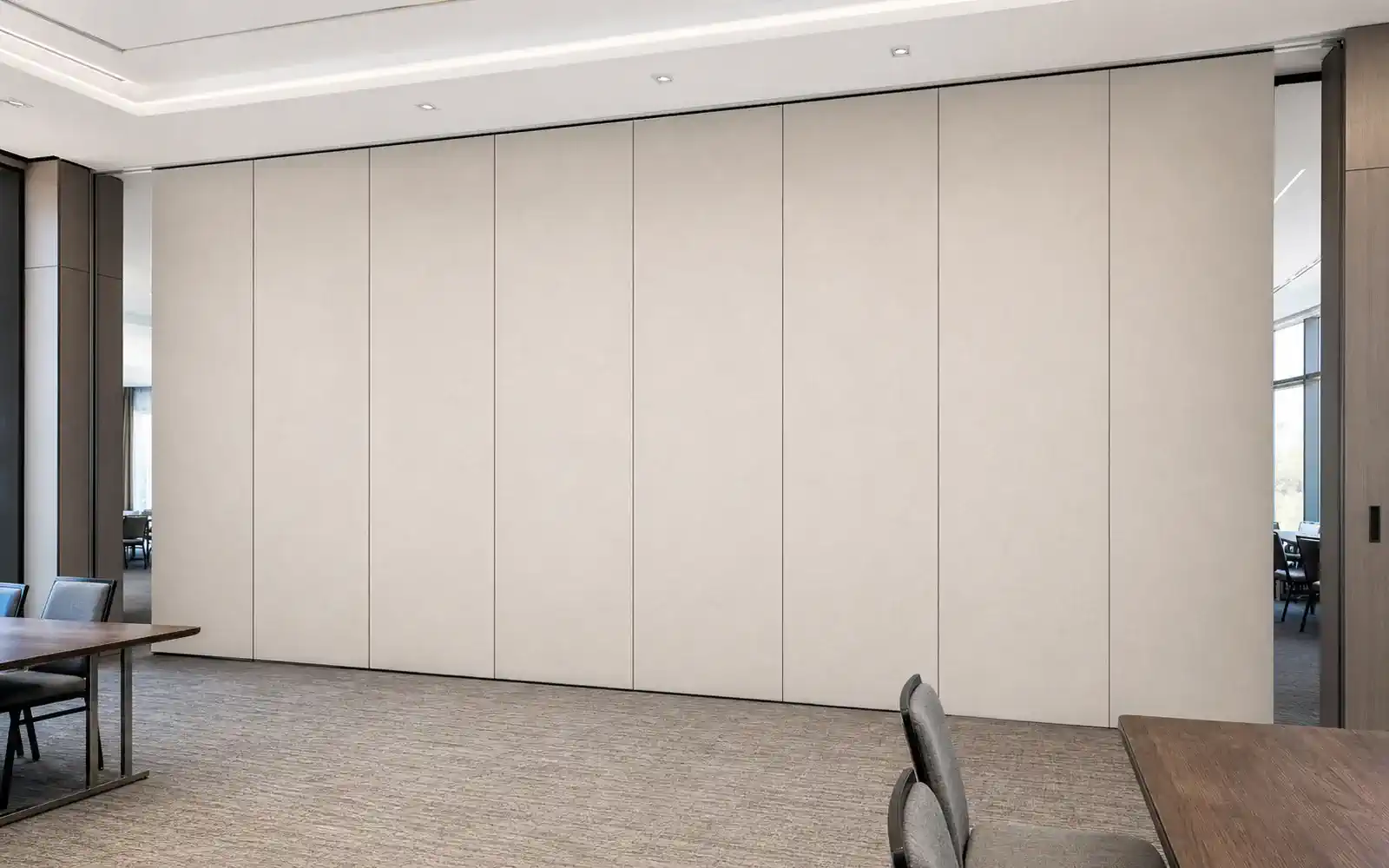
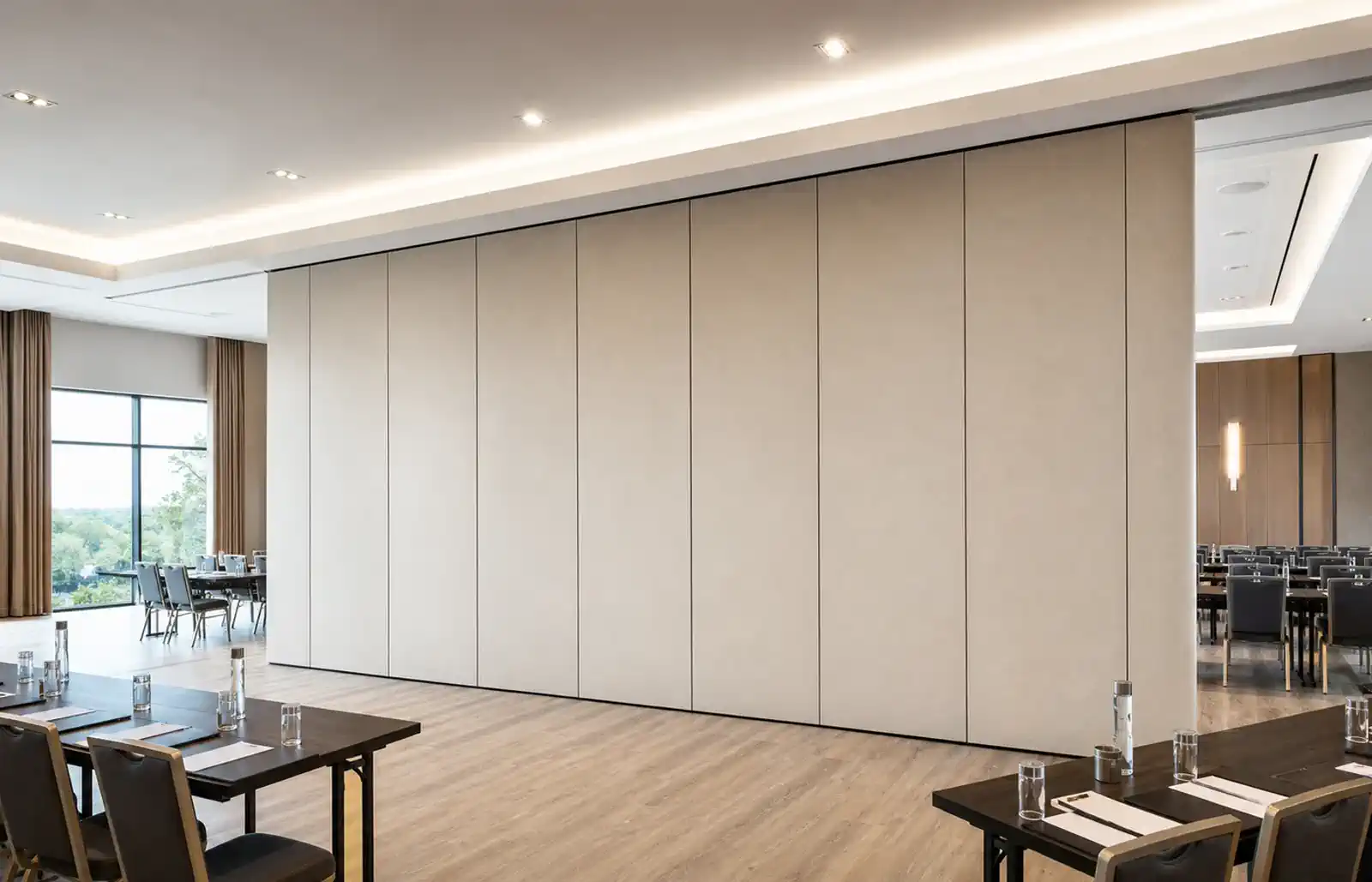
Suppliers can respond more precisely when the log identifies the interface in question. For movable partitions, the maintained product facts are that panels are individually movable, suspended from a top track, cross the opening without a floor track and park at a planned stacking position. Straight, turning and stacking routes are reviewed from the layout, and finish options include laminate, melamine, fabric, leather, glass and other approved surfaces.
Pass-door requirements and project documentation can be discussed directly. What cannot be assumed is performance, support capacity or dimensional fit without project-specific confirmation. Bring the log to that conversation so questions are answered against a shared record. You can review the movable partition wall range for general context and see how similar coordination questions are handled in the projects section.
Common Tracking Mistakes to Avoid
One frequent mistake is treating a review approval as a permanent decision. Approvals are valid for the revision they reference. Another is logging only disagreements; agreements also need a record so they are not reopened unnecessarily. A third is allowing the log to become a general issues list, which dilutes its purpose.
Keep the log focused on interfaces. If an item does not affect a junction, route, finish transition or evidence requirement, it probably belongs elsewhere.
Frequently Asked Questions
What is partition interface decision tracking in design reviews?
It is the practice of recording interface decisions with a reference, owner and status so they remain traceable between formal review meetings.
Who should own the decision log?
Usually the architect or design coordinator maintains it, while each decision has a named owner responsible for the next action.
Can a finish sample confirm acoustic performance?
No.
How often should the log be updated?
Update it whenever a decision is made or a drawing revision changes the basis of a prior decision, not only at review milestones.
What should be done with unresolved items?
Mark them as awaiting evidence, keep the owner visible and raise them in the next review or supplier discussion.
Does a movable partition require a floor track?
EBUNGE movable partition panels are top-hung and cross the opening without a continuous floor running track along the partition line. The exact route, junction arrangement, continuous overhead path and parking position must be confirmed from the coordinated project drawings.
Conclusion and Next Step
Tracking partition interface decisions is less about tools and more about rhythm. A simple log, a short between-review check and a clear evidence boundary keep the design team aligned without inventing conclusions the project cannot support. Confirm support, acoustic and dimensional requirements for each project before treating any interface as final.
To discuss pass-door requirements, finish options or project documentation, contact the EBUNGE team with your layout and open questions.
Continue Exploring
More Movable Partition Guide Guides
- Newer guideHow Architects Run a Partition Interface Query Log Through Consultant
- Earlier guideHow Architects Close Out Partition Interface Actions Before Track
- Related guideHow Architects Log Partition Coordination Assumptions Before Design
- Related guidePhasing Movable Partition Work When Renovation Zones Flip Mid-Project