
html body.single-post main#content.site-main{box-sizing:border-box!important;width:calc(100% – 32px)!important;max-width:900px!important;margin-left:auto!important;margin-right:auto!important;padding-left:0!important;padding-right:0!important}
Quick project answer
Review focus: operable wall track anchorage.
The suitability of each route and parking arrangement depends on the approved layout, circulation, ceiling interfaces and operating sequence. The question of who confirms operable wall track anchorage ceiling grid flatness is a coordination issue, not a single trade responsibility. Each party holds part of the evidence needed to confirm that the overhead route is suitable for the project-specific track and support design.
This article explains the confirmation process, the limits of visible evidence, and how project teams can document decisions without inferring performance that has not been verified. Visible references can support layout discussion but do not verify hidden construction or performance. Every project requires its own drawing review and written confirmation.
Why Ceiling Grid Flatness Matters for Top-Hung Operable Walls
Project review term: operable wall track anchorage.
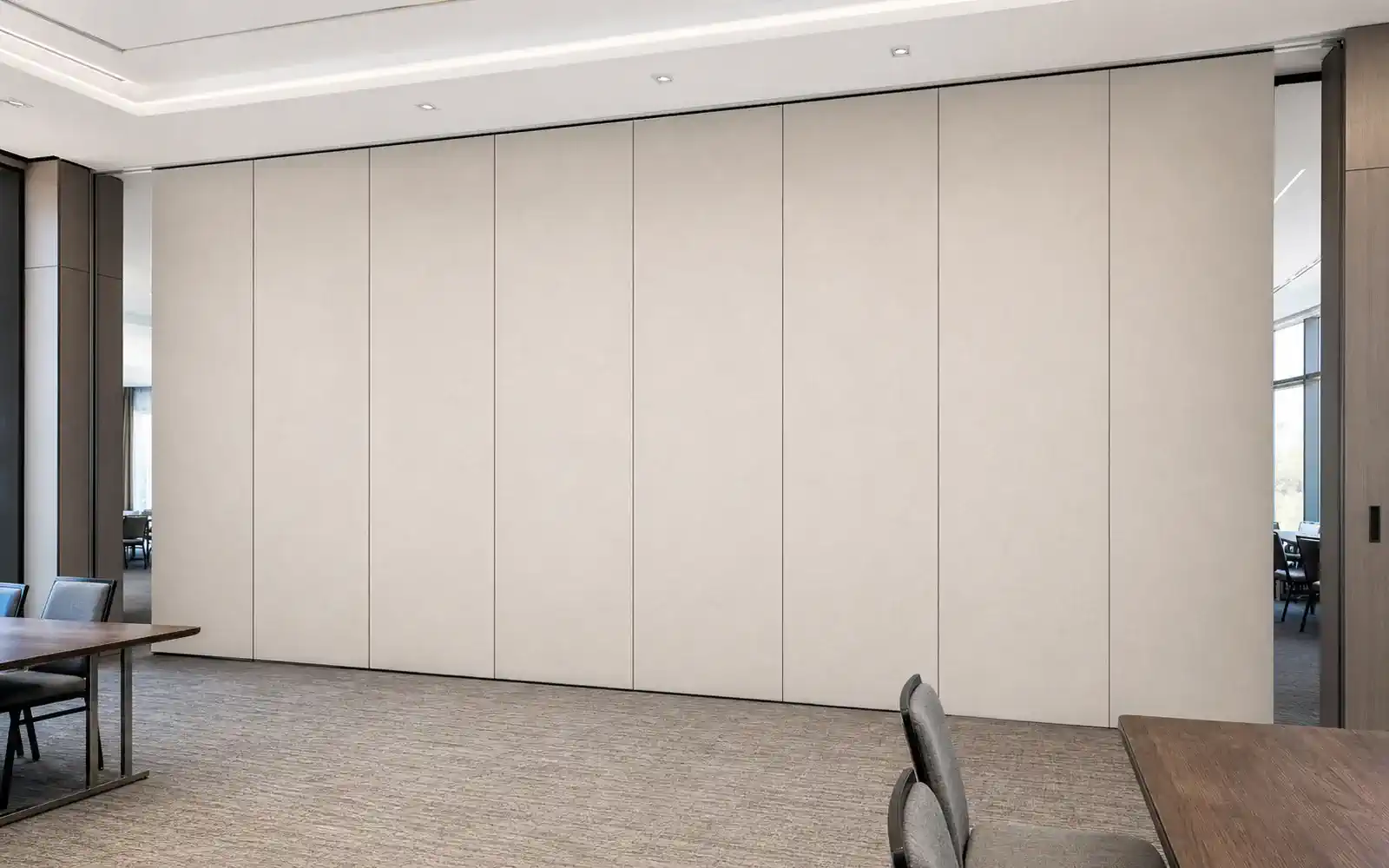
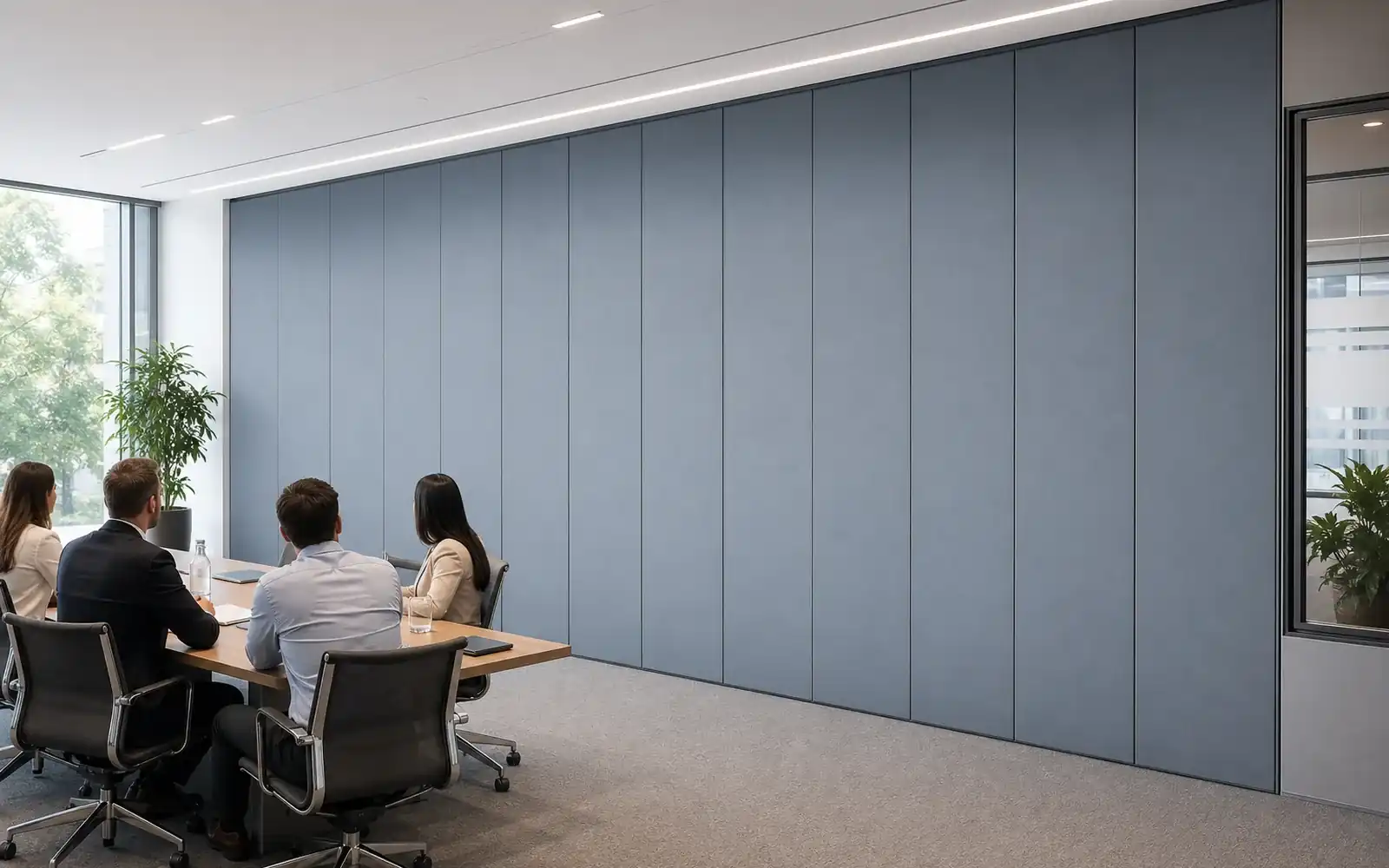
EBUNGE movable wall panels are individually movable, suspended from a top track, and cross the opening without a floor track. They park at a planned stacking position. Because the panels hang from the overhead track, the track must follow a continuous, supported route.
Flatness is not a cosmetic issue. It affects how the track sits, how panels travel, and whether the system can move as designed. Those require separate project-specific review. Teams should treat ceiling grid flatness as one input among many in the ceiling interface coordination process.
Who Is Responsible for Confirming Ceiling Grid Flatness?
Coordination scope: operable wall track anchorage.
Responsibility is shared and should be defined in the project’s coordination plan. The following roles typically contribute:
- Architect or interior designer: Defines the ceiling design intent, grid layout, and interface with the partition system.
- Ceiling contractor: Installs the ceiling grid and can report as-built flatness and deviations.
- General contractor: Coordinates trades, schedules inspections, and confirms site readiness.
- Partition supplier: Provides track and anchorage requirements based on the project layout and confirms whether the proposed route is feasible.

No single party should assume another has confirmed flatness. The confirmation should be documented in writing, with drawings and site measurements where required.
What Evidence Is Needed Before Track Anchorage?
Checklist focus: operable wall track anchorage.
Evidence should be project-specific and traceable. Generic assumptions or visual checks are not enough. The following evidence note lists typical items that may be requested. The exact list depends on the project’s design and contractual requirements.
Evidence note: Ceiling grid flatness confirmation should reference the approved ceiling layout, the track route drawing, and the structural support plan. Site measurements may be needed to verify as-built conditions. Any deviation from the design should be reviewed by the responsible parties before anchorage. This article does not provide acceptance criteria; those must come from the project specification.
Teams should also confirm that the track route is continuous and connected. The exact route, junction arrangement, continuous overhead path and parking position must be confirmed from the coordinated project drawings. If the layout includes turning or stacking routes, those paths must be reviewed as part of the same coordination effort.
Coordination Steps for Ceiling Grid and Track Interface
Review focus: operable wall track anchorage.
A structured process helps avoid late-stage conflicts. The following numbered steps reflect common coordination practice. They are not a substitute for project-specific engineering.
- Review the layout: Confirm straight, turning, and stacking routes from the architectural drawings.
- The exact overhead route and support arrangement must be confirmed by the responsible project team from coordinated drawings.
- Check ceiling grid design: Verify that the grid layout and ceiling height allow the track to be installed as intended.
- Conduct a site review: Compare as-built ceiling conditions with the design. Note any deviations.
- Document responsibilities: Record who will confirm flatness, who will approve deviations, and who will release the area for anchorage.
- Confirm before installation: Obtain written confirmation that the ceiling interface is ready for track anchorage.
This process should be repeated if the ceiling design changes or if site conditions differ from the drawings.
Common Coordination Gaps and How to Avoid Them
Several gaps appear frequently in partition projects. One is assuming that the ceiling contractor’s standard installation tolerance automatically satisfies the track anchorage requirement. A third is delaying partition coordination until after the ceiling is closed.
To avoid these gaps, bring the partition supplier into the ceiling coordination process early. Share the proposed track route and ask for the anchorage requirements. Confirm whether the ceiling grid can accommodate those requirements or whether adjustments are needed.
Project-Specific Confirmation and Documentation
Every project has unique dimensions, support conditions, and ceiling systems. The confirmation of ceiling grid flatness must therefore be project-specific. Teams should not rely on general statements or past projects as proof of suitability. Instead, they should request written confirmation from the responsible parties and keep it with the project records.
EBUNGE can discuss pass-door requirements and project documentation.
FAQ: Ceiling Grid Flatness and Operable Wall Track Anchorage
Who typically confirms ceiling grid flatness before track anchorage?
The confirmation is usually a shared responsibility. The project’s coordination plan should name the responsible party.
Can I rely on a visual inspection of the ceiling grid?
The project specification should define what evidence is acceptable.
What happens if the ceiling grid is not flat enough for the track?
If deviations are found, the responsible parties should review them against the project requirements. Options may include adjusting the ceiling grid, modifying the support structure, or revising the track route. Any change must be confirmed by the appropriate professionals.
Does EBUNGE confirm ceiling grid flatness for my project?
EBUNGE can provide track and anchorage requirements and discuss project documentation. EBUNGE does not replace the engineer of record or the general contractor.
How early should ceiling grid coordination begin?
Coordination should begin during the design phase, before the ceiling grid is installed. Early involvement helps avoid conflicts and reduces the need for rework. If the ceiling is already installed, a site review should be scheduled before track anchorage.
Are there standard flatness tolerances for operable wall tracks?
Tolerances depend on the specific system and project conditions. This article does not provide numerical tolerances. The project specification and the partition supplier’s requirements should be used to determine acceptable limits.
Conclusion: Confirm Before You Anchor
Ceiling grid flatness is a shared coordination responsibility. Before operable wall track anchorage, the project team should confirm the track route, support conditions, and ceiling interface through drawings, site review, and written documentation. No single trade should assume another has verified flatness. By defining responsibilities early and keeping evidence project-specific, teams can reduce installation conflicts and support a smoother partition installation.
To discuss your project’s ceiling interface, track anchorage requirements, or documentation needs, contact EBUNGE. You can also review the operable wall system overview or explore project references for general context.
Continue Exploring
More Installation and Maintenance Guides
- Newer guideWho Fixes the Ceiling Interface Datum When Partition Tracks Meet Uneven
- Earlier guideMovable Partition Installation Ceiling Close-in Planning
- Related guideMovable Partition Renovation Phasing Reverse Handover
- Related guideHow Contractors Build a Movable Partition Installation Crew Plan Around