
html body.single-post main#content.site-main{box-sizing:border-box!important;width:calc(100% – 32px)!important;max-width:900px!important;margin-left:auto!important;margin-right:auto!important;padding-left:0!important;padding-right:0!important}
Quick answer: movable partition renovation phasing reverse
Review focus: movable partition renovation phasing reverse.
Movable partition renovation phasing reverse handover describes a sequence in which the last zone to be finished is the first to be occupied, or the first zone released is the last to receive its partition scope. This reverses the usual assumption that partition work follows a clean, forward construction sequence. For overseas contractors, architects and renovation teams, the planning task is not to force the partition package into a fixed order, but to protect the overhead route, parking position and finish interfaces while other trades still occupy adjacent areas.
The focus keyword appears here because reverse handover changes the order of decisions, not the product facts. EBUNGE movable partition panels are individually movable, suspended from a top track, cross the opening without a floor track, and park at a planned stacking position. Straight, turning and stacking routes are reviewed from the layout. Those maintained facts are the stable base for phasing; everything else must be confirmed against project drawings and site conditions.
Why Reverse Handover Changes Partition Planning
Project review term: movable partition renovation phasing reverse.
In a forward handover, the partition route is often installed before finishes and furniture arrive. In reverse handover, an occupied or partially finished zone may sit on one side of the opening while the partition scope is still being coordinated on the other. The exact overhead route and support arrangement must be confirmed by the responsible project team from coordinated drawings.
Reverse handover also affects the parking position. If the planned stacking area is inside a zone that hands over early, the partition may need a different temporary or permanent parking arrangement. That is a layout question, not a performance question. It should be resolved with the project team before panels are ordered or routes are fixed.
What stays stable regardless of handover order
The top-hung principle remains stable: panels move without a continuous floor running track or floor hardware along the partition line. The overhead route must be continuous and supported as reviewed for the project. The exact route, junction arrangement, continuous overhead path and parking position must be confirmed from the coordinated project drawings. These are planning boundaries, not optional details.
What must be re-checked when zones reverse
Re-check the sequence of route completion, the location of the parking position, the protection of adjacent finishes, and the point at which the opening can be closed or opened. Each item depends on the actual layout, so confirm it with drawings rather than assuming a standard order.
Drawing-Led Checks Before Any Phasing Commitment
Coordination scope: movable partition renovation phasing reverse.
Phasing decisions should be traceable to drawings. Without that reference, reverse handover can create conflicting assumptions between the partition scope and adjacent trades.
Use the following checklist as a coordination aid. It does not replace project-specific support, acoustic or dimensional review.
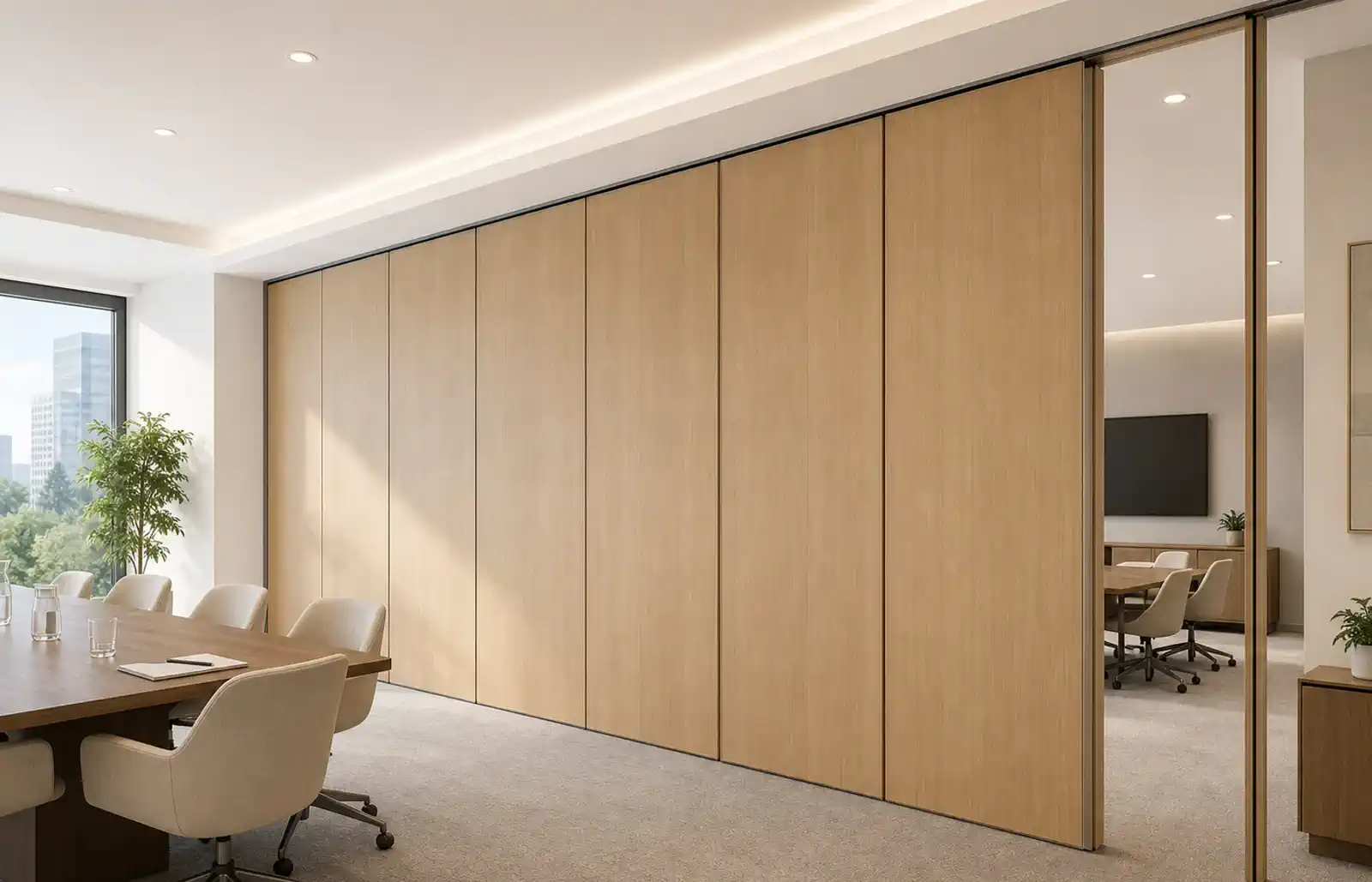
- Confirm the full overhead route from the closed position to the parking position, including any turns.
- Confirm the parking position and whether it remains accessible during each handover stage.
- Confirm the opening dimensions and the relationship between the partition line and adjacent finishes.
- Confirm finish selections from approved options such as laminate, melamine, fabric, leather, glass and other approved surfaces.
- Confirm whether a pass-door requirement applies and how it affects the panel sequence.
- Confirm the documentation needed for the project, including layout drawings and coordination notes.
Sequencing Options When Zones Hand Over in Reverse
Checklist focus: movable partition renovation phasing reverse.
There is no single correct sequence. The useful question is which sequence keeps the overhead route, parking position and finish interfaces coordinated. A compact comparison can help the project team frame the discussion without implying a performance result.
| Sequencing approach | When it may suit reverse handover | What to confirm |
|---|---|---|
| Route-first coordination | The overhead route crosses zones that hand over at different times | Continuous supported route and access for review |
| Parking-first coordination | The planned stacking position sits in an early handover zone | Alternative parking position or temporary protection |
| Finish-later coordination | Adjacent finishes are still being completed | Finish selection and protection of approved surfaces |
| Opening-first coordination | The opening must remain usable during staged handover | Pass-door requirements and panel movement sequence |
The table is a planning aid only. Each row still requires project-specific confirmation of support, acoustics and dimensions.
Interface Coordination With Other Trades
Review focus: movable partition renovation phasing reverse.
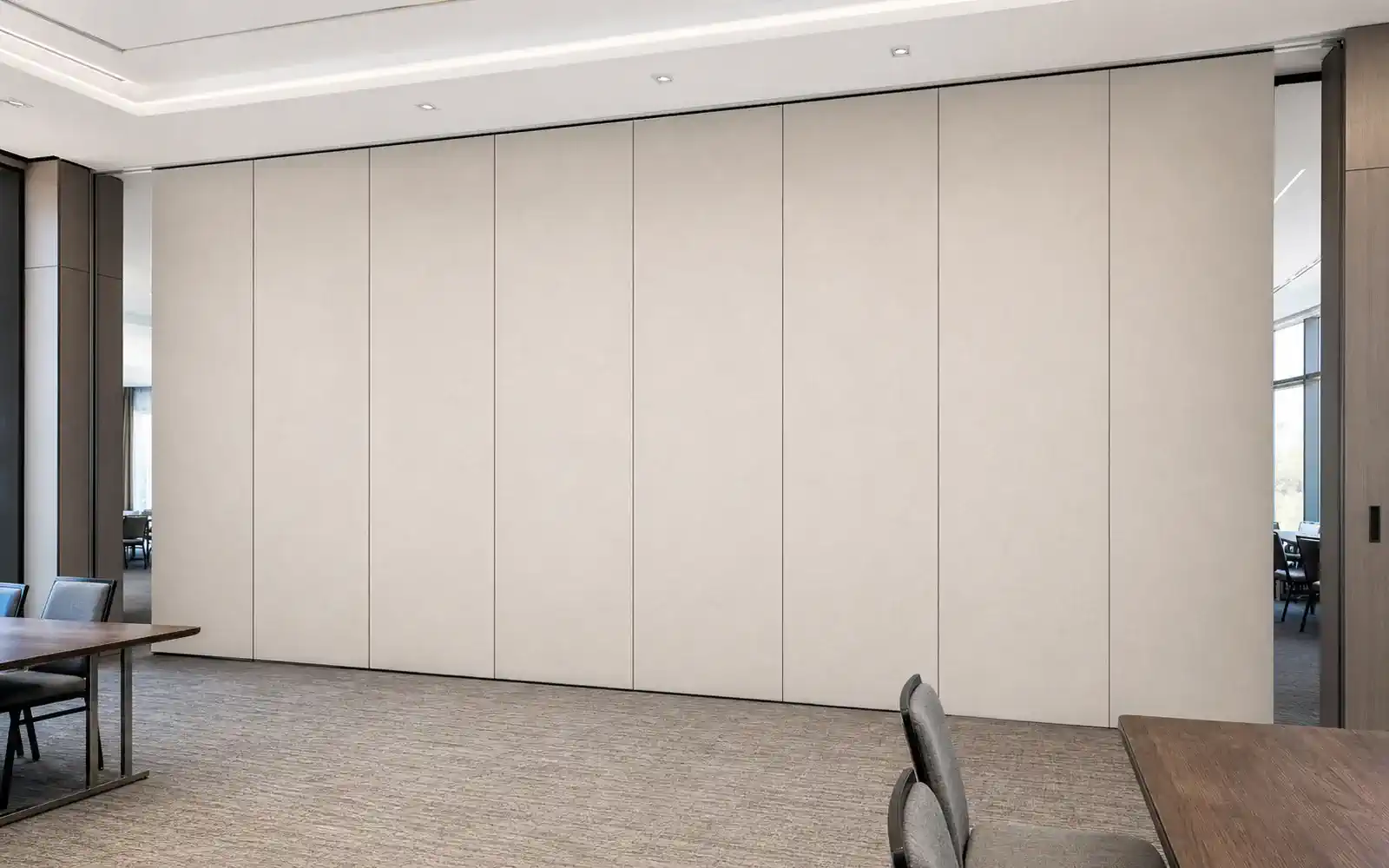
Reverse handover often means the partition scope meets ceilings, services, floor finishes and furniture in a different order. The partition team needs to know when each interface will be available, and the other trades need to know which areas must remain clear for the overhead route and parking position.
The suitability of each route and parking arrangement depends on the approved layout, circulation, ceiling interfaces and operating sequence. If acoustic separation is part of the brief, confirm the project-specific requirement with the responsible acoustic consultant and review it against the partition layout.
Questions to raise in coordination meetings
Ask which zone hands over first, where the partition will park during each stage, whether the overhead route is complete, and which finishes are approved. These questions keep the conversation on visible, confirmable items rather than assumed outcomes.
Documentation to keep current
Keep the layout drawing, finish schedule and coordination notes aligned as the sequence changes. If the handover order shifts again, the drawing set should show the revised route and parking position before work proceeds.
Evidence Boundaries for Reverse Handover Planning
Project review term: movable partition renovation phasing reverse.
Planning guidance should not become a performance claim. Visible references can support layout discussion but do not verify hidden construction or performance. Do not assume that a visible shape proves a hidden structure or result. Where a statement is comparative, absolute or causal, it needs matching evidence or it should be removed.
Evidence note: confirm project-specific support, acoustic and dimensional requirements before treating any phasing option as final. The maintained product facts cover top-hung movement, clear floor crossing, planned parking and approved finish options; they do not establish project performance.
This boundary matters most in reverse handover, because early occupation can create pressure to skip review steps.
FAQ: Movable Partition Renovation Phasing and Reverse Handover
What does reverse handover mean for movable partition work?
It means the order in which zones are released or occupied does not follow the partition installation sequence. The planning response is to re-check the overhead route, parking position and finish interfaces against the actual handover order.
Can movable partitions be planned without a floor track?
EBUNGE movable partition panels are top-hung and move without a continuous floor running track or floor hardware along the partition line. The overhead route must still be continuous and supported as reviewed for the project.
How should the parking position be chosen when zones hand over early?
Parking style is customized to the customer layout and project requirements. If the planned stacking position falls inside an early handover zone, review an alternative position or protection measure with the project team before finalizing the sequence.
Which finishes can be considered for a phased renovation?
Confirmed finish options include laminate, melamine, fabric, leather, glass and other approved surfaces. Finish selection should be confirmed against the project brief and the approved schedule, not inferred from a sample alone.
Do acoustic ratings decide the phasing sequence?
No. If acoustic separation is required, confirm the project-specific requirement with the responsible consultant and review it alongside the layout.
What should be confirmed before panels are ordered?
Confirm the layout, straight and turning routes, parking position, opening dimensions, finish selections, pass-door requirements and project documentation. These items should be reviewed from drawings rather than assumed.
Conclusion and Next Step
Movable partition renovation phasing reverse handover is manageable when the project team treats the overhead route, parking position and finish interfaces as drawing-led decisions. Keep the maintained product facts in view, avoid unsupported performance conclusions, and confirm project-specific support, acoustic and dimensional requirements before work proceeds.
To discuss a specific layout, review the movable partition wall range, see related project references, or contact EBUNGE with your drawings and handover sequence for coordination.
Continue Exploring
More Installation and Maintenance Guides
- Earlier guideHow Contractors Build a Movable Partition Installation Crew Plan Around
- Related guideMovable Partition Handover File Overlapping Trades
- Related guidePhasing Movable Partition Work When Renovation Zones Hand Over Out
- Related guideAssemble a Movable Partition Wall Handover Pack for Facility