
html body.single-post main#content.site-main{box-sizing:border-box!important;width:calc(100% – 32px)!important;max-width:900px!important;margin-left:auto!important;margin-right:auto!important;padding-left:0!important;padding-right:0!important}
Quick answer: operable wall renovation phasing handover waves
Review focus: operable wall renovation phasing handover waves.
When a renovation is handed over in waves, operable wall renovation phasing handover waves become a coordination problem before they become an installation problem. Each zone may be released at a different time, yet the movable partition must still travel, park and align with adjacent finishes. This article sets out an evidence-bounded planning framework for overseas contractors, architects, interior designers, owners and construction teams. It uses maintained EBUNGE product facts and avoids unsupported performance, engineering or commercial conclusions. Confirm all project-specific support, acoustic and dimensional requirements with the relevant design team.
Why Wave Handover Changes Operable Wall Planning
Project review term: operable wall renovation phasing handover waves.
In a single-phase handover, the partition route, parking position and adjacent structure are usually reviewed together. In a wave handover, one zone may be occupied while another is still being altered. The partition work must therefore be sequenced against zone release dates, not only against the overall programme.
EBUNGE movable wall panels are individually movable, suspended from a top track, cross the opening without a floor track, and park at a planned stacking position. Those facts matter because they define what must be coordinated early: the overhead route, the parking area and the interfaces at each zone boundary.
Start With the Route, Not the Panel Finish
Coordination scope: operable wall renovation phasing handover waves.
Straight, turning and stacking routes are reviewed from the layout. Before finishes are selected, the project team should confirm that every proposed movement path has a continuous connected overhead route and project-specific support review. The exact route, junction arrangement, continuous overhead path and parking position must be confirmed from the coordinated project drawings.
This is especially important when a wave handover creates temporary openings, temporary walls or incomplete ceilings. A route that works in the final layout may not work during an intermediate phase. Record the route assumptions on the phased drawings and revisit them at each handover.
Route review checklist
- Mark the full travel path on the phased layout, including turns and parking.
- Confirm the overhead route is continuous for each phase, not only at final completion.
- Identify any temporary structure that could interrupt the route.
- Check that the parking position remains accessible during and after each handover.
- Record support and dimensional questions for project-specific confirmation.
Coordinate Finishes and Interfaces by Zone
Checklist focus: operable wall renovation phasing handover waves.
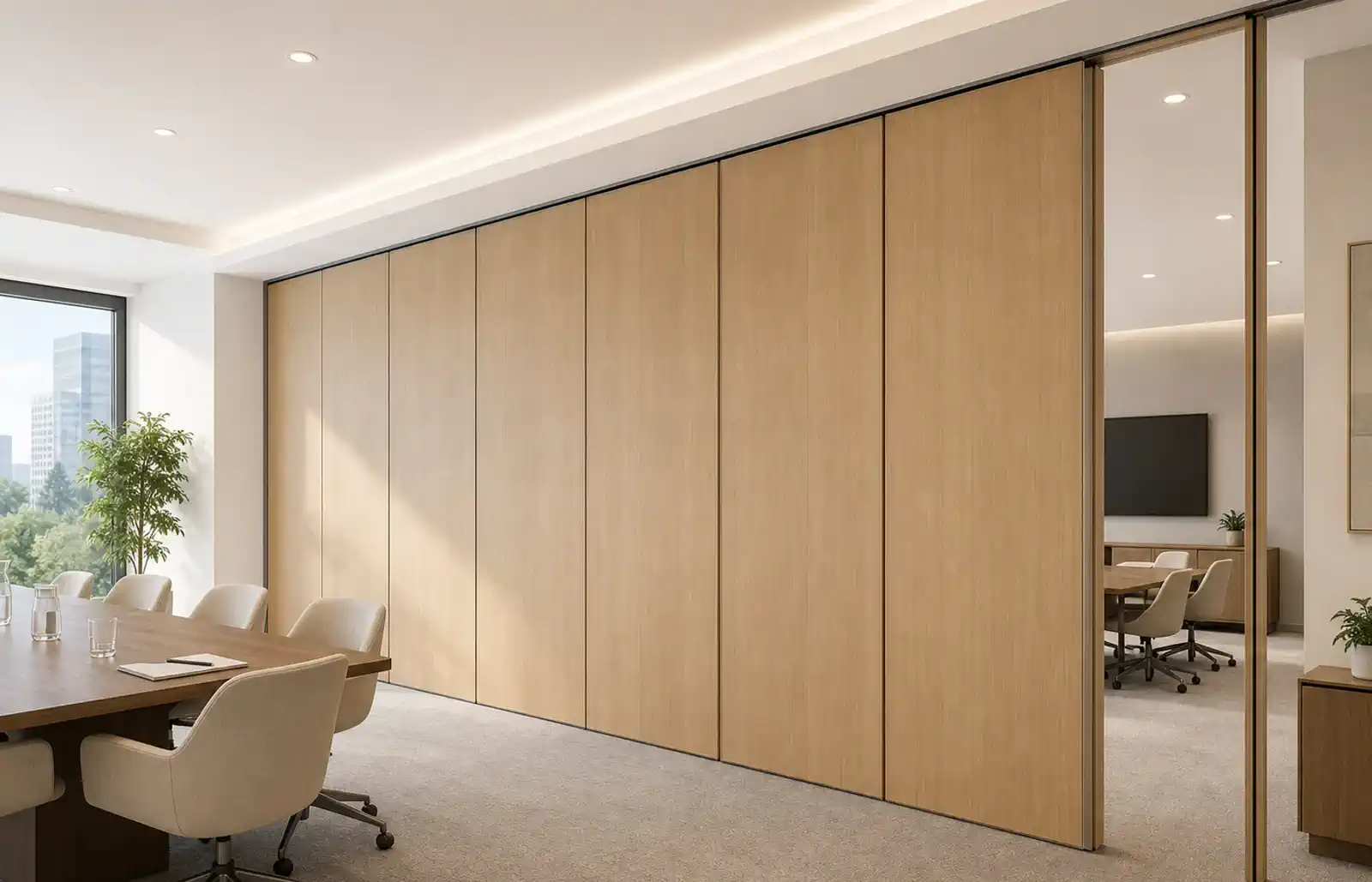
Confirmed finish options include laminate, melamine, fabric, leather, glass and other approved surfaces. Finish selection can proceed in parallel with route planning, but it should not be used to infer acoustic, fire, durability or maintenance performance. A visible finish is not evidence of hidden performance.
Wave handover often means adjacent finishes are installed at different times. The partition interface at each zone boundary should be described in the same drawing set as the wall, ceiling and floor finishes. Where a pass-door is required, pass-door requirements and project documentation can be discussed with the EBUNGE team.
Interface coordination table
| Interface | What to confirm | Evidence boundary |
|---|---|---|
| Overhead route | Continuous connected path for each phase | Requires project-specific support review |
| Parking position | Planned stacking location and access | Customized to layout and project requirements |
| Adjacent finishes | Sequence and junction details | Finish choice does not prove performance |
| Pass-door | Requirement and documentation | Confirm with project team |
Use an Evidence Note for Acoustic and Support Questions
Review focus: operable wall renovation phasing handover waves.
The suitability of each route and parking arrangement depends on the approved layout, circulation, ceiling interfaces and operating sequence. Where acoustic separation matters, the project team should confirm the requirement against the specific assembly, interface and test evidence available for that project.
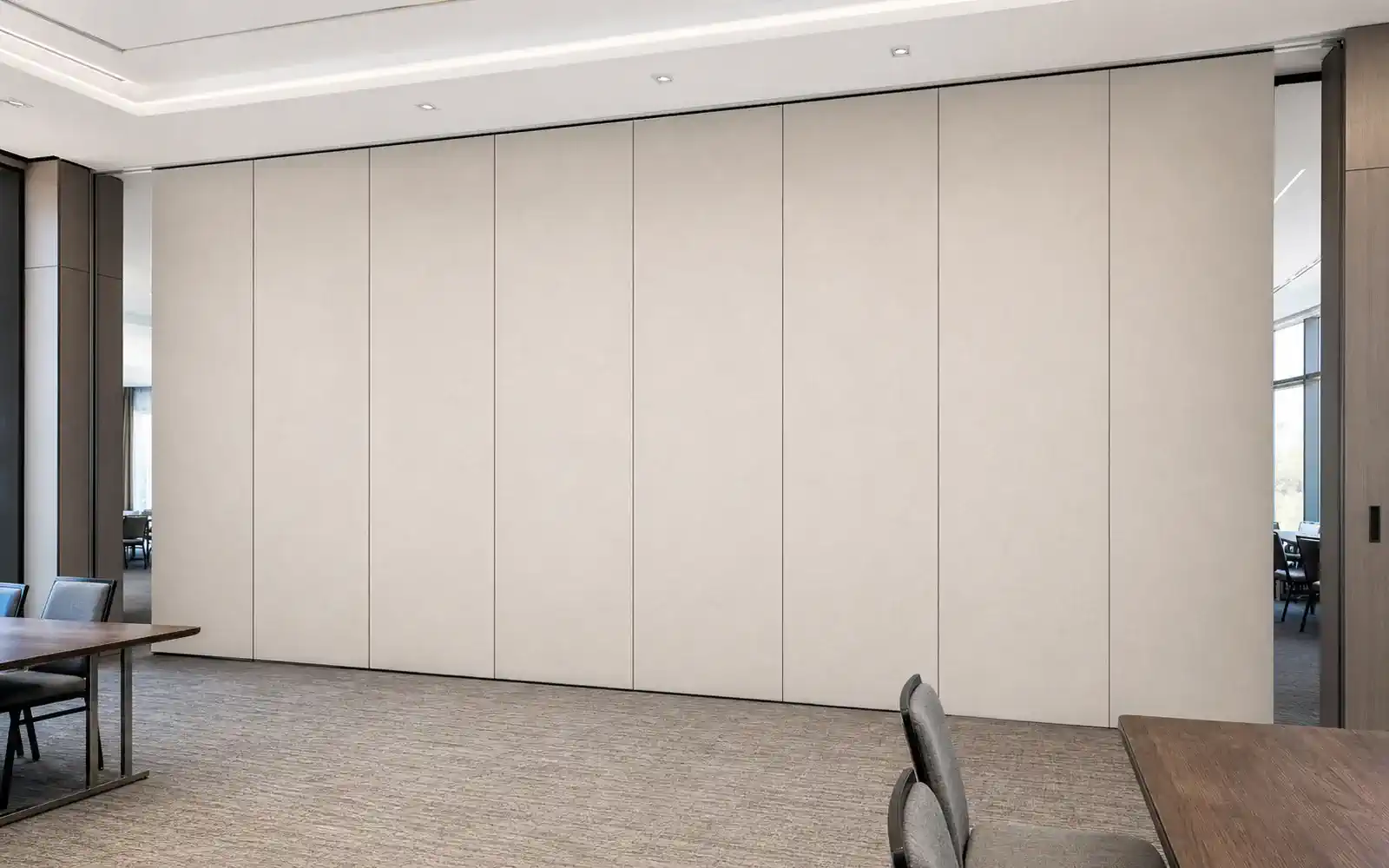
Evidence note: Do not infer acoustic, fire, durability, load or maintenance performance from a finish, photograph or drawing. Confirm project-specific support, acoustic and dimensional requirements before relying on any statement.
Support questions follow the same rule. The top track and overhead route require project-specific review. Wave handover can introduce temporary conditions that differ from the final design, so the review should be repeated at each zone release.
Sequence the Work Around Handover Waves
A practical sequence helps the site team avoid rework. Panel handling and the operating sequence must be confirmed for the selected layout and project conditions.
- Confirm the zone release dates and the order in which spaces become available.
- Review the straight, turning and stacking routes against each phase.
- Identify temporary conditions that could affect the overhead route or parking.
- Coordinate finish selection with the adjacent works and record approved surfaces.
- Discuss pass-door requirements and project documentation early.
- Confirm support, acoustic and dimensional requirements with the project team.
- Revisit the route and parking assumptions at each handover.
Documentation That Supports Wave Handover
Project documentation should show the partition layout, route, parking position and interfaces for each phase. Where information is not yet available, mark it as a confirmation item rather than filling the gap with an assumption.
For teams comparing options, the operable wall system page provides maintained product context. Project examples can be reviewed through the projects section, but a similar layout is not evidence of performance in a different building.
What to confirm before each handover
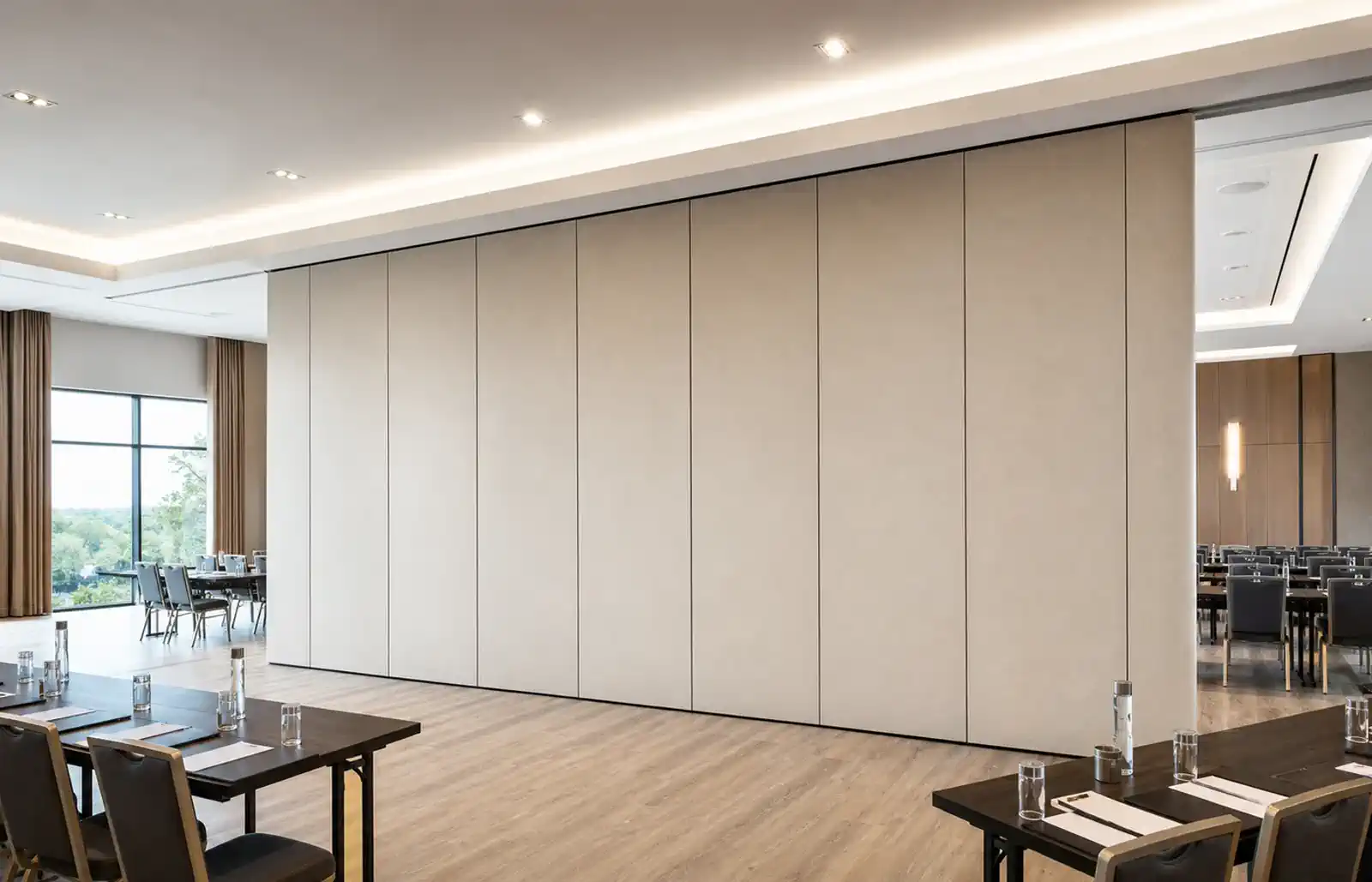
- Current route and parking position for the released zone.
- Any temporary structure affecting the overhead route.
- Finish and interface status at zone boundaries.
- Pass-door and documentation requirements.
- Open support, acoustic and dimensional questions.
Frequently Asked Questions
What is the main risk in operable wall renovation phasing handover waves?
The main planning risk is assuming the final route and parking position will work in every intermediate phase. Temporary conditions can interrupt the overhead route, so each wave should be reviewed separately.
Can operable wall panels cross an untracked gap?
No. Every proposed movement path requires a continuous connected overhead route and project-specific support review. Panels are suspended from a top track and do not use a floor track along the partition line.
Do finish choices prove acoustic performance?
No. Confirmed finish options include laminate, melamine, fabric, leather, glass and other approved surfaces, but a finish is not evidence of acoustic, fire, durability or maintenance performance. Confirm project-specific acoustic requirements separately.
How should STC or Rw be treated in the specification?
This article does not claim a specific rating. The project team should confirm the requirement against the specific assembly and available evidence.
When should pass-door requirements be discussed?
Discuss pass-door requirements and project documentation early, before the phased layout is fixed. This helps the team coordinate the route, parking and interfaces across handover waves.
Is parking style fixed for every project?
No. Parking style is customized to the customer layout and project requirements and may support compact stacking when the coordinated design permits it. Confirm the planned stacking position for each phase.
Conclusion and Next Step
Phasing operable wall work around wave handover is mainly a discipline of drawing review, route confirmation and evidence boundaries. Keep the focus on the continuous overhead route, the planned parking position and the interfaces at each zone release. Do not infer hidden performance from a finish or a similar project.
To discuss your phased layout, pass-door requirements and project documentation, contact EBUNGE and confirm the project-specific support, acoustic and dimensional requirements with your design team.
Continue Exploring
More Installation and Maintenance Guides
- Earlier guideWhat Ceiling Interface Drawings Should Show Before Partition Tracks Are
- Related guideWhat Records Close Out a Movable Partition Handover File?
- Related guideWho Sets the Ceiling Interface Datum When Partition Tracks Meet Raised
- Related guideWho Owns the Ceiling Interface When Movable Partitions Meet Curved