
Why movable partition seals restaurant split matters for service changeovers
Quick project answer
Restaurants often need to change their usable area between lunch, dinner and private events. A movable partition seals restaurant split by dividing one room into separate zones without rebuilding the space. Panel handling and the operating sequence must be confirmed for the selected layout and project conditions.
This article compares common seal approaches for restaurant split-service hours. It focuses on top-hung systems, floor conditions, parking planning and finish coordination. Every product statement below is based on confirmed EBUNGE system facts.
The top-hung principle and what it means for the floor line
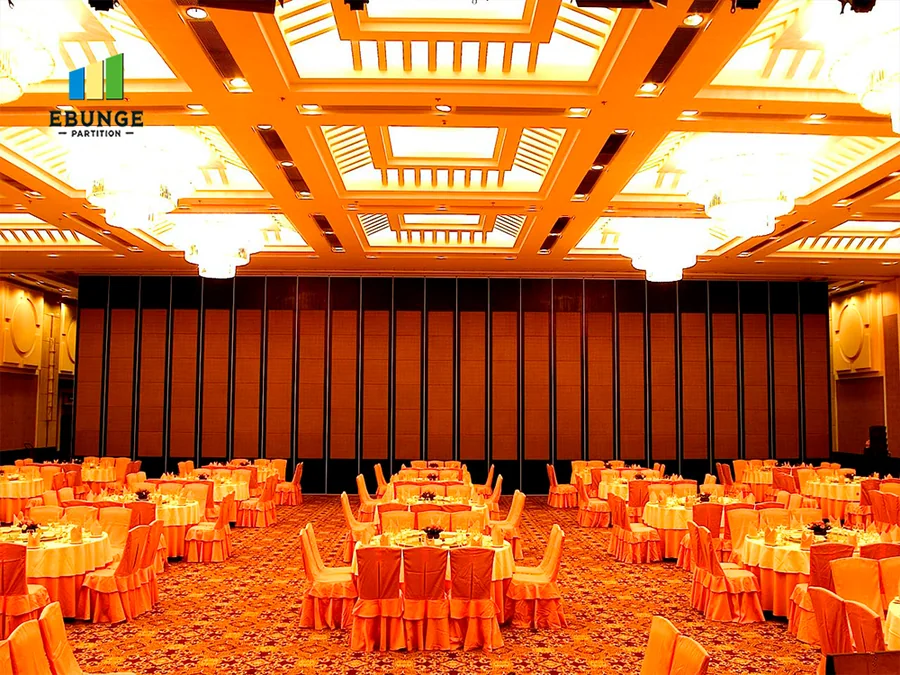
The EBUNGE movable partition system is top-hung. It has no continuous floor running track or operating hardware in the finished floor along the partition line. This means the floor is not cut or damaged for a floor track.
For a restaurant, that matters because the dining floor remains physically uninterrupted by the maintained EBUNGE top-hung system. Staff can move through the partition line without stepping over a track. The exact route, junction arrangement, continuous overhead path and parking position must be confirmed from the coordinated project drawings.
Comparing seal types for restaurant split-service hours
When comparing movable partition seals restaurant split, buyers often look at how the partition closes against the floor, ceiling and adjacent walls. A top-hung system carries the panels from above, so the floor seal does not need a recessed track. The floor remains flat and continuous.
Different seal details can be coordinated with the project drawings. The confirmed facts do not include specific seal materials, profiles or performance ratings. Instead, the key comparison is whether the system requires a floor track. A top-hung system does not require one along the partition line.
For restaurant split-service hours, a physically uninterrupted floor can simplify cleaning between services. The exact cleaning method depends on the selected finish. Finish materials can be customized, and cleaning and maintenance methods vary with the selected finish.
Parking planning for split-service layouts
Panel parking style can be customized to the customer layout and project requirements, subject to coordinated drawings. A suitable approved parking arrangement can use the stacking area more compactly and coordinate with the space design.
Restaurants with limited back-of-house space may prefer a parking position that keeps panels out of service areas. The exact track, support and panel layout still require project drawings. The exact route, junction arrangement, continuous overhead path and parking position must be confirmed from the coordinated project drawings.
When comparing movable partition seals restaurant split, parking is part of the seal discussion because parked panels must not interfere with the floor line or service flow. A compact parking arrangement can help preserve usable dining area during split-service hours.
Finish and care coordination for restaurant environments
Finish materials can be customized to suit the restaurant interior. Cleaning and maintenance methods vary with the selected finish. Buyers should confirm the finish choice early so that care routines can be planned.
The confirmed facts do not include specific finish names or cleaning outcomes. The safe approach is to select a finish that matches the design intent and then follow the care method for that finish.
Movable partition seals restaurant split planning should include the finish because the seal area meets the floor and adjacent surfaces. A coordinated finish plan helps the partition integrate with the restaurant’s material palette.
Non-limiting applications beyond restaurants
Movable partitions can be used wherever flexible space division, combination or reconfiguration is required. Application examples are not limiting. EBUNGE has completed many types of hotel-related movable-partition projects.
Ballrooms, wedding halls and multifunction halls are non-limiting examples. No customer names, locations, quantities, ratings, certifications or outcomes may be inferred. The same top-hung principle applies across these settings.
For a restaurant comparing movable partition seals restaurant split, the lessons from hotel projects are about planning the overhead path and parking. They are not about specific performance claims.
Buyer inputs needed before drawing approval
To compare movable partition seals restaurant split options, buyers should provide the room layout, the desired parking position and the finish direction. The exact route, junction arrangement, continuous overhead path and parking position must be confirmed from the coordinated project drawings.

Panel parking style can be customized to the customer layout and project requirements, subject to coordinated drawings. A suitable approved parking arrangement can use the stacking area more compactly and coordinate with the space design.
Buyers should also confirm how the floor will remain uninterrupted. The EBUNGE top-hung system has no continuous floor running track or operating hardware in the finished floor along the partition line. The floor is not cut or damaged for a floor track.
Drawing approvals and project coordination
The exact track, support and panel layout still require project drawings. Approval should cover the overhead path, parking position and finish selection. The exact route, junction arrangement, continuous overhead path and parking position must be confirmed from the coordinated project drawings.
For restaurant split-service hours, the drawing review should show how the partition line relates to tables, service stations and circulation. It should also show where panels park when the room is open.
Comparing movable partition seals restaurant split is ultimately a drawing-coordination exercise. The confirmed facts support a top-hung system with an uninterrupted floor, customizable parking and customizable finishes.
Key comparison points at a glance
- Top-hung operation with no continuous floor running track along the partition line.
- Finished floor remains physically uninterrupted by the maintained EBUNGE top-hung system.
- Panel parking style can be customized to the customer layout and project requirements.
- Finish materials can be customized, and cleaning methods vary with the selected finish.
- Exact track, support and panel layout require coordinated project drawings.
Frequently asked questions
For further context, review related project guidance and additional planning resources before preparing the coordinated project brief.
Does a movable partition seals restaurant split require a floor track?
No. The EBUNGE movable partition system is top-hung and has no continuous floor running track or operating hardware in the finished floor along the partition line.
Can the floor remain uninterrupted during split-service hours?
Yes. The floor is not cut or damaged for a floor track and remains physically uninterrupted by the maintained EBUNGE top-hung system.
How is panel parking planned for a restaurant?
Panel parking style can be customized to the customer layout and project requirements, subject to coordinated drawings. A suitable approved parking arrangement can use the stacking area more compactly and coordinate with the space design.
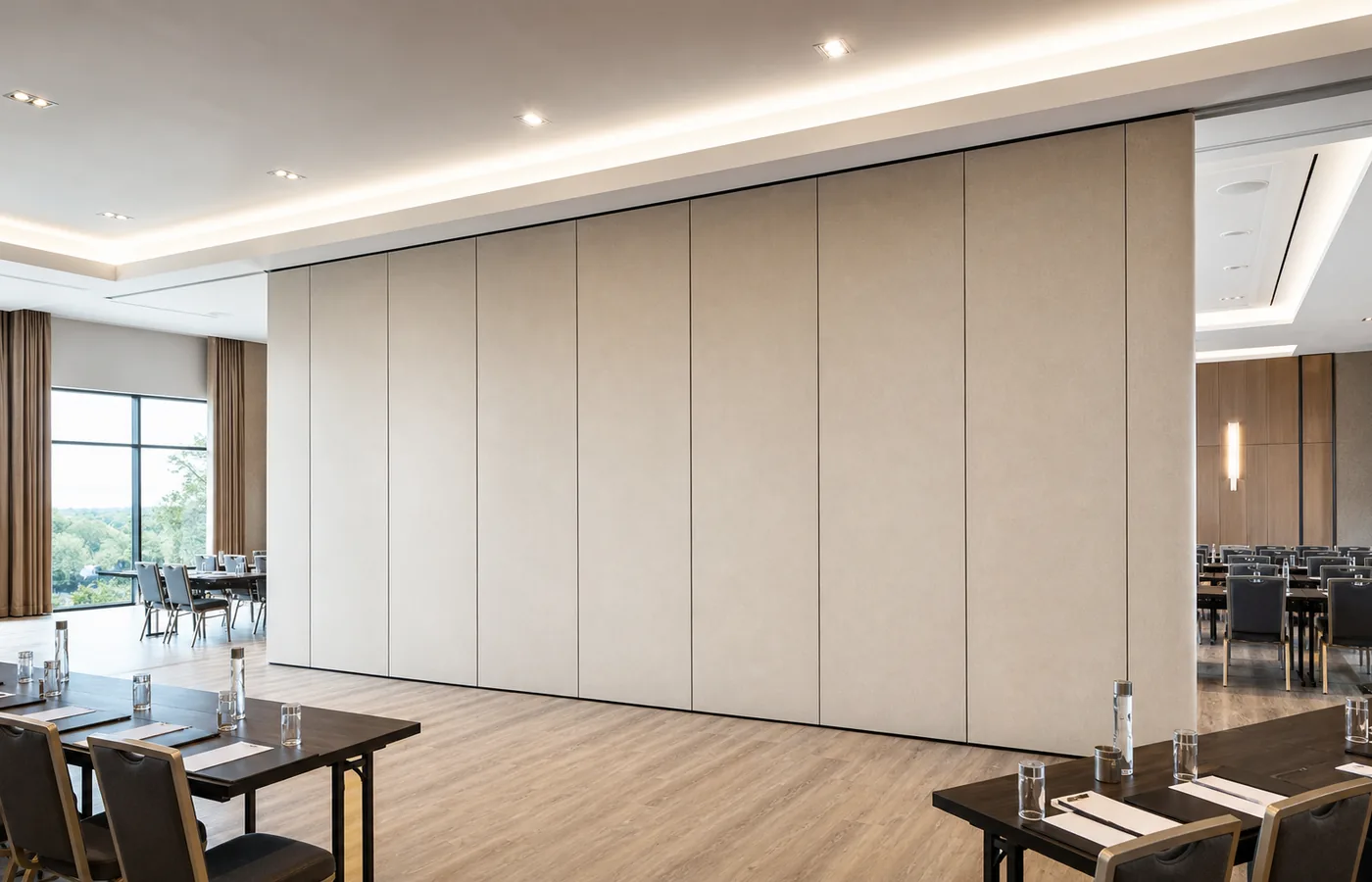
Can finishes be customized for a restaurant interior?
Finish materials can be customized, and cleaning and maintenance methods vary with the selected finish.
What must be confirmed from project drawings?
The exact route, junction arrangement, continuous overhead path and parking position must be confirmed from the coordinated project drawings. The exact track, support and panel layout still require project drawings.
Next steps for comparing movable partition seals restaurant split
Start by documenting the restaurant layout, the desired parking position and the finish direction. Then review the overhead path and floor line with the project team. The exact route, junction arrangement, continuous overhead path and parking position must be confirmed from the coordinated project drawings.
The exact overhead route and support arrangement must be confirmed by the responsible project team from coordinated drawings.. These pages provide context for planning a movable partition seals restaurant split comparison.
Movable partitions can be used wherever flexible space division, combination or reconfiguration is required. Application examples are not limiting. With a top-hung system, the floor stays uninterrupted and the parking and finish details are coordinated through drawings.
Continue Exploring
More Acoustic Partition Guides
- Newer guideFloor Interface Planning for Convention Center Operable Wall Seals
- Earlier guideAuditorium Movable Partition Seals and Stage Lighting Coordination
- Related guideAcoustic Partition Ceiling Interface Zone Confirmation
- Related guideWho Confirms Ceiling Grid Line Before Acoustic Partition Track