
Quick project answer
Airport interiors often need flexible rooms that can be divided, combined or reconfigured without interrupting the finished floor. For security and operations teams, airport operable wall track security is a planning topic that connects overhead alignment, camera sightlines and approved parking positions. The EBUNGE movable partition system is top-hung, so the partition line does not require a continuous floor running track or operating hardware in the finished floor.
Why top-hung alignment matters for airport operable wall track security
A top-hung partition carries its panels from an overhead track rather than from a floor guide. This principle affects how the partition line meets the surrounding floor and how security devices are positioned above the space. Airport operable wall track security therefore begins with the overhead route, not with a floor-mounted rail.
The exact route, junction arrangement, continuous overhead path and parking position must be confirmed from the coordinated project drawings. That boundary keeps the design tied to approved documents instead of assumptions about the ceiling zone.

Because the system is top-hung, the finished floor along the partition line is not cut or damaged for a floor track. The floor remains physically uninterrupted by the maintained EBUNGE top-hung system. This is a useful starting point when airport teams review camera coverage and passenger circulation.
Physically uninterrupted floor and camera sightlines
An uninterrupted floor can simplify how the partition line relates to adjacent finishes and to camera positions. Airport operable wall track security reviews should still confirm the overhead track route and the parking area from coordinated drawings. The floor itself does not need a continuous running track along the partition line.
Security cameras are usually mounted above the occupied space, so their clearance depends on the approved ceiling and track layout. The exact route, junction arrangement, continuous overhead path and parking position must be confirmed from the coordinated project drawings. This statement applies to every camera-clearance review.
When the floor is not cut for a floor track, the partition line can remain visually continuous with the surrounding floor finish. Airport operable wall track security planning can then focus on overhead coordination rather than on floor-mounted hardware.
Parking planning for airport operable wall track security
Panel parking style can be customized to the customer layout and project requirements, subject to coordinated drawings. A suitable approved parking arrangement can use the stacking area more compactly and coordinate with the space design. The exact track, support and panel layout still require project drawings.
Airport operable wall track security reviews should treat parking as part of the overhead plan. The parking position affects how panels gather when the room is open, and it also affects what security cameras can see in that zone. The exact route, junction arrangement, continuous overhead path and parking position must be confirmed from the coordinated project drawings.
Because parking style is customizable, the project team can compare options against the approved layout. No single parking arrangement applies to every airport space, and the final choice belongs in the coordinated drawing set.
Finish and care coordination
Finish materials can be customized, and cleaning and maintenance methods vary with the selected finish. Airport operable wall track security planning should note the chosen finish because care routines differ by material. The project team can then align those routines with the approved drawings.
Finish selection does not change the top-hung principle or the uninterrupted floor condition. It does affect how the partition surfaces are cleaned and maintained over time. Airport operable wall track security reviews can record the finish choice alongside the overhead route and parking position.
The exact route, junction arrangement, continuous overhead path and parking position must be confirmed from the coordinated project drawings. This boundary applies to finish coordination as much as to track alignment.
Non-limiting applications in airport environments
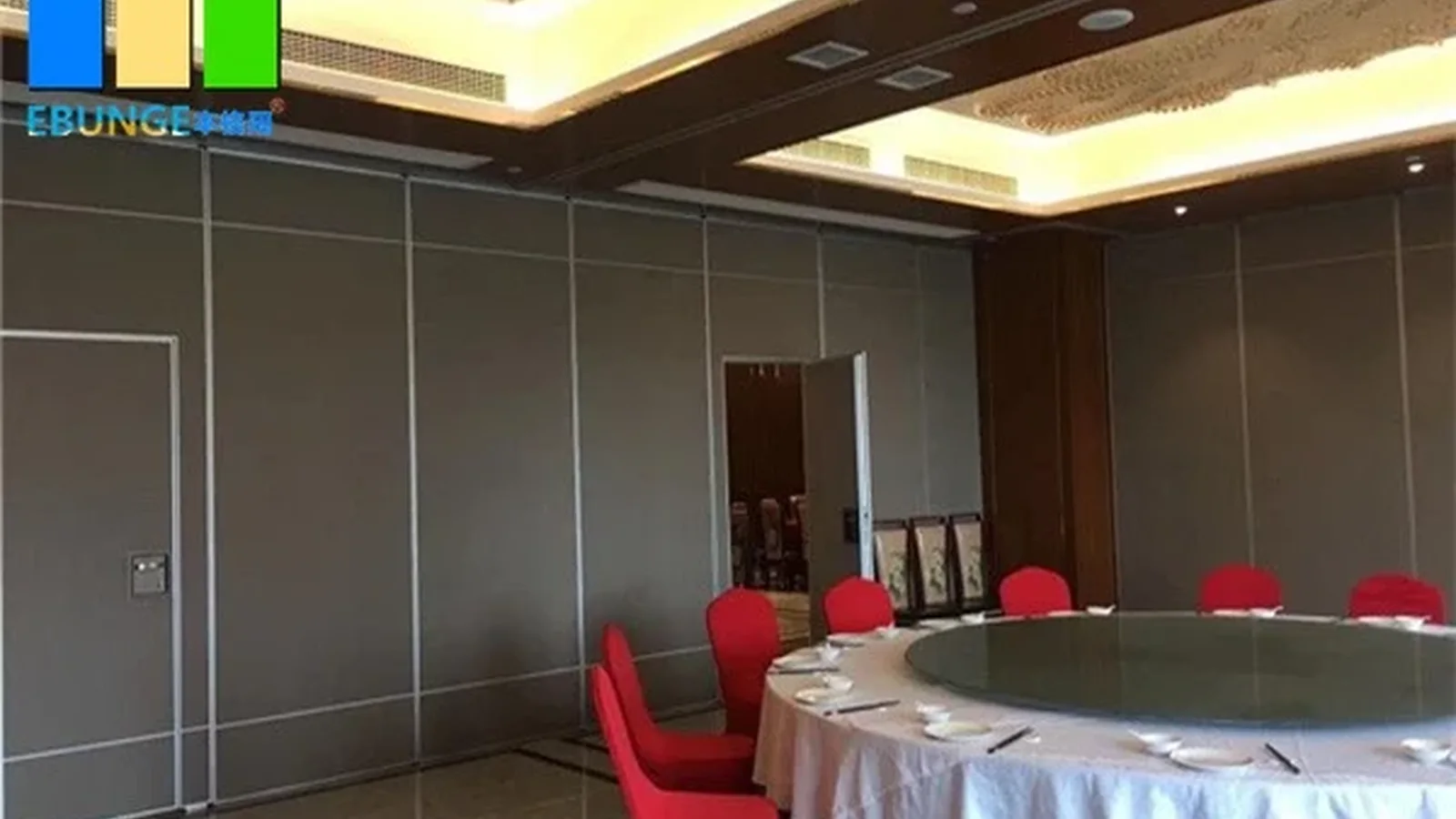
Movable partitions can be used wherever flexible space division, combination or reconfiguration is required. Application examples are not limiting, so airport teams can consider them alongside other project types. EBUNGE has completed many types of hotel-related movable-partition projects, and ballrooms, wedding halls and multifunction halls are non-limiting examples.
Airport operable wall track security may be relevant to lounges, meeting rooms, training areas or other flexible zones. These examples are illustrative rather than exhaustive. Each space still requires its own coordinated drawings for track route and parking.
No customer names, locations, quantities, ratings, certifications or outcomes may be inferred from the hotel-related project experience. The confirmed point is that EBUNGE has completed many types of hotel-related movable-partition projects, and those examples do not limit other applications.
Buyer inputs and drawing approvals
Airport operable wall track security planning depends on clear inputs from the buyer and the design team. Useful inputs include the intended room layouts, the approved parking zone and the camera positions shown on the security plan. These inputs feed into the coordinated drawings that govern the project.
- Room layouts showing how spaces divide, combine or reconfigure.
- Approved parking zone and its relationship to adjacent areas.
- Camera positions and overhead clearance zones from the security plan.
- Selected finish materials and their care requirements.
- Coordinated drawings that confirm the overhead route and parking position.
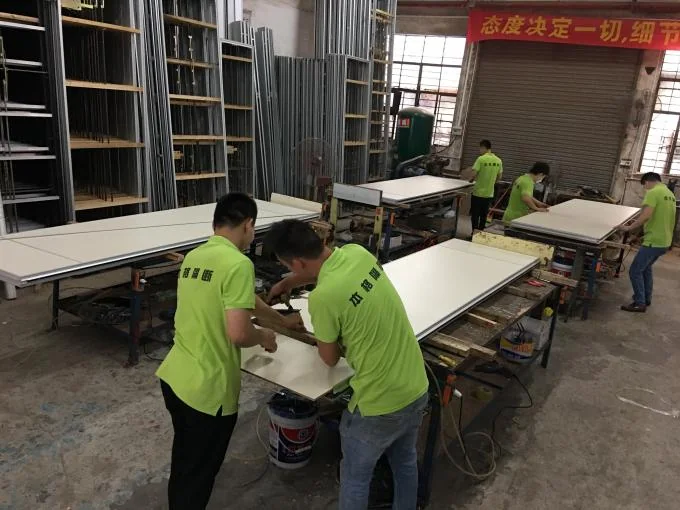
The exact route, junction arrangement, continuous overhead path and parking position must be confirmed from the coordinated project drawings. Airport operable wall track security cannot be finalized without that drawing approval step.
Review sequence for airport operable wall track security
A practical review sequence helps the project team keep track alignment and camera clearance in the same conversation. The sequence below is a planning aid, not a universal installation procedure. It focuses on information exchange and drawing approval.
- Confirm that the partition is top-hung and that no continuous floor track is required along the partition line.
- Record the intended room layouts and the approved parking zone.
- Compare the overhead route with camera positions on the security plan.
- Select finish materials and note their care requirements.
- Submit coordinated drawings for approval of the exact route, junction arrangement, continuous overhead path and parking position.
Airport operable wall track security improves when these items are reviewed together. The exact route, junction arrangement, continuous overhead path and parking position must be confirmed from the coordinated project drawings.
Drawing approval and change control
Coordinated drawings are the controlling document for track alignment and parking. Airport operable wall track security reviews should reference the approved revision rather than earlier sketches. When layouts or camera positions change, the drawings should be updated and reapproved.
The top-hung principle and the uninterrupted floor condition remain consistent across revisions. What changes is the project-specific route, junction arrangement, continuous overhead path and parking position. Those items must be confirmed from the coordinated project drawings.
Airport operable wall track security is a drawing-led review: confirm the overhead route, protect the uninterrupted floor and approve the parking position before final coordination.
Finish materials can be customized, and cleaning and maintenance methods vary with the selected finish. That finish decision should also appear in the approved set so care planning stays aligned with the installed surfaces.
Frequently asked questions
Does an airport operable wall track security review require a floor track?
No. The EBUNGE movable partition system is top-hung and has no continuous floor running track or operating hardware in the finished floor along the partition line. The floor is not cut or damaged for a floor track.
How does the uninterrupted floor affect camera clearance?
The floor remains physically uninterrupted by the maintained EBUNGE top-hung system. Camera clearance is still an overhead coordination item, so the exact route, junction arrangement, continuous overhead path and parking position must be confirmed from the coordinated project drawings.
Can panel parking style be customized for airport spaces?
Yes. Panel parking style can be customized to the customer layout and project requirements, subject to coordinated drawings. A suitable approved parking arrangement can use the stacking area more compactly and coordinate with the space design.
Are finishes and care methods fixed for every airport project?
No. Finish materials can be customized, and cleaning and maintenance methods vary with the selected finish. The chosen finish should be recorded in the coordinated drawings alongside the track route and parking position.
Which applications are confirmed for movable partitions?
Movable partitions can be used wherever flexible space division, combination or reconfiguration is required. Application examples are not limiting. EBUNGE has completed many types of hotel-related movable-partition projects, and ballrooms, wedding halls and multifunction halls are non-limiting examples.
What should buyers provide for airport operable wall track security planning?
Buyers should provide intended room layouts, the approved parking zone, camera positions from the security plan and selected finish materials. The exact route, junction arrangement, continuous overhead path and parking position must be confirmed from the coordinated project drawings.
For related system information, see the operable wall system page and the projects page. This topic remains a project-specific review, and the approved drawings govern the final layout.
Continue Exploring
More Installation and Maintenance Guides
- Newer guideAirport Partition Track and Fire Suppression Coordination
- Earlier guidePre-Installation Load Tests for Airport Partition Track Systems
- Related guideMovable Partition Wall Handover Commissioning Records
- Related guideWho Sets the Ceiling Interface Datum When Partition Tracks Meet Curved