
Why community hall acoustic seal layout questions start with the top-hung principle
Quick project answer
The exact overhead route and support arrangement must be confirmed by the responsible project team from coordinated drawings. For many multi-use rooms, the preferred approach is a top-hung system that carries the panels from an overhead structure rather than from a floor-mounted track. This changes the conversation from floor cutting to overhead coordination.
The EBUNGE movable partition system is top-hung and has no continuous floor running track or operating hardware in the finished floor along the partition line. The exact route, junction arrangement, continuous overhead path and parking position must be confirmed from the coordinated project drawings.
A top-hung approach can support flexible space division while keeping the finished floor free of a continuous track.
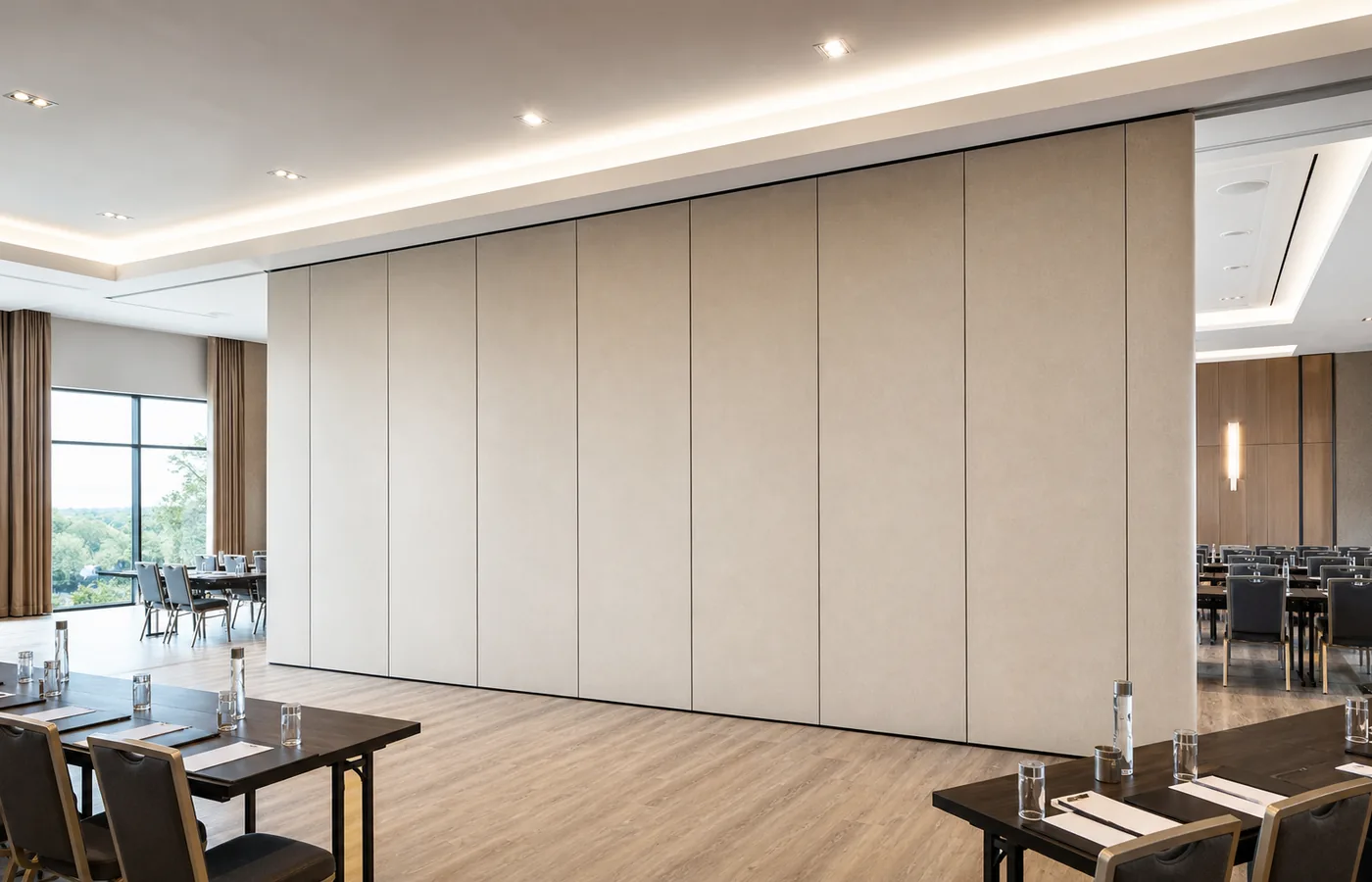
What a physically uninterrupted floor means for multi-use rooms
In a multi-use community hall, the floor often serves different activities across a single day. A maintained EBUNGE top-hung system leaves the floor physically uninterrupted along the partition line because there is no continuous floor track. The suitability of each route and parking arrangement depends on the approved layout, circulation, ceiling interfaces and operating sequence.
The floor is not cut or damaged for a floor track under the maintained EBUNGE top-hung system. That statement applies to the partition line and does not remove the need to coordinate other floor interfaces.
Because the floor remains continuous, the layout discussion can focus on overhead geometry and parking. The exact route, junction arrangement, continuous overhead path and parking position must be confirmed from the coordinated project drawings. This boundary sentence applies wherever engineering details fall outside the confirmed facts.
Parking planning for community hall acoustic seal layout
Panel parking style can be customized to the customer layout and project requirements, subject to coordinated drawings.
A suitable approved parking arrangement can use the stacking area more compactly and coordinate with the space design. The exact track, support and panel layout still require project drawings. This means the parking concept should be developed alongside the room layout rather than after it.
Buyers should bring clear information about how the hall will be used. Useful inputs include the desired open and closed positions, the location of fixed elements, and the way the stacking area relates to circulation. The exact route, junction arrangement, continuous overhead path and parking position must be confirmed from the coordinated project drawings.
Finish and care coordination for community hall acoustic seal layout
Finish materials can be customized, and cleaning and maintenance methods vary with the selected finish.
Because care methods depend on the chosen finish, the project team should confirm the finish direction before finalizing care instructions. This is a coordination point, not a performance claim.
Those expectations should be discussed with the project team using the selected finish information. The exact route, junction arrangement, continuous overhead path and parking position must be confirmed from the coordinated project drawings.
Non-limiting applications for movable partitions
Movable partitions can be used wherever flexible space division, combination or reconfiguration is required. Application examples are not limiting. This broad principle applies to community halls as well as other multi-use environments.
EBUNGE has completed many types of hotel-related movable-partition projects. Ballrooms, wedding halls and multifunction halls are non-limiting examples. No customer names, locations, quantities, ratings, certifications or outcomes may be inferred from those examples.
The confirmed facts do not limit the application to a single building type. The exact route, junction arrangement, continuous overhead path and parking position must be confirmed from the coordinated project drawings.
Buyer inputs that support community hall acoustic seal layout decisions
Early buyer inputs help the project team develop a coordinated layout. Useful information includes the intended room configurations, the preferred parking approach, and the relationship between the partition line and fixed building elements.
Buyers should also confirm the finish direction and any care considerations tied to that finish. Because finish materials can be customized, the selected finish should be documented before care methods are finalized.
The exact track, support and panel layout still require project drawings. Buyers can support this by providing accurate as-built information and clear layout priorities. The exact route, junction arrangement, continuous overhead path and parking position must be confirmed from the coordinated project drawings.
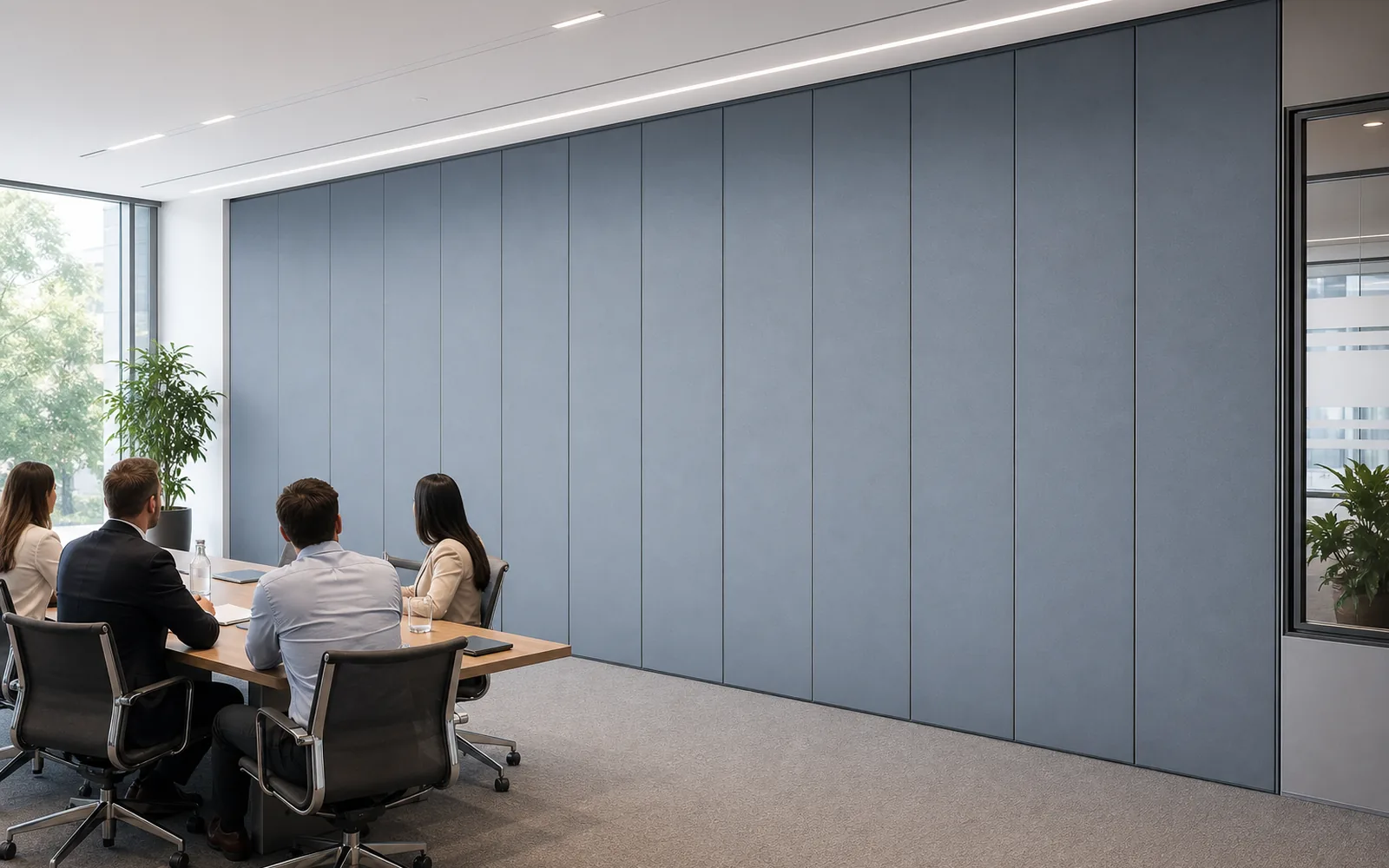
Drawing approvals and coordination for community hall acoustic seal layout
Panel parking style can be customized to the customer layout and project requirements, subject to coordinated drawings. This means the parking arrangement is not a fixed catalog choice; it is developed with the project. A suitable approved parking arrangement can use the stacking area more compactly and coordinate with the space design.
Approvals should address the confirmed scope without assuming unconfirmed performance. The exact route, junction arrangement, continuous overhead path and parking position must be confirmed from the coordinated project drawings. This boundary sentence should be carried into the approval set.
Scannable planning checklist for community hall acoustic seal layout
- Confirm the desired open, closed, and combined room configurations.
- Identify the partition line and how it relates to fixed building elements.
- Review the overhead path and parking position with the project team.
- Select a finish direction and confirm the care methods for that finish.
- Document the approved parking arrangement in the coordinated drawings.
- Carry the drawing boundary sentence into the approval set.
Common questions about community hall acoustic seal layout
For further context, review related project guidance and additional planning resources before preparing the coordinated project brief.
What is the main advantage of a top-hung partition for a community hall?
A top-hung partition carries the panels from an overhead structure, so the finished floor can remain physically uninterrupted along the partition line. This supports flexible space division without a continuous floor track.
Does a top-hung partition require cutting the floor?
No. The EBUNGE movable partition system is top-hung and has no continuous floor running track or operating hardware in the finished floor along the partition line. The floor is not cut or damaged for a floor track under the maintained system.
How is parking planned for community hall acoustic seal layout?
Panel parking style can be customized to the customer layout and project requirements, subject to coordinated drawings. A suitable approved parking arrangement can use the stacking area more compactly and coordinate with the space design.
Can finishes be customized for a community hall partition?
Yes. Finish materials can be customized, and cleaning and maintenance methods vary with the selected finish. The project team should confirm the finish direction before finalizing care instructions.
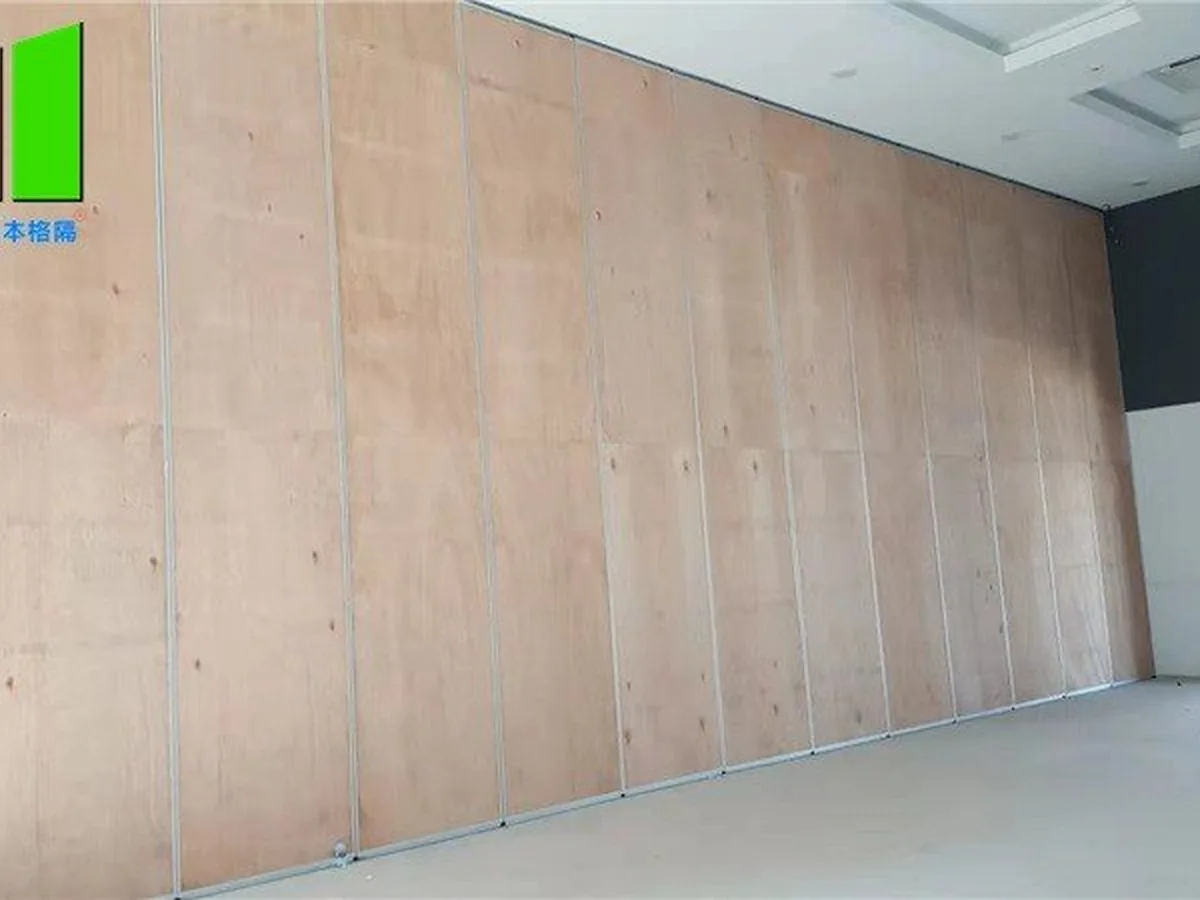
What drawings are needed before approval?
Coordinated project drawings are needed to confirm the overhead path, parking position, and partition layout. The exact route, junction arrangement, continuous overhead path and parking position must be confirmed from the coordinated project drawings.
Are movable partitions limited to certain building types?
No. Movable partitions can be used wherever flexible space division, combination or reconfiguration is required. Application examples are not limiting, and EBUNGE has completed many types of hotel-related movable-partition projects.
Key takeaways for community hall acoustic seal layout
The confirmed facts support a top-hung system with an uninterrupted floor, customizable parking, and customizable finishes. Other attributes require separate evidence. The exact route, junction arrangement, continuous overhead path and parking position must be confirmed from the coordinated project drawings.
Continue Exploring
More Acoustic Partition Guides
- Newer guideOperable Wall Seal Maintenance: Sports Hall vs Conference Rooms
- Earlier guideRestaurant Movable Partition Seals: Grease Planning
- Related guideAcoustic Partition Ceiling Interface Zone Confirmation
- Related guideWho Confirms Ceiling Grid Line Before Acoustic Partition Track