
Quick answer: airport convention partition
Review the project drawings for airport convention partition.
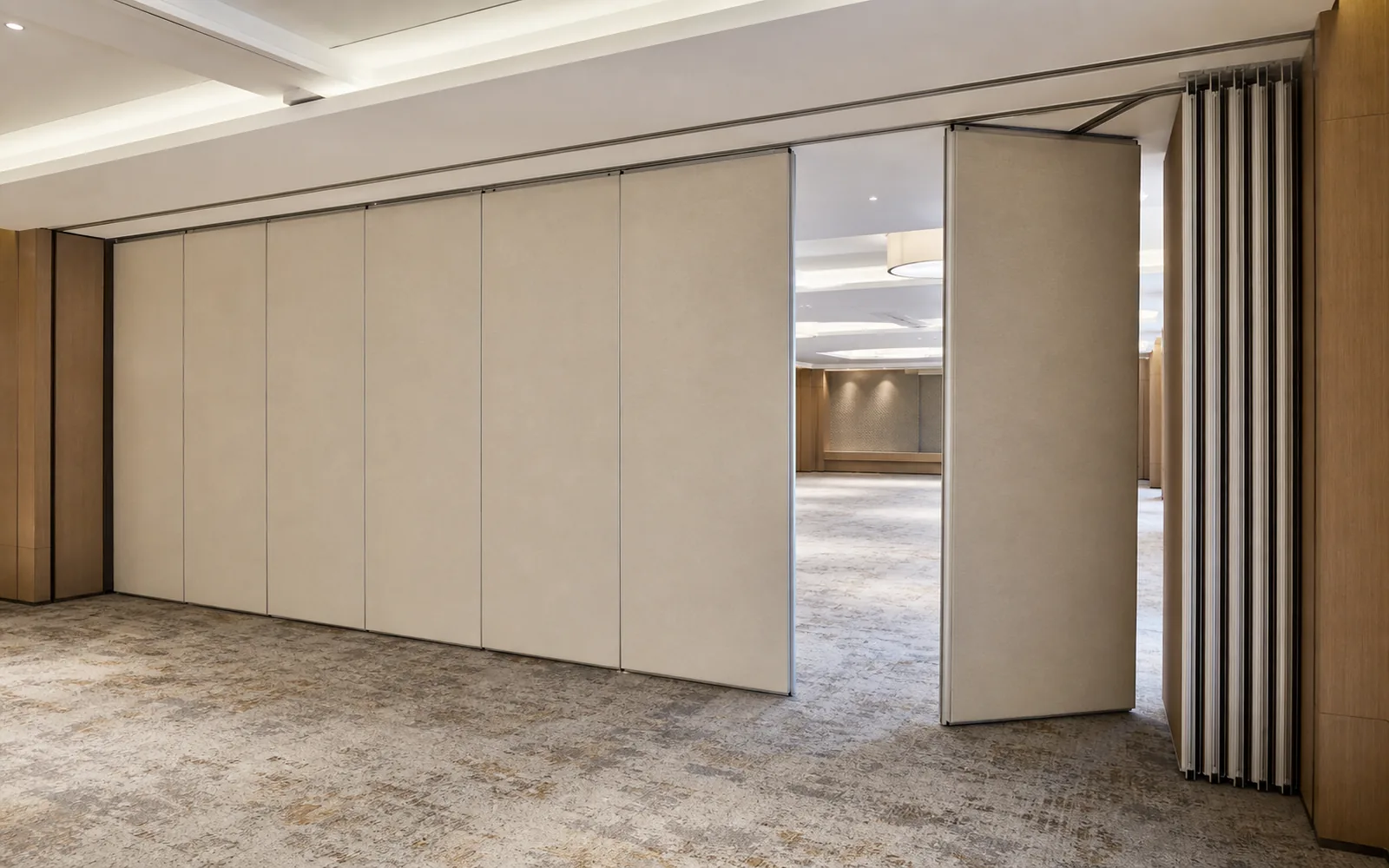
Airport convention partition maintenance track rigging grid junctures sit where a top-hung operable wall route meets the overhead structure that carries it. Because EBUNGE movable panels are individually movable, suspended from a top track, cross the opening without a floor track and park at a planned stacking position, the maintenance question is not only about panels. It is about the whole overhead route and the interfaces around it. This article sets out a check framework for facility and project teams, and marks where project-specific confirmation is required.
Why Rigging Grid Junctures Deserve Their Own Check
Coordinate the current drawing set for airport convention partition.
A convention or exhibition hall ceiling often carries lighting, signage, services and rigging points. Where a partition track passes through or near that grid, the track route and the grid are two different systems sharing one zone. A visual inspection of the panel face will not reveal whether the overhead route remains continuous and supported.

Treat every juncture as a coordination point, not a cosmetic detail. The relevant questions are: does the route stay connected, is the support arrangement unchanged, and has anything been added nearby that could interfere with travel or parking?
What to Inspect Along the Track Route
Record the drawing revision used for airport convention partition.
Walk the full route rather than sampling it. The route may be straight, turning or stacking, and each type creates different viewing angles and access needs. Confirm that the path the panels follow is the path shown on the reviewed layout.
- Route continuity: check that the overhead route remains connected across the opening and toward the parking position.
- Juncture condition: look for visible changes, obstructions or new attachments at grid intersections.
- Clearance: confirm that nothing has been hung or stored in the travel or stacking zone.
- Alignment: observe whether panels run smoothly or show repeated resistance at the same point.
- Stacking area: verify that the planned parking position is still clear and usable.
Record what you see with location notes and photographs. Panel handling and the operating sequence must be confirmed for the selected layout and project conditions.
A Numbered Maintenance Check Sequence
- Review the current drawings. Compare the installed route with the latest reviewed layout before touching anything.
- Inspect the overhead route. Move along the full run, including turns and the approach to the stacking position.
- Inspect junctures. At each rigging grid intersection, note visible condition, nearby additions and any sign of interference.
- Operate a sample of panels. Move panels individually and listen for repeated sounds at the same location.
- Check the parking zone. Confirm the stacking position is clear and that panels reach it as planned.
- Check finishes. Note damage, soiling or edge wear on laminate, melamine, fabric, leather, glass or other approved surfaces.
- Log and escalate. The suitability of each route and parking arrangement depends on the approved layout, circulation, ceiling interfaces and operating sequence.
Evidence Note: What a Visual Check Cannot Confirm
Visible references can support layout discussion but do not verify hidden construction or performance. Those items require project-specific documentation and review by the responsible parties. Do not infer hidden performance from a photograph, a finish sample or a drawing alone.
This boundary matters in airports and convention centres, where multiple trades share the ceiling zone. Maintenance observations should describe condition and location, not certify engineering outcomes.
Ceiling Interface and Support Coordination
Support arrangements at ceiling interfaces are project-specific. The inspection team should know which party is responsible for the overhead structure and which is responsible for the partition route. Where a juncture involves rigging grid members, confirm the interface responsibility before any adjustment.
If a proposed change affects the route, the stacking position or the ceiling interface, return to the reviewed layout. Do not treat a field decision as a substitute for coordinated documentation.
Acoustic and Seal Concepts in Maintenance Terms
Inspect visible seal lines and closing edges for damage or gaps as part of the routine.
Finish Care and Documentation
Confirmed finish options include laminate, melamine, fabric, leather, glass and other approved surfaces. Each behaves differently in use, so cleaning and repair questions should be directed to the finish supplier or project specification.
Keep a simple finish log: location, finish type, observed condition and action taken. This helps facility teams plan touch-ups without guessing about compatibility.
Pass Doors and Project Documentation
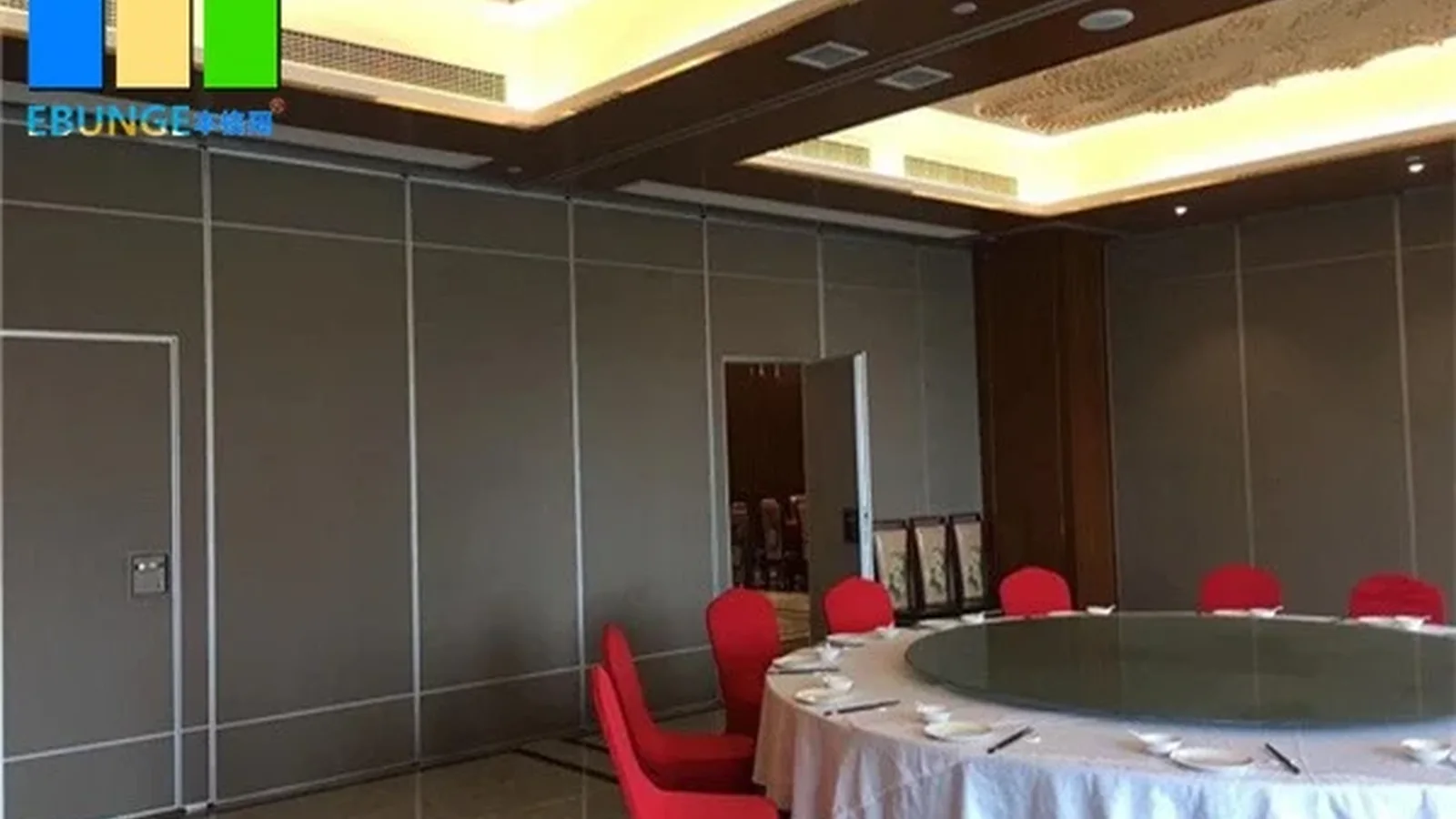
Pass-door requirements and project documentation can be discussed with EBUNGE. If a pass door sits near a juncture or stacking zone, include it in the same inspection walk so that its operation and surrounding clearance are reviewed together.
For broader context on how these systems are applied, see the operable wall system overview and the project references page.
Frequently Asked Questions
How often should the track route be inspected?
Frequency depends on venue use, traffic and project requirements. Many facilities tie inspection to event cycles or planned maintenance windows. Confirm the interval with the responsible project party.
Can maintenance staff adjust the track at a rigging grid juncture?
Only within the agreed scope and responsibility matrix.
What should be recorded during an inspection?
Record location, observed condition, any change since the last visit, photographs and the action taken. Note the panel movement path and the stacking zone condition.
Does a smooth-running panel confirm acoustic performance?
No.
How should finishes be maintained?
Follow the approved finish specification. Laminate, melamine, fabric, leather, glass and other surfaces have different care needs, so confirm cleaning and repair guidance for the actual finish.
What if the stacking position is blocked?
Clear the planned parking position and review the layout. Panels are designed to park at a planned stacking position, so obstruction should be treated as a coordination issue.
Conclusion and Next Step
Maintenance checks at airport convention partition track and ceiling rigging grid junctures are strongest when they follow the reviewed route, document visible condition and respect evidence limits.
To discuss pass-door requirements, project documentation or a specific layout, contact EBUNGE and share the current drawings so the route, support and dimensional requirements can be reviewed together.
Continue Exploring
More Maintenance Guides
- Newer guideWhat Maintenance Checks Apply to University Training Center Partition
- Earlier guideHotel Banquet Partition Track: Ceiling Rigging Motor Maintenance
- Related guidePlanning Service Walkways Behind Operable Wall Stacking Bays
- Related guidePlan Service Access to Operable Wall Tracks When Ceiling Hatches