
Quick project answer
Airport movable partition seal planning for security checkpoints begins with the partition principle rather than a product catalogue. The EBUNGE movable partition system is top-hung, so the operating hardware sits above the partition line instead of inside the finished floor. That single fact shapes how a checkpoint zone can be divided, combined and reconfigured over time.
Why the Top-Hung Principle Matters at a Checkpoint
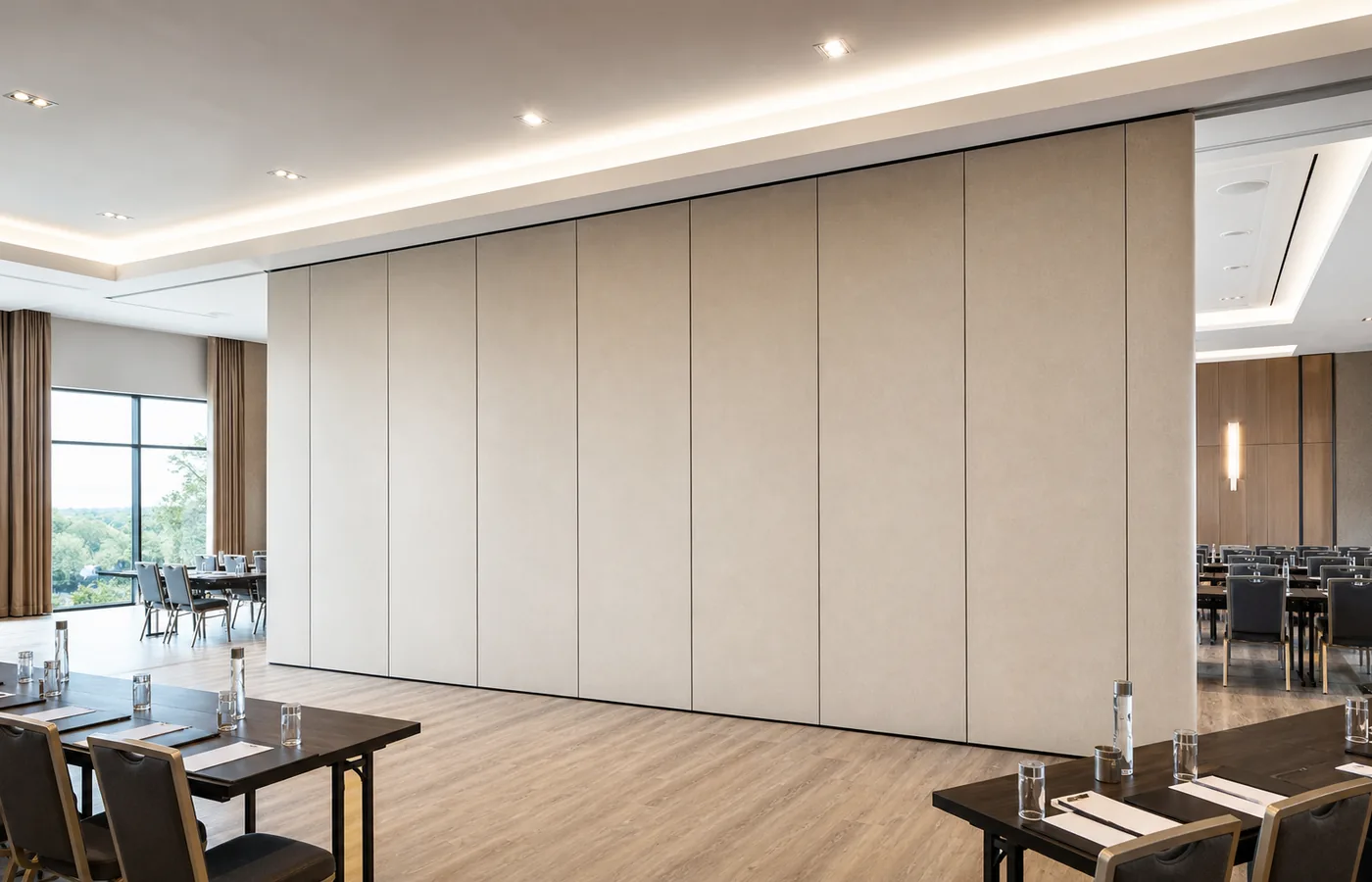
A top-hung system carries the panels from an overhead structure. The finished floor along the partition line is not cut and is not damaged for a floor track. This matters where a checkpoint floor must stay physically uninterrupted across its full width.
Airport movable partition seal planning for security checkpoints therefore starts with the overhead path. The panels travel below that path, and the floor beneath remains a continuous surface. No continuous floor running track or operating hardware sits in the finished floor along the partition line.
This arrangement suits spaces that change duty across a day or a season. A zone can be divided for one operation and opened for another without a floor trench. The maintained EBUNGE top-hung system keeps the floor physically uninterrupted.
The Physically Uninterrupted Floor and Its Planning Value
The exact overhead route and support arrangement must be confirmed by the responsible project team from coordinated drawings. Trolleys, queues and cleaning equipment cross the line without meeting a raised strip. The floor remains one continuous plane along the partition line.
That continuity is a planning input, not a performance claim. It tells the design team that the partition line does not require a floor cut. It also tells them that the overhead condition carries the coordination burden.
Airport movable partition seal planning for security checkpoints should record this split clearly. Floor continuity is one confirmed property. The overhead route, supports and parking position are separate drawing items.
The exact route, junction arrangement, continuous overhead path and parking position must be confirmed from the coordinated project drawings.
Parking Planning for Panels Near a Checkpoint
Panel parking style can be customized to the customer layout and project requirements, subject to coordinated drawings. A suitable approved parking arrangement can use the stacking area more compactly and coordinate with the space design.
Parking is often the tightest part of a checkpoint scheme. The stacking zone competes with queue space, equipment positions and circulation routes. Early parking planning keeps those competing uses visible on one drawing set.
Airport movable partition seal planning for security checkpoints should treat parking as a layout decision. The question is where panels rest when the opening is clear, and how that resting zone relates to adjacent functions.
The exact track, support and panel layout still require project drawings. Parking style is customizable, but the final arrangement follows the coordinated set rather than a generic default.
Finish Selection and Care Coordination
Finish materials can be customized, and cleaning and maintenance methods vary with the selected finish. That link between finish and care belongs in the early planning conversation, not at the end of a project.
A checkpoint environment has its own routine cleaning regime. The selected finish should be discussed with the people who will care for it. Their methods and products must suit the finish that is actually chosen.
Airport movable partition seal planning for security checkpoints can note this dependency in the drawing package. When the finish changes, the care method changes with it. Keeping both on one record reduces later confusion.
Finish choice also affects how the partition line reads within the space. A coordinated finish supports the overall design intent while remaining a customizable item rather than a fixed specification.
Non-Limiting Applications Beyond the Checkpoint
Movable partitions can be used wherever flexible space division, combination or reconfiguration is required. Application examples are not limiting, and checkpoint zones are one example among many.
EBUNGE has completed many types of hotel-related movable-partition projects. Ballrooms, wedding halls and multifunction halls are non-limiting examples of that experience.
That background informs how the team reads a layout. A checkpoint scheme shares some planning questions with a hall scheme: where panels rest, how the line runs and what the floor must carry.
Airport movable partition seal planning for security checkpoints benefits from that wider view. The same top-hung principle appears across many project types, with each layout resolved on its own drawings.
Buyer Inputs That Shape the Drawing Set
Useful drawings begin with clear buyer inputs. The project team should confirm the zone to be divided, the clear opening required and the space available for parking.
They should also confirm the finish direction and the cleaning methods already used in the building. These inputs let the partition layout respond to real operating conditions.
Airport movable partition seal planning for security checkpoints should list these inputs before layout work advances. Missing inputs tend to surface later as drawing revisions.
- Zone to be divided and the clear opening required
- Available parking area and its relationship to circulation
- Finish direction and the cleaning methods already in use
- Overhead conditions that the coordinated drawings must resolve
Drawing Approvals and the Coordination Boundary
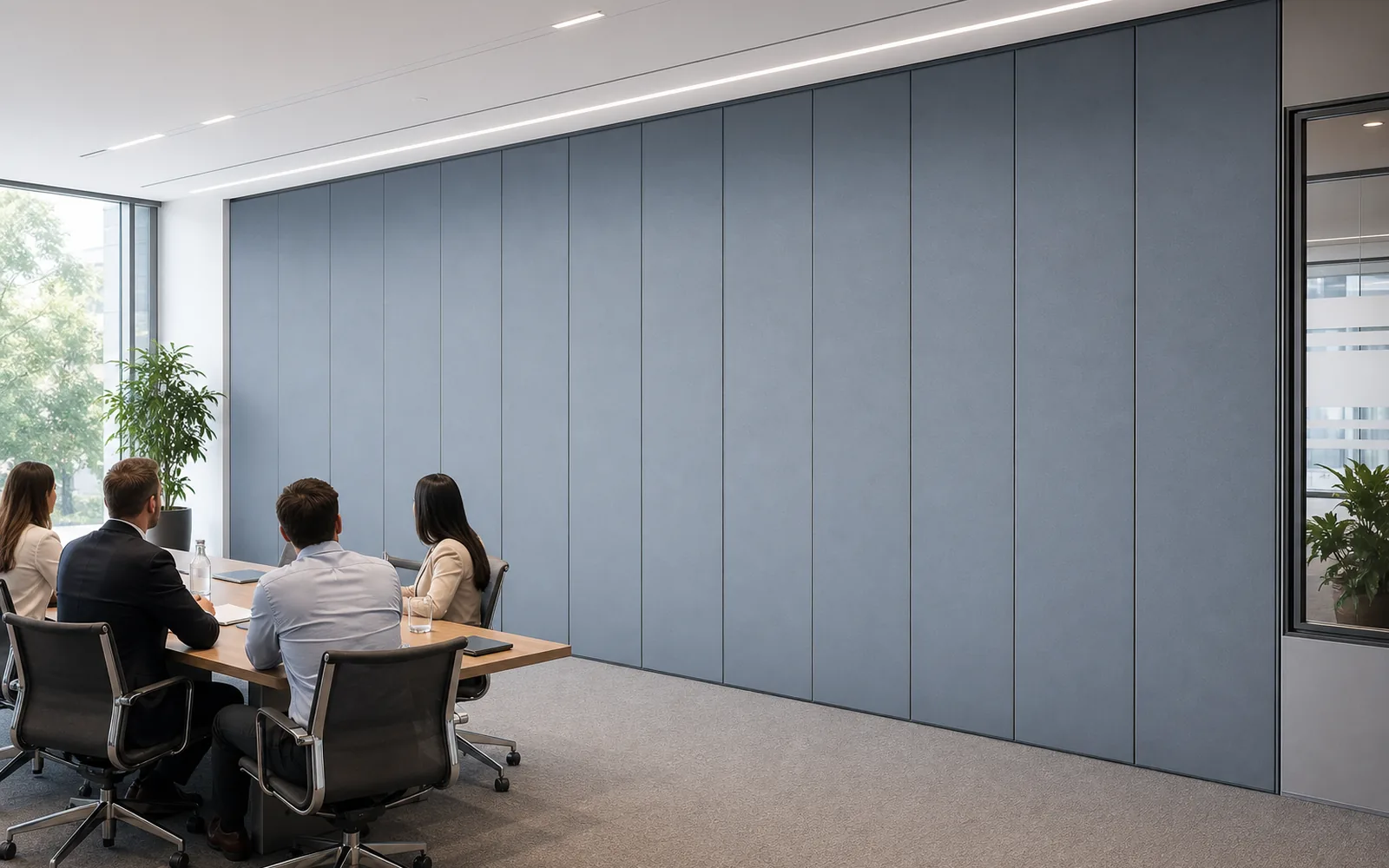
Approval rests on coordinated drawings, not on assumptions. The overhead path, support positions and parking layout must be shown together before the scheme is fixed.
The exact route, junction arrangement, continuous overhead path and parking position must be confirmed from the coordinated project drawings.
Airport movable partition seal planning for security checkpoints is complete when those drawings agree. Floor continuity is confirmed by the top-hung principle. Everything above the floor line is confirmed by the coordinated set.
Airport movable partition seal planning for security checkpoints pairs one confirmed floor condition with one drawing-led overhead condition.
Reviewing the Plan Before Release
A final review should check that the floor line stays uninterrupted and that parking is shown on the same set. It should also check that the finish and its care method are recorded together.
Airport movable partition seal planning for security checkpoints then moves forward on a shared record. Teams can compare the approved layout with the site conditions before work begins.
| Planning item | Confirmed basis | Drawing action |
|---|---|---|
| Floor along the partition line | Top-hung system; no floor track | Keep the floor uninterrupted |
| Panel parking | Style customizable to layout | Show the stacking zone |
| Finish and care | Finish customizable; care varies | Record finish with its care method |
| Overhead route | Requires coordinated drawings | Confirm route and parking position |
Frequently Asked Questions
For further context, review related project guidance and additional planning resources before preparing the coordinated project brief.
Does a top-hung partition need a floor track?
No. The EBUNGE movable partition system is top-hung, and no continuous floor running track or operating hardware sits in the finished floor along the partition line.
Is the floor cut or damaged for the partition?
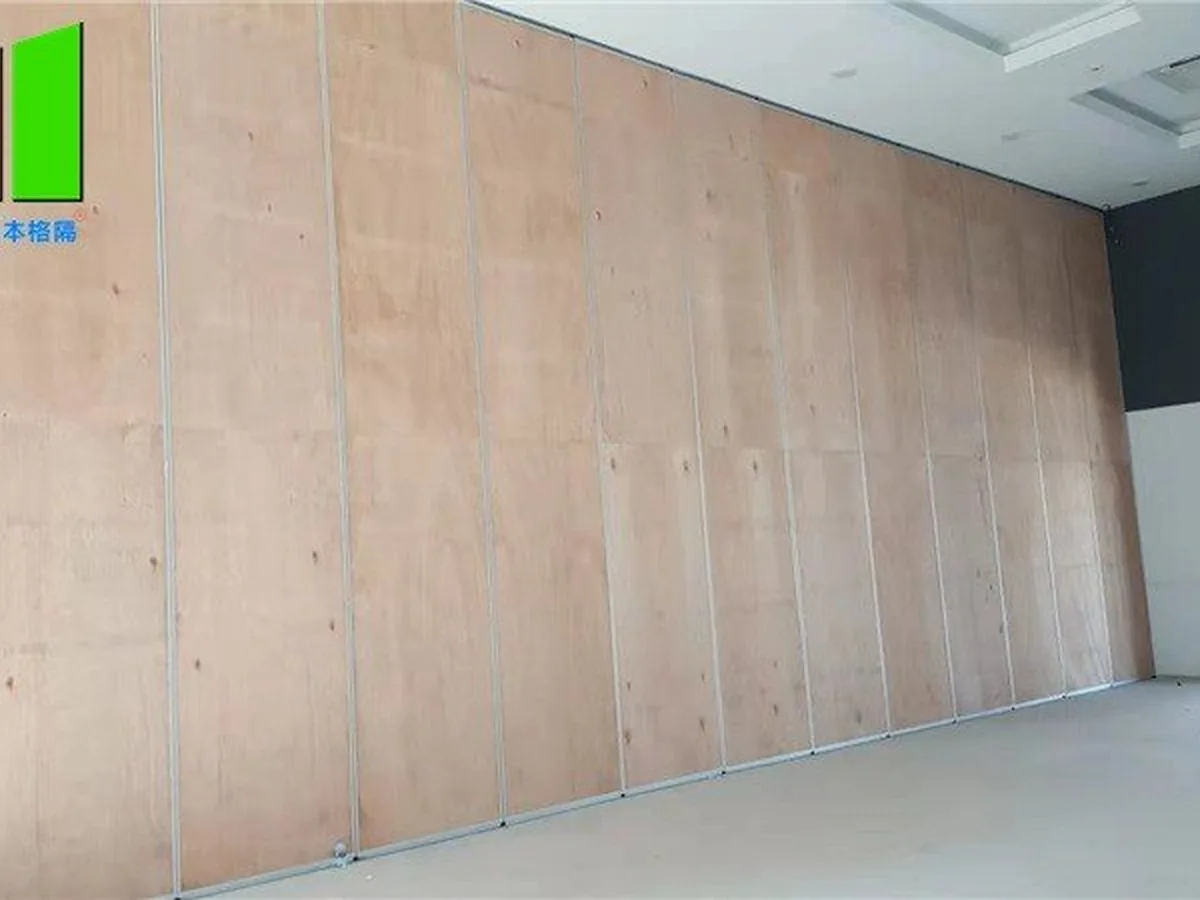
The floor is not cut or damaged for a floor track and remains physically uninterrupted by the maintained EBUNGE top-hung system.
Can panel parking be adapted to a checkpoint layout?
Panel parking style can be customized to the customer layout and project requirements, subject to coordinated drawings. A suitable approved parking arrangement can use the stacking area more compactly and coordinate with the space design.
Can the finish be customized, and does care change with it?
Finish materials can be customized, and cleaning and maintenance methods vary with the selected finish. The care method should be recorded alongside the chosen finish.
Where can movable partitions be used?
Movable partitions can be used wherever flexible space division, combination or reconfiguration is required. Application examples are not limiting.
What must the coordinated drawings confirm?
The exact route, junction arrangement, continuous overhead path and parking position must be confirmed from the coordinated project drawings.
Continue Exploring
More Acoustic Partition Guides
- Newer guideConvention Center Operable Wall Seal and Plenum Coordination
- Earlier guideRestaurant Function Room Acoustic Seal Layout Questions
- Related guideAcoustic Partition Ceiling Interface Zone Confirmation
- Related guideWho Confirms Ceiling Grid Line Before Acoustic Partition Track