
Quick project answer
Airport terminals divide space for many functions, from holdrooms to baggage claim. When flexibility is required, a top-hung movable partition can separate or combine areas without cutting the finished floor. This article explains how airport movable partition seals holdroom and baggage claim planning differ, and what to confirm before production.
Why the Top-Hung Principle Matters at Airports
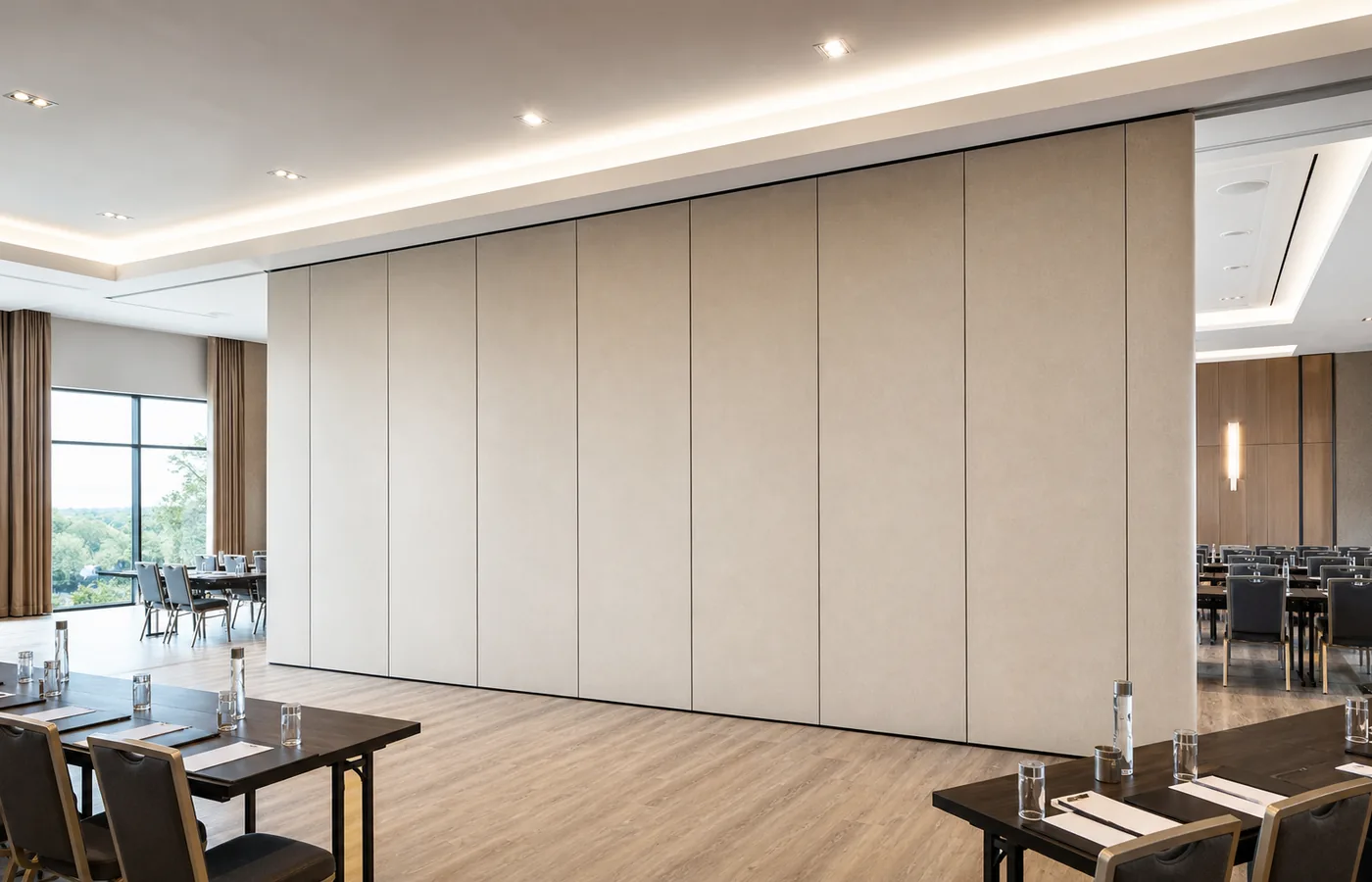
The EBUNGE movable partition system is top-hung. It has no continuous floor running track or operating hardware in the finished floor along the partition line. This means the floor is not cut or damaged for a floor track. The floor remains physically uninterrupted by the maintained EBUNGE top-hung system.
The suitability of each route and parking arrangement depends on the approved layout, circulation, ceiling interfaces and operating sequence. It also removes the need to coordinate a floor track with existing finishes. The top-hung principle applies wherever flexible space division, combination or reconfiguration is required.
Holdroom vs Baggage Claim: Different Planning Contexts
Holdrooms often need to switch between waiting, boarding and overflow uses. Baggage claim areas may need to separate service zones or create temporary queuing space. Both can use a top-hung movable partition, but the surrounding conditions differ.
In a holdroom, seating layouts and circulation paths may change frequently. In baggage claim, baggage carts and service access may influence how panels are parked. The airport movable partition seals holdroom and baggage claim planning should start with a clear layout brief for each area.
Parking Planning for Panels
Panel parking style can be customized to the customer layout and project requirements, subject to coordinated drawings. A suitable approved parking arrangement can use the stacking area more compactly and coordinate with the space design. The exact track, support and panel layout still require project drawings.
For airport movable partition seals holdroom projects, parking may need to avoid passenger flow lanes. For baggage claim, parking may need to respect cart traffic and service doors. The exact route, junction arrangement, continuous overhead path and parking position must be confirmed from the coordinated project drawings.
Finish and Care Coordination
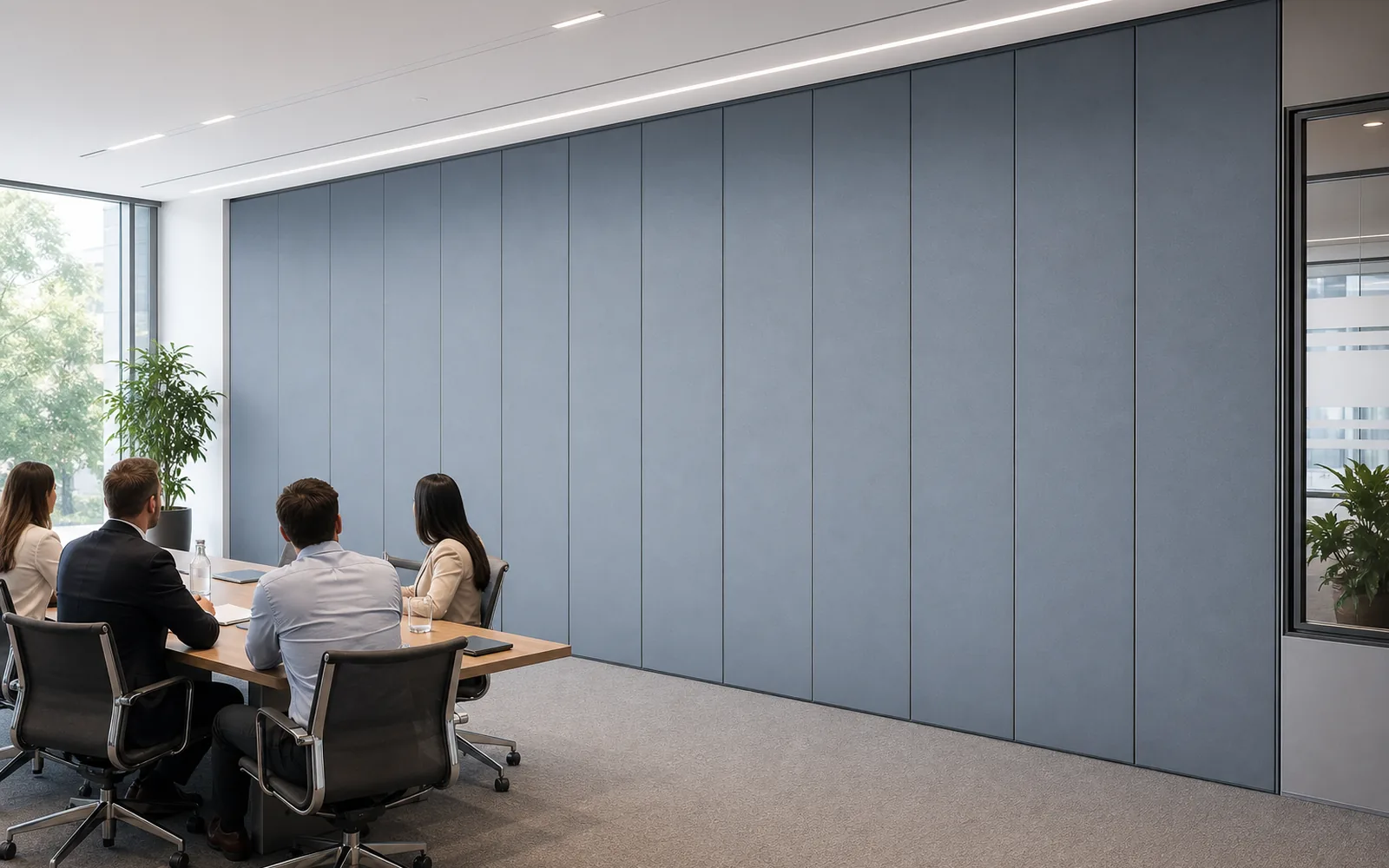
Finish materials can be customized, and cleaning and maintenance methods vary with the selected finish. Airport environments may have specific cleaning routines, so the chosen finish should be discussed with the cleaning team early.
Because care methods depend on the finish, a single cleaning instruction does not apply to every project. The airport movable partition seals holdroom and baggage claim areas may use different finishes based on visual and durability preferences. Confirm finish samples and care guidance before finalizing the order.
Non-Limiting Applications in Airport Settings
Movable partitions can be used wherever flexible space division, combination or reconfiguration is required. Application examples are not limiting. EBUNGE has completed many types of hotel-related movable-partition projects. Ballrooms, wedding halls and multifunction halls are non-limiting examples.
No customer names, locations, quantities, ratings, certifications or outcomes may be inferred from those projects. The same top-hung principle can be considered for airport holdrooms, baggage claim zones and other terminal areas when the project drawings support it.
Buyer Inputs and Drawing Approvals
Early buyer inputs help align the partition with the space. Useful inputs include the intended use of each area, the desired parking location, the preferred finish direction and the cleaning method. These inputs feed into coordinated drawings.
The exact route, junction arrangement, continuous overhead path and parking position must be confirmed from the coordinated project drawings. Approval of those drawings is a key step before production. Without approved drawings, the airport movable partition seals holdroom and baggage claim layout cannot be finalized.
Scannable Planning Checklist
- Confirm whether the area is a holdroom, baggage claim or another terminal zone.
- Identify the desired parking position and how it relates to passenger flow.
- Select a finish direction and confirm its care method with the cleaning team.
- Review the coordinated drawings for the exact route, junction arrangement, continuous overhead path and parking position.
- Approve the drawings before production.
Comparison Snapshot: Holdroom vs Baggage Claim
| Consideration | Holdroom | Baggage Claim |
|---|---|---|
| Primary use | Waiting, boarding, overflow | Service separation, queuing |
| Circulation focus | Passenger seating and paths | Baggage carts and service access |
| Parking planning | Avoid passenger flow lanes | Respect cart traffic and service doors |
| Finish care | Match cleaning routine | Match cleaning routine |
Drawing Approval Boundary
The exact route, junction arrangement, continuous overhead path and parking position must be confirmed from the coordinated project drawings.
This boundary applies to every airport movable partition seals holdroom and baggage claim discussion. It keeps the planning grounded in project-specific drawings rather than assumptions.
FAQ
For further context, review related project guidance and additional planning resources before preparing the coordinated project brief.
What does top-hung mean for an airport movable partition?
Top-hung means the EBUNGE movable partition system is supported from above. It has no continuous floor running track or operating hardware in the finished floor along the partition line.
Does the floor need to be cut for a floor track?
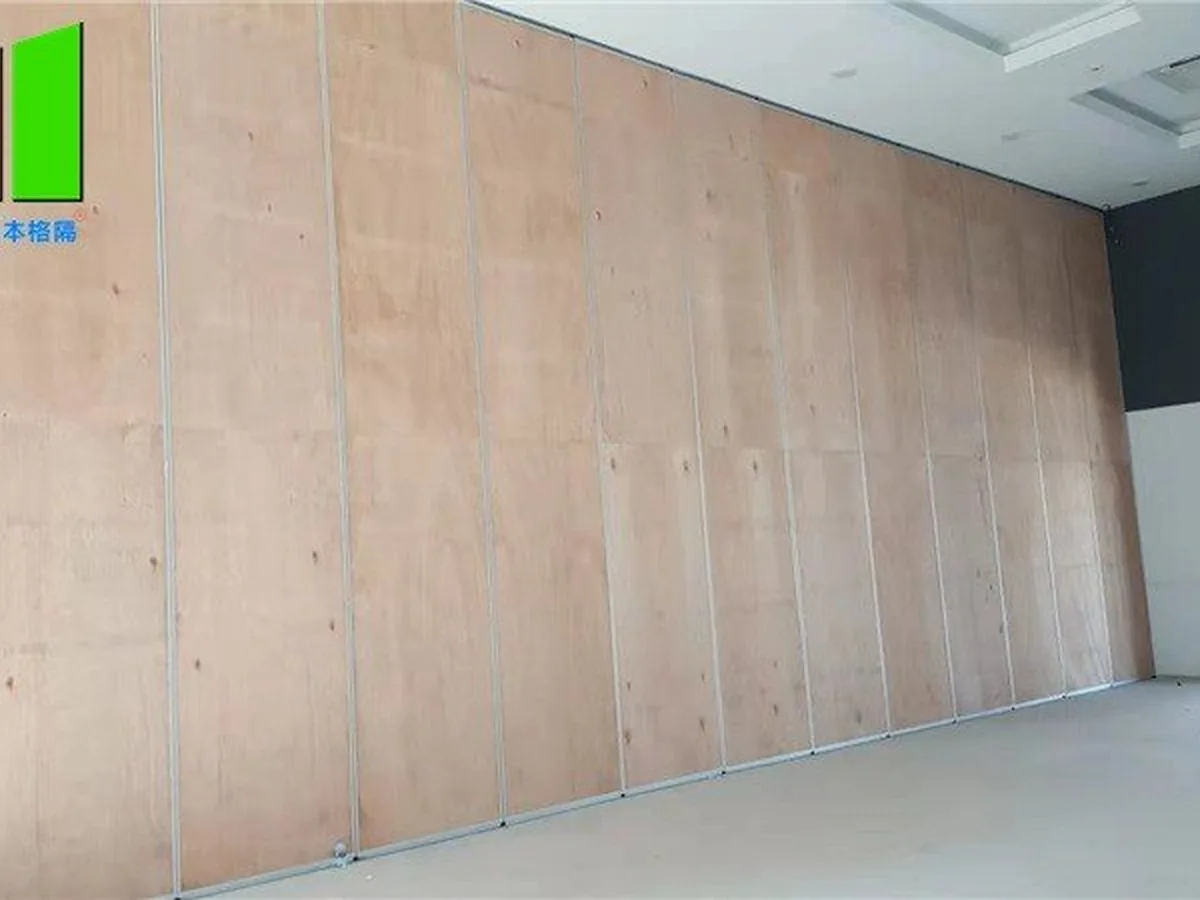
No. The floor is not cut or damaged for a floor track and remains physically uninterrupted by the maintained EBUNGE top-hung system.
Can parking be customized for a holdroom or baggage claim?
Panel parking style can be customized to the customer layout and project requirements, subject to coordinated drawings. A suitable approved parking arrangement can use the stacking area more compactly and coordinate with the space design.
Are finish materials customizable?
Yes. Finish materials can be customized, and cleaning and maintenance methods vary with the selected finish.
What must be confirmed from the coordinated project drawings?
The exact route, junction arrangement, continuous overhead path and parking position must be confirmed from the coordinated project drawings.
The exact overhead route and support arrangement must be confirmed by the responsible project team from coordinated drawings.. These pages provide context for planning airport movable partition seals holdroom and baggage claim areas.
Continue Exploring
More Acoustic Partition Guides
- Newer guideAcoustic Planning for Convention Center Partition Seals vs Halls
- Earlier guideSports Hall Partition Seals at Wall-Mounted Padding Drawing Guide
- Related guideAcoustic Partition Ceiling Interface Zone Confirmation
- Related guideWho Confirms Ceiling Grid Line Before Acoustic Partition Track