
Quick project answer
Impact mapping for community hall operable wall finishes starts with the floor. A top-hung system keeps the finished floor physically uninterrupted along the partition line. That single principle changes how teams plan dolly parking, finish care and drawing approvals. This article explains the planning inputs that matter when community hall operable wall finishes are selected for flexible spaces.
What impact mapping means for community hall operable wall finishes
Impact mapping connects a design decision to the people and spaces it affects. For community hall operable wall finishes, the decision is not only about color or texture. It also affects how panels park, how the floor reads and how cleaning teams work around the installed system.
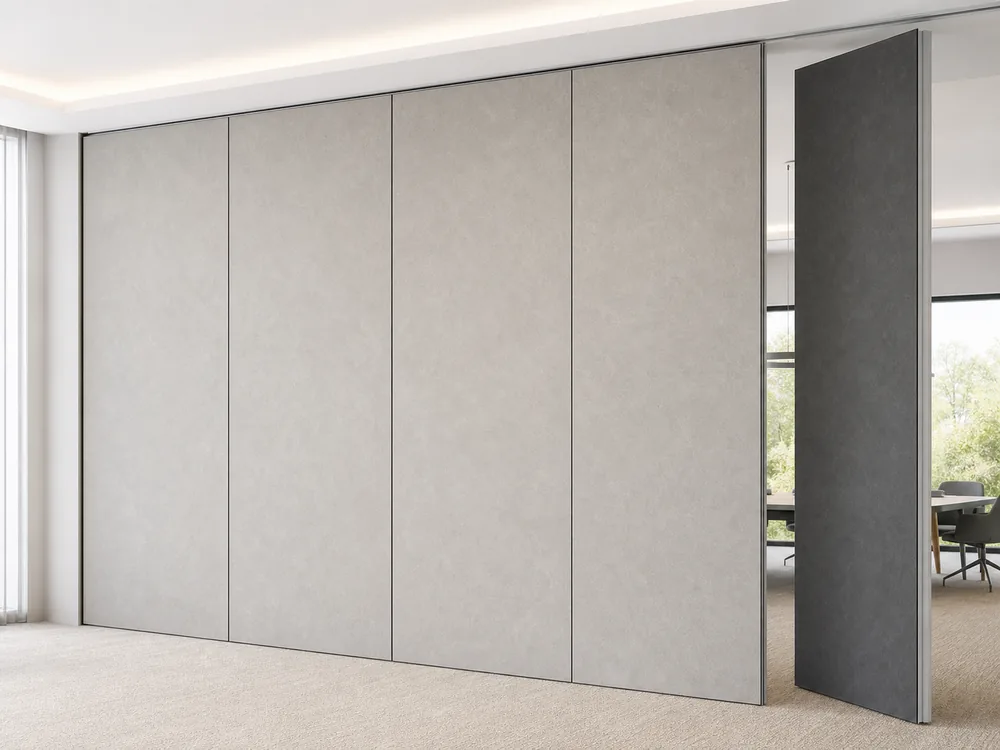
Use impact mapping to list the rooms, events and circulation routes that share the hall. Then note where panels will rest when the hall is open. This early map helps the project team coordinate community hall operable wall finishes with the wider space design.
The exact route, junction arrangement, continuous overhead path and parking position must be confirmed from the coordinated project drawings.
The top-hung principle and the physically uninterrupted floor
The EBUNGE movable partition system is top-hung. It has no continuous floor running track or operating hardware in the finished floor along the partition line. The floor is not cut or damaged for a floor track and remains physically uninterrupted by the maintained EBUNGE top-hung system.
For community hall operable wall finishes, this means the finish can run across the full floor area without a track break. The visible floor plane stays continuous, which supports a clean read in open-plan layouts.
Because there is no floor track, the finish selection can focus on durability and care rather than track cut-outs. Teams can review community hall operable wall finishes against the actual traffic and event patterns in the hall.
The exact route, junction arrangement, continuous overhead path and parking position must be confirmed from the coordinated project drawings.
Dolly planning and parking style for community hall operable wall finishes
Panel parking style can be customized to the customer layout and project requirements, subject to coordinated drawings. A suitable approved parking arrangement can use the stacking area more compactly and coordinate with the space design. The exact track, support and panel layout still require project drawings.
Dolly planning is the practical work of deciding where panels rest when the hall is open. It affects sightlines, floor finish zones and the way community hall operable wall finishes are protected during events.
Parking style options are not universal. The project team should confirm the approved arrangement with the partition supplier and the design team before finalizing community hall operable wall finishes.
The exact route, junction arrangement, continuous overhead path and parking position must be confirmed from the coordinated project drawings.
Finish and care coordination for community hall operable wall finishes
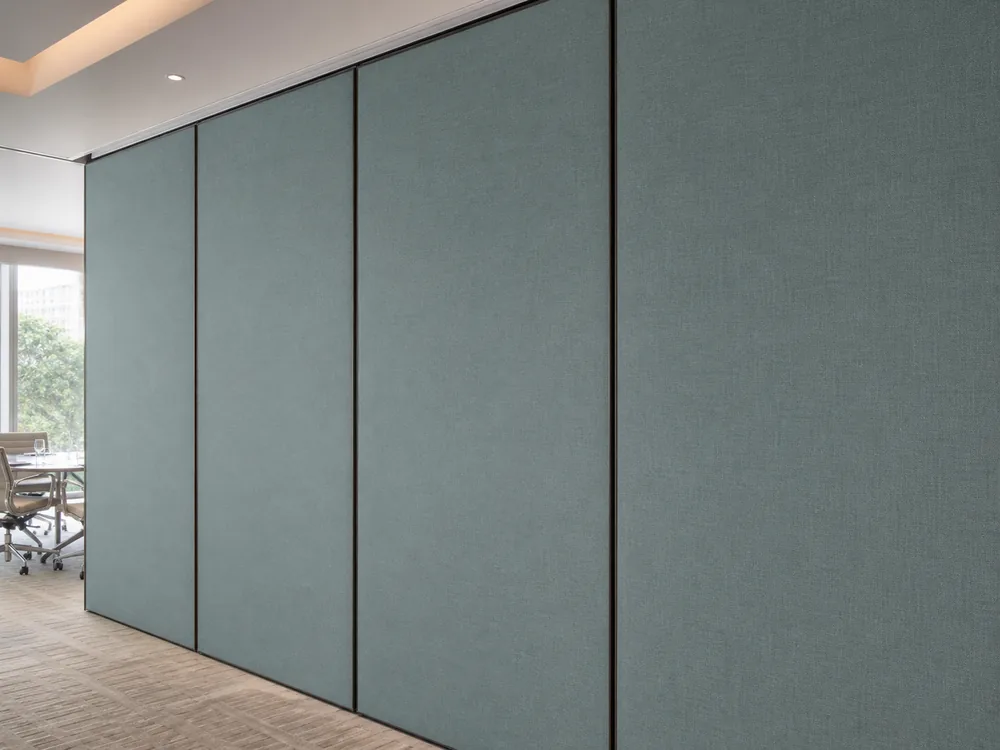
Finish materials can be customized, and cleaning and maintenance methods vary with the selected finish. That means community hall operable wall finishes should be chosen together with the care plan, not after it.
Different finishes respond to different cleaning methods. The project team should confirm the care approach for each selected finish before the hall opens. The suitability of each route and parking arrangement depends on the approved layout, circulation, ceiling interfaces and operating sequence.
Finish coordination also affects how panels read against adjacent walls, doors and floor finishes. Review samples in the actual hall lighting where possible.
The exact route, junction arrangement, continuous overhead path and parking position must be confirmed from the coordinated project drawings.
Non-limiting applications for community hall operable wall finishes
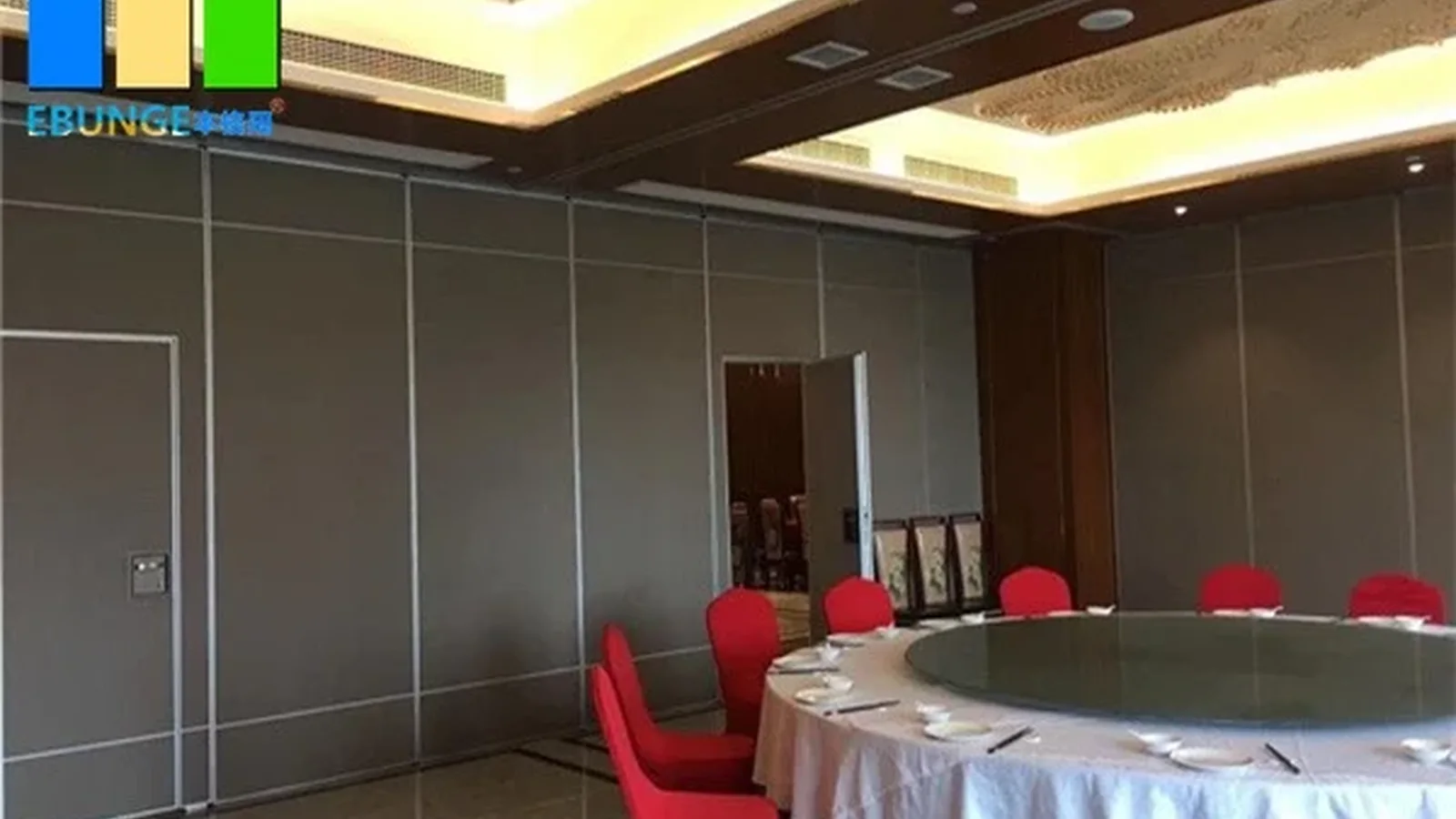
Movable partitions can be used wherever flexible space division, combination or reconfiguration is required. Application examples are not limiting. Community halls, hotel ballrooms, wedding halls and multifunction halls are non-limiting examples of spaces where this approach can be considered.
EBUNGE has completed many types of hotel-related movable-partition projects. Ballrooms, wedding halls and multifunction halls are non-limiting examples. No customer names, locations, quantities, ratings, certifications or outcomes may be inferred.
For community hall operable wall finishes, the application list should be read as a starting point. Each hall has its own event mix, storage pattern and finish expectations.
The exact route, junction arrangement, continuous overhead path and parking position must be confirmed from the coordinated project drawings.
Buyer inputs and drawing approvals
Buyers can prepare a short input list before drawings are issued. This helps the project team coordinate community hall operable wall finishes with the rest of the hall design.
- Hall plan showing open and divided configurations.
- Preferred parking area for stacked panels.
- Finish direction and care method for each selected finish.
- Event types that share the hall across a typical year.
- Points where the partition line meets adjacent construction.
These inputs feed the coordinated drawings. The exact track, support and panel layout still require project drawings. Approval should confirm the parking arrangement, finish selection and care method together.
The exact route, junction arrangement, continuous overhead path and parking position must be confirmed from the coordinated project drawings.
How impact mapping supports community hall operable wall finishes
Impact mapping turns a finish choice into a planning record. It links community hall operable wall finishes to parking, cleaning and event use. That record helps the project team review decisions before installation drawings are finalized.
Use the map to compare options. Note where a parking style affects the stacking area and how the selected finish will be cared for. Then confirm the approved arrangement in the coordinated drawings.
The exact route, junction arrangement, continuous overhead path and parking position must be confirmed from the coordinated project drawings.
Common questions about community hall operable wall finishes
Does a top-hung system require a floor track?
No. The EBUNGE movable partition system is top-hung and has no continuous floor running track or operating hardware in the finished floor along the partition line. The floor is not cut or damaged for a floor track and remains physically uninterrupted by the maintained EBUNGE top-hung system.
Can parking style be customized for a community hall?
Panel parking style can be customized to the customer layout and project requirements, subject to coordinated drawings. A suitable approved parking arrangement can use the stacking area more compactly and coordinate with the space design. The exact track, support and panel layout still require project drawings.
Can finishes be customized for community hall operable wall finishes?
Finish materials can be customized, and cleaning and maintenance methods vary with the selected finish. The project team should confirm the care method for each selected finish before the hall opens.
Where can movable partitions be used?
Movable partitions can be used wherever flexible space division, combination or reconfiguration is required. Application examples are not limiting. Community halls, hotel ballrooms, wedding halls and multifunction halls are non-limiting examples.
What should buyers confirm before approving drawings?
Buyers should confirm the parking arrangement, finish selection and care method together. The exact route, junction arrangement, continuous overhead path and parking position must be confirmed from the coordinated project drawings.
Does EBUNGE have hotel-related movable-partition experience?
EBUNGE has completed many types of hotel-related movable-partition projects. Ballrooms, wedding halls and multifunction halls are non-limiting examples. No customer names, locations, quantities, ratings, certifications or outcomes may be inferred.
For related space-planning context, review movable partition wall options and see projects for completed work. Impact mapping for community hall operable wall finishes keeps the floor, parking and finish decisions connected through drawing approval.
Continue Exploring
More Materials and Finishes Guides
- Newer guideComparing Operable Wall Finishes for Healthcare Training Rooms
- Earlier guideRestaurant Room Partition Finish Impact Planning for Table Storage
- Related guideWho Verifies Partition Handover Records When Trades Finish at Different
- Related guideMovable Partition Finish Sample Coordination Guide for Interior