
Why a Community Hall Partition Seal Maintenance Checklist Matters
The suitability of each route and parking arrangement depends on the approved layout, circulation, ceiling interfaces and operating sequence. A community hall partition seal maintenance checklist helps facility teams and project stakeholders track the condition of seals and the floor recessed anchor covers that protect them. These components work together to support the partition’s function, yet they are often overlooked during routine inspections.
Movable partitions from EBUNGE are top-hung and move without a continuous floor running track or floor hardware along the partition line. This design means that the floor area remains clear when the partition is open, which is a key advantage for flexible spaces. However, where floor recessed anchor covers are used, they become part of the system’s interface and require attention. The exact overhead route and support arrangement must be confirmed by the responsible project team from coordinated drawings.
Whether you are an architect, facility manager, or contractor, understanding what to inspect and why is essential. The checklist we outline is not a one-size-fits-all solution; it must be adapted to your specific layout, usage, and project documentation.

Understanding the Role of Seals and Floor Recessed Anchor Covers
In a movable partition system, seals are used to close gaps between panels and between panels and adjacent surfaces, such as the floor, ceiling, or walls. Visible references can support layout discussion but do not verify hidden construction or performance. Floor recessed anchor covers are protective elements that sit flush with the floor when not in use, covering the anchoring points that may be used to secure panels in place.
Because EBUNGE panels are top-hung and do not require a continuous floor track, the floor recessed anchors are typically located at specific positions along the partition line. These anchors help stabilize the bottom of the panels when they are in place. The covers protect the anchor mechanisms from dirt, debris, and accidental damage when the partition is not in use.
It is important to note that the exact configuration of seals and anchors varies by project. The layout, including straight, turning, and stacking routes, is reviewed from the project drawings.
Key Components to Include in Your Inspection Checklist
Share the opening dimensions, room layout and intended operating sequence for review.
A comprehensive community hall partition seal maintenance checklist should cover several areas.
Visual Inspection of Seals
Start with a visual check of all visible seals along the panel edges, top, and bottom. Look for signs of wear, tearing, or compression set. Seals that appear cracked, hardened, or missing sections may need replacement. Document any anomalies with photographs and notes.
Floor Recessed Anchor Covers
Inspect each floor recessed anchor cover for damage, misalignment, or debris accumulation. The covers should sit flush with the floor and open and close smoothly. If a cover is damaged, it may expose the anchor mechanism to dirt or create a trip hazard. Ensure that the covers are clean and free of obstructions.
Track and Hanger System
Although the focus is on seals and anchor covers, the top track and hangers are integral to the system. Check for any visible signs of wear on the track, such as dents or debris. Ensure that hangers move freely along the track without unusual resistance. This is part of a holistic inspection.
Panel Alignment and Operation
Operate the partition through its full range of motion, including any turning or stacking routes. Observe whether panels align correctly when closed and whether seals compress evenly. Misalignment can indicate issues with the track or hangers, which may affect seal performance.
Documentation Review
Keep a record of all inspections, including dates, findings, and any maintenance actions taken. It also supports warranty claims if needed.
How to Develop a Project-Specific Checklist
No two community halls are identical, and neither are their movable partition systems. Your maintenance checklist must be tailored to your specific installation. Here are steps to develop a project-specific checklist:
Review Project Drawings and Documentation
Start by reviewing the project drawings and technical documentation provided by the manufacturer. These documents outline the track layout, stacking positions, and locations of floor anchors. Understanding the designed system is essential for identifying what to inspect.
Consult with the Manufacturer or Installer
Engage with the manufacturer or installer to clarify any questions about the system’s components and recommended maintenance practices. They can provide guidance on inspection intervals and specific areas of concern based on the system design.
Define Inspection Frequency
Determine how often inspections should occur based on usage patterns. A community hall that hosts daily events may require more frequent checks than one used occasionally. Consider seasonal factors, such as changes in humidity or temperature, that might affect seals.
Train Maintenance Personnel
Ensure that the personnel responsible for inspections are trained on the specific system. They should know how to operate the partition safely and what to look for during inspections. Provide them with a checklist template that they can follow.
Common Issues to Look For
During inspections, be alert to common issues that can affect seals and floor recessed anchor covers.
Debris and Dirt Accumulation
Dirt and debris can accumulate in the recessed anchor covers and along seal channels. This can interfere with the operation of the covers and the sealing effectiveness. Regular cleaning is essential.
Wear and Tear on Seals
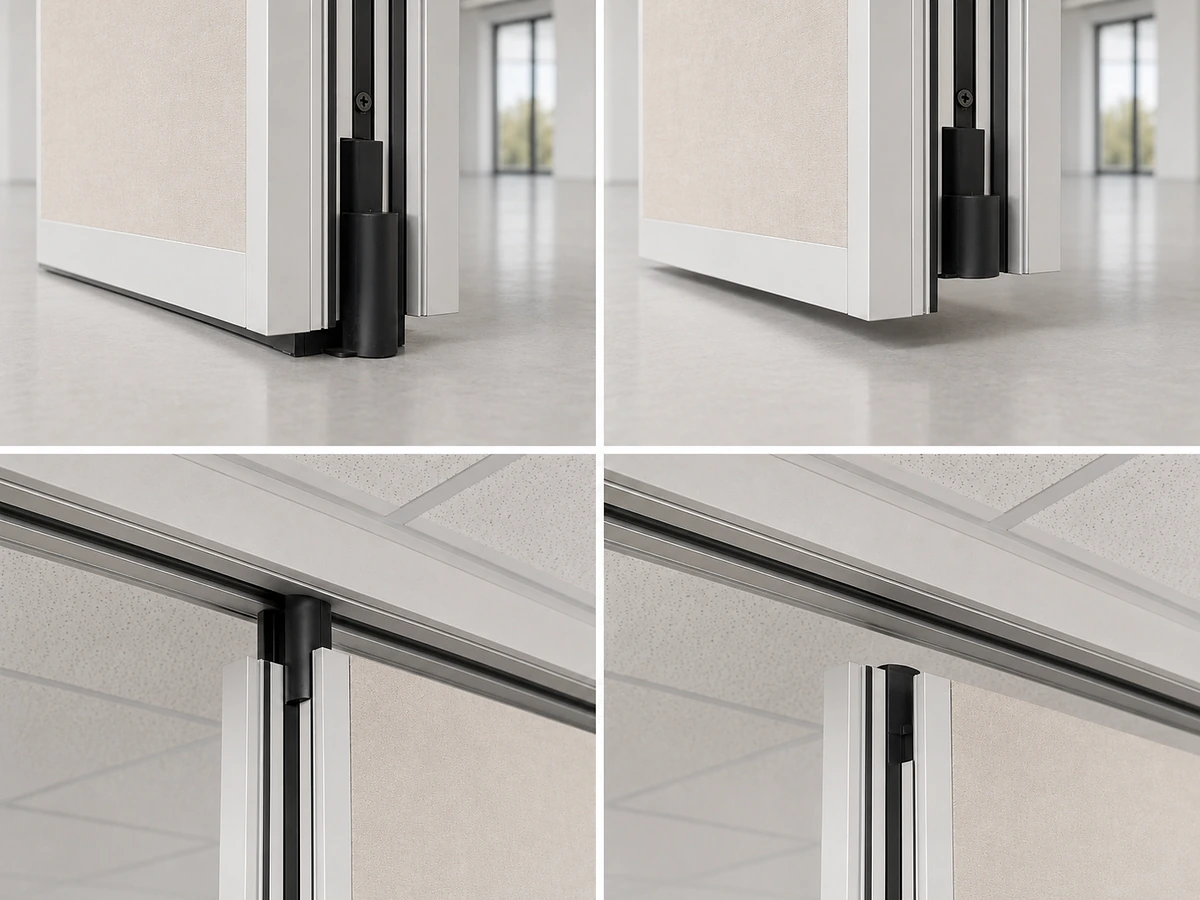
Seals naturally wear over time due to friction and environmental exposure. Look for signs of abrasion, especially at points where panels meet or where seals contact the floor. Early detection can prevent more significant issues.
Misalignment of Panels
If panels become misaligned, they may not seal properly. This can be caused by issues with the track, hangers, or even the building structure. Any misalignment should be addressed promptly.
Damage to Anchor Covers
Anchor covers can be damaged by heavy loads or impact. A damaged cover may not close properly, leaving the anchor exposed. Replace damaged covers as soon as possible.
Acoustic Considerations: What to Keep in Mind
Review the ceiling interface, panel route and stacking position together.
Maintenance Best Practices for Long-Term Reliability
Regular Cleaning
Clean the track, seals, and anchor covers regularly. Use a soft cloth and mild detergent as appropriate for the materials. Avoid using harsh chemicals that could damage seals or finishes.
Lubrication (If Applicable)
Some moving parts may require lubrication. However, do not apply lubricants to seals or surfaces unless recommended by the manufacturer. Over-lubrication can attract dirt and cause issues.
Prompt Repairs
Address any issues found during inspections promptly. Small problems, if left unattended, can escalate into more significant repairs. Keep spare parts, such as seals or covers, on hand if possible.
Maintain a Maintenance Log
Keep a detailed log of all inspections and maintenance activities. This helps track the condition of the system over time and can inform future maintenance planning.
Frequently Asked Questions
What is a floor recessed anchor cover in a movable partition system?
A floor recessed anchor cover is a protective plate that sits flush with the floor and covers the anchoring point used to secure a movable partition panel in place. When the partition is not in use, the cover is closed to keep the anchor mechanism clean and safe.
How often should I inspect the seals on my community hall partition?
Inspection frequency depends on usage. For a community hall that is used frequently, consider monthly inspections.
Can I replace a damaged seal myself?
Seal replacement can often be done by trained maintenance personnel, but it is important to use the correct replacement parts and follow the manufacturer’s instructions. If you are unsure, contact the manufacturer or a qualified installer for assistance.
Do seals affect the acoustic performance of the partition?
What should I do if a floor anchor cover is damaged?
If a floor anchor cover is damaged, it should be repaired or replaced as soon as possible to prevent debris from entering the anchor mechanism and to avoid trip hazards. Contact the manufacturer for replacement parts.
Where can I find the maintenance documentation for my EBUNGE partition?
Maintenance documentation is typically provided at project handover. If you need additional copies, contact EBUNGE through the contact page and provide your project details.
Conclusion and Next Steps
By focusing on seals and floor recessed anchor covers, and by following a project-specific approach, you can help ensure that your partition continues to function as intended. The exact route, junction arrangement, continuous overhead path and parking position must be confirmed from the coordinated project drawings.
. If you have a project in mind and need guidance on maintenance planning, our team is ready to assist. Explore our project references to see how we have helped other facilities, and do not hesitate to contact us for expert advice tailored to your needs.
Continue Exploring
More Acoustic Partition Guides
- Newer guideWhy Office Meeting Suite Partition Seals Need Detailing at Ceiling Diffuser Edges
- Earlier guideWhy Sports Hall Partition Seals Need Interface Detailing at Floor-Mounted Volleyball Anchor Points
- Related guideHow to Coordinate Office Meeting Suite Partition Seals with Wall-Mounted Video Bar Swing Paths
- Related guideHow to Coordinate Hotel Banquet Partition Seals with Ceiling-Mounted Rigging Point Access Panels