
Quick project answer
Document the review scope for community hall partition stacking pockets.
Community hall partition stacking pockets are the wall zones where movable panels rest when the room opens up. In busy halls, those zones often sit beside coat racks, noticeboards and service fittings. Planning the pocket and the rack together keeps the room usable in both open and closed states.
Why Stacking Pockets Deserve Early Attention
Record the coordination scope for community hall partition stacking pockets.
A stacking pocket is more than leftover wall space. It is the destination for every panel in the run, so its position shapes how the hall reads when the partition is open. Community hall partition stacking pockets also affect where furniture, coat racks and circulation routes can sit.
When the pocket is considered late, wall-mounted items may land in the panel path. Early coordination between the partition layout and the coat rack position reduces that risk. The aim is a wall elevation where each element has a defined place.
The Top-Hung Principle Behind EBUNGE Partitions
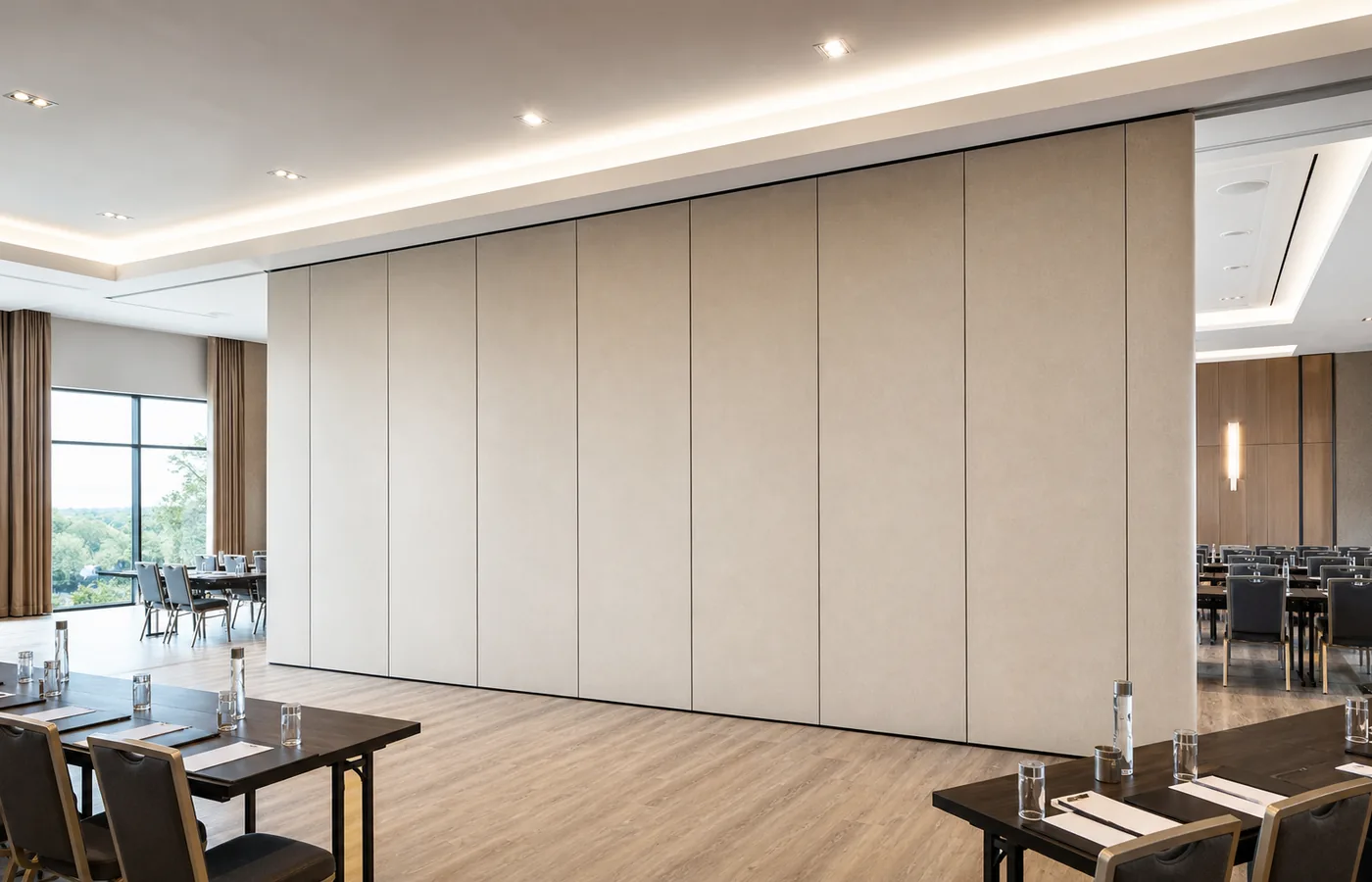
The EBUNGE movable partition system is top-hung. Panels hang from an overhead track, and the finished floor along the partition line carries no continuous running track or operating hardware. This principle shapes how the stacking pocket is planned.
Because the floor is not cut or damaged for a floor track, the floor surface remains physically uninterrupted by the maintained EBUNGE top-hung system. That matters in halls where the same floor hosts events, markets or community meetings.
The exact route, junction arrangement, continuous overhead path and parking position must be confirmed from the coordinated project drawings.
What an Uninterrupted Floor Means for Hall Use
An uninterrupted floor is a practical benefit in a multi-use hall. Chairs, tables and temporary stalls can cross the partition line without meeting a floor channel. Cleaning routines also follow one continuous surface rather than a tracked edge.
This does not remove the need for planning. The overhead path still has to be set out, and the stacking pocket still has to receive the panels. The difference is that the floor itself is not part of the running track.
Planning Community Hall Partition Stacking Pockets
Panel parking style can be customized to the customer layout and project requirements, subject to coordinated drawings. A suitable approved parking arrangement can use the stacking area more compactly and coordinate with the space design.
The exact track, support and panel layout still require project drawings. That is why the pocket should be discussed alongside the wall elevation, not after it.
- Where the panels will rest when the hall is fully open
- How the coat rack swing relates to the parked panel face
- Which wall areas must stay clear for circulation
- How the overhead path connects to the parking position
Wall-Mounted Coat Rack Swings and Panel Parking
A wall-mounted coat rack often swings outward from the wall. Its arc needs clear space, and that arc can overlap a stacking pocket if the two are planned independently. Checking the swing against the parked panel position is a simple early step.
Where the rack sits close to the pocket, the drawing should show both the rack in its resting position and its swing envelope. This helps the design team judge whether the two elements can share the wall zone.
Community hall partition stacking pockets work best when every wall-mounted item is drawn in both its stored and in-use position.
Finish Selection and Care Coordination
Finish materials can be customized, and cleaning and maintenance methods vary with the selected finish. The finish choice therefore affects both the look of the panels and the care routine for the hall team.
Care guidance should be recorded for the finish that is actually selected. A generic cleaning note may not suit every surface, so the project documents should carry the relevant method for each confirmed finish.
Non-Limiting Applications for Movable Partitions
Movable partitions can be used wherever flexible space division, combination or reconfiguration is required. Application examples are not limiting, and the same top-hung principle can serve many room types.
EBUNGE has completed many types of hotel-related movable-partition projects. Ballrooms, wedding halls and multifunction halls are non-limiting examples. Community halls follow the same planning logic when stacking pockets and wall fittings are coordinated.
For related system information, see the operable wall system page and the projects section.
Buyer Inputs That Shape the Stacking Layout
Useful early inputs include the open and closed room sizes, the preferred parking wall, and the position of coat racks and other wall fittings. These inputs let the design team test options before drawings are fixed.
Buyers should also confirm who will use the hall and how often the layout changes. Frequent reconfiguration places more emphasis on a clear parking zone and unobstructed wall space.
- Confirm the open and closed room configurations.
- Mark the preferred stacking pocket wall.
- Record wall-mounted items and their swing envelopes.
- Agree the finish direction and care expectations.
- Review the coordinated drawings before approval.
Drawing Approvals and Project Coordination
The exact route, junction arrangement, continuous overhead path and parking position must be confirmed from the coordinated project drawings. Approval should follow a review of those drawings rather than a verbal description.
Community hall partition stacking pockets, coat rack swings and overhead paths all appear on the same set of coordinated drawings. Keeping them together helps the project team spot overlaps before work is set out.
| Item | What the drawing should show |
|---|---|
| Stacking pocket | Parking position and wall zone for parked panels |
| Coat rack | Resting position and swing envelope |
| Overhead path | Route confirmed from coordinated drawings |
| Finish | Selected finish and its care method |
Frequently Asked Questions
What is a community hall partition stacking pocket?
It is the wall zone where movable panels rest when the partition is open. Its size and position depend on the parking arrangement agreed in the coordinated project drawings.
Does a top-hung partition need a floor track?
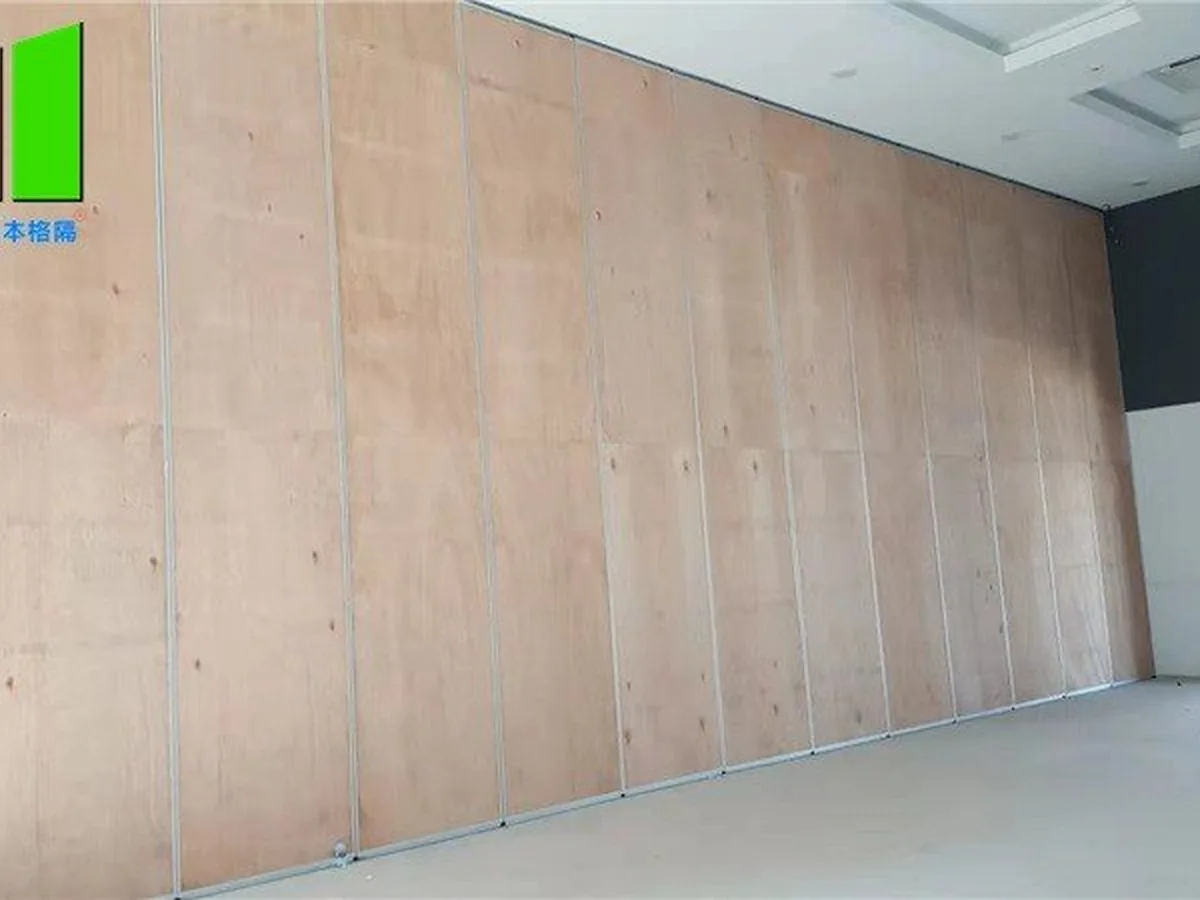
No continuous floor running track or operating hardware is required in the finished floor along the partition line. The floor remains physically uninterrupted by the maintained EBUNGE top-hung system.
Can a wall-mounted coat rack sit near the stacking pocket?
It can be considered when the rack position and its swing envelope are shown on the coordinated drawings. The overlap between the swing and the parked panel position should be reviewed.
Can the parking style be customized?
Panel parking style can be customized to the customer layout and project requirements, subject to coordinated drawings. The exact track, support and panel layout still require project drawings.
Can the panel finish be customized?
Finish materials can be customized, and cleaning and maintenance methods vary with the selected finish. The care method for the chosen finish should be recorded in the project documents.
Where can movable partitions be used?
Movable partitions can be used wherever flexible space division, combination or reconfiguration is required. Application examples are not limiting.
Continue Exploring
More Operable Wall System Guides
- Newer guideSports Hall Partition Stacking: Ceiling Batting Cage Anchor Points
- Earlier guideCommunity Hall Partition Manual Operation: Stage Rope Pulleys
- Related guideEvacuation Chair Routes Where Operable Walls Cross Accessible Paths
- Related guidePhase Operable Wall Work When a Renovation Adds a New Wing