
Quick project answer
An auditorium operable wall finishes comparison for high-traffic areas starts with the movement principle, not the surface sample. The EBUNGE movable partition system is top-hung and has no continuous floor running track or operating hardware in the finished floor along the partition line. That single fact changes how finish planning, parking and daily care are coordinated.
Start with the top-hung principle
In a top-hung arrangement, the panels are carried from above rather than guided by a continuous floor track. The finished floor along the partition line is not cut or damaged for a floor track. This keeps the floor physically uninterrupted by the maintained EBUNGE top-hung system.
For an auditorium, that uninterrupted floor matters because the same room may serve seated events, standing gatherings and equipment movement. A finish comparison should therefore begin with the overhead path and parking position, not only with color or texture.
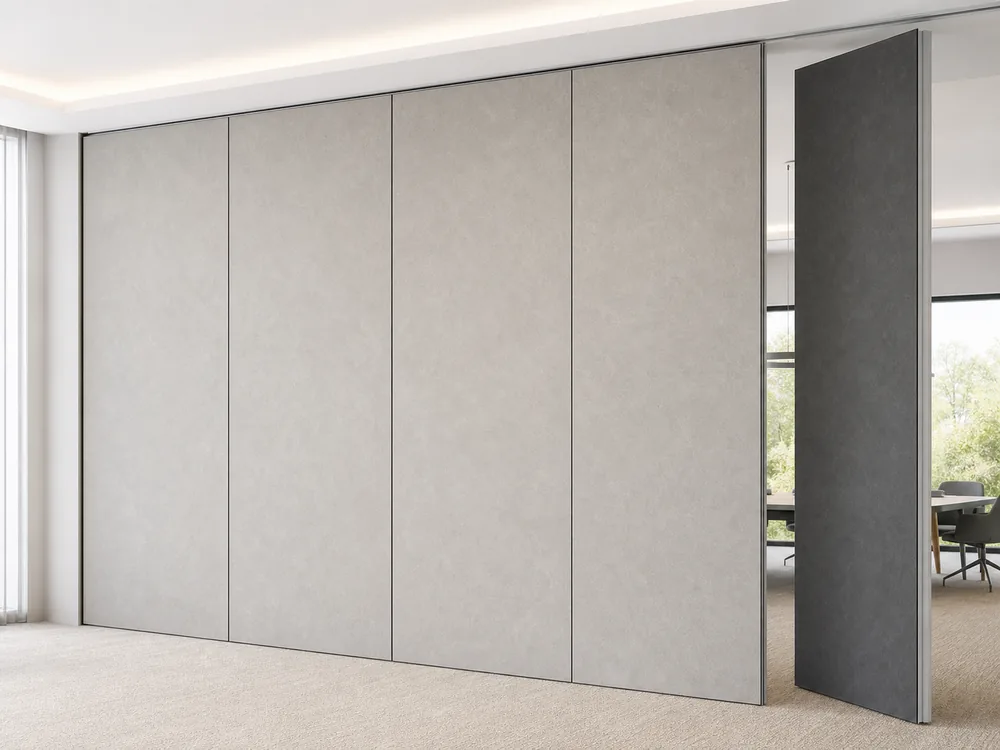
The exact route, junction arrangement, continuous overhead path and parking position must be confirmed from the coordinated project drawings.
Why a physically uninterrupted floor changes finish choices
When no floor track interrupts the partition line, the floor finish can run continuously through the opening. This can simplify transitions between the auditorium and adjacent areas because there is no floor hardware to work around at the partition line.
Finish selection still depends on how the wall panels will be handled and where they will rest. A durable panel finish may suit a high-traffic auditorium, but cleaning and maintenance methods vary with the selected finish. The finish and the care method should be chosen together.
Because the floor remains physically uninterrupted by the maintained EBUNGE top-hung system, the auditorium operable wall finishes comparison can focus on panel surfaces and parking rather than floor-track detailing.
Plan parking before finalizing finishes
Panel parking style can be customized to the customer layout and project requirements, subject to coordinated drawings. A suitable approved parking arrangement can use the stacking area more compactly and coordinate with the space design.
Parking affects finish planning because stored panels may sit close to other surfaces or within a dedicated stacking zone. The finish should be reviewed alongside the parking position so that the stored panels and the surrounding auditorium finishes can be coordinated.
The exact track, support and panel layout still require project drawings. For an auditorium operable wall finishes comparison, parking is not an afterthought; it is part of the finish and layout decision.
Compare finish and care coordination
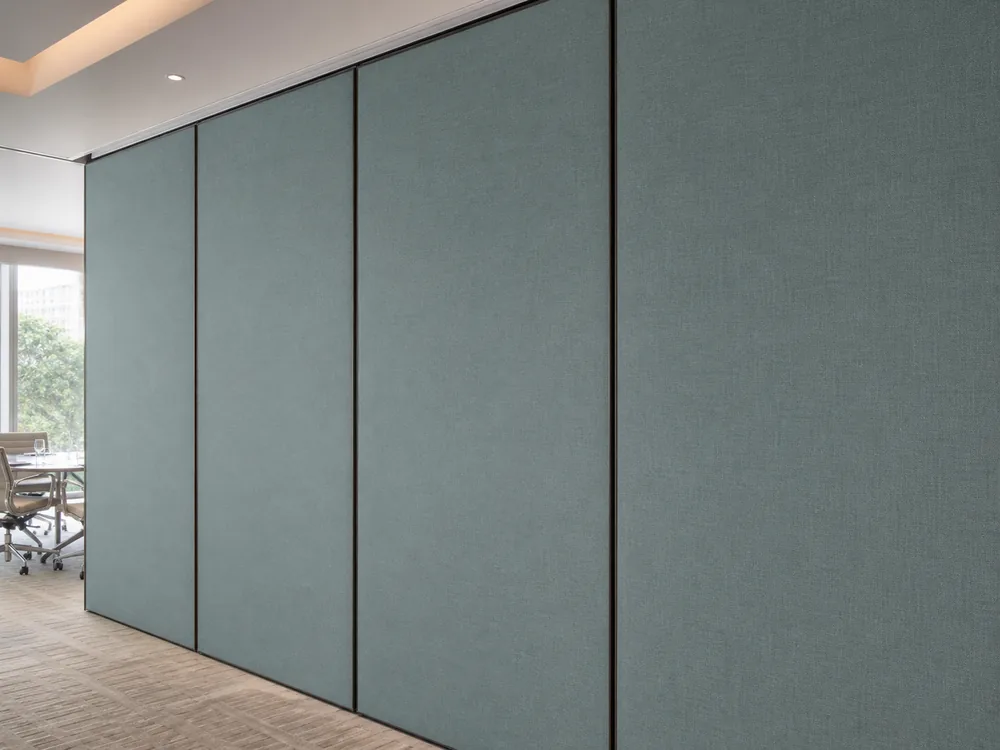
Finish materials can be customized, and cleaning and maintenance methods vary with the selected finish. That means two auditorium projects with different finishes may need different care routines even when the top-hung principle is the same.
A finish comparison should ask how the selected surface will be cleaned, what products are appropriate, and how often care is expected in a high-traffic area. These answers come from the finish selection, not from a universal rule.
The table below shows the coordination points to review. It does not rank finishes or promise performance.
| Planning item | What to confirm | Why it matters |
|---|---|---|
| Finish selection | Customizable finish direction | Care method varies with finish |
| Cleaning method | Finish-specific care | High-traffic areas need a defined routine |
| Parking style | Customized to layout and requirements | Affects stacking area use |
| Overhead path | Coordinated project drawings | Confirms route and junction arrangement |
Use non-limiting application examples
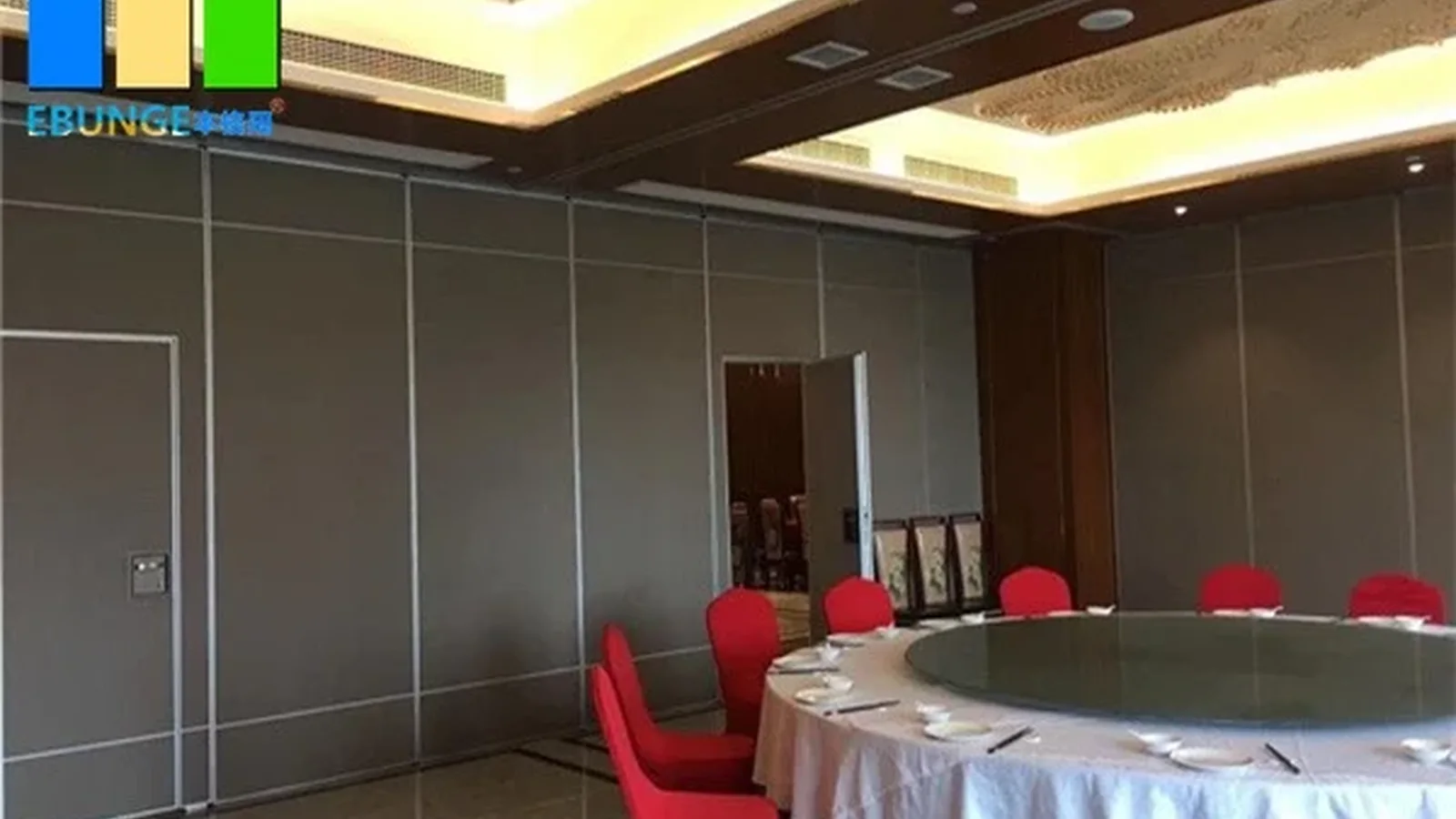
Movable partitions can be used wherever flexible space division, combination or reconfiguration is required. Application examples are not limiting. EBUNGE has completed many types of hotel-related movable-partition projects; ballrooms, wedding halls and multifunction halls are non-limiting examples.
An auditorium may share planning characteristics with those spaces, such as large openings and varied event use. However, no customer names, locations, quantities, ratings, certifications or outcomes may be inferred from those examples.
For an auditorium operable wall finishes comparison, the useful lesson is that finish and parking planning should follow the actual room layout and event pattern.
Buyer inputs that shape the comparison
A productive comparison begins with clear buyer inputs. The project team should provide the room layout, the intended parking zone, the finish direction and the expected care approach. These inputs allow the finish and parking discussion to stay grounded in the project.
Buyers should also confirm which surfaces are considered high-traffic and how the auditorium will be used across different events. The finish comparison can then focus on the areas that receive the most contact.
Because finish materials can be customized, the buyer input stage is the right time to align appearance, cleaning and parking. The exact route, junction arrangement, continuous overhead path and parking position must be confirmed from the coordinated project drawings.
Drawing approvals and final coordination
Final coordination depends on approved drawings. The exact track, support and panel layout still require project drawings. A suitable approved parking arrangement can use the stacking area more compactly and coordinate with the space design.
For an auditorium operable wall finishes comparison, the drawings should show how the top-hung system relates to the room, where panels will park, and how the selected finish will be cared for. The floor remains physically uninterrupted by the maintained EBUNGE top-hung system, so floor-track detailing is not part of the partition line.
Review the finish and parking decisions together before approval. The suitability of each route and parking arrangement depends on the approved layout, circulation, ceiling interfaces and operating sequence.
Frequently asked questions
What is the first step in an auditorium operable wall finishes comparison?
Start with the top-hung principle and the parking plan. Finish materials can be customized, but cleaning and maintenance methods vary with the selected finish, so finish and care should be reviewed together.
Does a top-hung system require a floor track?
The EBUNGE movable partition system is top-hung and has no continuous floor running track or operating hardware in the finished floor along the partition line. The floor is not cut or damaged for a floor track.
How is parking planned for an auditorium?
Panel parking style can be customized to the customer layout and project requirements, subject to coordinated drawings. A suitable approved parking arrangement can use the stacking area more compactly and coordinate with the space design.
Can finish materials be customized?
Yes. Finish materials can be customized, and cleaning and maintenance methods vary with the selected finish. The care method should be confirmed for the finish chosen.
What must be confirmed from project drawings?
The exact route, junction arrangement, continuous overhead path and parking position must be confirmed from the coordinated project drawings. The exact track, support and panel layout still require project drawings.
Are there non-limiting application examples?
Movable partitions can be used wherever flexible space division, combination or reconfiguration is required. EBUNGE has completed many types of hotel-related movable-partition projects; ballrooms, wedding halls and multifunction halls are non-limiting examples.
For related reading, see movable partition wall and projects. A careful auditorium operable wall finishes comparison keeps the top-hung principle, uninterrupted floor, parking plan, finish care and drawing approvals in one coordinated view.
Continue Exploring
More Materials and Finishes Guides
- Newer guideSchool Auditorium Operable Wall Finish Edge Planning
- Earlier guideMovable Partition Finish Planning for Training Center Traffic
- Related guideWho Verifies Partition Handover Records When Trades Finish at Different
- Related guideMovable Partition Finish Sample Coordination Guide for Interior