
Why healthcare training room partition finishes matter
Document the review scope for healthcare training room partition finishes.
Quick project answer
Healthcare training rooms host instruction, simulation and group work. The room may need to change from one large space into smaller areas. Movable partitions allow that flexibility. The finish on those partitions affects how the surface is cleaned and maintained. This article compares UV cleaning and chemical cleaning for healthcare training room partition finishes.
Cleaning methods vary with the selected finish. No single method suits every material. The choice also depends on the room’s use and the cleaning products already approved in the facility. The goal is to match the finish and the care routine without assuming one approach works everywhere.
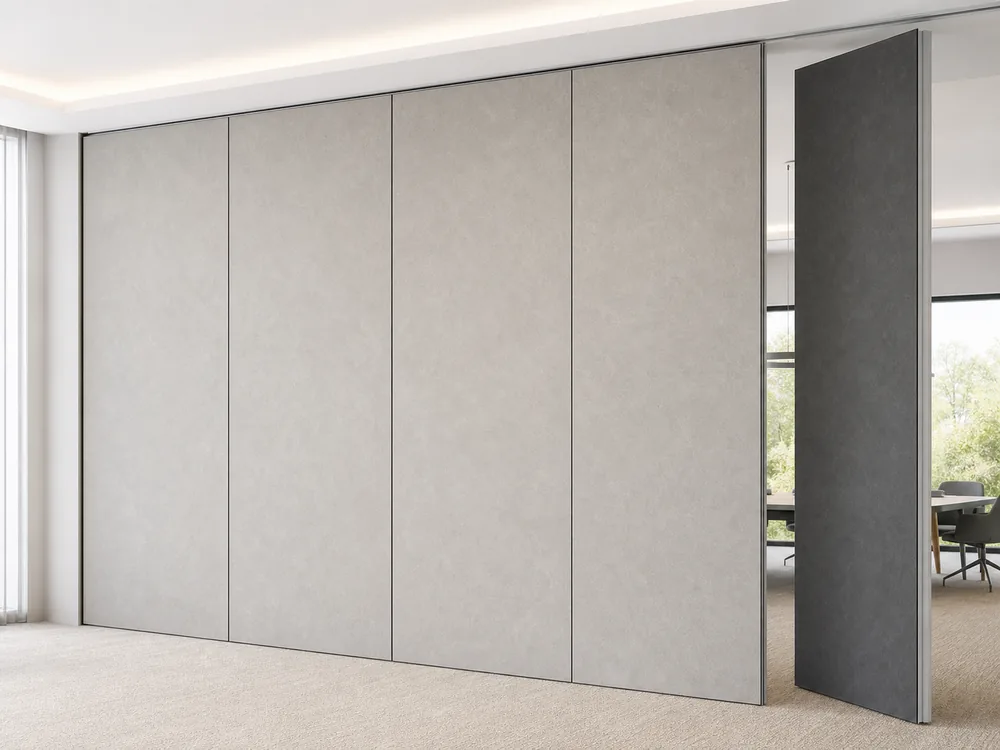
The top-hung principle and the floor
The EBUNGE movable partition system is top-hung. It has no continuous floor running track or operating hardware in the finished floor along the partition line. This means the floor is not cut or damaged for a floor track. The floor remains physically uninterrupted by the maintained EBUNGE top-hung system.
The suitability of each route and parking arrangement depends on the approved layout, circulation, ceiling interfaces and operating sequence. There is no track recess to collect debris. Staff can clean the floor as a single continuous surface. This is a practical benefit when the room must be cleaned between sessions.
The exact route, junction arrangement, continuous overhead path and parking position must be confirmed from the coordinated project drawings. The top-hung principle describes the support method, not a universal layout. Every project has its own overhead conditions and parking needs.
UV cleaning and chemical cleaning: a finish-based comparison
UV cleaning uses ultraviolet light to treat surfaces. Chemical cleaning uses liquid products applied by hand or machine. Each method interacts differently with partition finishes. Some finishes may be more compatible with one method than the other.
UV cleaning does not require liquids, so it may be considered where wet methods are impractical. Chemical cleaning can reach crevices and soil that light may not reach. The right choice depends on the finish, the soil type and the facility’s protocols.
Because finish materials can be customized, cleaning and maintenance methods vary with the selected finish. A finish that performs well with chemical cleaning may not be suitable for UV exposure. A finish that tolerates UV may need specific chemical products. These are finish-specific decisions.
Planning parking for healthcare training rooms
Panel parking style can be customized to the customer layout and project requirements, subject to coordinated drawings. A suitable approved parking arrangement can use the stacking area more compactly and coordinate with the space design. The exact track, support and panel layout still require project drawings.
In a healthcare training room, parking may need to avoid door swings, equipment zones or teaching walls. Early planning helps coordinate the partition with the room’s other elements. The parking position is part of the coordinated drawings, not a default location.
Movable partitions can be used wherever flexible space division, combination or reconfiguration is required. Application examples are not limiting. A training room may also serve as a meeting room or simulation lab. The parking plan should reflect how the room is used across the day.
Finish and care coordination
Finish materials can be customized, and cleaning and maintenance methods vary with the selected finish. This means the finish choice and the cleaning method should be decided together. A finish selected for its appearance may require a care routine that the facility cannot support. A finish selected for easy cleaning may not meet the room’s design goals.
For healthcare training room partition finishes, the care team should review the finish sample and the proposed cleaning method. If UV cleaning is planned, the finish should be confirmed as compatible. If chemical cleaning is planned, the products should be confirmed as suitable. This review happens before the finish is finalized.
The exact route, junction arrangement, continuous overhead path and parking position must be confirmed from the coordinated project drawings. Finish and care coordination follows the same drawing-based approach. No cleaning outcome should be assumed without evidence.
Non-limiting applications and buyer inputs
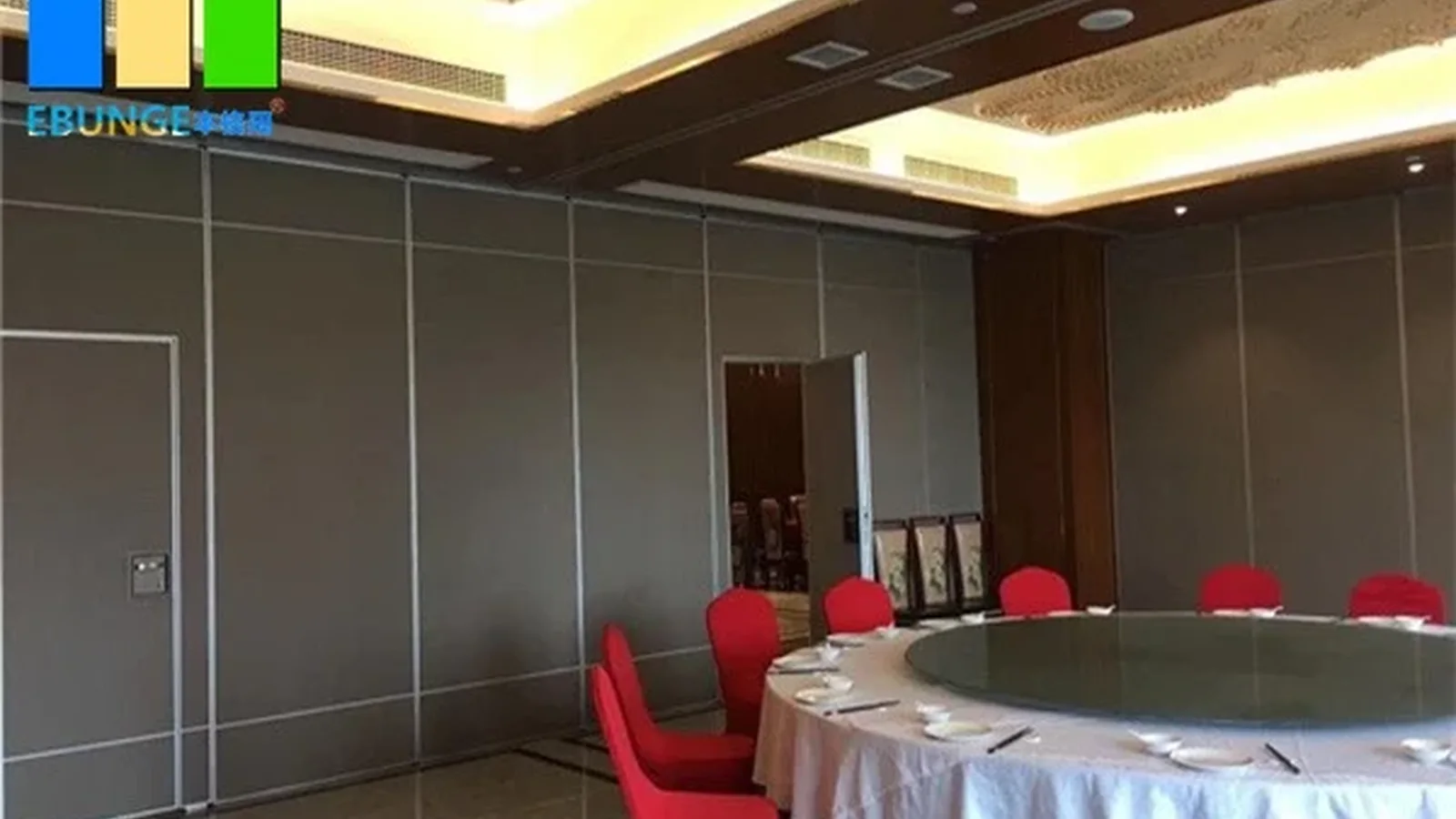
EBUNGE has completed many types of hotel-related movable-partition projects. Ballrooms, wedding halls and multifunction halls are non-limiting examples. No customer names, locations, quantities, ratings, certifications or outcomes may be inferred. The same top-hung principle applies to healthcare training rooms when the project drawings support it.
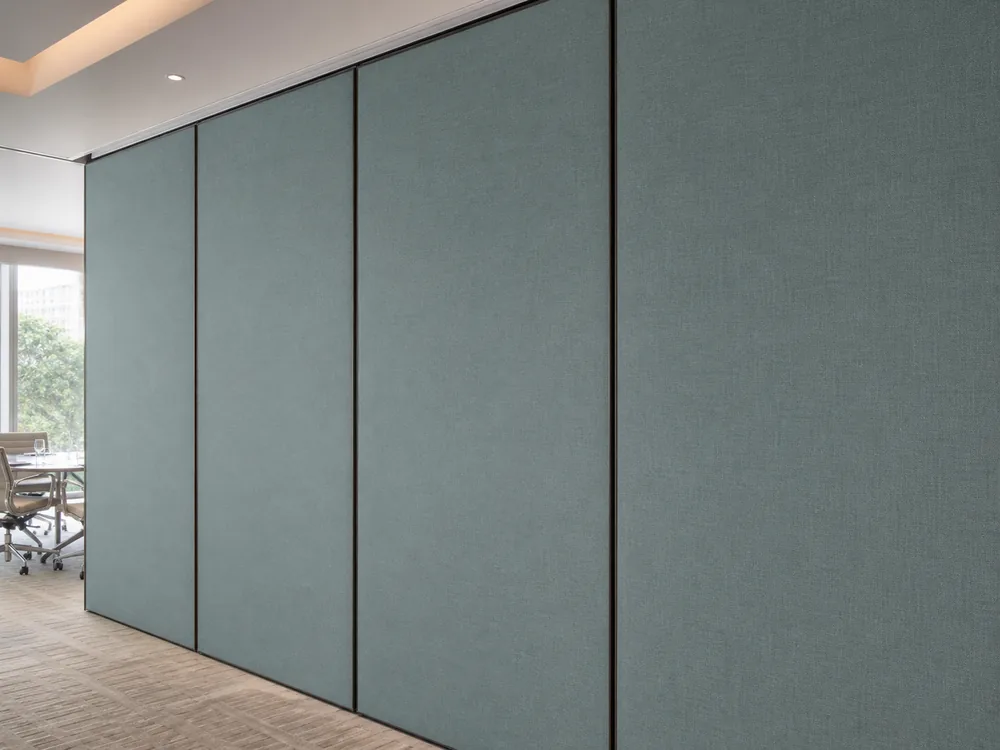
Visible references can support layout discussion but do not verify hidden construction or performance. They should also share any finish preferences and the facility’s cleaning protocols. These inputs help the project team coordinate the partition with the space.
Buyers should also confirm the parking area and the overhead structure available for the top-hung system. The exact route, junction arrangement, continuous overhead path and parking position must be confirmed from the coordinated project drawings. Early input reduces later changes.
Drawing approvals and project coordination
Drawing approvals are a key step for any movable partition project. The coordinated drawings show the track route, the parking position and the panel layout. They also show how the partition relates to the room’s other elements. For healthcare training room partition finishes, the drawings should note the selected finish and any care requirements.
The EBUNGE top-hung system has no continuous floor running track. This is a confirmed fact. The drawings should reflect that the floor remains uninterrupted. Any junction or parking detail must be confirmed from the coordinated project drawings.
Approvals should cover the finish, the cleaning method and the parking arrangement. If UV cleaning is planned, the finish compatibility should be documented. If chemical cleaning is planned, the product list should be reviewed. These steps support a coordinated project.
Frequently asked questions
What is the main difference between UV and chemical cleaning for partition finishes?
UV cleaning uses ultraviolet light, while chemical cleaning uses liquid products. The suitable method depends on the selected finish and the facility’s protocols. Finish materials can be customized, and cleaning and maintenance methods vary with the selected finish.
Does a top-hung movable partition require a floor track?
No. The EBUNGE movable partition system is top-hung and has no continuous floor running track or operating hardware in the finished floor along the partition line. The floor is not cut or damaged for a floor track.
Can healthcare training room partition finishes be customized?
Yes. Finish materials can be customized, and cleaning and maintenance methods vary with the selected finish. The finish choice should be coordinated with the cleaning method and the project drawings.
How is parking planned for a movable partition?
Panel parking style can be customized to the customer layout and project requirements, subject to coordinated drawings. A suitable approved parking arrangement can use the stacking area more compactly and coordinate with the space design.
What should buyers confirm before approving drawings?
Buyers should confirm the finish, the cleaning method and the parking arrangement. The exact route, junction arrangement, continuous overhead path and parking position must be confirmed from the coordinated project drawings.
Key takeaways
- The EBUNGE movable partition system is top-hung with no continuous floor running track.
- The floor remains physically uninterrupted by the maintained EBUNGE top-hung system.
- Finish materials can be customized, and cleaning and maintenance methods vary with the selected finish.
- UV and chemical cleaning are finish-specific choices, not universal solutions.
- Parking style can be customized, subject to coordinated drawings.
- Healthcare training room partition finishes should be reviewed with the care team.
For related project examples, see /projects/. To learn more about the movable partition system, visit /movable-partition-wall/.
Continue Exploring
More Materials and Finishes Guides
- Newer guideExhibition Hall Partition Finish Impact: Mobile Display Walls
- Earlier guideHealthcare Training Room Partition Finish Planning for Stretcher Traffic
- Related guideWho Verifies Partition Handover Records When Trades Finish at Different
- Related guideMovable Partition Finish Sample Coordination Guide for Interior