
Why healthcare training room partition seals matter for simulation and lecture
Quick project answer
Healthcare training rooms often need to switch between simulation setups and lecture configurations. The partition system you choose affects how the floor performs, how panels are stored, and how finishes hold up. When evaluating healthcare training room partition seals, the key is to match the partition type to the room’s operational pattern.
Simulation layouts may require a clear floor for beds, manikins, and equipment. Lecture layouts may need a large open area for seating and presentation. A top-hung movable partition can support both by dividing space without cutting the floor.
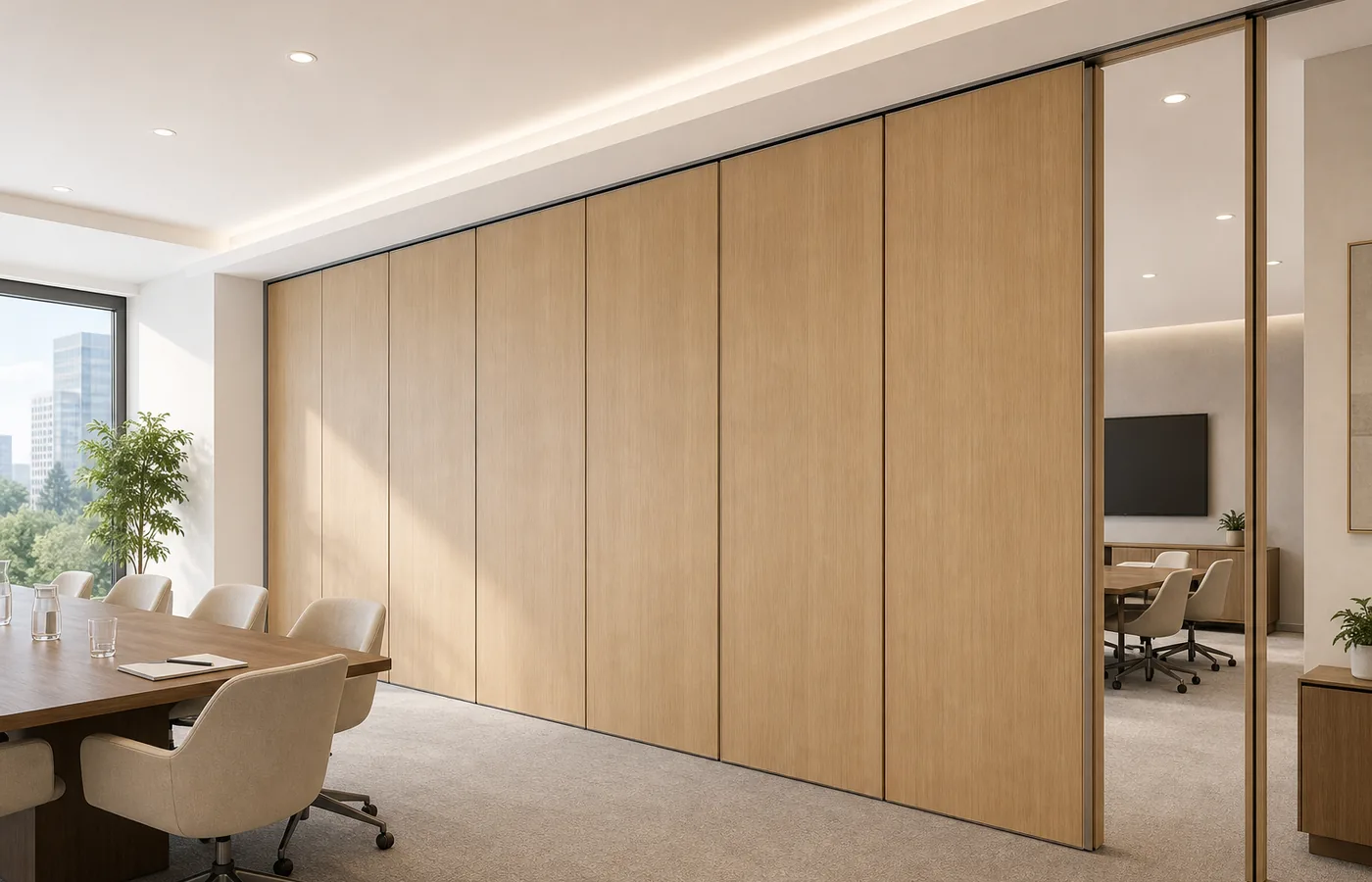
The EBUNGE movable partition system is top-hung and has no continuous floor running track or operating hardware in the finished floor along the partition line. This means the floor is not cut or damaged for a floor track and remains physically uninterrupted by the maintained EBUNGE top-hung system.
The top-hung principle for healthcare training rooms
In a top-hung system, the panels hang from an overhead track. The floor stays free of tracks, so simulation beds and lecture chairs can move without obstruction. Cost and maintenance requirements depend on the selected configuration, finish and project conditions and require project-specific confirmation.
Because there is no floor track, the partition line does not interrupt the floor surface. The suitability of each route and parking arrangement depends on the approved layout, circulation, ceiling interfaces and operating sequence. However, the exact route, junction arrangement, continuous overhead path and parking position must be confirmed from the coordinated project drawings.
Healthcare training room partition seals are often discussed in terms of how well the partition closes against adjacent surfaces. With a top-hung system, the seal interface at the floor is different from a floor-track system. The floor remains uninterrupted, so the partition does not rely on a floor track for alignment.
Physically uninterrupted floor: benefits and planning
A physically uninterrupted floor means no continuous track or operating hardware is embedded along the partition line. For lecture rooms, it allows flexible seating arrangements without a track underfoot.
The EBUNGE top-hung system keeps the finished floor free of partition hardware. The floor is not cut or damaged for a floor track and remains physically uninterrupted by the maintained EBUNGE top-hung system. This is a confirmed feature of the system.
When planning healthcare training room partition seals, consider how the partition meets the floor. With no floor track, the partition’s bottom edge does not engage a track. The exact route, junction arrangement, continuous overhead path and parking position must be confirmed from the coordinated project drawings.
Parking planning for simulation and lecture modes
Panel parking style can be customized to the customer layout and project requirements, subject to coordinated drawings. A suitable approved parking arrangement can use the stacking area more compactly and coordinate with the space design.
In simulation mode, you may want panels parked away from the training area. In lecture mode, you may want them stacked to open the room. The parking position affects how the room functions in each mode.
When comparing healthcare training room partition seals for simulation versus lecture, parking is a practical differentiator. Simulation may require quick access to equipment, while lecture may prioritize open seating. The exact track, support and panel layout still require project drawings.
Finish and care coordination
Finish materials can be customized, and cleaning and maintenance methods vary with the selected finish. For healthcare training rooms, finish choice should align with the cleaning protocols used in simulation and lecture settings.
Simulation areas may need frequent cleaning between scenarios. Lecture areas may need less frequent but still regular care. Because cleaning methods vary by finish, the finish selection should be coordinated with the facility’s cleaning team.
Healthcare training room partition seals are not a separate product; they are part of the partition system’s interface. The finish on the panels and adjacent surfaces affects how the partition looks and how it is maintained. The exact route, junction arrangement, continuous overhead path and parking position must be confirmed from the coordinated project drawings.
Non-limiting applications in healthcare training
Movable partitions can be used wherever flexible space division, combination or reconfiguration is required; application examples are not limiting. Healthcare training rooms are one example among many.
EBUNGE has completed many types of hotel-related movable-partition projects; ballrooms, wedding halls and multifunction halls are non-limiting examples. The same top-hung principle can apply to healthcare training rooms when the project drawings support it.
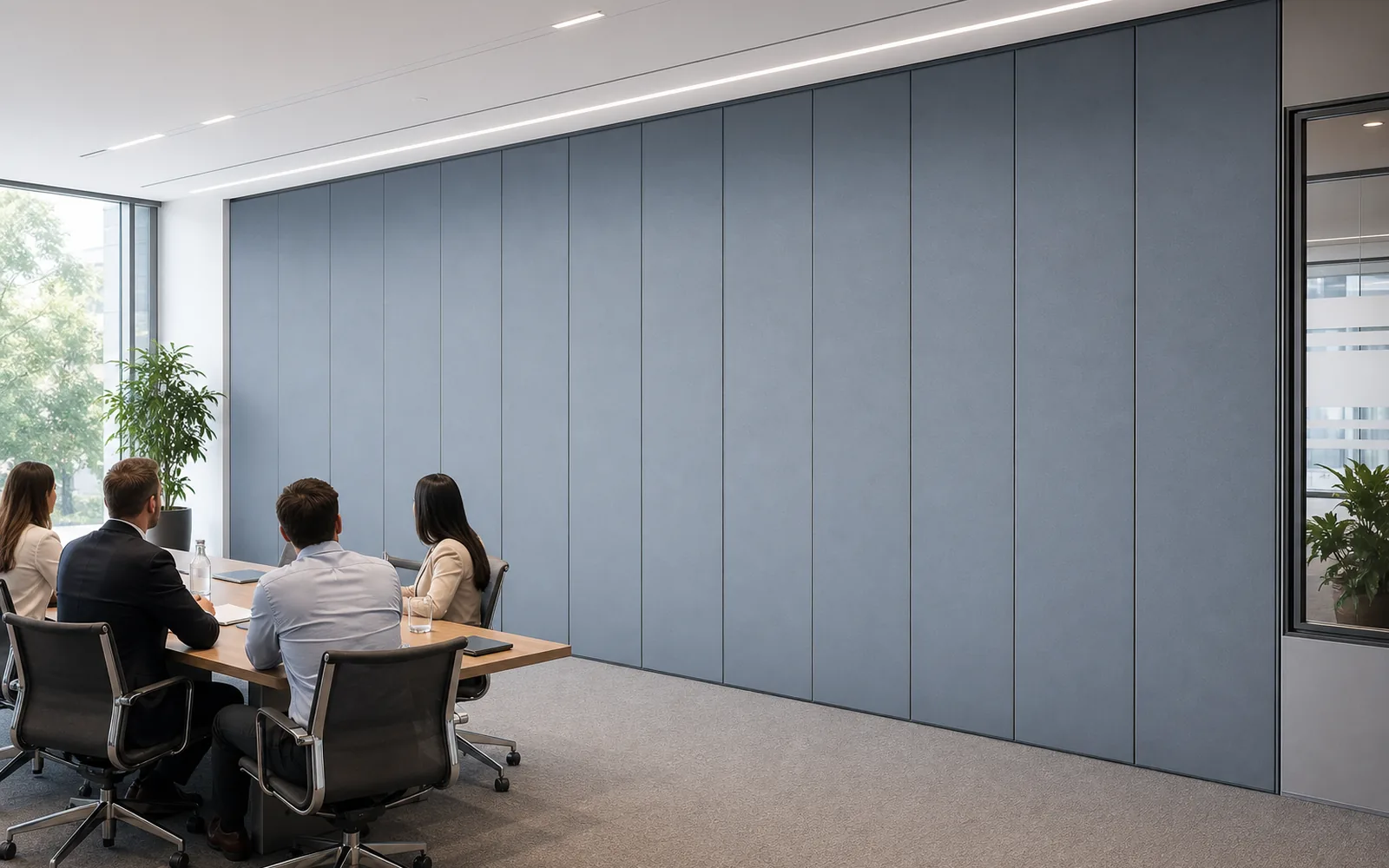
When you compare healthcare training room partition seals for simulation versus lecture, remember that the partition system is part of a larger space plan. The partition should support the room’s primary functions without adding floor obstructions.
Buyer inputs and drawing approvals
To move from concept to coordinated drawings, buyers should provide room dimensions, intended uses, parking preferences, and finish direction. These inputs help the project team develop a suitable layout.
The exact route, junction arrangement, continuous overhead path and parking position must be confirmed from the coordinated project drawings. The exact overhead route and support arrangement must be confirmed by the responsible project team from coordinated drawings.
For healthcare training room partition seals, the drawing approval stage is where the partition interface, parking, and finish details are resolved. Buyers should review coordinated drawings before finalizing any partition selection.
Comparing simulation and lecture needs
Lecture rooms often prioritize open space and seating flexibility. A top-hung partition can support both by keeping the floor free of tracks.
When evaluating healthcare training room partition seals, consider how the partition will be used daily. Will it be opened and closed frequently? Will panels be parked in a visible area? These questions inform the parking and finish choices.
The EBUNGE top-hung system has no continuous floor running track or operating hardware in the finished floor along the partition line. This feature supports both simulation and lecture configurations by preserving the floor surface.
Key takeaways for healthcare training room partition seals
- Top-hung partitions keep the floor free of tracks and operating hardware.
- Parking style can be customized to the layout, subject to coordinated drawings.
- Finish materials can be customized, and cleaning methods vary by finish.
- Applications are not limited to healthcare training rooms.
- Drawing approvals confirm the exact route, junction arrangement, continuous overhead path and parking position.
Frequently asked questions
For further context, review related project guidance and additional planning resources before preparing the coordinated project brief.
What are healthcare training room partition seals?
Healthcare training room partition seals refer to the interface where a movable partition meets adjacent surfaces in a training room. With a top-hung system, the floor remains uninterrupted, so the seal interface does not involve a floor track.
Can a top-hung partition work for both simulation and lecture layouts?
The floor stays free for simulation equipment and lecture seating. The exact route, junction arrangement, continuous overhead path and parking position must be confirmed from the coordinated project drawings.
How is parking planned for healthcare training room partitions?
Panel parking style can be customized to the customer layout and project requirements, subject to coordinated drawings. A suitable approved parking arrangement can use the stacking area more compactly and coordinate with the space design.
What finish options are available for healthcare training room partitions?
Finish materials can be customized, and cleaning and maintenance methods vary with the selected finish. The finish should be coordinated with the facility’s cleaning protocols for simulation and lecture use.
Are healthcare training room partition seals different from other movable partition applications?
The principles are similar. Movable partitions can be used wherever flexible space division, combination or reconfiguration is required; application examples are not limiting. Healthcare training rooms are one example among many.
Continue Exploring
More Acoustic Partition Guides
- Newer guideHealthcare Training Room Partition Seals and HVAC Damper Coordination
- Earlier guideCoordinating Auditorium Partition Seals with Under-Stage HVAC Grilles
- Related guideAcoustic Partition Ceiling Interface Zone Confirmation
- Related guideWho Confirms Ceiling Grid Line Before Acoustic Partition Track