
Quick project answer
Hotel banquet partition seals speaker coordination is a planning topic that sits between the partition system and the ceiling services above it. The EBUNGE movable partition system is top-hung and has no continuous floor running track or operating hardware in the finished floor along the partition line. This principle shapes how teams think about ceiling speaker cluster trim rings and other overhead elements.
This article explains the top-hung principle, the physically uninterrupted floor, parking planning, finish and care coordination, and the buyer inputs that support drawing approvals. It does not describe a generic operating procedure or hidden mechanisms.
Understanding the top-hung principle
The EBUNGE movable partition system is top-hung. That means the partition line does not rely on a continuous floor running track or operating hardware set into the finished floor. The floor is not cut or damaged for a floor track and remains physically uninterrupted by the maintained EBUNGE top-hung system.

For hotel banquet spaces, this top-hung approach influences how ceiling speaker cluster trim rings are considered. The overhead path and the partition line share the ceiling zone, so the relationship between them belongs in the coordinated project drawings.
Hotel banquet partition seals speaker planning often begins with the ceiling plan. Trim rings around speaker clusters are ceiling-side elements, while the partition is a top-hung system. Their relative positions require confirmation rather than assumption.
Why the physically uninterrupted floor matters
Because the floor is not cut or damaged for a floor track, the finished floor remains physically uninterrupted by the maintained EBUNGE top-hung system. This is a confirmed characteristic of the system, not a performance claim about any particular floor finish.
For banquet operations, an uninterrupted floor can simplify how the room is used between configurations. The floor surface itself is not modified along the partition line for a continuous floor track.
Hotel banquet partition seals speaker coordination still requires attention to the ceiling zone. The absence of a floor track does not remove the need to plan the overhead path and the parking position.
Planning parking and stacking areas
Panel parking style can be customized to the customer layout and project requirements, subject to coordinated drawings. A suitable approved parking arrangement can use the stacking area more compactly and coordinate with the space design.
The exact track, support and panel layout still require project drawings. Parking planning is therefore a drawing-stage activity, not a field decision made without documentation.
Hotel banquet partition seals speaker topics often arise near parking zones because ceiling services and speaker clusters may be present there. The stacking area and the ceiling plan should be reviewed together.
The exact route, junction arrangement, continuous overhead path and parking position must be confirmed from the coordinated project drawings.
Finish and care coordination
Finish materials can be customized, and cleaning and maintenance methods vary with the selected finish. This means the care approach follows the finish choice rather than a single universal method.
For hotel banquet spaces, finish coordination may involve the partition panels and adjacent ceiling elements such as speaker cluster trim rings. The finish selection and the care method should be documented together.
Hotel banquet partition seals speaker planning does not change the fact that finish care is finish-specific. Teams should confirm the selected finish and its corresponding care method during project coordination.
Non-limiting application examples
Movable partitions can be used wherever flexible space division, combination or reconfiguration is required. Application examples are not limiting.
EBUNGE has completed many types of hotel-related movable-partition projects. Ballrooms, wedding halls and multifunction halls are non-limiting examples. No customer names, locations, quantities, ratings, certifications or outcomes may be inferred.
Hotel banquet partition seals speaker coordination may be relevant in any of these settings where ceiling speaker clusters and trim rings are part of the ceiling design. The specific arrangement remains project-specific.
Buyer inputs and drawing approvals
Buyers can prepare by gathering layout requirements, parking preferences, finish selections and ceiling coordination information. These inputs support the coordinated drawings that guide the project.
Panel parking style can be customized to the customer layout and project requirements, subject to coordinated drawings. Finish materials can be customized, and cleaning and maintenance methods vary with the selected finish.
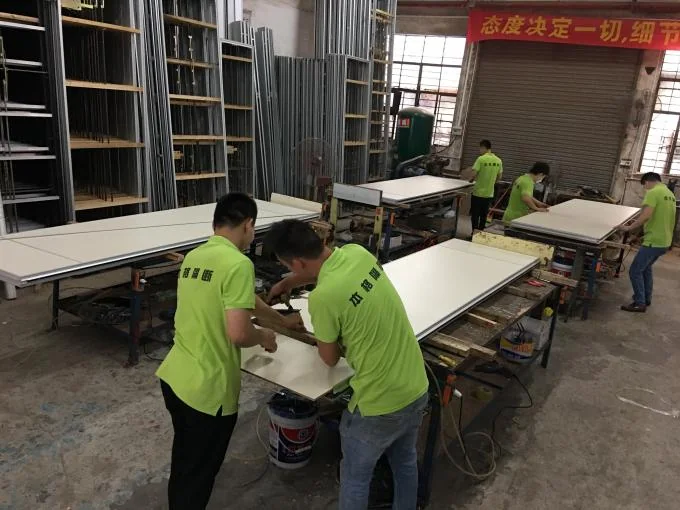
Hotel banquet partition seals speaker questions should be directed to the drawing review process. The exact route, junction arrangement, continuous overhead path and parking position must be confirmed from the coordinated project drawings.
- Layout requirements for flexible space division, combination or reconfiguration
- Parking preferences for the stacking area
- Finish selections and corresponding care methods
- Ceiling coordination information, including speaker cluster trim rings
Coordinating ceiling speaker cluster trim rings
Ceiling speaker cluster trim rings are ceiling-side elements. Their relationship to a top-hung movable partition belongs in the coordinated drawings. The partition system does not include a continuous floor track, so the ceiling zone carries the overhead path.
Hotel banquet partition seals speaker coordination is not a product feature; it is a planning interface. The drawings should show how the partition line, overhead path and ceiling elements relate.
The exact route, junction arrangement, continuous overhead path and parking position must be confirmed from the coordinated project drawings.
The EBUNGE movable partition system is top-hung and has no continuous floor running track or operating hardware in the finished floor along the partition line.
Common questions about hotel banquet partition seals speaker planning
For further context, review related project guidance and additional planning resources before preparing the coordinated project brief.
What does hotel banquet partition seals speaker coordination involve?
It involves planning the relationship between the top-hung movable partition, the ceiling zone and ceiling elements such as speaker cluster trim rings. The exact route, junction arrangement, continuous overhead path and parking position must be confirmed from the coordinated project drawings.
Does the EBUNGE movable partition system use a floor track?
No. The EBUNGE movable partition system is top-hung and has no continuous floor running track or operating hardware in the finished floor along the partition line. The floor is not cut or damaged for a floor track and remains physically uninterrupted by the maintained EBUNGE top-hung system.
Can panel parking style be customized?
Panel parking style can be customized to the customer layout and project requirements, subject to coordinated drawings. A suitable approved parking arrangement can use the stacking area more compactly and coordinate with the space design. The exact track, support and panel layout still require project drawings.
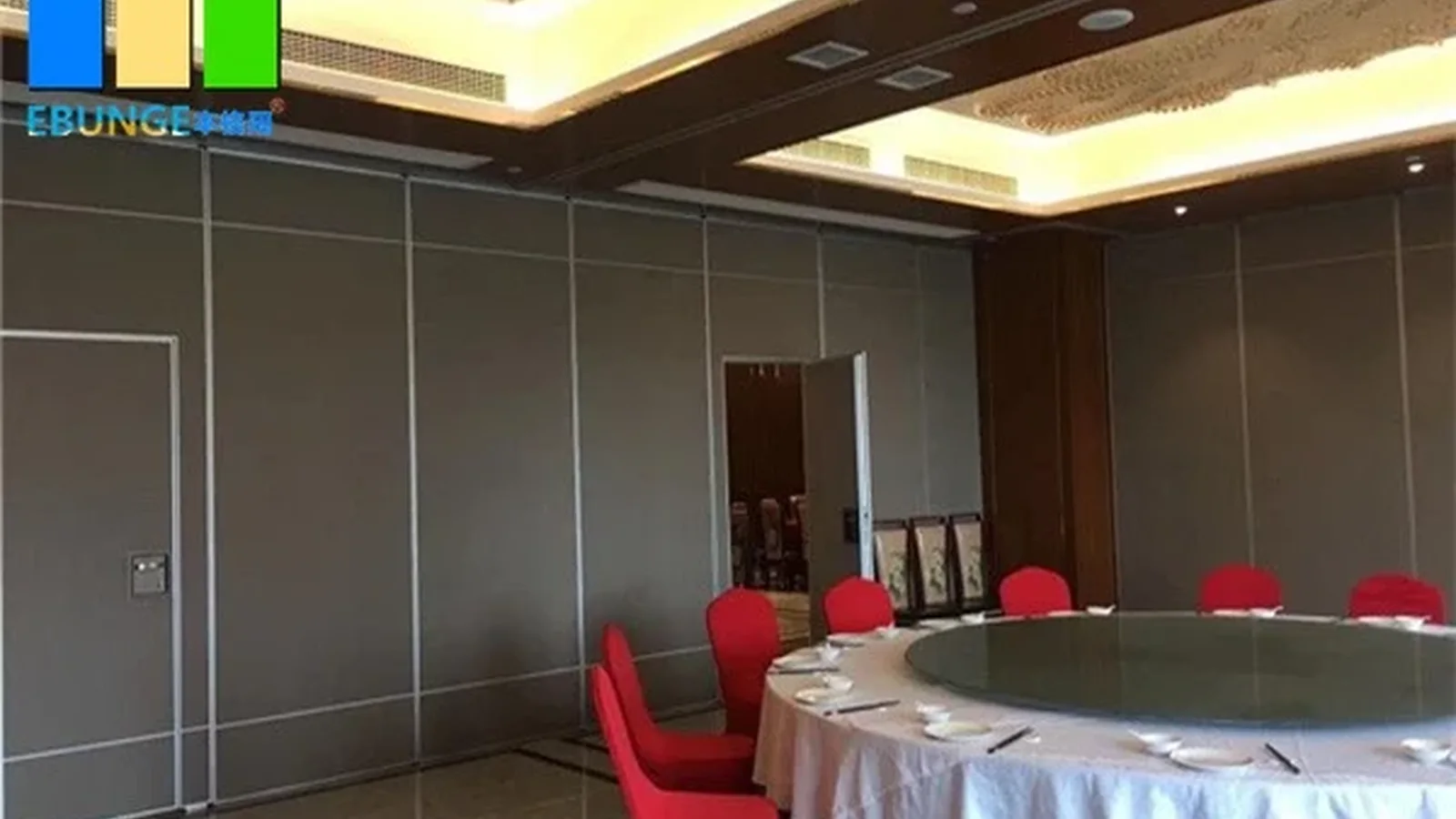
Can finish materials be customized?
Finish materials can be customized, and cleaning and maintenance methods vary with the selected finish. The care approach should be confirmed alongside the finish selection during project coordination.
Where can movable partitions be used?
Movable partitions can be used wherever flexible space division, combination or reconfiguration is required. Application examples are not limiting. EBUNGE has completed many types of hotel-related movable-partition projects, with ballrooms, wedding halls and multifunction halls as non-limiting examples.
What should buyers prepare for drawing approvals?
Buyers should prepare layout requirements, parking preferences, finish selections and ceiling coordination information. These inputs support the coordinated drawings. The exact route, junction arrangement, continuous overhead path and parking position must be confirmed from the coordinated project drawings.
The exact overhead route and support arrangement must be confirmed by the responsible project team from coordinated drawings..
Continue Exploring
More Acoustic Partition Guides
- Newer guideOffice Suites Partition Seals: Crestron Touch Panel Drawings
- Earlier guideHotel Banquet Partition Seals at Projector Lifts: Interface Detailing
- Related guideAcoustic Partition Ceiling Interface Zone Confirmation
- Related guideWho Confirms Ceiling Grid Line Before Acoustic Partition Track