
Understanding the Top-Hung Principle for Convention Hall Movable Partition Finishes
Quick project answer
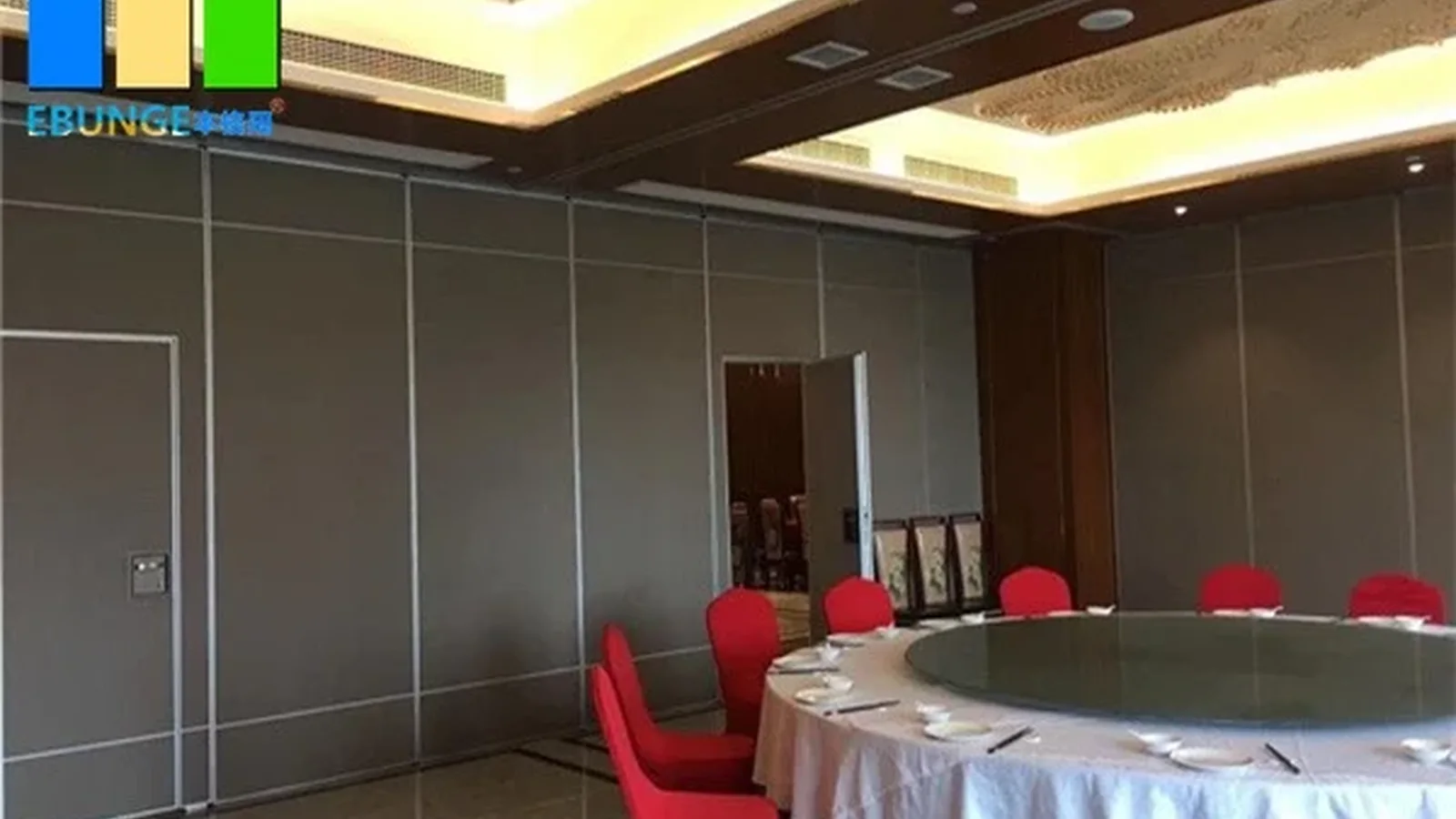
Convention hall movable partition finishes are often planned around how the partition system interacts with the floor. The EBUNGE movable partition system is top-hung. It has no continuous floor running track or operating hardware in the finished floor along the partition line. This means the floor is not cut or damaged for a floor track. The floor remains physically uninterrupted by the maintained EBUNGE top-hung system.
For convention halls, this top-hung approach can influence finish selection. Because there is no floor track, the floor finish can run continuously beneath the partition line. This may simplify transitions between different floor materials. However, the exact route, junction arrangement, continuous overhead path and parking position must be confirmed from the coordinated project drawings.
Exhibit floors often have different priorities. They may need to accommodate heavy foot traffic, booth setups, and temporary structures. A top-hung system keeps the floor free of tracks, which can help when exhibit layouts change. Still, the finish must be chosen with care because cleaning and maintenance methods vary with the selected finish.
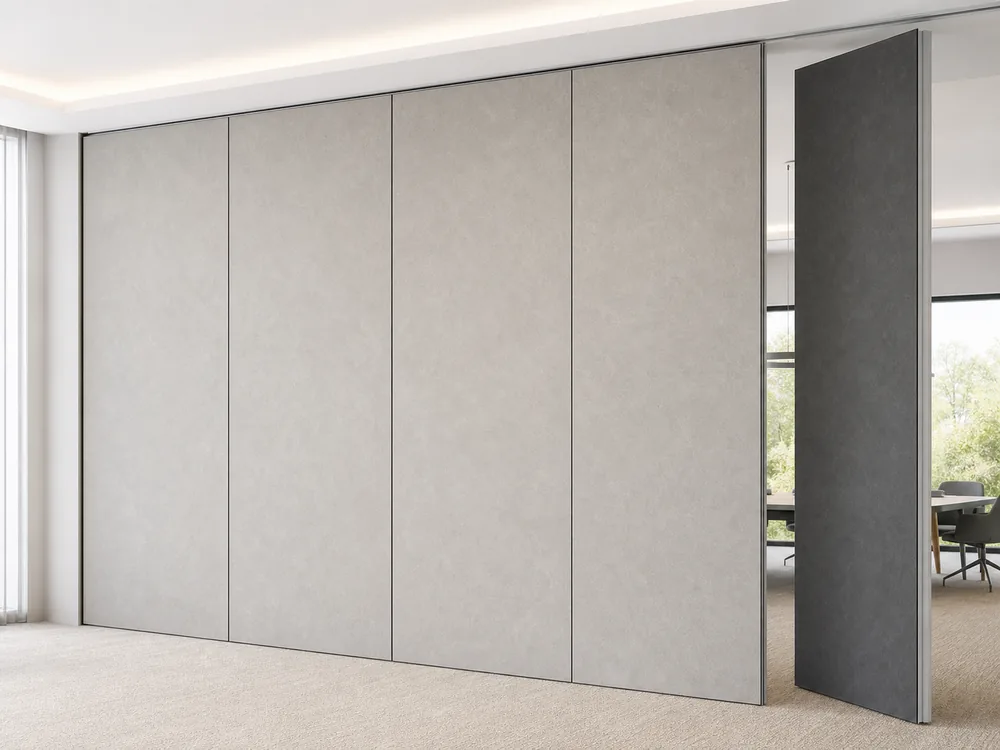
Why a Physically Uninterrupted Floor Matters for Exhibit Floors
An uninterrupted floor is a key consideration for exhibit floors. Without a floor track, the floor surface remains continuous. Visible references can support layout discussion but do not verify hidden construction or performance. For convention hall movable partition finishes, the absence of a floor track means the finish can be installed without cuts along the partition line.
However, this does not mean every floor finish is suitable for every event. The finish must still handle the expected use. Cleaning and maintenance methods vary with the selected finish. Some finishes may require specific care products or routines. The project team should confirm the finish and its care requirements early.
For exhibit floors, a continuous floor can help when moving equipment or setting up displays. But the floor finish itself must be chosen for durability and maintenance. The top-hung system does not change the need to select a finish that matches the space.
Parking Planning for Convention Hall Movable Partition Finishes
Panel parking style can be customized to the customer layout and project requirements, subject to coordinated drawings. A suitable approved parking arrangement can use the stacking area more compactly and coordinate with the space design. For convention hall movable partition finishes, parking planning affects how panels are stored when not in use.
The exact track, support and panel layout still require project drawings. This means the parking area must be planned with the overall space in mind. In convention halls, parking may be located in a dedicated alcove or along a wall. In exhibit floors, parking might need to avoid booth areas or circulation paths.
Because parking style is customizable, the design team can explore options. However, no specific parking outcome can be promised without drawings. The exact route, junction arrangement, continuous overhead path and parking position must be confirmed from the coordinated project drawings.
Finish and Care Coordination for Movable Partition Finishes
Finish materials can be customized, and cleaning and maintenance methods vary with the selected finish. This is a critical point for convention hall movable partition finishes. The finish must align with the hall’s design and the expected cleaning regime.
For exhibit floors, finishes may need to withstand frequent setup and breakdown. The chosen finish should be coordinated with the cleaning team. Different finishes may require different methods. Some may need dry cleaning, while others may tolerate damp wiping. The project team should confirm care instructions from the finish supplier.
Coordination also involves the partition system’s top-hung nature. Since there is no floor track, the floor finish can be continuous. But the finish still needs to be compatible with the overall design. The exact route, junction arrangement, continuous overhead path and parking position must be confirmed from the coordinated project drawings.
Non-Limiting Applications for Movable Partition Finishes
Movable partitions can be used wherever flexible space division, combination or reconfiguration is required. Application examples are not limiting. EBUNGE has completed many types of hotel-related movable-partition projects. Ballrooms, wedding halls and multifunction halls are non-limiting examples.
For convention hall movable partition finishes, the focus is on flexibility. The same principles can apply to exhibit floors. The top-hung system allows the floor to remain uninterrupted. This can be useful in spaces where floor continuity is valued.
However, no customer names, locations, quantities, ratings, certifications or outcomes may be inferred. Each project is unique. The finish and parking plan must be developed for the specific space.
Buyer Inputs and Drawing Approvals
Buyers should provide clear inputs for convention hall movable partition finishes. This includes the desired finish look, cleaning expectations, and parking preferences. The project team can then coordinate these inputs with the top-hung system.
Drawing approvals are essential. The exact track, support and panel layout still require project drawings. The parking arrangement must be approved. The finish selection must be confirmed. Without approved drawings, no production or installation should proceed.
The exact route, junction arrangement, continuous overhead path and parking position must be confirmed from the coordinated project drawings. This boundary sentence applies to all engineering details outside confirmed facts.
Key Considerations for Convention Hall Movable Partition Finishes
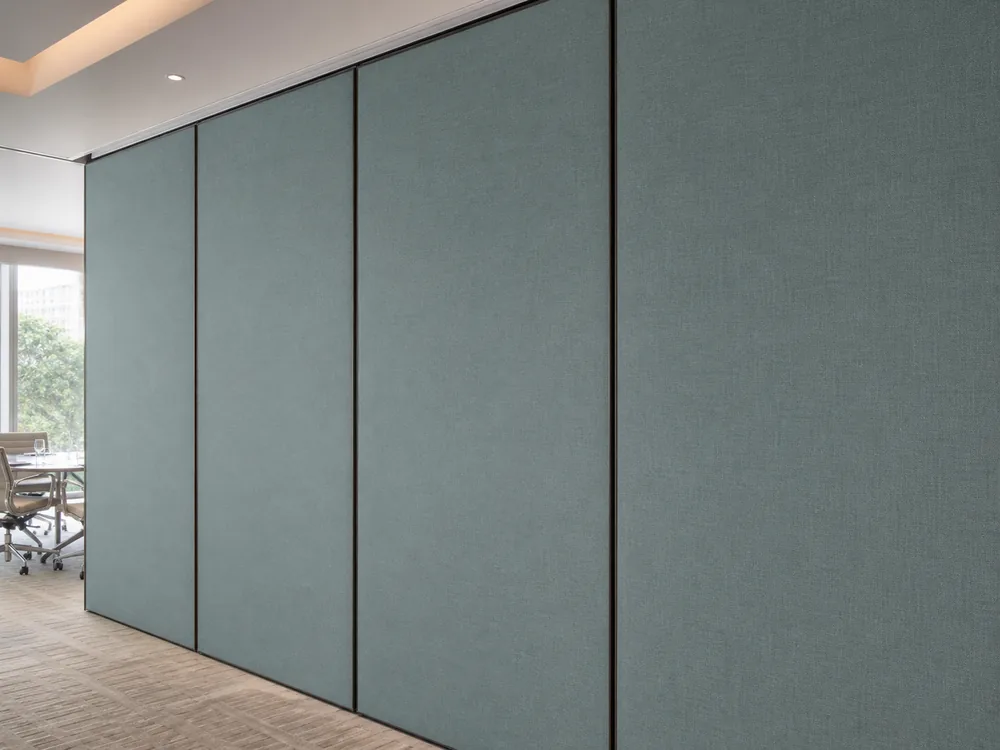
- Top-hung system with no continuous floor track.
- Floor remains physically uninterrupted by the maintained system.
- Finish materials can be customized.
- Cleaning and maintenance methods vary with the selected finish.
- Parking style can be customized to layout and project requirements.
- Exact track, support and panel layout require project drawings.
Comparing Convention Halls and Exhibit Floors
| Factor | Convention Hall | Exhibit Floor |
|---|---|---|
| Floor continuity | Continuous floor finish possible | Continuous floor finish possible |
| Parking | Customizable, subject to drawings | Customizable, subject to drawings |
| Finish care | Varies with selected finish | Varies with selected finish |
| Top-hung | No floor track | No floor track |
Frequently Asked Questions
What makes convention hall movable partition finishes different from exhibit floor finishes?
The main difference is the expected use and cleaning regime. Convention halls may have different finish care needs than exhibit floors. Both can use top-hung systems with no floor track.
Does the top-hung system require cutting the floor for a track?
No. The EBUNGE movable partition system is top-hung and has no continuous floor running track or operating hardware in the finished floor along the partition line. The floor is not cut or damaged for a floor track.
Can finish materials be customized for convention hall movable partition finishes?
Yes. Finish materials can be customized, and cleaning and maintenance methods vary with the selected finish. The project team should confirm care requirements.
How is parking planned for movable partitions?
Panel parking style can be customized to the customer layout and project requirements, subject to coordinated drawings. A suitable approved parking arrangement can use the stacking area more compactly and coordinate with the space design.
What drawings are needed before production?
The exact track, support and panel layout still require project drawings. The exact route, junction arrangement, continuous overhead path and parking position must be confirmed from the coordinated project drawings.
Coordinating with EBUNGE for Your Project
For convention hall movable partition finishes, early coordination is important. EBUNGE has completed many types of hotel-related movable-partition projects. Ballrooms, wedding halls and multifunction halls are non-limiting examples. You can review movable partition wall options and projects for reference.
Remember that no customer names, locations, quantities, ratings, certifications or outcomes may be inferred. Each project requires its own drawings and approvals. The top-hung system keeps the floor uninterrupted, but the finish and parking must be planned for the specific space.
Convention hall movable partition finishes should be selected with care. The finish must match the design and the cleaning routine. The parking must fit the layout. All details must be confirmed from coordinated project drawings.
Continue Exploring
More Materials and Finishes Guides
- Newer guideAirport Public vs Staff-Only Zones Movable Partition Finish Planning
- Earlier guideComparing Operable Wall Finishes for Healthcare Training Rooms
- Related guideWho Verifies Partition Handover Records When Trades Finish at Different
- Related guideMovable Partition Finish Sample Coordination Guide for Interior