
html body.single-post main#content.site-main{box-sizing:border-box!important;width:calc(100% – 32px)!important;max-width:900px!important;margin-left:auto!important;margin-right:auto!important;padding-left:0!important;padding-right:0!important}
Quick answer: movable partition tender
Review focus: movable partition tender.
The suitability of each route and parking arrangement depends on the approved layout, circulation, ceiling interfaces and operating sequence. It is a structured check that the submitted evidence matches the opening, the operating concept and the project conditions. For overseas contractors, architects, interior designers, owners and renovation teams, the goal is to separate what has been demonstrated from what still needs project-specific confirmation.
This guide sets out an evidence-bounded framework. It does not replace acoustic engineering advice, and it does not turn a laboratory report into a promise about a finished room.
Start With the Opening, Not the Report
Project review term: movable partition tender.
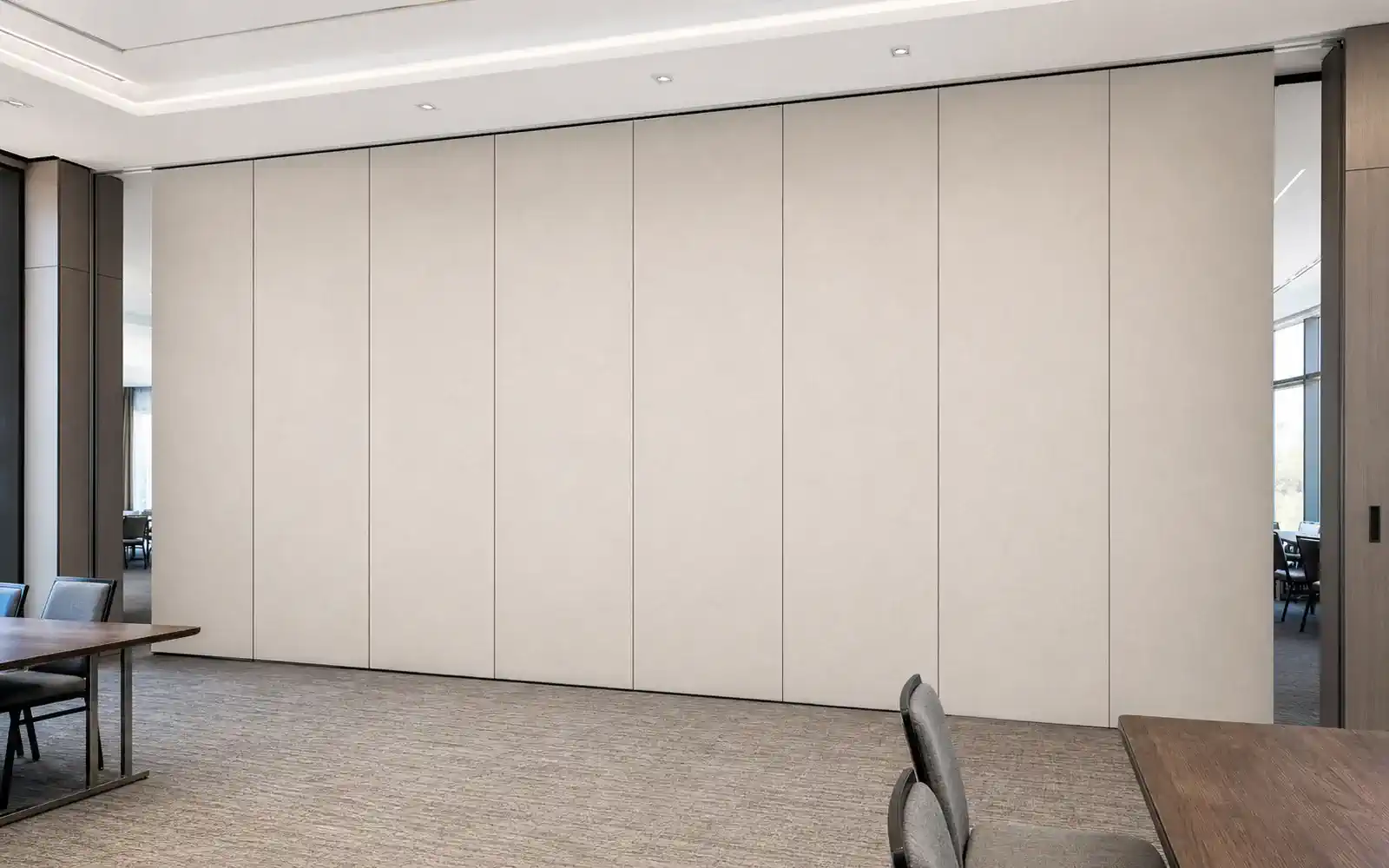
Acoustic evidence describes a tested assembly or configuration. A tender submission may include a report, a summary sheet or a manufacturer statement. Before reading any of it, confirm the opening dimensions, the finished floor condition, the head structure and the intended movement route. A top-hung movable partition crosses the opening without a floor track, so the overhead route and support condition are central to the design review.
Ask whether the submitted evidence relates to a single panel, a paired panel set, a continuously connected assembly or a specific junction detail. If the report does not identify the configuration, the comparison is incomplete. Record the gap as a clarification item rather than assuming equivalence.
What the tender drawing should show
The drawing set should indicate the partition line, the parking position, the stacking arrangement and any turning or junction conditions. Straight, turning and stacking routes are reviewed from the layout, so a route that looks simple on a floor plan may need a different review once the overhead path is traced. Confirm that the evidence scope and the drawing scope refer to the same arrangement.
Read STC and Rw as Concepts, Not Counts
Coordination scope: movable partition tender.
The rating depends on the tested assembly, the frequency range considered and the laboratory or field conditions.
When a tender quotes a rating, ask for the underlying report reference, the tested configuration and the date. Then ask how the proposed project assembly differs from that configuration. Differences in panel size, junction detail, seal condition, finish weight or surrounding construction can all affect the outcome. None of those differences should be resolved by assumption.
Evidence note: a rating is meaningful only when the tested configuration, the project configuration and the review boundary are stated together. If any of the three is missing, treat the claim as unverified.
Interrogate the Test Report’s Scope
Checklist focus: movable partition tender.

A report title alone is not evidence of relevance. Look for the test standard, the specimen description, the mounting condition and the laboratory identification. Check whether the specimen included the same type of junction, the same suspension concept and the same operating principle as the proposed partition.
If the report covers a different configuration, the tender should explain the relationship between the tested specimen and the proposed assembly. That explanation may be a technical assessment, a project-specific review or a clarification request. It should not be a silent substitution.
Questions that expose scope gaps
- Does the report identify the full assembly, including the junction and closing details?
- Is the tested panel size within the range proposed for this opening?
- Does the report describe the same top-hung, floor-track-free operating concept?
- Are the finish and surface conditions relevant to the proposed specification?
- Is the report current, legible and traceable to the issuing laboratory?
Compare Submissions on Equal Terms
Review focus: movable partition tender.
Different tenderers may present acoustic information in different formats. One may submit a full report, another a summary, another a statement of conformity. A fair comparison requires a common checklist. The table below is a review aid, not a performance ranking.
| Evidence item | What to confirm | Action if missing |
|---|---|---|
| Test report reference | Standard, date, laboratory, specimen | Request the full document |
| Configuration match | Panel type, junction, suspension | Ask for a written comparison |
| Project conditions | Opening, head structure, parking route | Refer to drawing review |
| Finish relevance | Surface type and build-up | Confirm approved finish options |
| Boundary statement | What is not covered | Record as a clarification |
Use the same table for every bidder.
Connect Evidence to the Movement and Parking Strategy
Project review term: movable partition tender.
The parking position, the stacking arrangement and the route all influence how the partition sits when open and closed. Panels are individually movable, suspended from a top track, and park at a planned stacking position. If the parking area is tight or the route includes a turn, the review should confirm that the proposed arrangement is coordinated with the structure above.
Each claim needs its own evidence. Where the tender relies on a standard detail, ask whether that detail has been reviewed for this opening and this head condition.
Coordination points for the project team
- Confirm the partition line and the clear opening width.
- Trace the overhead route from closed position to parking position.
- Identify any turning or junction condition and review it on the layout.
- Check that the specified finish is among the confirmed options.
- Record pass-door requirements and any project documentation needs.
- List every acoustic claim that still requires project-specific confirmation.
Document Boundaries Before Award
Coordination scope: movable partition tender.
For each acoustic claim, record the evidence reference, the reviewer, the date and the remaining boundary. If a claim cannot be verified from the submitted documents, mark it as requiring confirmation rather than accepting it by default.

This practice protects the project team from later disputes and helps the successful tenderer understand what must be demonstrated during submittals. It also keeps the evaluation focused on the information actually provided, not on assumptions about what a product family might achieve.
Frequently Asked Questions
What is a movable partition tender acoustic test evidence review?
It is a structured check of the acoustic documents submitted with a tender. The review compares the tested configuration with the proposed project assembly and records any differences that need project-specific confirmation.
Can a single STC or Rw figure prove the partition will perform in my room?
No. A figure describes a tested configuration under stated conditions. The finished room may differ because of junctions, surrounding construction and installation conditions, so project-specific confirmation is required.
What should I do if the test report does not match the proposed configuration?
Ask the tenderer for a written comparison between the tested specimen and the proposed assembly. If the difference cannot be explained with evidence, record it as an open clarification and do not treat the rating as confirmed for the project.
Does the parking or stacking layout affect acoustic evidence?
Acoustic evidence should be assessed against the closed and operating configuration. The parking route still needs separate review for support and coordination.
Which finish options are relevant to the acoustic review?
Confirmed finish options include laminate, melamine, fabric, leather, glass and other approved surfaces. The relevance of a finish to an acoustic claim depends on the tested configuration. Confirm the finish scope with the project team and do not assume equivalence between different surfaces.
How should pass doors be handled in the evidence review?
Pass-door requirements and project documentation can be discussed with the supplier. A pass door introduces a junction and an operating element, so its effect on the assembly should be reviewed as part of the project-specific acoustic and dimensional confirmation.
Conclusion and Next Step
Confirm project-specific support, acoustic and dimensional requirements with the responsible parties.
To discuss your layout, finish options, pass-door requirements and documentation needs, contact the EBUNGE team. You can also review the acoustic movable partition range and see how project layouts are coordinated before specification.
Continue Exploring
More Cost and Planning Guides
- Newer guideReview a Movable Partition Tender for Provisional Sums
- Earlier guideCompare Movable Partition Tender Returns When Bidders Price
- Related guideBenchmark a Movable Partition Tender Against Prior Award Data
- Related guideRead a Movable Partition Tender Pricing Schedule for Hidden