
Quick project answer
Space planning decisions rarely sit in one discipline. When a room must serve more than one function, the choice between movable walls vs fixed partitions changes how the plan is drawn, how the floor is treated and how the surrounding areas are used. This article sets out the planning differences that matter to architects, interior designers, hotel operators and project managers, and it explains where project drawings must confirm the final arrangement.
Why the movable walls vs fixed partitions decision starts with the floor plan
A fixed partition is drawn once and remains in place. It defines a permanent boundary, and every subsequent decision about circulation, furniture and services is made around that boundary. A movable partition is drawn as a boundary that can be opened, closed or rearranged, so the plan must also account for where panels rest when the space is open.
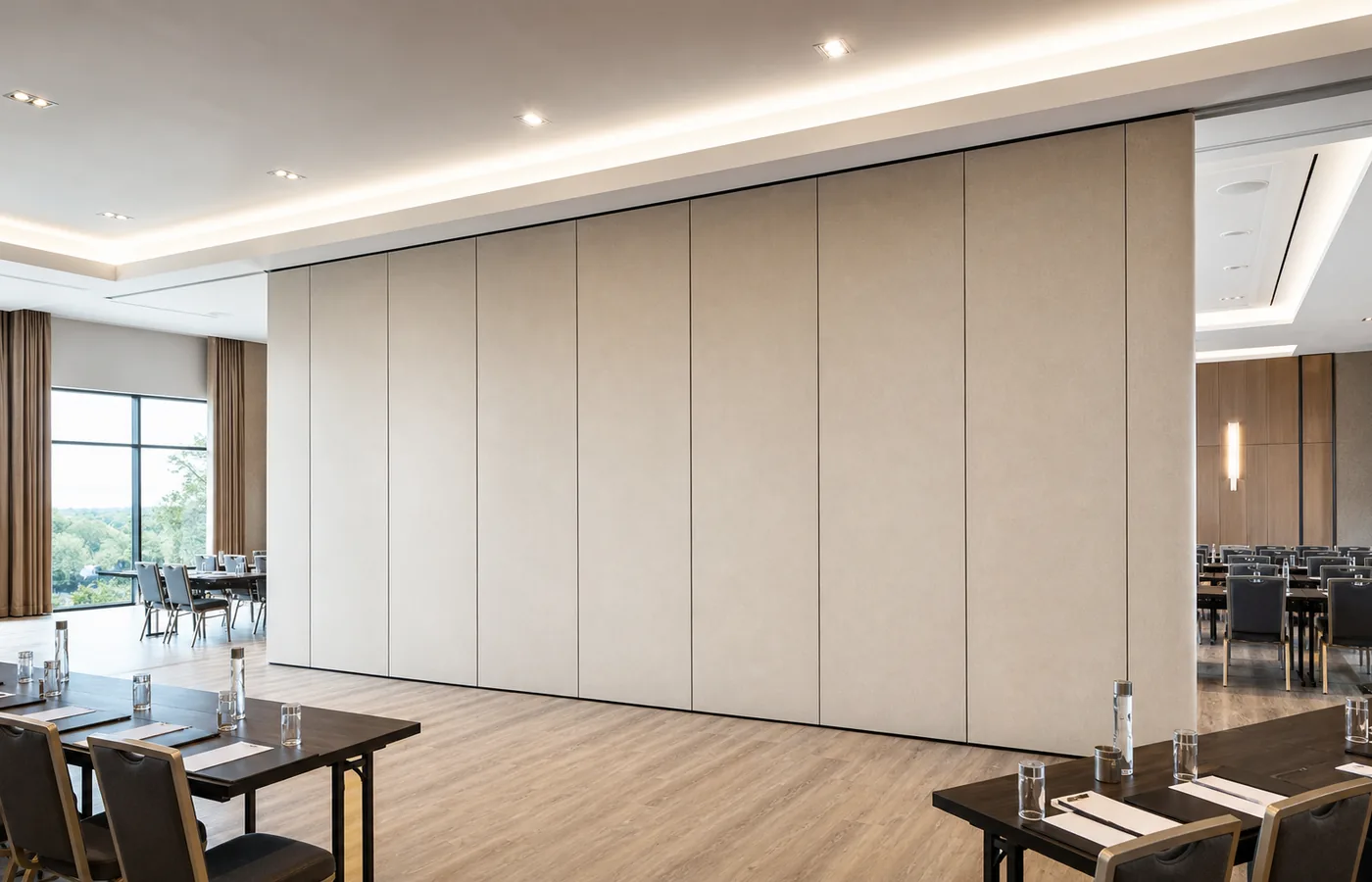
That single difference drives the rest of the comparison. The movable walls vs fixed partitions question is not only about the partition line itself. It is about the whole planning envelope: the overhead path, the floor surface, the parking zone and the finish schedule. Each of these items appears on different drawings and is usually owned by different team members, which is why early coordination matters more than any single specification line.
The top-hung principle and what it means for planning
The EBUNGE movable partition system is top-hung. The panels are carried from an overhead structure rather than from a track set into the finished floor. This principle shapes the planning conversation because the partition line and the floor line are no longer competing for the same zone.
For a design team, the top-hung approach means the partition can be shown on the reflected ceiling plan and the general arrangement plan without a continuous floor running track or operating hardware appearing in the finished floor along the partition line. The exact route, junction arrangement, continuous overhead path and parking position must be confirmed from the coordinated project drawings.
Planning attention therefore moves upward. The overhead path must be coordinated with the ceiling zone, and the parking position must be coordinated with the room layout. Neither item can be resolved from a catalogue page alone, and both benefit from being raised at the same stage as the partition line itself.
What a physically uninterrupted floor changes
With the maintained EBUNGE top-hung system, the floor is not cut or damaged for a floor track and remains physically uninterrupted along the partition line. In planning terms, this affects several ordinary decisions.
- Floor finishes can run continuously across the partition line without a break for a track.
- Transition details between adjacent floor materials can be planned as they would be in an open room.
- Cleaning routes and furniture layouts are not interrupted by a floor-mounted channel along the partition line.
- The partition line can be shown on finish plans without a separate track detail.
These points are planning consequences of the top-hung principle, not performance claims. They describe how the floor is treated on drawings and how the finished surface is arranged. The exact route, junction arrangement, continuous overhead path and parking position must be confirmed from the coordinated project drawings.
Parking planning for movable walls vs fixed partitions
A fixed partition has no parking requirement because it does not move. A movable partition needs a place for panels to rest when the room is open. That parking zone is a real part of the plan and should be treated with the same care as the room itself.
Panel parking style can be customized to the customer layout and project requirements, subject to coordinated drawings. A suitable approved parking arrangement can use the stacking area more compactly and coordinate with the space design. The exact track, support and panel layout still require project drawings.
In practice, the parking discussion usually covers three questions. Where do panels rest when the space is fully open? How does that zone relate to circulation and furniture? How is the parking area finished and maintained? The answers belong on the coordinated drawings, not in a generic description.
Parking is a planning zone, not an afterthought. The earlier it appears on the layout, the more naturally it can be coordinated with the rest of the space.
Finish selection and care coordination
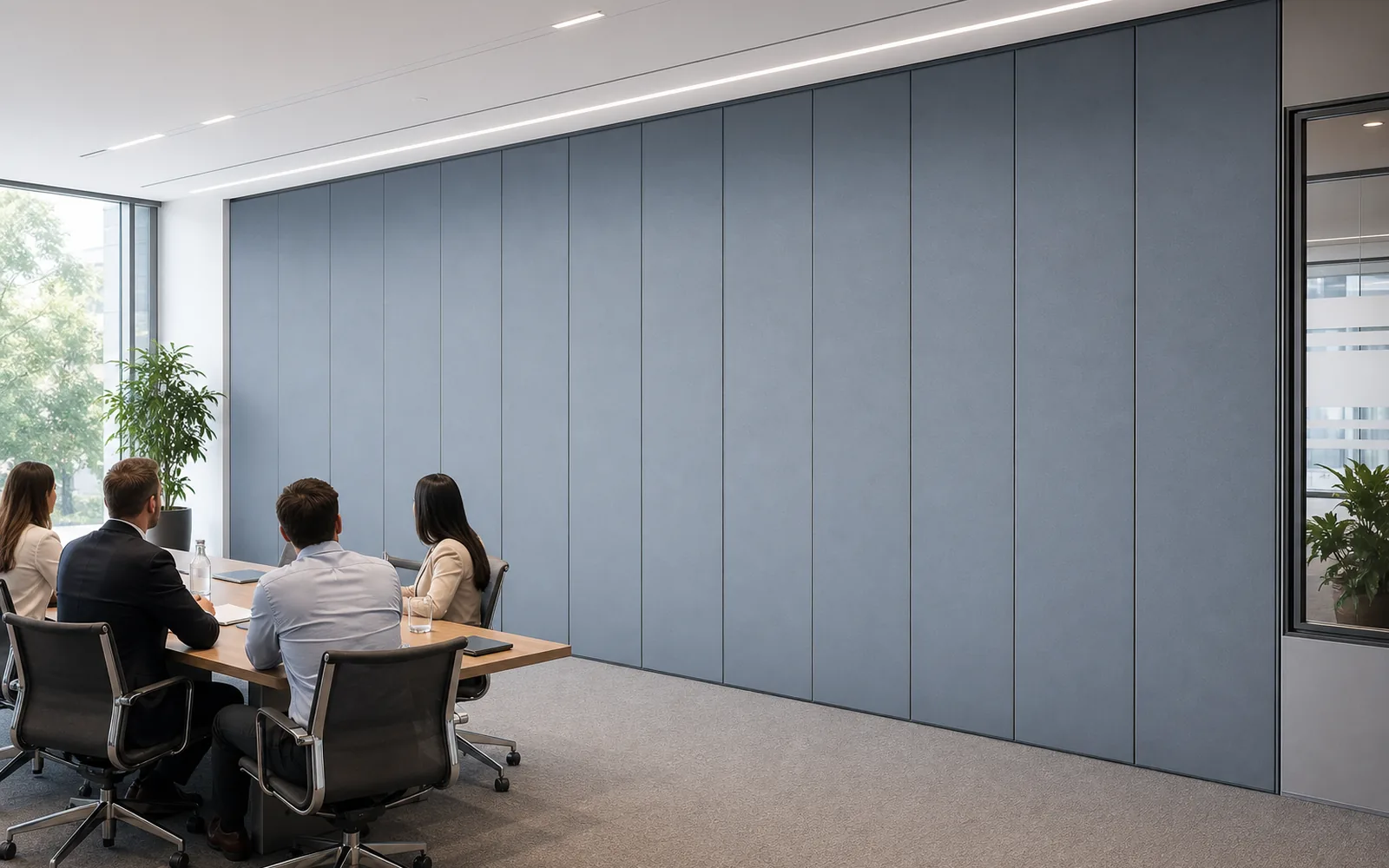
Finish materials can be customized, and cleaning and maintenance methods vary with the selected finish. That sentence carries a planning instruction: the finish schedule and the care routine should be developed together.
For a hotel ballroom, a wedding hall or a multifunction hall, the visible face of a partition is part of the interior design. The finish may need to relate to wall treatments, joinery or adjacent surfaces. Because care methods vary by finish, the team responsible for cleaning and upkeep should know which finish has been selected and how it should be treated.
This is one of the practical differences in the movable walls vs fixed partitions comparison. A fixed partition finish is chosen once for a permanent surface. A movable partition finish is chosen for panels that are handled, parked and returned to service, so the finish decision and the care decision are linked from the start.
Applications where flexible division is planned
Movable partitions can be used wherever flexible space division, combination or reconfiguration is required; application examples are not limiting. EBUNGE has completed many types of hotel-related movable-partition projects; ballrooms, wedding halls and multifunction halls are non-limiting examples.
Other settings follow the same planning logic whenever a room must change between configurations. The common thread is not the building type but the requirement: a space that needs to be divided, combined or rearranged over time. Where that requirement exists, the movable walls vs fixed partitions comparison usually favours a movable solution, provided the overhead path and parking zone can be coordinated.
Buyer inputs that shape the coordinated drawings
Coordinated drawings depend on clear inputs from the buyer and the design team. The following list shows the kind of information that typically feeds the drawing process.
- The room or rooms to be divided, with the intended configurations.
- The partition lines for each configuration.
- The preferred parking position and the area available for it.
- The finish direction for panel faces and edges.
- The cleaning and maintenance routine expected for the selected finish.
- The coordination points between the partition layout and the surrounding ceiling and floor plans.
These inputs are not a specification. They are the raw material from which the coordinated drawings are developed. The exact route, junction arrangement, continuous overhead path and parking position must be confirmed from the coordinated project drawings.
Drawing approvals and the limits of a general article
A general article can explain principles, but it cannot approve a layout. The movable walls vs fixed partitions decision is settled on drawings, and those drawings must reflect the actual room, the actual overhead conditions and the actual parking zone.
For product families and system options, the products pages provide an overview, and the solutions pages show how flexible division is approached across different settings. Neither replaces the coordinated drawing set.
Approval therefore follows a simple sequence: inputs are gathered, drawings are prepared, the drawings are reviewed against the room and the parking zone, and the final arrangement is confirmed. Any statement about the partition that is not on those drawings remains provisional.
Frequently asked questions
What is the main planning difference between movable walls vs fixed partitions?
A fixed partition is a permanent boundary, while a movable partition is a boundary that can be opened, closed or rearranged, so the plan must also account for the overhead path and the parking zone.
Does a top-hung movable partition require a track in the finished floor?
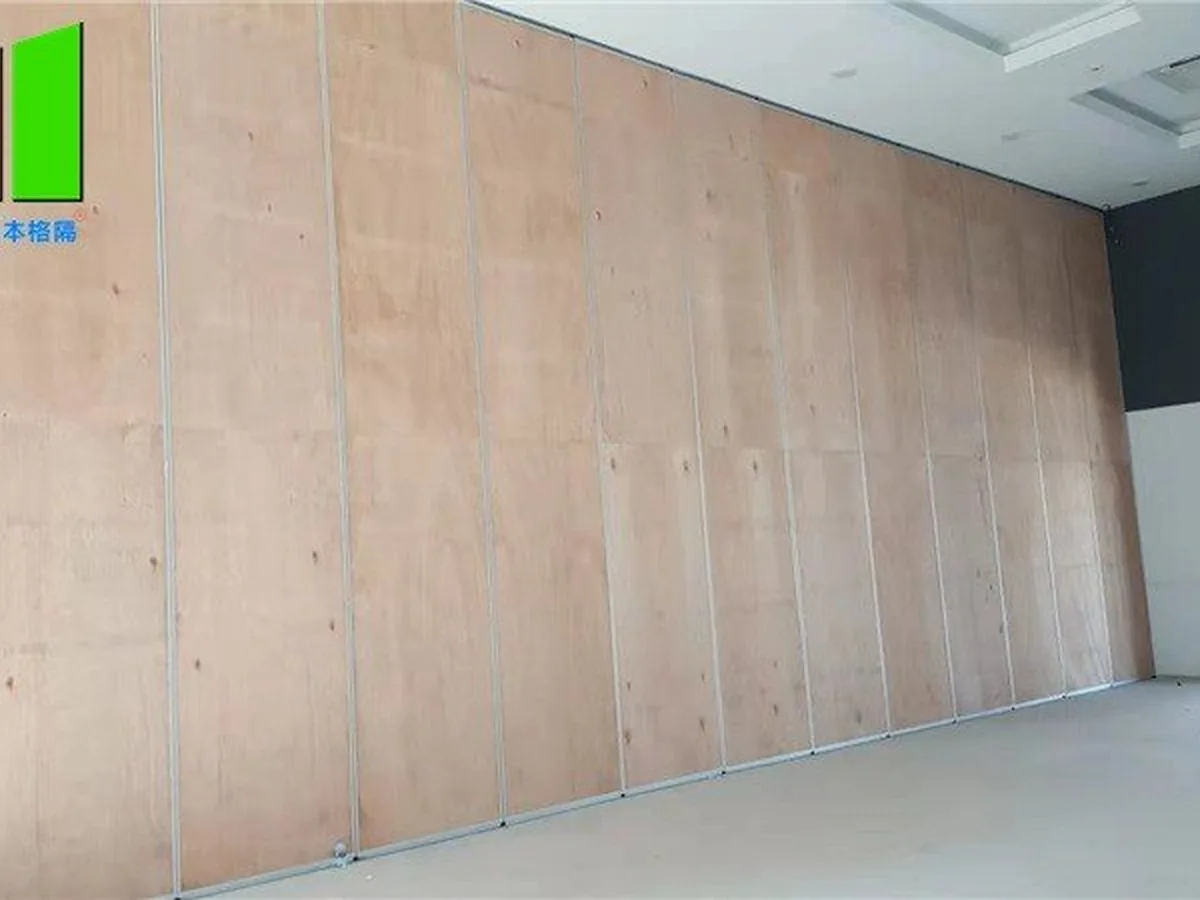
With the maintained EBUNGE top-hung system, there is no continuous floor running track or operating hardware in the finished floor along the partition line, and the floor is not cut or damaged for a floor track.
How is panel parking planned?
Panel parking style can be customized to the customer layout and project requirements, subject to coordinated drawings, and a suitable approved parking arrangement can use the stacking area more compactly and coordinate with the space design.
Can finish materials be customized?
Finish materials can be customized, and cleaning and maintenance methods vary with the selected finish, so the finish schedule and the care routine should be developed together.
Which applications suit movable partitions?
Movable partitions can be used wherever flexible space division, combination or reconfiguration is required, and application examples such as ballrooms, wedding halls and multifunction halls are non-limiting.
What must be confirmed before the layout is fixed?
The exact route, junction arrangement, continuous overhead path and parking position must be confirmed from the coordinated project drawings.
Continue Exploring
More Movable Partition Guide Guides
- Newer guideDo Movable Partition Walls Need Floor Tracks?
- Earlier guideHow Does a Movable Partition Wall Work?
- Related guideHow Architects Run a Partition Coordination Workflow Across Consultant
- Related guideRoom Scheduling Rules That Decide When Movable Partitions Stay Open