
html body.single-post main#content.site-main{box-sizing:border-box!important;width:calc(100% – 32px)!important;max-width:900px!important;margin-left:auto!important;margin-right:auto!important;padding-left:0!important;padding-right:0!important}
Quick answer: operable wall room scheduling changeover policy
Review focus: operable wall room scheduling changeover policy.
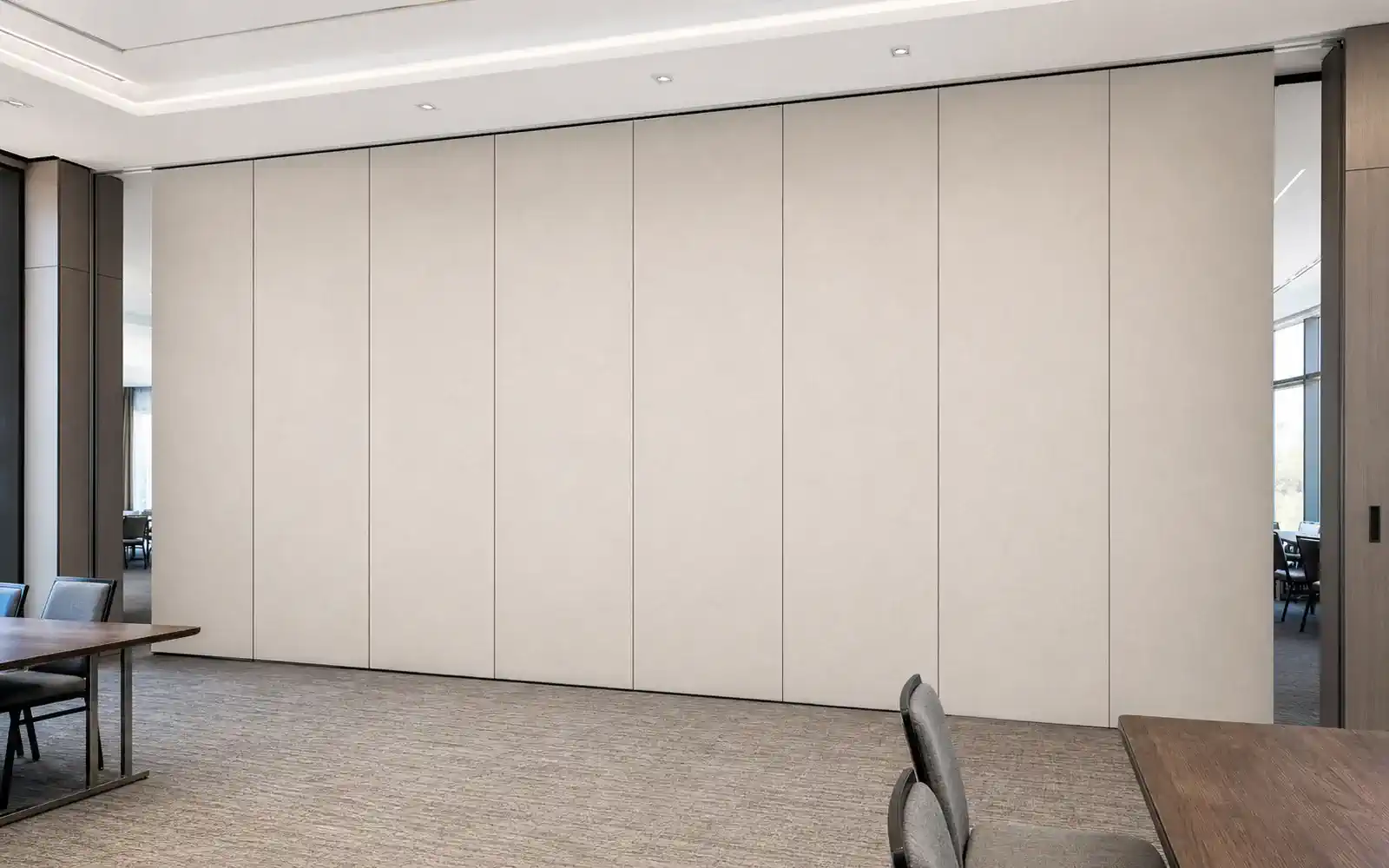
An operable wall room scheduling changeover policy is the written rule set that decides when a movable partition stays open, when it closes, and who may change that state. For contractors, architects, interior designers, owners and facility teams, it is an operations and facility planning tool that connects booking behavior to the physical movement path of top-hung panels. Because EBUNGE panels are individually movable, suspended from a top track, cross the opening without a floor track, and park at a planned stacking position, the policy must respect those confirmed facts. Every recommendation should be checked against project-specific support, acoustic and dimensional requirements before it enters a specification or a venue handbook.
Why a Changeover Policy Belongs in the Project Brief
Project review term: operable wall room scheduling changeover policy.
Flexible rooms fail operationally when the booking calendar and the partition movement plan are written by different people at different times. A changeover policy forces those conversations earlier. It asks how often the room will switch between one large space and two smaller spaces, where panels park between events, and whether the route from the opening to the stacking position stays clear. None of those questions require a performance claim. They require a layout review.
The policy also protects design intent. If the schedule assumes a changeover every hour, the operations team needs to know whether that rhythm is realistic for the agreed route and parking arrangement. The answer depends on project-specific review. The policy should state what is confirmed, what remains open, and who signs off on changes.
Start With the Movement Route, Not the Calendar
Coordination scope: operable wall room scheduling changeover policy.
Scheduling rules only work when the physical route works. Review the straight, turning and stacking routes from the layout before writing any booking rule. A route that looks simple on a floor plan may involve a turn, a narrow approach, or a parking position that conflicts with furniture storage.
Route questions to answer before scheduling
- Where does each panel travel between the closed position and the parking position?
- Does the overhead route remain continuous and supported along the proposed path?
- Does the parking position stay clear of doors, circulation, service access and furniture?
- Are pass-door requirements defined for the way people will move through the closed wall?
These are drawing-review questions, not performance claims. They help the project team decide whether a proposed changeover frequency is compatible with the agreed layout. If the route is not confirmed, the scheduling policy should not promise a fast or frequent changeover.
Define Room States and Booking Rules
Checklist focus: operable wall room scheduling changeover policy.
A useful policy names the room states clearly. The exact overhead route and support arrangement must be confirmed by the responsible project team from coordinated drawings. Each state should have a booking label so staff, clients and event planners use the same vocabulary. The label should describe the physical arrangement, not an assumed acoustic result.

Booking rules should also define who may request a changeover, how far in advance, and what happens when requests conflict. For example, a policy might require that a room booked in a closed state cannot be converted to an open state without a defined approval step. That rule is operational, not technical, and it can be written without inventing performance data.
Compact comparison: booking rule types
| Rule type | What it controls | Evidence needed |
|---|---|---|
| State rule | Which room states are allowed | Confirmed layout and parking plan |
| Timing rule | How changeovers fit the daily schedule | Project-specific operational review |
| Approval rule | Who authorizes a change | Owner and facility agreement |
| Route rule | How panels move and park | Drawing review of straight, turning and stacking routes |
This table is a planning aid. It does not replace project documentation. Where a rule depends on support, acoustic or dimensional confirmation, mark it as pending until the relevant review is complete.
Coordinate Operations and Facility Planning
Review focus: operable wall room scheduling changeover policy.
Operations and facility planning coordination is where most changeover policies succeed or fail. The operations team knows the booking pressure. The facility team knows the building constraints. The design team knows the intended layout. A short coordination meeting can surface conflicts before they become daily friction.
Use a simple agenda: review the room states, confirm the parking position, walk the movement route, and agree the approval chain. Record open items separately from confirmed items. The suitability of each route and parking arrangement depends on the approved layout, circulation, ceiling interfaces and operating sequence.
Decision checklist for the coordination meeting
- Are the room states named and understood by all parties?
- Is the parking position confirmed in the layout?
- Is the movement route reviewed for straight, turning and stacking conditions?
- Are pass-door requirements and project documentation discussed?
- Are finish options such as laminate, melamine, fabric, leather, glass or other approved surfaces recorded where relevant?
- Are open items assigned to a named reviewer with a review date?
Finish choices matter to scheduling only in the sense that they are part of the approved specification. They should not be used to infer acoustic, durability or maintenance performance. If a stakeholder asks for a performance statement, direct the question to the project-specific evidence process.
Write the Policy So It Can Be Audited
Project review term: operable wall room scheduling changeover policy.
An auditable policy separates confirmed facts from assumptions. Confirmed facts include the top-hung movement principle, the absence of a continuous floor running track along the partition line, and the planned stacking position. Assumptions include expected changeover frequency, staffing patterns and event mix. Assumptions can change; confirmed facts should not be rewritten without a design review.
Instead, state that acoustic requirements are project-specific and must be confirmed through the appropriate review.
Evidence note
This article provides planning guidance only. It does not confirm support capacity, acoustic performance, dimensions, loads, installation method or commercial outcomes. Those items require project-specific documentation and review.
Common Scheduling Mistakes to Avoid
One common mistake is treating the partition as invisible in the booking system. If the calendar does not know the room state, staff will improvise, and improvised changeovers put pressure on routes and parking positions. Panel handling and the operating sequence must be confirmed for the selected layout and project conditions. Without project-specific review, that assumption is unsupported.
A third mistake is ignoring the stacking position in daily operations. If the parking area is used for storage, the partition cannot return to its planned position without conflict. The policy should name the parking position as a protected operational zone and include it in the room setup checklist.

Finally, avoid copying a policy from another venue. Room proportions, routes, booking patterns and approval structures differ. A policy that works in one building may create avoidable friction in another. Use the framework, then confirm the details against the actual layout.
FAQ: Operable Wall Scheduling and Changeover
What is an operable wall room scheduling changeover policy?
It is a written rule set that defines when a movable partition stays open or closed, how room states are booked, who approves changes, and how the movement route and parking position are protected during daily operations.
Does the policy need acoustic test data?
The policy itself does not need test data, but any acoustic claim in the project specification does. Acoustic requirements are project-specific and should be confirmed through the appropriate review.
Can the policy assume a fixed changeover time?
No. Changeover timing depends on the agreed route, parking arrangement, room layout and operational staffing. These are project-specific and should be reviewed rather than assumed in a generic policy.
How should pass doors be handled in the schedule?
Pass-door requirements can be discussed as part of the project documentation. The scheduling policy should record whether a pass door is included and how it affects room states, but it should not infer performance from the presence of a door.
Which finish options affect scheduling?
Confirmed finish options include laminate, melamine, fabric, leather, glass and other approved surfaces. They are part of the approved specification. They should not be used to infer acoustic, durability or maintenance performance.
Who should own the changeover policy?
Ownership usually sits with the facility or operations team, with design and contracting input. The policy should name an approver for changes and a reviewer for open technical items.
Conclusion and Next Steps
A good operable wall room scheduling changeover policy keeps the room usable without overstating what the partition can do. It starts with the movement route, names the room states, coordinates operations and facility planning, and separates confirmed facts from assumptions. It also points every open technical question to project-specific review.
To move from framework to project documentation, review the operable wall system overview, examine relevant project references, and then contact the team to discuss pass-door requirements, layout drawings and scheduling assumptions for your specific venue.
Continue Exploring
More Operable Wall System Guides
- Newer guidePhase Operable Wall Work When a Renovation Adds a New Wing
- Earlier guideAuditing Accessible Circulation Where Operable Walls Cross Corridors
- Related guideRoom Booking Rules That Decide When Operable Walls Stay Open
- Related guideAccessible Circulation for Accessible Circulation Egress Planning