
html body.single-post main#content.site-main{box-sizing:border-box!important;width:calc(100% – 32px)!important;max-width:900px!important;margin-left:auto!important;margin-right:auto!important;padding-left:0!important;padding-right:0!important}
Quick project answer
Review focus: handover documentation.
Partition handover documentation trade completion gaps rarely appear as one dramatic failure. They accumulate quietly when the movable wall scope closes before adjacent trades, and the records that should describe the finished installation are assembled later from memory. For overseas project teams, the risk is not only a missing file; it is a handover pack that describes a different configuration from the one actually built. This article offers an evidence-bounded framework for identifying and closing those gaps without inferring performance that has not been confirmed.
The starting point is to treat documentation as a scope in its own right. Movable wall panels are individually movable, suspended from a top track, cross the opening without a floor track, and park at a planned stacking position.
Why gaps open when partition trades finish apart
Project review term: handover documentation.
Trade sequencing is usually planned around physical works, not around record-keeping. The partition installer may complete panel hanging and route checks while ceilings, floor finishes, electrical works or adjacent joinery are still open. When the partition team leaves site, the people who remain may hold fragments of information about the installation but not the full picture.
The suitability of each route and parking arrangement depends on the approved layout, circulation, ceiling interfaces and operating sequence. Handover documentation coordination often assumes that one party will collect everything, but no single trade owns the interface between the partition drawings, the finish schedule and the final inspection record. Without a named owner, each trade assumes another will close the loop.
The interface is wider than the panel line
The documentation boundary should follow the physical interface. A straight, turning or stacking route is reviewed from the layout, so the layout drawing is part of the record. Finish options such as laminate, melamine, fabric, leather, glass and other approved surfaces belong in the same pack, because a later reader cannot infer a specified surface from a photograph.
A decision checklist before the partition trade leaves
Coordination scope: handover documentation.
Use a short checklist at the point of trade completion, while the installation team is still available to confirm details. The checklist is a coordination tool, not a performance statement.
- Route record: confirm that the as-built layout shows the straight, turning and stacking routes reviewed for the project.
- Overhead continuity: confirm that every proposed movement path follows a continuous connected overhead route, and record any project-specific support review that was required.
- Parking position: record the planned stacking position and any layout constraints that affect it.
- Finish schedule: match each panel face to the approved surface, including laminate, melamine, fabric, leather, glass or another approved finish.
- Pass doors: record agreed pass-door requirements and where they sit in the layout.
- Open items: list anything deferred to another trade, with a named owner and a review date.
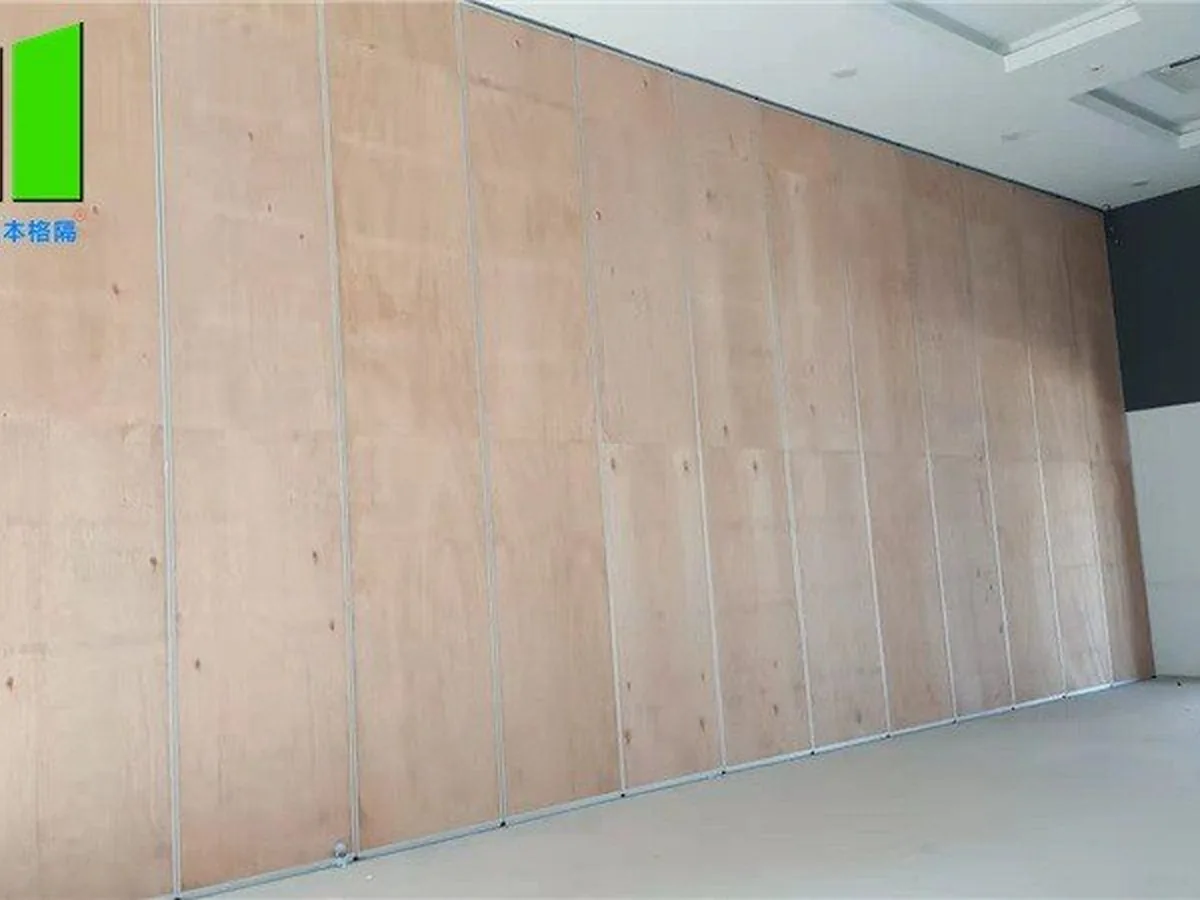
Keep the checklist attached to the drawing set rather than filed separately.
Numbered process for closing documentation gaps
Checklist focus: handover documentation.
The following sequence works for projects where the partition scope finishes before adjacent trades. It assumes no particular contract form and can be adapted to the project’s document control system.
- Freeze the as-built layout. Mark the drawing revision that reflects the installed routes and parking position, and state clearly which revisions are superseded.
- Reconcile the finish schedule. Compare the approved schedule against the installed surfaces and record any substitution with its approval reference.
- Collect interface confirmations. Ask each adjacent trade to confirm in writing the items that touch the partition line, such as ceiling closure or floor finish termination.
- Log open items in one register. Give every gap an owner, a required action and a closure date, and review the register at each site meeting.
- Assemble the handover pack. Place drawings, schedules, confirmations and the open-items register in a single indexed location.
- Verify before final sign-off. Ask a person who did not compile the pack to check that each document matches the installed configuration.
Comparison: what a complete record shows versus what it cannot show
The table below separates the visible, verifiable record from matters that require separate project-specific confirmation.
| Record item | What it can evidence | What it cannot evidence |
|---|---|---|
| As-built layout drawing | Installed routes and parking position as recorded | Acoustic, fire or structural performance |
| Finish schedule | Approved surface selection per panel face | Cleaning compatibility or durability in a specific environment |
| Interface confirmations | That adjacent trades acknowledged their boundary | That the boundary performs as intended |
| Open-items register | What remained outstanding and who owned it | That outstanding items were later resolved |
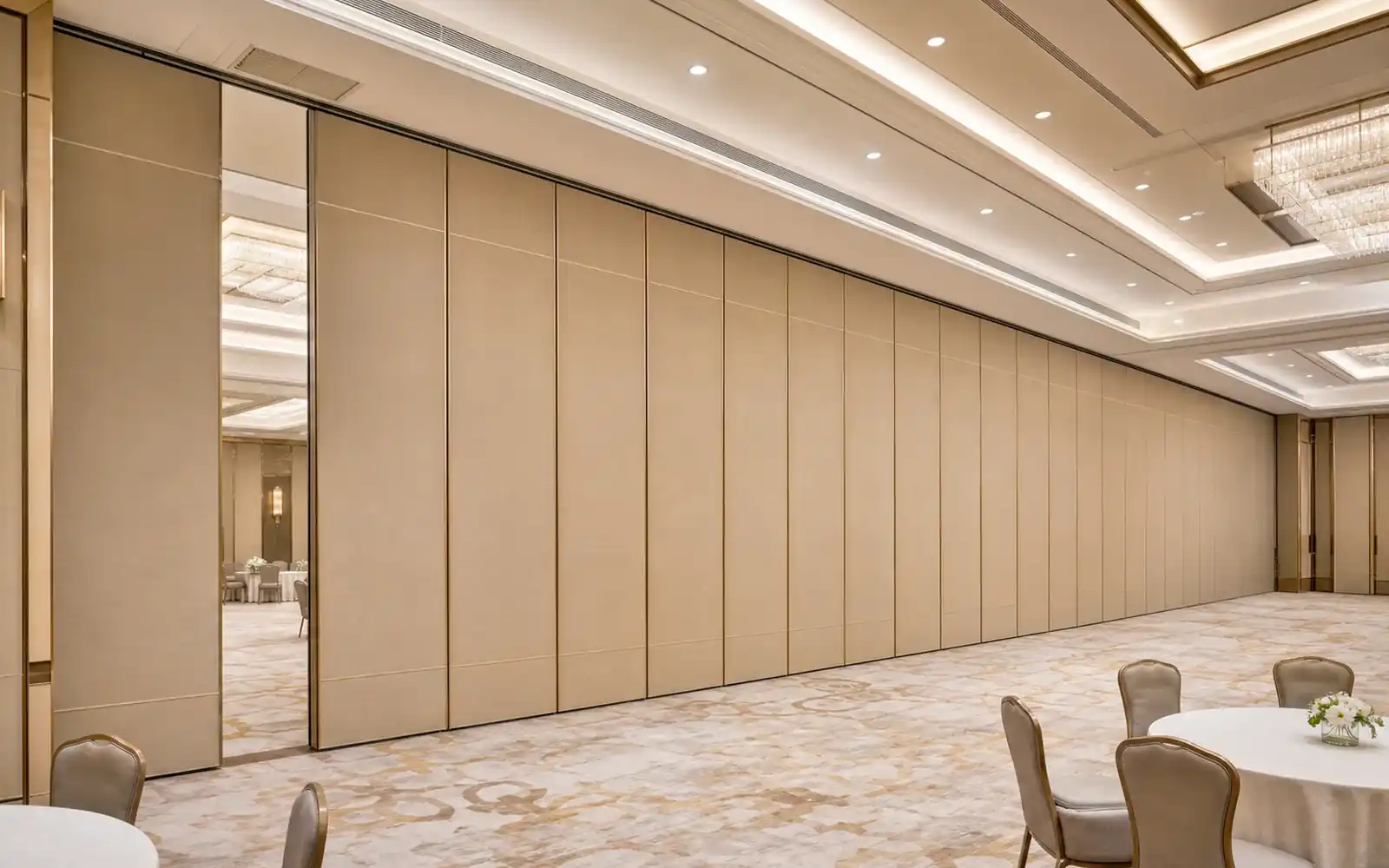
A rating describes a laboratory or field assessment under defined conditions; it does not translate directly into a guaranteed experience in an occupied room. Any acoustic requirement for a project needs its own confirmation route, and the handover pack should point to that route rather than imply a result.
Evidence notes for reviewers and owners
Reviewers should be able to trace each statement in the pack back to a source. A useful evidence note records the document, its revision, the date it was issued and the person who confirmed it. Where a statement cannot be traced, mark it as unconfirmed rather than filling the gap with an assumption.
Evidence note: a finish shown in a photograph or on a sample board confirms appearance only. It does not confirm acoustic behaviour, structural capacity, cleaning compatibility or suitability for a particular room.
This boundary matters most when the partition trade has already left site. A later reviewer may be tempted to infer performance from a drawing or a completed-looking room. The correct response is to identify the missing confirmation and route it to the party who can provide it, not to convert an absence of evidence into a positive statement.
Documentation for projects with turning or stacking routes
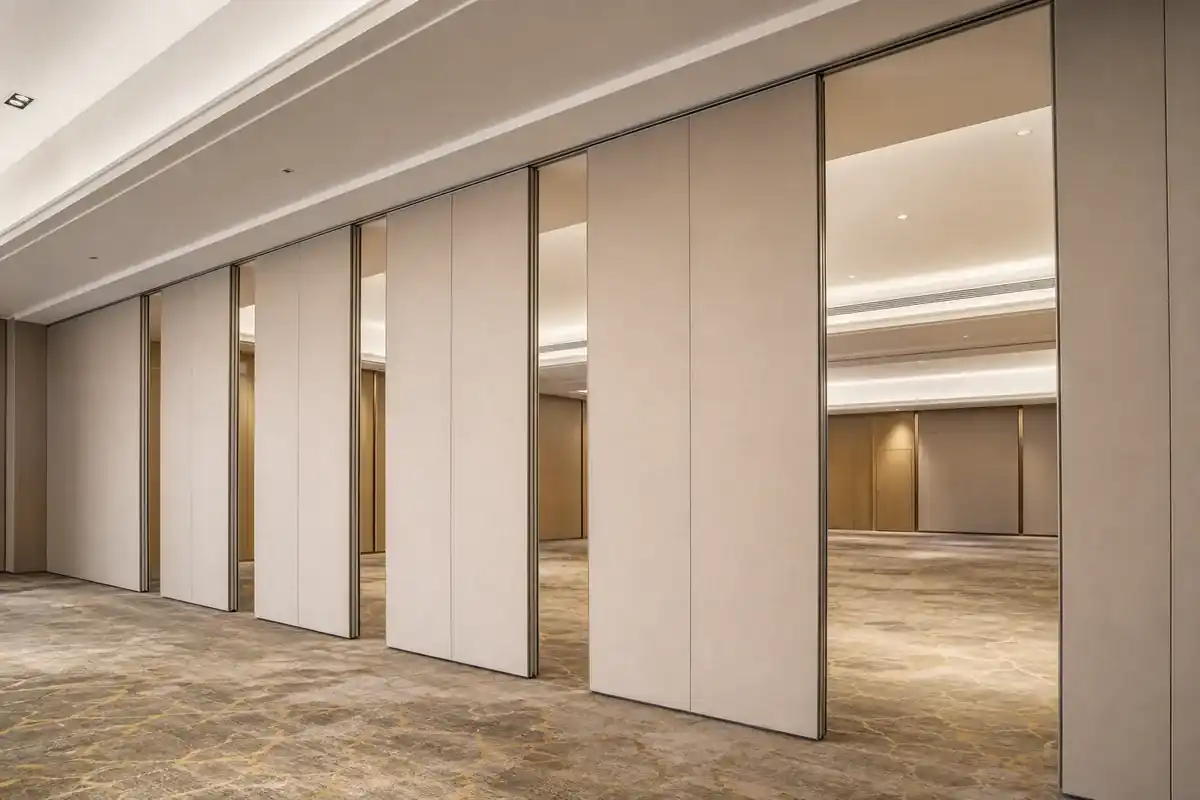
Projects with turning or stacking routes need slightly more care because the layout carries more information. Record the reviewed route, the parking position and any constraint that affects how panels move. The exact route, junction arrangement, continuous overhead path and parking position must be confirmed from the coordinated project drawings.
FAQ: partition handover documentation trade completion gaps
Who should own the handover pack when the partition trade finishes first?
The owner should be named in the project’s document control plan before work starts, not decided at completion. Whoever holds the pack must have authority to request confirmations from other trades and to keep the open-items register current.
Can a finish sample close a documentation gap on its own?
No. Those matters need separate project-specific confirmation.
How should acoustic questions be recorded?
Record the question, the party responsible for answering it and the reference to any project-specific assessment.
What belongs in the record for a stacking layout?
The reviewed route, the planned stacking position and any layout constraint affecting movement. The record should also confirm that the overhead route is continuous and connected, with any support review noted.
How can a team check the pack before final sign-off?
Ask someone who did not compile the pack to compare each document against the installed configuration. Use the open-items register to confirm that every gap has an owner and a closure note.
When should the supplier be involved in documentation discussions?
Early, while the layout and finish schedule are still being developed. Pass-door requirements and project documentation can be discussed directly, and the outcomes should be written into the project record.
Conclusion and next step
Closing partition handover documentation trade completion gaps is mostly a discipline of sequencing and ownership. Freeze the as-built layout, reconcile the finish schedule, collect interface confirmations and keep one open-items register until every gap is closed. Keep the evidence boundary visible: a drawing or sample confirms what it shows, not how the installation performs.
For projects where the movable wall scope is being planned or reviewed, the movable partition wall overview sets out the maintained product context, and the project pages show how layouts and finishes are presented. When your team is ready to align drawings, finishes and documentation expectations, contact EBUNGE to discuss your project requirements.
Continue Exploring
More Materials and Finishes Guides
- Earlier guideWho Verifies Partition Handover Records When Trades Finish at Different
- Related guideMovable Partition Finish Sample Coordination Guide for Interior
- Related guideBanquet Partition Finishes at Ceiling Rigging Beam Obstructions
- Related guideSchool Auditorium Partition Finishes Selection Guide for Wall Control