
Quick project answer
The office meeting suite partition track is a top-hung system that carries panels from above. Because the floor remains physically uninterrupted, the ceiling plane becomes the main coordination zone. Light fixture rows and sprinkler layouts often run in parallel or diagonal patterns across that same ceiling. This article explains how to compare those services with a top-hung partition track and what to confirm before drawings are approved.
How a Top-Hung Office Meeting Suite Partition Track Works
In a top-hung system, the panels hang from an overhead track. There is no continuous floor running track or operating hardware in the finished floor along the partition line. The floor is not cut or damaged for a floor track. It remains physically uninterrupted by the maintained top-hung system.
This principle matters when you compare the partition line with ceiling services. Light fixture rows and sprinkler heads are fixed to the ceiling structure or plenum. The partition track also needs a continuous overhead path. The exact route, junction arrangement, continuous overhead path and parking position must be confirmed from the coordinated project drawings.
Why the Physically Uninterrupted Floor Matters for Layout

A physically uninterrupted floor means the finished floor surface is not cut for a track. That condition can support flexible space division, combination or reconfiguration. It also means the partition line does not introduce a floor groove that would cross light fixture rows or sprinkler zones at floor level.
However, the absence of a floor track does not remove the need to plan the ceiling interface. The office meeting suite partition track still occupies a linear zone overhead. Light fixture rows and sprinkler heads may sit close to that zone. The exact route, junction arrangement, continuous overhead path and parking position must be confirmed from the coordinated project drawings.
Comparing Ceiling Light Fixture Rows with the Partition Track
Light fixture rows are usually arranged to suit desk layouts, meeting tables or circulation. A partition track may run parallel to those rows, cross them, or stop short of them. Because the track is top-hung, the visual relationship is seen at the ceiling rather than at the floor.
When you review an office meeting suite partition track, check whether the proposed track line conflicts with the light fixture rows in plan and section. The track may need to sit between rows or follow a different alignment. The exact route, junction arrangement, continuous overhead path and parking position must be confirmed from the coordinated project drawings.
Sprinkler Layouts and the Top-Hung Partition Line
Sprinkler heads are placed according to the ceiling design and the space below. A top-hung partition track adds a linear element at ceiling level. The track may pass near sprinkler heads or run between them. The partition panels, when parked or in use, may also sit below the ceiling plane.
This is a coordination topic, not a performance claim. The office meeting suite partition track does not change the sprinkler design by itself. The design team must review the track route against the sprinkler layout. The exact route, junction arrangement, continuous overhead path and parking position must be confirmed from the coordinated project drawings.
Parking Planning for Panels and Ceiling Services
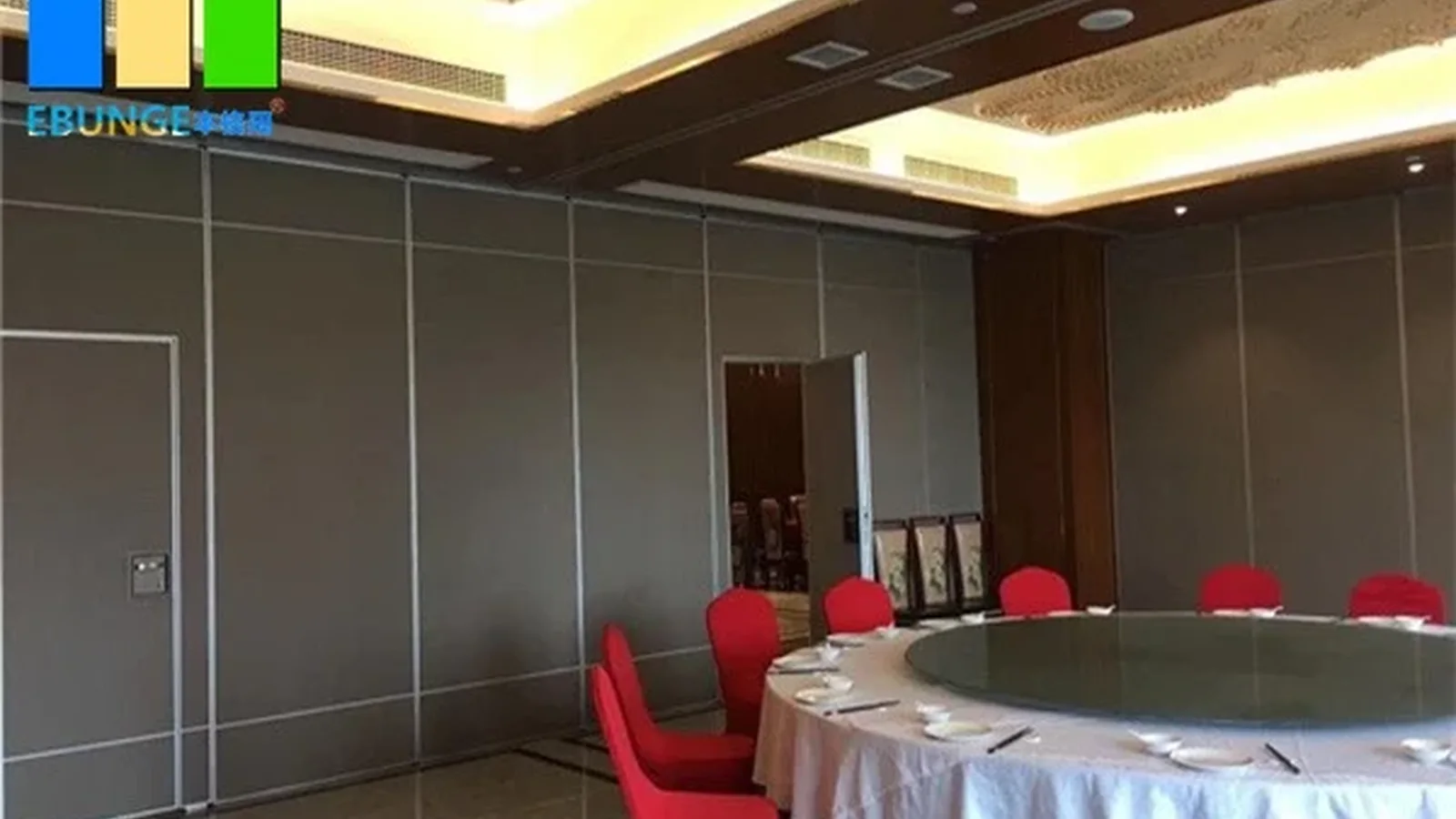
Panel parking style can be customized to the customer layout and project requirements, subject to coordinated drawings. A suitable approved parking arrangement can use the stacking area more compactly and coordinate with the space design. The exact track, support and panel layout still require project drawings.
Parking location affects how the office meeting suite partition track meets light fixture rows and sprinkler positions. A parking zone may sit at the end of a track run or in a dedicated area. The exact route, junction arrangement, continuous overhead path and parking position must be confirmed from the coordinated project drawings.
Finish and Care Coordination with Ceiling Elements
Finish materials can be customized, and cleaning and maintenance methods vary with the selected finish. This means the visual relationship between the partition panels and the ceiling services can be adjusted through finish selection. The office meeting suite partition track itself remains a top-hung system with no continuous floor track.
Care planning should consider how the selected finish is cleaned and maintained. The methods vary with the finish, so the project team should confirm them for each selected material. The exact route, junction arrangement, continuous overhead path and parking position must be confirmed from the coordinated project drawings.
Non-Limiting Applications for Flexible Space Division
Movable partitions can be used wherever flexible space division, combination or reconfiguration is required. Application examples are not limiting. EBUNGE has completed many types of hotel-related movable-partition projects. Ballrooms, wedding halls and multifunction halls are non-limiting examples.
No customer names, locations, quantities, ratings, certifications or outcomes may be inferred. The office meeting suite partition track is one way to apply the top-hung principle. The same principle can support other layouts where a physically uninterrupted floor is preferred. The exact route, junction arrangement, continuous overhead path and parking position must be confirmed from the coordinated project drawings.
Buyer Inputs and Drawing Approvals
Buyers should provide the intended partition line, parking preference and ceiling service information. Light fixture rows and sprinkler positions should be shown on the same coordinated drawings as the office meeting suite partition track. Finish preferences and care expectations also belong in the review set.
Approval should be based on coordinated drawings, not on assumptions. The exact track, support and panel layout still require project drawings. The exact route, junction arrangement, continuous overhead path and parking position must be confirmed from the coordinated project drawings.
Key Comparison Points at a Glance
| Element | Typical Ceiling Condition | Coordination with Office Meeting Suite Partition Track |
|---|---|---|
| Light fixture rows | Linear rows above desks or tables | Track may run parallel, cross, or stop short; confirm on drawings |
| Sprinkler heads | Distributed per ceiling design | Track route and parking zone must be reviewed against head positions |
| Floor | Physically uninterrupted | No continuous floor track or operating hardware along the partition line |
| Parking area | Stacking zone for panels | Customizable to layout; exact track, support and panel layout require drawings |
Checklist for Coordinated Drawings
- Show the proposed office meeting suite partition track line in plan and section.
- Overlay light fixture rows and sprinkler head positions on the same drawing.
- Indicate the parking zone and its relationship to ceiling services.
- Note the selected finish and the finish-specific cleaning and maintenance method.
- Confirm that the floor remains physically uninterrupted by the maintained top-hung system.
Frequently Asked Questions
Does a top-hung office meeting suite partition track require a floor track?
No. The EBUNGE movable partition system is top-hung and has no continuous floor running track or operating hardware in the finished floor along the partition line. The floor is not cut or damaged for a floor track and remains physically uninterrupted by the maintained top-hung system.
Can the partition track cross ceiling light fixture rows?
The track route relative to light fixture rows depends on the project layout. The exact route, junction arrangement, continuous overhead path and parking position must be confirmed from the coordinated project drawings.
How should sprinkler heads be coordinated with the partition track?
Sprinkler head positions and the track route should be shown together on coordinated drawings. The design team reviews the relationship between the top-hung track, the parking zone and the sprinkler layout. The exact route, junction arrangement, continuous overhead path and parking position must be confirmed from the coordinated project drawings.
Can panel parking be customized for the ceiling layout?
Panel parking style can be customized to the customer layout and project requirements, subject to coordinated drawings. A suitable approved parking arrangement can use the stacking area more compactly and coordinate with the space design. The exact track, support and panel layout still require project drawings.
Are finish and cleaning methods the same for every project?
No. Finish materials can be customized, and cleaning and maintenance methods vary with the selected finish. The project team should confirm the care method for each selected finish.
Where can a top-hung movable partition be used?
Movable partitions can be used wherever flexible space division, combination or reconfiguration is required. Application examples are not limiting. EBUNGE has completed many types of hotel-related movable-partition projects, with ballrooms, wedding halls and multifunction halls as non-limiting examples.
For related reading, see movable partition wall and projects. The suitability of each route and parking arrangement depends on the approved layout, circulation, ceiling interfaces and operating sequence.
Continue Exploring
More Movable Partition Guide Guides
- Newer guideRestaurant Partition Track: HVAC vs Grease Filter Clearance
- Earlier guideCompare Healthcare Training Room Partition Track: Columns vs Sprinklers
- Related guideHow Facility Teams Schedule Partition Changeovers Without Disrupting
- Related guideWhat Architects Should Log When Partition Coordination Decisions Slip