
Why Restaurant Function Room Partition Maintenance Differs from Hotel Banquet Planning
Quick project answer
Restaurant function room partition maintenance and hotel banquet planning both deal with flexible space, but they start from different daily rhythms. A restaurant may reconfigure a private dining area between lunch and dinner service. A hotel may prepare a ballroom for a wedding, then reset it for a conference. Visible references can support layout discussion but do not verify hidden construction or performance.
This article compares the two contexts without ranking them. It focuses on the top-hung principle, the physically uninterrupted floor, parking planning, finish care coordination, and the buyer inputs that feed into coordinated drawings.
The Top-Hung Principle and the Physically Uninterrupted Floor
The EBUNGE movable partition system is top-hung. It has no continuous floor running track or operating hardware in the finished floor along the partition line. Because of this, the floor is not cut or damaged for a floor track. The floor remains physically uninterrupted by the maintained EBUNGE top-hung system.
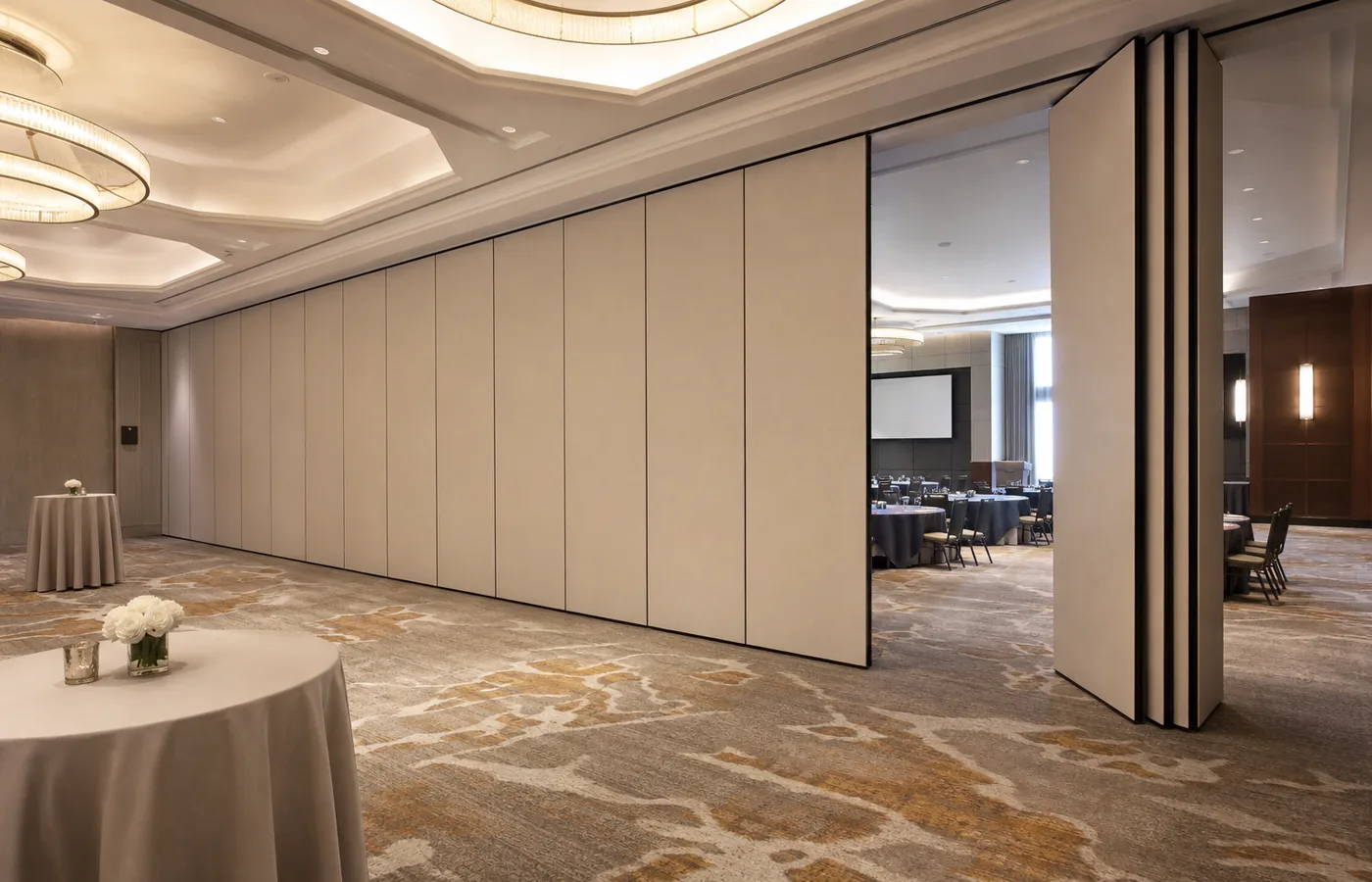
For restaurant function room partition maintenance, that uninterrupted floor changes the daily routine. Staff can clean and reset the room without working around a floor channel. For hotel banquet planning, the same principle means the floor finish can continue across the room without a track line interrupting the design.
The exact route, junction arrangement, continuous overhead path and parking position must be confirmed from the coordinated project drawings.
Parking Planning for Panels in Restaurant and Hotel Contexts
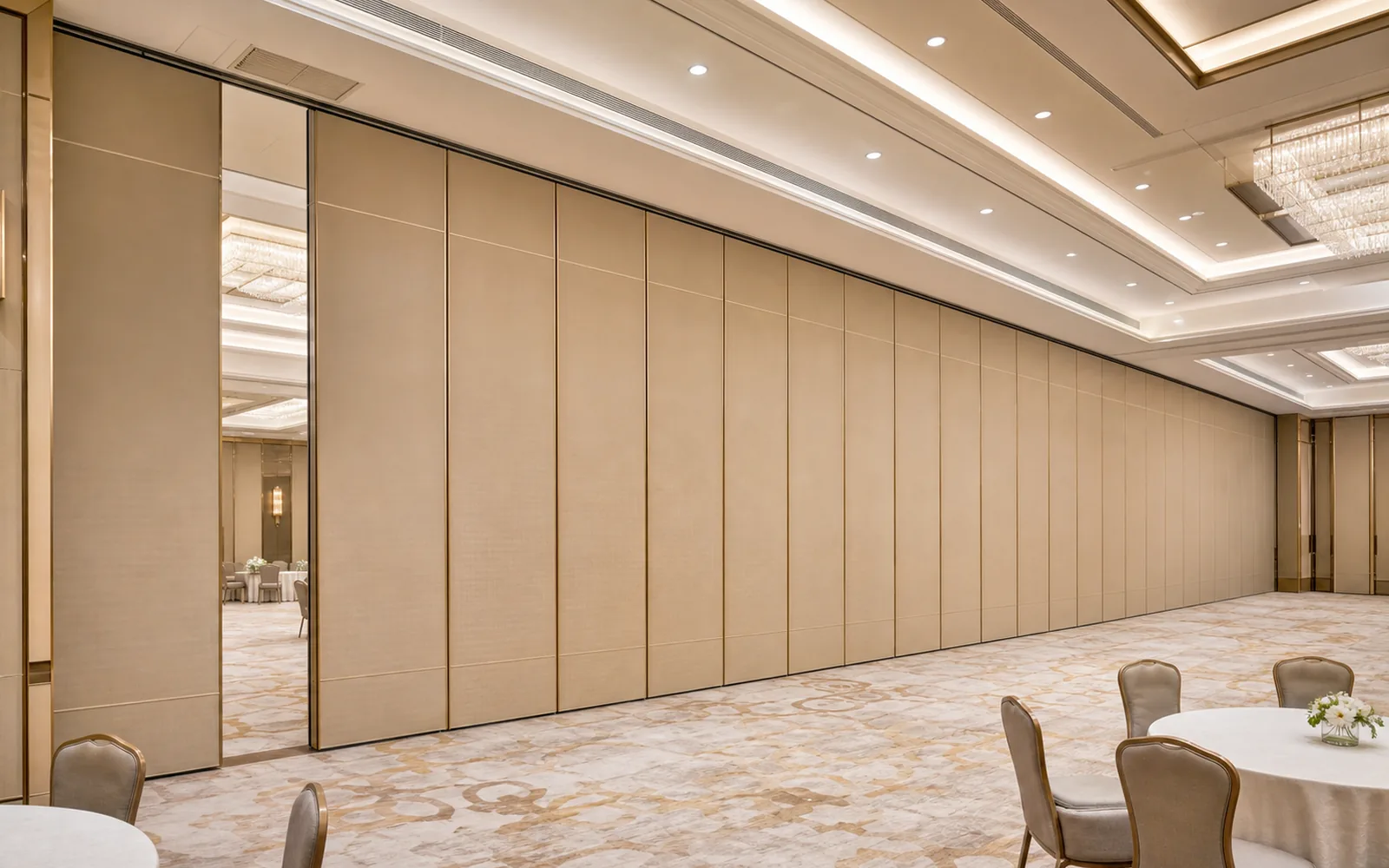
Panel parking style can be customized to the customer layout and project requirements, subject to coordinated drawings. A suitable approved parking arrangement can use the stacking area more compactly and coordinate with the space design. The exact track, support and panel layout still require project drawings.
In a restaurant, parking may need to respect service paths, table layouts and back-of-house access. In a hotel banquet setting, parking may need to coordinate with staging, catering flow and guest circulation. Neither context has a single default parking solution.
Restaurant function room partition maintenance planning should therefore begin with how the room is used across a typical week. Hotel banquet planning should begin with the range of event formats the space must support.
Finish and Care Coordination for Movable Partitions
Finish materials can be customized, and cleaning and maintenance methods vary with the selected finish.
For hotel banquet planning, finish selection may need to align with brand standards, event types and housekeeping practices. The care method follows the finish, not a universal rule.
Buyers should confirm finish samples and care instructions before finalizing drawings. The exact route, junction arrangement, continuous overhead path and parking position must be confirmed from the coordinated project drawings.
Non-Limiting Applications Across Hospitality Spaces
Movable partitions can be used wherever flexible space division, combination or reconfiguration is required. Application examples are not limiting. EBUNGE has completed many types of hotel-related movable-partition projects. Ballrooms, wedding halls and multifunction halls are non-limiting examples.
Restaurant function rooms, private dining areas and event spaces can also use movable partitions where the project conditions suit a top-hung system. No customer names, locations, quantities, ratings, certifications or outcomes may be inferred from these examples.
For restaurant function room partition maintenance, the relevant question is how often the space changes and who cares for the finishes. For hotel banquet planning, the question is how many event formats the room must serve.
Buyer Inputs That Shape Coordinated Drawings
Coordinated drawings depend on buyer inputs. These include the room layout, the intended parking area, the finish direction and the way the space will be used. The exact route, junction arrangement, continuous overhead path and parking position must be confirmed from the coordinated project drawings.
Restaurant function room partition maintenance planning benefits from early input on cleaning routines and service access. Hotel banquet planning benefits from early input on event schedules and staging needs.
Buyers should also confirm how the top-hung system interacts with the ceiling and surrounding construction. The exact route, junction arrangement, continuous overhead path and parking position must be confirmed from the coordinated project drawings.
Drawing Approvals and Project-Specific Confirmation
Drawing approvals are the point where project-specific details are confirmed. The exact route, junction arrangement, continuous overhead path and parking position must be confirmed from the coordinated project drawings.
For restaurant function room partition maintenance, approved drawings should reflect the parking position and finish care method. For hotel banquet planning, approved drawings should reflect the range of configurations the space must support.
The exact overhead route and support arrangement must be confirmed by the responsible project team from coordinated drawings. Each project requires its own coordinated review.
Comparing Maintenance Planning and Banquet Planning
| Planning Focus | Restaurant Function Room | Hotel Banquet Space |
|---|---|---|
| Primary daily concern | Service turnover and floor care | Event setup and guest flow |
| Floor condition | Physically uninterrupted by top-hung system | Physically uninterrupted by top-hung system |
| Parking priority | Service paths and table layouts | Staging and catering flow |
| Finish care | Varies with selected finish | Varies with selected finish |
| Drawing input | Cleaning routines and access | Event schedules and staging |
Key Takeaways for Buyers
- Restaurant function room partition maintenance is shaped by the top-hung principle and the physically uninterrupted floor.
- Hotel banquet planning benefits from early parking and finish coordination.
- Panel parking style can be customized to the customer layout and project requirements, subject to coordinated drawings.
- Finish materials can be customized, and cleaning and maintenance methods vary with the selected finish.
- The exact route, junction arrangement, continuous overhead path and parking position must be confirmed from the coordinated project drawings.
Frequently Asked Questions
Does a top-hung movable partition require a floor track?
The EBUNGE movable partition system is top-hung and has no continuous floor running track or operating hardware in the finished floor along the partition line. The floor is not cut or damaged for a floor track and remains physically uninterrupted by the maintained EBUNGE top-hung system.
How does restaurant function room partition maintenance differ from hotel banquet planning?
Restaurant function room partition maintenance often focuses on daily service turnover and floor care. Hotel banquet planning often focuses on event setup and guest flow. Both depend on coordinated drawings for the exact route, junction arrangement, continuous overhead path and parking position.
Can panel parking be customized for a restaurant or hotel layout?
Panel parking style can be customized to the customer layout and project requirements, subject to coordinated drawings. A suitable approved parking arrangement can use the stacking area more compactly and coordinate with the space design. The exact track, support and panel layout still require project drawings.

Do finish materials affect cleaning and maintenance methods?
Yes. Finish materials can be customized, and cleaning and maintenance methods vary with the selected finish. Buyers should confirm finish samples and care instructions before finalizing drawings.
Where can movable partitions be used?
Movable partitions can be used wherever flexible space division, combination or reconfiguration is required. Application examples are not limiting. EBUNGE has completed many types of hotel-related movable-partition projects, including ballrooms, wedding halls and multifunction halls as non-limiting examples.
What must be confirmed from coordinated project drawings?
The exact route, junction arrangement, continuous overhead path and parking position must be confirmed from the coordinated project drawings. The exact overhead route and support arrangement must be confirmed by the responsible project team from coordinated drawings.
For related reading, see movable partition wall and projects.
Continue Exploring
More Maintenance Guides
- Newer guideHealthcare Training Room Partition Seal Maintenance Checklist
- Earlier guideHotel Banquet Partition Maintenance for Ceiling-Mounted Track Systems
- Related guidePlan Service Access to Operable Wall Tracks When Ceiling Hatches
- Related guideAcoustic Movable Partition Track Servicing Access