
Quick project answer
Restaurant movable partition maintenance inspection planning starts with one clear principle: understand how the system is supported before writing any check. The EBUNGE movable partition system is top-hung, so the operating path sits above the opening rather than in the floor. That single fact shapes what a maintenance inspection can reasonably cover and what must be left to the coordinated project drawings.
Start With the Top-Hung Principle
A top-hung arrangement carries the panels from an overhead track. The finished floor along the partition line is therefore not part of the operating path. For a restaurant, that matters because dining areas, service routes and floor finishes change often during a fit-out review.
Restaurant movable partition maintenance inspection should begin by confirming the system type on the approved drawings. If the drawings show a top-hung EBUNGE system, the inspection scope follows that configuration. It should not assume a floor-based mechanism that the project does not contain.
The exact route, junction arrangement, continuous overhead path and parking position must be confirmed from the coordinated project drawings.
Why the Floor Stays Physically Uninterrupted
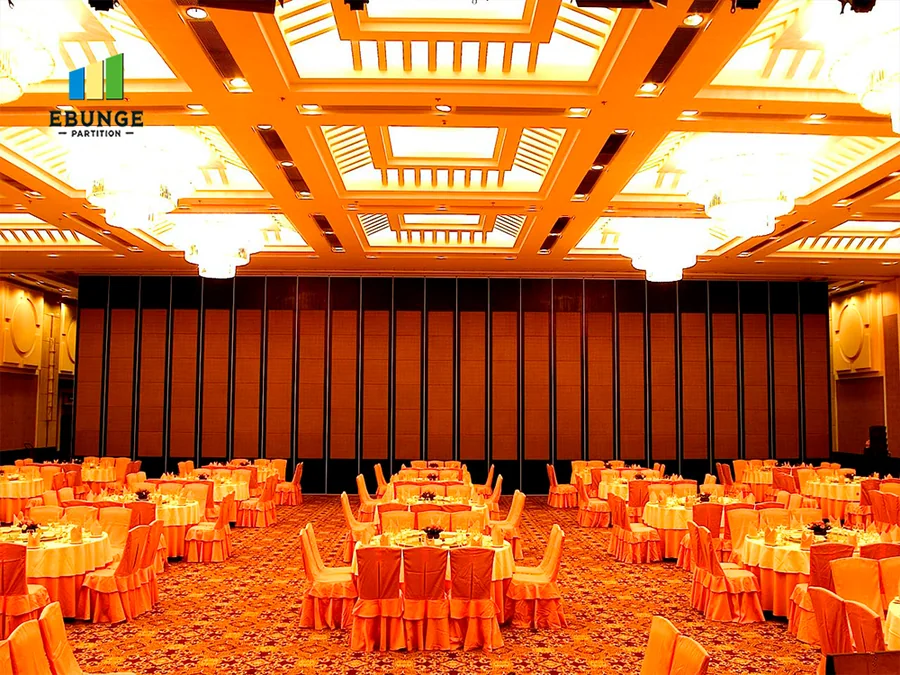
The EBUNGE top-hung system has no continuous floor running track or operating hardware in the finished floor along the partition line. The floor is not cut or damaged for a floor track and remains physically uninterrupted by the maintained system.
This is useful context for restaurant movable partition maintenance inspection because floor condition is often raised as a concern. With a top-hung system, the inspection does not need to trace a floor channel or a floor-mounted guide along the opening.
Restaurant teams can keep floor cleaning routines and floor finish checks separate from the partition inspection. The two activities meet at the same room, but they do not share the same hardware zone.
Plan Parking and Stacking Early
Panel parking style can be customized to the customer layout and project requirements, subject to coordinated drawings. Parking is a planning decision, not a default outcome, and it should be settled before the inspection schedule is written.
A suitable approved parking arrangement can use the stacking area more compactly and coordinate with the space design. The exact track, support and panel layout still require project drawings.
For restaurant movable partition maintenance inspection, the parking zone is a practical checkpoint. Inspectors should know where panels rest when the room is open and how that zone relates to tables, service doors and back-of-house routes.
The exact route, junction arrangement, continuous overhead path and parking position must be confirmed from the coordinated project drawings.
Coordinate Finish Selection With Care Routines
Finish materials can be customized, and cleaning and maintenance methods vary with the selected finish. That link should be recorded during handover so the inspection plan matches the actual surface in the restaurant.
Restaurant movable partition maintenance inspection should reference the approved finish schedule rather than a generic cleaning assumption. A finish used near a dining area may be cared for differently from a finish used in a service corridor.
Because methods vary by finish, the inspection plan should list the approved care reference for each face. It should not prescribe one cleaning method across every panel in the project.
Applications Are Not Limiting
Movable partitions can be used wherever flexible space division, combination or reconfiguration is required; application examples are not limiting. Restaurants are one context among many, and the same planning logic can apply elsewhere.
EBUNGE has completed many types of hotel-related movable-partition projects. Ballrooms, wedding halls and multifunction halls are non-limiting examples, and no customer names, locations, quantities, ratings, certifications or outcomes may be inferred.
For restaurant movable partition maintenance inspection, this means the method should follow the confirmed system and the coordinated drawings, not a template borrowed from another venue type.
Buyer Inputs to Gather Before Inspection Planning
A useful inspection plan starts with documents rather than opinions. The buyer, operator and project team should gather the approved layout, the finish schedule and the parking arrangement before the first inspection is scheduled.
Restaurant movable partition maintenance inspection also benefits from a clear room-use brief. The team should note when the room opens, when it closes and which zones are affected during each configuration.
- Approved coordinated drawings showing the top-hung configuration.
- Confirmed parking style and stacking zone for the layout.
- Finish schedule with the approved care reference for each surface.
- Room-use notes covering open, closed and combined states.
- Contacts for the parties responsible for each inspection item.
The exact route, junction arrangement, continuous overhead path and parking position must be confirmed from the coordinated project drawings.
Drawing Approvals and Responsibility
Restaurant movable partition maintenance inspection planning depends on coordinated drawings because the confirmed facts stop at the system principle. Track route, support and panel layout remain drawing items, and they should be approved before inspection content is finalized.
A simple responsibility table can keep the plan readable. It separates what the operator checks from what the project team confirms on the drawings.

| Planning item | Primary source | Inspection use |
|---|---|---|
| System type | Coordinated drawings | Confirm top-hung configuration |
| Floor condition | Site observation | Confirm no floor track zone |
| Parking arrangement | Approved layout | Locate stacking area |
| Finish care | Finish schedule | Match care method to surface |
Review the movable partition products and the completed project references before finalizing the inspection scope.
Building the Inspection Schedule
Restaurant movable partition maintenance inspection should be scheduled around service patterns. A quiet period between services usually allows a clearer review of the room than a peak dining window.
- Confirm the approved top-hung system and drawing revision.
- Walk the partition line and record the uninterrupted floor condition.
- Review the parking zone against the approved layout.
- Check each finish against its approved care reference.
- Record observations and route drawing questions to the project team.
The schedule should stay tied to the confirmed system. It should not introduce steps that the drawings do not support.
Common Planning Questions
What does restaurant movable partition maintenance inspection cover first?
It starts with the confirmed system type. For a top-hung EBUNGE system, the inspection follows the overhead operating path and the approved drawings rather than a floor track.
Does the floor need a track channel for this system?
No. The EBUNGE top-hung system has no continuous floor running track or operating hardware in the finished floor along the partition line, so the floor is not cut for a floor track.
How is the parking area decided?
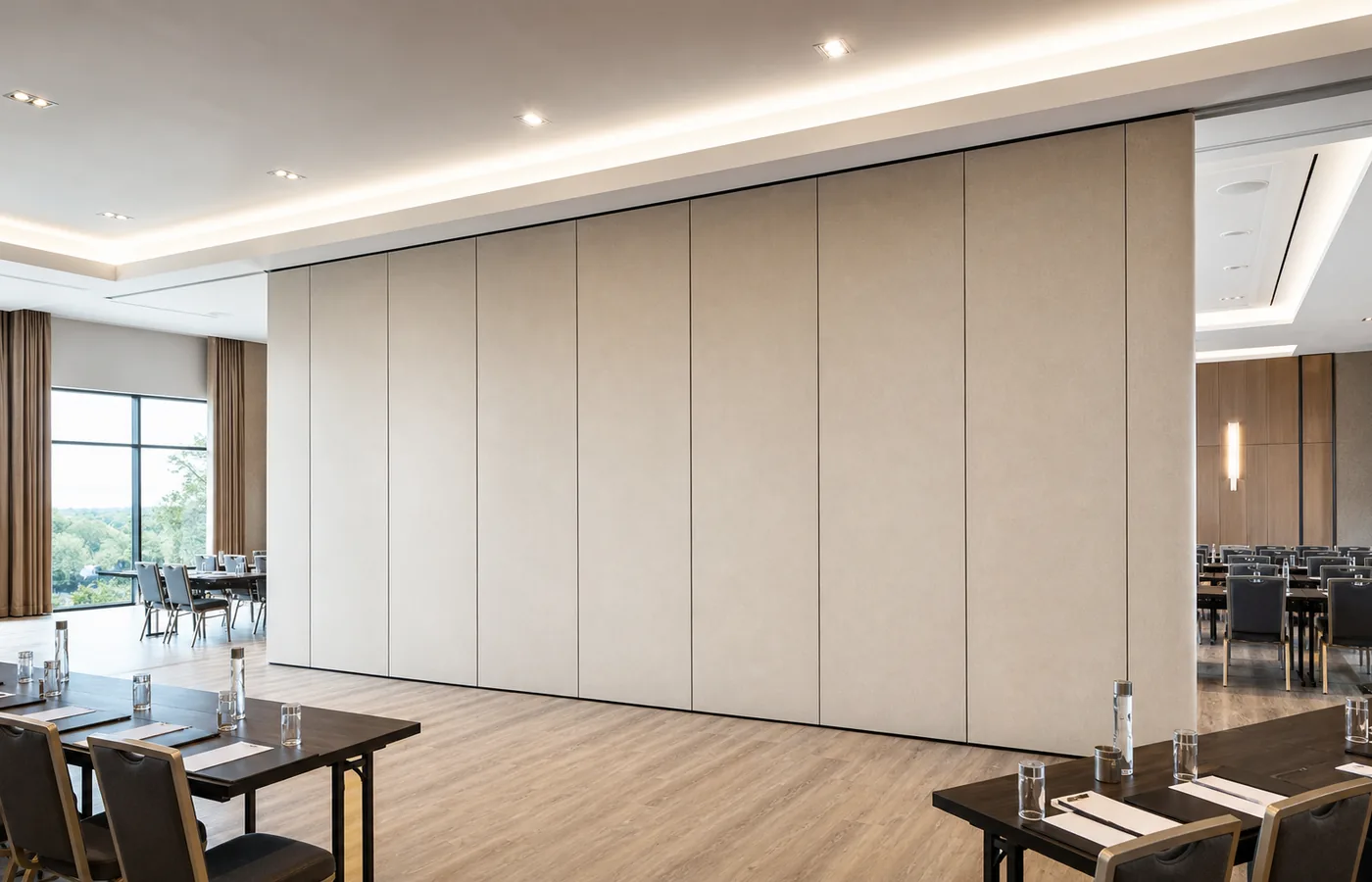
Panel parking style can be customized to the customer layout and project requirements, subject to coordinated drawings. A suitable approved arrangement can use the stacking area more compactly and coordinate with the space design.
Can cleaning methods be the same for every panel?
Finish materials can be customized, and cleaning and maintenance methods vary with the selected finish. The inspection plan should follow the approved finish schedule for each surface.
Are restaurant applications the only option?
No. Movable partitions can be used wherever flexible space division, combination or reconfiguration is required, and application examples are not limiting.
What must be confirmed from drawings?
The exact route, junction arrangement, continuous overhead path and parking position must be confirmed from the coordinated project drawings.
Keeping the Plan Practical
The suitability of each route and parking arrangement depends on the approved layout, circulation, ceiling interfaces and operating sequence. The top-hung principle, the uninterrupted floor and the parking layout give the plan its structure.
Finish care adds the surface-specific layer, and the coordinated drawings resolve the engineering details. When those four elements are aligned, the inspection plan stays accurate and usable for the restaurant team.
Continue Exploring
More Maintenance Guides
- Newer guideOffice Suites Operable Wall Maintenance: Huddle Room Dividers
- Earlier guideAuditorium Movable Partition Maintenance Planning vs Classroom Dividers
- Related guidePlan Service Access to Operable Wall Tracks When Ceiling Hatches
- Related guideAcoustic Movable Partition Track Servicing Access