
Quick project answer
Walk-in coolers run continuously in many restaurants. Their vibration can travel through building surfaces and affect nearby movable partitions. This article explains how restaurant operable wall seals cooler vibration planning works when the partition is top-hung and the floor remains physically uninterrupted.
Understanding the Top-Hung Principle
The EBUNGE movable partition system is top-hung. It carries panels from an overhead track rather than from a floor track. This means there is no continuous floor running track or operating hardware in the finished floor along the partition line.
Because the floor is not cut or damaged for a floor track, it remains physically uninterrupted by the maintained EBUNGE top-hung system. The suitability of each route and parking arrangement depends on the approved layout, circulation, ceiling interfaces and operating sequence.
Restaurant operable wall seals cooler vibration planning begins with this overhead support concept. The partition does not rely on a floor channel that could collect debris or interfere with cooler placement.
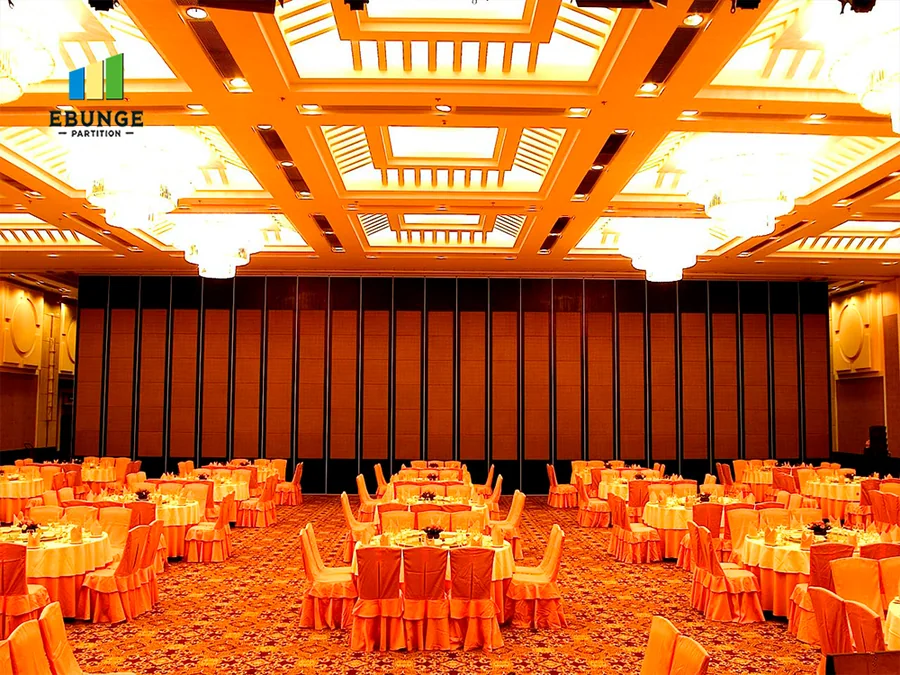
Movable partitions can be used wherever flexible space division, combination or reconfiguration is required. Application examples are not limiting. A restaurant may divide a dining area from a prep zone or create a private event corner near a cooler.
Why a Physically Uninterrupted Floor Matters
A walk-in cooler often sits close to a wall line. If a floor track were present, it could create a joint that traps moisture or food particles. The EBUNGE top-hung approach leaves the floor surface continuous along the partition line.
This continuity does not mean the floor is unaffected by vibration. It means the partition does not introduce a floor cut. The floor remains physically uninterrupted by the maintained EBUNGE top-hung system.
Restaurant operable wall seals cooler vibration planning should consider how the partition relates to the cooler’s location. The overhead track and panel parking must be coordinated with the cooler’s footprint and service clearance.
The exact route, junction arrangement, continuous overhead path and parking position must be confirmed from the coordinated project drawings.
Parking Planning for Restaurant Layouts
Panel parking style can be customized to the customer layout and project requirements, subject to coordinated drawings. A suitable approved parking arrangement can use the stacking area more compactly and coordinate with the space design.
In a restaurant, parking may need to avoid cooler doors, server stations, and walkways. The exact track, support and panel layout still require project drawings.
Restaurant operable wall seals cooler vibration planning includes deciding where panels rest when the room is open. A compact stacking area can help keep the dining floor clear.
Parking is not a universal sequence. It depends on the approved layout and the coordinated overhead path. The exact route, junction arrangement, continuous overhead path and parking position must be confirmed from the coordinated project drawings.
Finish and Care Coordination
Finish materials can be customized, and cleaning and maintenance methods vary with the selected finish. A restaurant may choose a finish that suits its interior and cleaning routine.
Because cleaning methods vary, the project team should confirm care instructions for the chosen finish. This is separate from any vibration consideration.
Restaurant operable wall seals cooler vibration planning does not prescribe a finish. It simply notes that finish selection and care are project-specific.
The exact route, junction arrangement, continuous overhead path and parking position must be confirmed from the coordinated project drawings.
Non-Limiting Applications in Foodservice
EBUNGE has completed many types of hotel-related movable-partition projects. Ballrooms, wedding halls and multifunction halls are non-limiting examples. No customer names, locations, quantities, ratings, certifications or outcomes may be inferred.
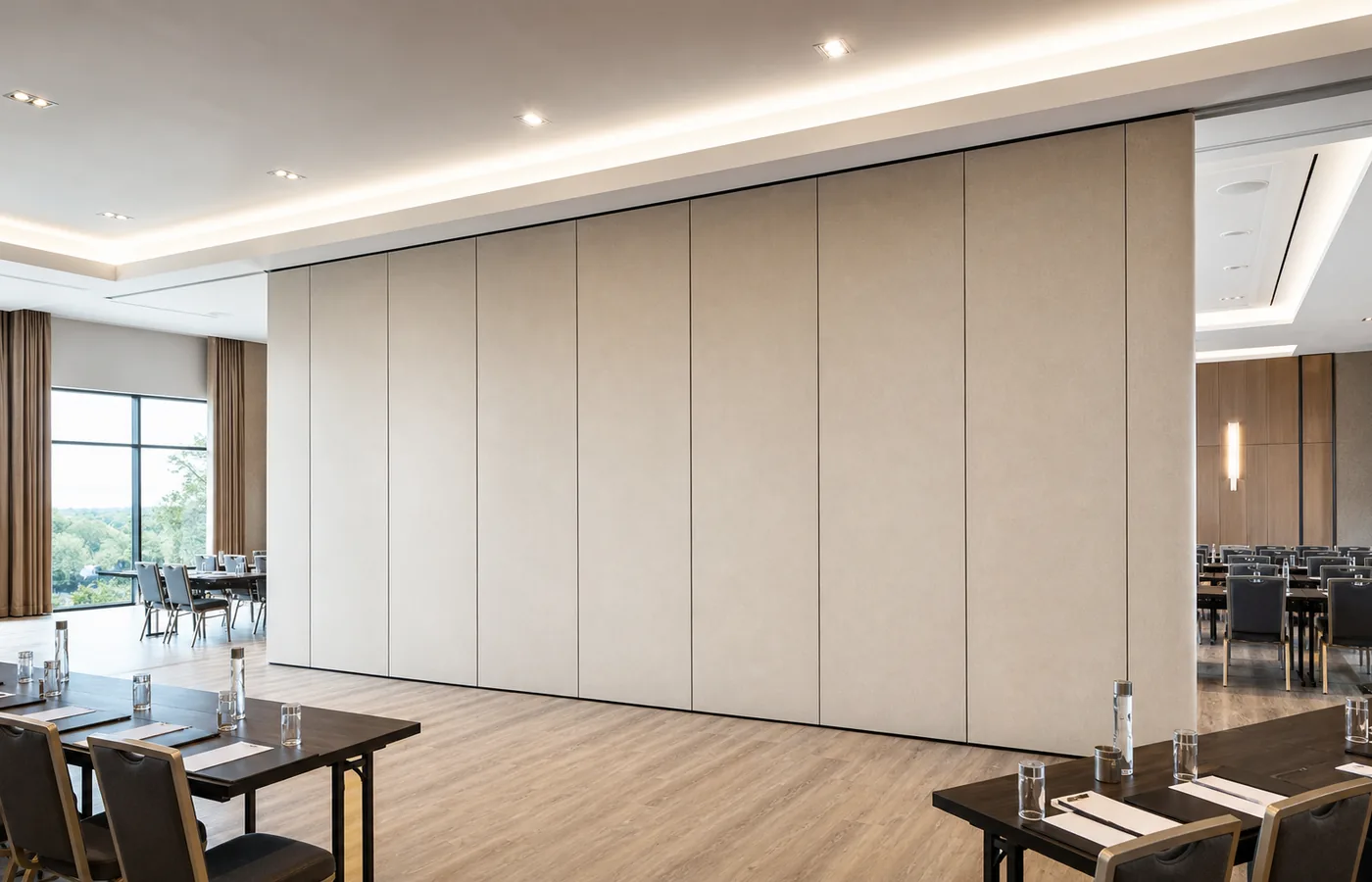
Restaurants can also use movable partitions for flexible space division, combination or reconfiguration. A dining room might become a private event space, or a prep area might be separated from guest seating.
Restaurant operable wall seals cooler vibration planning is relevant when a cooler sits near a partition line. The top-hung system avoids a floor track, but the overhead path and parking still need coordination.
Application examples are not limiting. Each restaurant layout has its own constraints and opportunities.
Buyer Inputs and Drawing Approvals
Buyers should provide layout information, cooler location, and desired parking style. These inputs help the project team coordinate the overhead track and panel layout.
Finish preferences and cleaning expectations are also useful. Finish materials can be customized, and cleaning and maintenance methods vary with the selected finish.
Restaurant operable wall seals cooler vibration planning relies on coordinated drawings. The exact route, junction arrangement, continuous overhead path and parking position must be confirmed from the coordinated project drawings.

Approval of those drawings is a project step. It helps confirm that the top-hung system fits the restaurant’s space and operational needs.
Scannable Planning Checklist
- Confirm the partition line and cooler location on the layout.
- Review the overhead track path and any junctions.
- Decide on a parking style that suits the space.
- Select a finish and confirm its care method.
- Coordinate drawings before finalizing the layout.
Comparison of Floor Conditions
| Condition | Top-Hung EBUNGE System | Floor-Track Alternative |
|---|---|---|
| Floor cut | Not required along partition line | Typically required |
| Floor continuity | Remains physically uninterrupted | Interrupted by track |
| Cleaning | No floor channel to clean | Channel may collect debris |
This comparison is general. The exact route, junction arrangement, continuous overhead path and parking position must be confirmed from the coordinated project drawings.
Frequently Asked Questions
For further context, review related project guidance and additional planning resources before preparing the coordinated project brief.
Does a top-hung partition require a floor track?
No. The EBUNGE movable partition system is top-hung and has no continuous floor running track or operating hardware in the finished floor along the partition line.
Will the floor be cut for the partition?
The floor is not cut or damaged for a floor track and remains physically uninterrupted by the maintained EBUNGE top-hung system.
Can parking be customized for a restaurant?
Panel parking style can be customized to the customer layout and project requirements, subject to coordinated drawings.
Are finishes customizable?
Finish materials can be customized, and cleaning and maintenance methods vary with the selected finish.
What projects has EBUNGE completed?
EBUNGE has completed many types of hotel-related movable-partition projects. Ballrooms, wedding halls and multifunction halls are non-limiting examples, but no customer names, locations, quantities, ratings, certifications or outcomes may be inferred.
How does cooler vibration relate to the partition?
Restaurant operable wall seals cooler vibration planning considers the cooler’s location near the partition line. The top-hung system avoids a floor track, but the overhead path and parking still require coordination.
The exact overhead route and support arrangement must be confirmed by the responsible project team from coordinated drawings..
Continue Exploring
More Acoustic Partition Guides
- Newer guideWhich Drawings Specify Restaurant Partition Seals at Floor Troughs?
- Earlier guideRestaurant Partition Seals: Private Dining vs Open Kitchen Noise
- Related guideAcoustic Partition Ceiling Interface Zone Confirmation
- Related guideWho Confirms Ceiling Grid Line Before Acoustic Partition Track