
Quick project answer
Restaurant movable partition maintenance inspection is a planning task that must respect both the dining calendar and the office workday. For B2B venues, the inspection window often falls between service periods or during administrative hours. This article explains how a top-hung system changes the inspection scope and how to coordinate checks without cutting into the finished floor or disrupting office schedules.
Why the Top-Hung Principle Shapes the Inspection
The EBUNGE movable partition system is top-hung and has no continuous floor running track or operating hardware in the finished floor along the partition line. That single fact changes what a restaurant movable partition maintenance inspection should look at. The floor is not cut or damaged for a floor track and remains physically uninterrupted by the maintained EBUNGE top-hung system.
Because the operating hardware sits above the partition line, the floor itself stays whole. Inspectors can therefore focus on the overhead path, the panel condition, and the parking area rather than on floor-mounted rails. This reduces the number of trades needed during a scheduled visit and helps keep the dining room available for service.
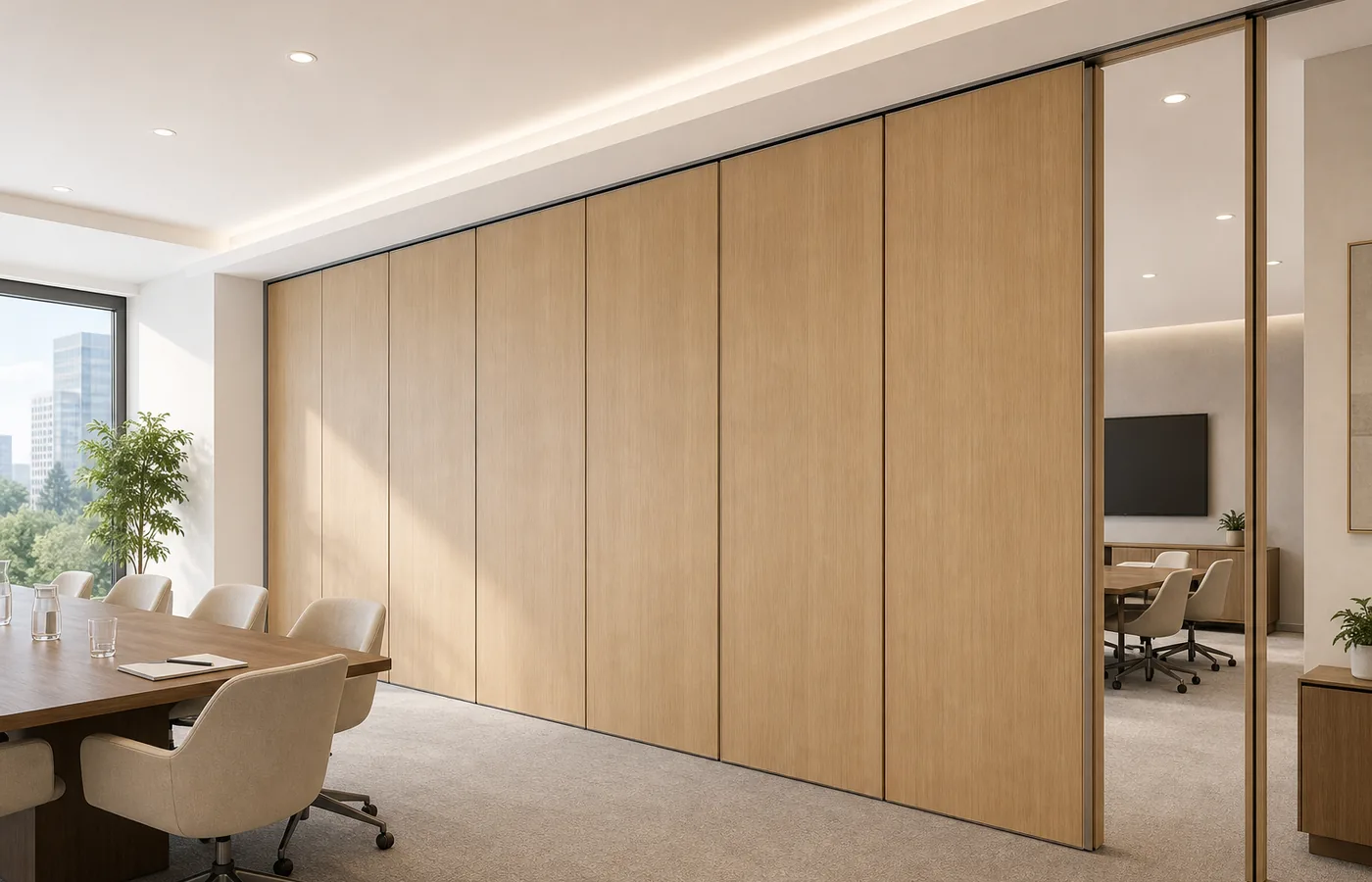
For office schedules, this means the inspection can often be planned as an overhead and panel review rather than a floor-breaking activity. The exact route, junction arrangement, continuous overhead path and parking position must be confirmed from the coordinated project drawings.
Keeping the Finished Floor Physically Uninterrupted
A key benefit of the top-hung approach is that the finished floor remains physically uninterrupted along the partition line. There is no continuous floor track to clean around, no recess to trap debris, and no operating hardware embedded in the floor. During a restaurant movable partition maintenance inspection, the floor can be checked for surface condition without expecting a track.
This matters for restaurants that share a building with offices. A floor that is not cut or damaged for a floor track is less likely to require floor closure during inspection. The inspection team can walk the partition line and confirm that the floor surface is intact and free of obstructions that could affect panel movement.
However, the absence of a floor track does not remove the need for careful coordination. The exact route, junction arrangement, continuous overhead path and parking position must be confirmed from the coordinated project drawings.
Planning Parking and Stacking Around Office Hours
Panel parking style can be customized to the customer layout and project requirements, subject to coordinated drawings. A suitable approved parking arrangement can use the stacking area more compactly and coordinate with the space design. For a restaurant movable partition maintenance inspection, the parking zone is a practical starting point because it determines how panels are stored when not in use.
When office schedules limit access to certain hours, the inspection can begin at the parking area and then move along the partition line. The goal is to confirm that the approved parking arrangement still matches the coordinated drawings and that the stacking area remains clear for operation.
The exact track, support and panel layout still require project drawings. Inspectors should not assume that a parking position seen on site is the final approved position without checking the drawings.
Finish and Care Coordination for Restaurant Environments
Finish materials can be customized, and cleaning and maintenance methods vary with the selected finish. This is important for restaurants because food service areas may require different care routines than office corridors. A restaurant movable partition maintenance inspection should include a review of the finish-specific care instructions with the facilities team.
Because cleaning methods vary by finish, the inspection schedule should align with the cleaning products and techniques already approved for that surface. Office schedules may limit when wet cleaning or dust-generating work can occur, so the inspection plan should separate finish checks from other tasks.
The exact route, junction arrangement, continuous overhead path and parking position must be confirmed from the coordinated project drawings.
Non-Limiting Applications and Shared Building Context
Movable partitions can be used wherever flexible space division, combination or reconfiguration is required; application examples are not limiting. EBUNGE has completed many types of hotel-related movable-partition projects; ballrooms, wedding halls and multifunction halls are non-limiting examples.
Restaurants in mixed-use buildings often share walls, ceilings, and service corridors with offices. A restaurant movable partition maintenance inspection should therefore consider access routes that do not disrupt office tenants. The inspection may need to use service elevators or back-of-house paths, depending on the building layout.
Because application examples are not limiting, the same top-hung principle can apply to other flexible spaces. The exact route, junction arrangement, continuous overhead path and parking position must be confirmed from the coordinated project drawings.
Buyer Inputs and Drawing Approvals Before Inspection
Before scheduling a restaurant movable partition maintenance inspection, buyers should gather the coordinated project drawings that show the approved track, support and panel layout. These drawings are the reference for any inspection findings. Without them, inspectors cannot confirm whether the installed arrangement matches the approved design.
Buyers should also confirm the finish type for each panel so that care instructions can be matched correctly. Finish materials can be customized, and cleaning and maintenance methods vary with the selected finish. Providing this information in advance helps the inspection team prepare the right supplies and methods.
Finally, the inspection schedule should be agreed with both restaurant management and office facilities. The exact route, junction arrangement, continuous overhead path and parking position must be confirmed from the coordinated project drawings.
Scannable Inspection Planning Checklist
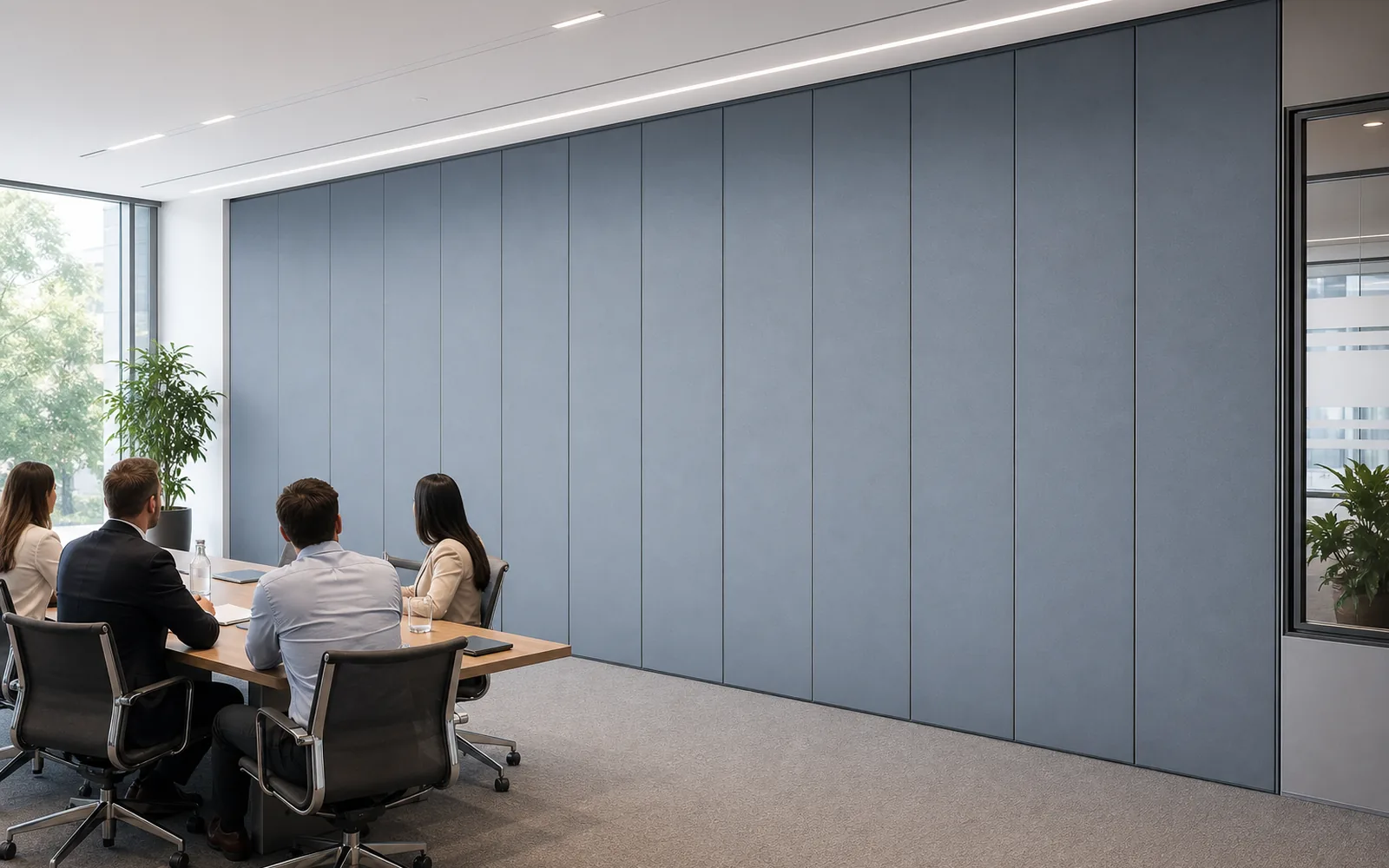
- Confirm the approved parking arrangement against coordinated drawings.
- Verify that the finished floor remains physically uninterrupted along the partition line.
- Review finish-specific cleaning and maintenance methods for each panel type.
- Coordinate access times with office schedules and restaurant service periods.
- Check that the overhead path matches the drawing-approved route.
Comparison of Inspection Focus Areas
| Area | What to Check | Drawing Reference |
|---|---|---|
| Floor line | No continuous floor track or embedded hardware | Floor protection details |
| Parking zone | Stacking area matches approved layout | Parking arrangement plan |
| Panel finish | Finish-specific care method is available | Finish schedule |
| Overhead path | Route aligns with coordinated drawings | Track and support layout |
Frequently Asked Questions
How often should a restaurant movable partition maintenance inspection be scheduled?
The frequency depends on use intensity, cleaning routines, and the finish selected. Because cleaning and maintenance methods vary with the selected finish, the schedule should be set with the facilities team and reviewed against the coordinated drawings. There is no universal interval that applies to every project.
Does the top-hung system require floor track maintenance?
No. The EBUNGE movable partition system is top-hung and has no continuous floor running track or operating hardware in the finished floor along the partition line. The floor is not cut or damaged for a floor track and remains physically uninterrupted by the maintained EBUNGE top-hung system. Inspection focuses above the partition line.
Can the inspection be done during office hours?
It can be planned around office schedules when access routes and noise levels allow. Because there is no floor track to cut or repair, the work is less likely to require floor closure. The exact route, junction arrangement, continuous overhead path and parking position must be confirmed from the coordinated project drawings.
What should buyers provide before the inspection?
Buyers should provide the coordinated project drawings showing the approved track, support and panel layout, plus the finish type for each panel. Finish materials can be customized, and cleaning and maintenance methods vary with the selected finish. These inputs help the inspection team prepare correctly.
Is the parking arrangement fixed for every restaurant?
No. Panel parking style can be customized to the customer layout and project requirements, subject to coordinated drawings. A suitable approved parking arrangement can use the stacking area more compactly and coordinate with the space design. The exact track, support and panel layout still require project drawings.
Does the inspection cover other applications beyond restaurants?
Movable partitions can be used wherever flexible space division, combination or reconfiguration is required; application examples are not limiting. EBUNGE has completed many types of hotel-related movable-partition projects; ballrooms, wedding halls and multifunction halls are non-limiting examples. The same top-hung principle applies.
For product information, see our movable partition products. For project references, see completed projects. A well-planned restaurant movable partition maintenance inspection keeps the floor intact and the schedule predictable.
Continue Exploring
More Maintenance Guides
- Newer guideAuditorium Movable Partition Maintenance Planning vs Classroom Dividers
- Earlier guideOffice Meeting Suite Movable Partition Maintenance for Conference Rooms
- Related guidePlan Service Access to Operable Wall Tracks When Ceiling Hatches
- Related guideAcoustic Movable Partition Track Servicing Access