
Why Floor-Mounted Conduit Outlets Matter in Auditorium Partition Planning
For overseas contractors and school project teams, the question of school auditorium partition floor conduit outlet checks arises when a movable wall must seal to a floor that contains power, data, or AV outlets. These outlets are often required for stage lighting, audio equipment, or presentation systems. Because EBUNGE movable partition panels are top-hung and move without a continuous floor running track, the floor surface along the partition line can be relatively clear. However, any floor-mounted conduit outlet that interrupts the floor plane can affect how the partition’s bottom seal performs.
This article provides a procurement-focused framework for pre-installation checks. It is not a technical installation manual. The suitability of each route and parking arrangement depends on the approved layout, circulation, ceiling interfaces and operating sequence.
Understanding the Partition System and Its Floor Interface
EBUNGE movable partitions are designed as individually movable panels suspended from an overhead track. They cross the opening without a floor track, which means the floor finish can be continuous. Panels park at a planned stacking position when not in use. This design offers flexibility for spaces like school auditoriums that need to reconfigure from a large hall into smaller teaching or event spaces.
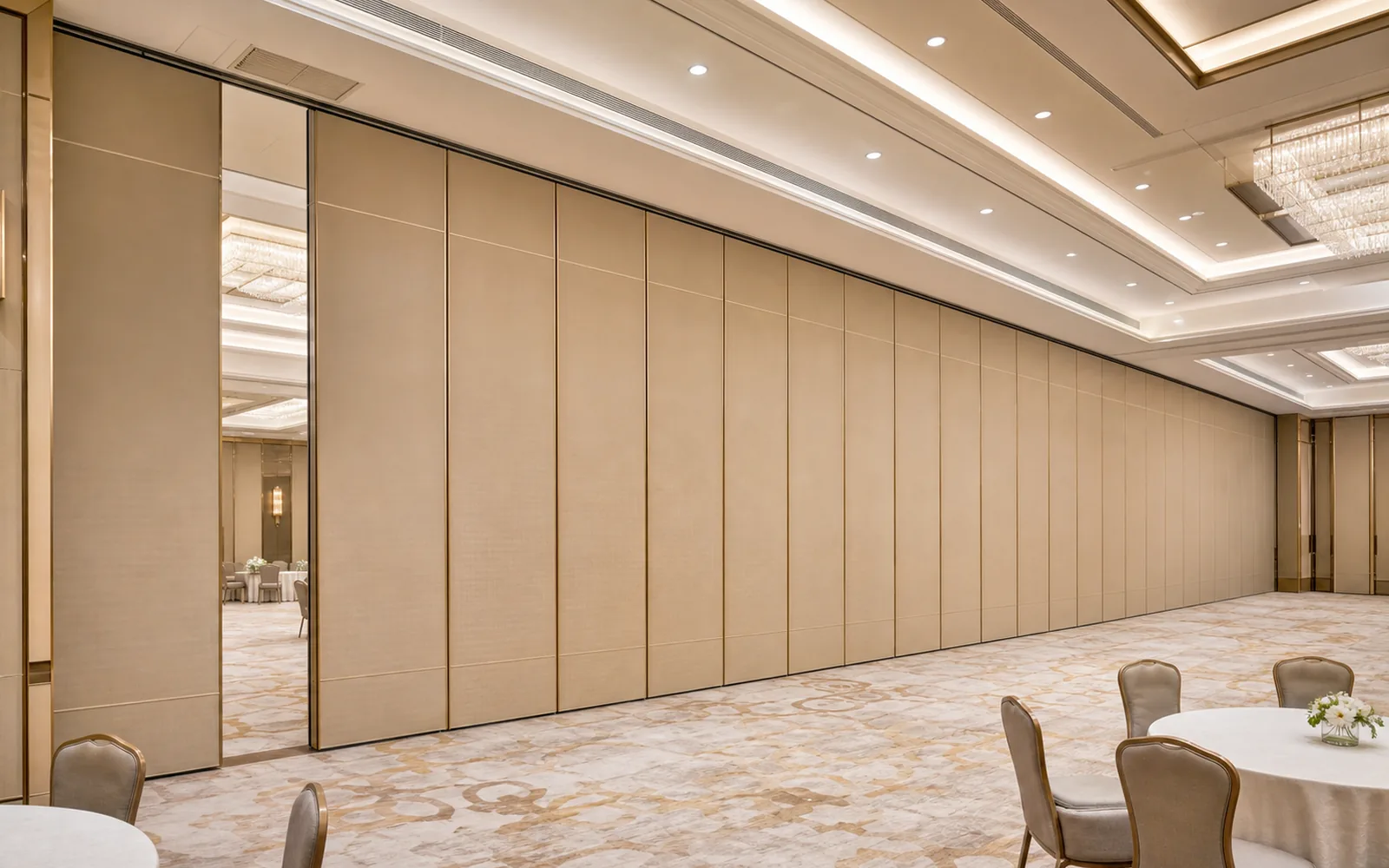
The effectiveness of that seal depends on the floor being level, clean, and free of obstructions.
Why Conduit Outlets Are a Common Coordination Point
In school auditoriums, floor outlets are often installed for microphones, instrument amplifiers, or projector controls. Even a small lip can interrupt the seal line.
Pre-Installation Checks: A Step-by-Step Framework
Share the opening dimensions, room layout and intended operating sequence for review.
The following checks are intended to guide project teams. Panel handling and the operating sequence must be confirmed for the selected layout and project conditions.
1. Review the Partition Layout and Identify Outlet Locations
Start with the partition layout drawing. Mark every floor-mounted conduit outlet that lies within the partition’s travel path, its closed position, and its stacking area. Even outlets outside the immediate seal line can affect panel movement if they are in the path.
For EBUNGE partitions, straight, turning, and stacking routes are reviewed from the layout. Any floor obstruction along these routes must be identified. The project documentation should include a clear plan showing outlet positions relative to the partition.
2. Verify Outlet Cover Flatness and Protrusion
Inspect each outlet cover. It should be flush with the finished floor or recessed enough to allow the partition seal to pass over without catching. If the cover is raised, it may need to be adjusted or replaced. Cost and maintenance requirements depend on the selected configuration, finish and project conditions and require project-specific confirmation.
Remember that the seal material is not specified here; the point is that any protrusion can affect the seal’s ability to make continuous contact. The project team should document the acceptable tolerance for floor flatness and outlet protrusion, based on the partition supplier’s recommendations.
3. Coordinate with Electrical and AV Consultants
Floor conduit outlets are often installed by electrical or low-voltage contractors. Coordinate with them to ensure that outlet boxes are set at the correct depth and that covers are designed to be flush. If an outlet must be moved, do this before the floor finish is applied.
In school projects, there may be multiple phases of construction. Early coordination between the partition installer and the electrical contractor is essential. The partition supplier can review the layout and advise on potential conflicts, but the final responsibility for outlet placement lies with the design team.
4. Assess the Impact on Acoustic Sealing
Visible references can support layout discussion but do not verify hidden construction or performance. However, do not assume a specific decibel loss.
They are not a direct count of decibels at every frequency. For a school auditorium, the desired rating will depend on the activities in adjacent spaces. The presence of floor outlets may necessitate additional sealing measures, but these must be designed and tested for the specific project.
5. Plan for Seal Interruption at Outlet Locations
If an outlet cannot be moved or made flush, the partition seal may need to be interrupted at that point. This is a design decision that requires careful detailing. Options include using a gasket or a custom seal piece that fits around the outlet. However, any interruption creates a potential leak path.
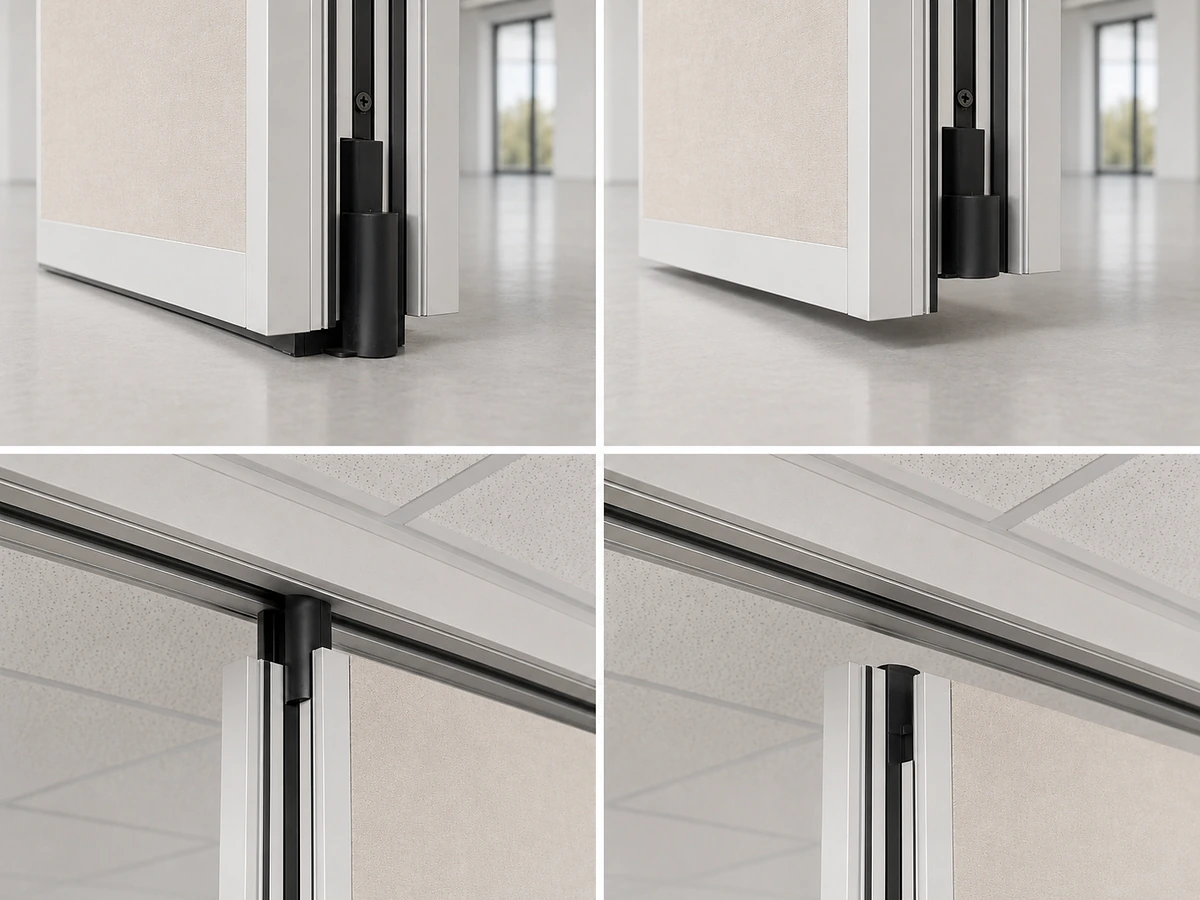
Discuss these details with the partition manufacturer.
6. Document All Checks and Decisions
Keep a record of all pre-installation checks, including photographs of each outlet, measurements of protrusion, and decisions made.
EBUNGE project documentation can be discussed with the supplier. They can provide checklists and forms to help standardize the process.
Common Pitfalls and How to Avoid Them
Project teams often overlook the following issues:
- Outlets in the stacking area: Panels park in a compact stack. If an outlet is in that area, it may interfere with the panels’ ability to nest together. Check the stacking layout.
- Outlets under the track: The overhead track supports the panel weight. Floor outlets do not affect the track, but they can affect the panel’s vertical alignment if they cause the floor to be uneven.
- Outlets that are not yet installed: In renovation projects, old outlets may be removed, but the conduit may remain. Ensure that any abandoned conduit is capped flush with the floor.
Review the ceiling interface, panel route and stacking position together.
The exact overhead route and support arrangement must be confirmed by the responsible project team from coordinated drawings.
Case Example: School Auditorium Renovation (Illustrative)
Consider a typical school auditorium renovation where a movable partition is to divide the space into two classrooms. The floor has several data outlets for student laptops. During pre-installation checks, the team discovers that one outlet cover is raised by 3 mm. The partition seal would not make full contact at that point.
The team coordinates with the electrical contractor to replace the cover with a flush type. They also document the location of all other outlets and confirm that they are within tolerance. The partition is installed without issues. This example is illustrative only; actual projects will vary.
Coordination with EBUNGE and Project Documentation
EBUNGE provides movable partition systems that are customized to each project. The parking style, finish options, and track layout are all tailored. For school auditorium projects, it is essential to share the floor plan and outlet layout with the EBUNGE team early in the design process. They can review the proposed partition routes and identify any potential conflicts.
Finish options include laminate, melamine, fabric, leather, glass, and other approved surfaces. The choice of finish does not affect the floor seal, but it may affect the overall aesthetic and maintenance.
.
FAQ: School Auditorium Partition Floor Conduit Outlet Checks
What pre-installation checks are required for floor conduit outlets under a movable partition?
Check that all outlets are flush with the floor, within tolerance, and not located in the partition’s travel or stacking path. Document each outlet’s position and condition.
Can a floor conduit outlet be left in place if it is slightly raised?
It depends on the height of the protrusion and the type of seal. A raised outlet can create a gap. Confirm acceptable tolerances with the partition supplier.
How do floor outlets affect the acoustic performance of a movable partition?
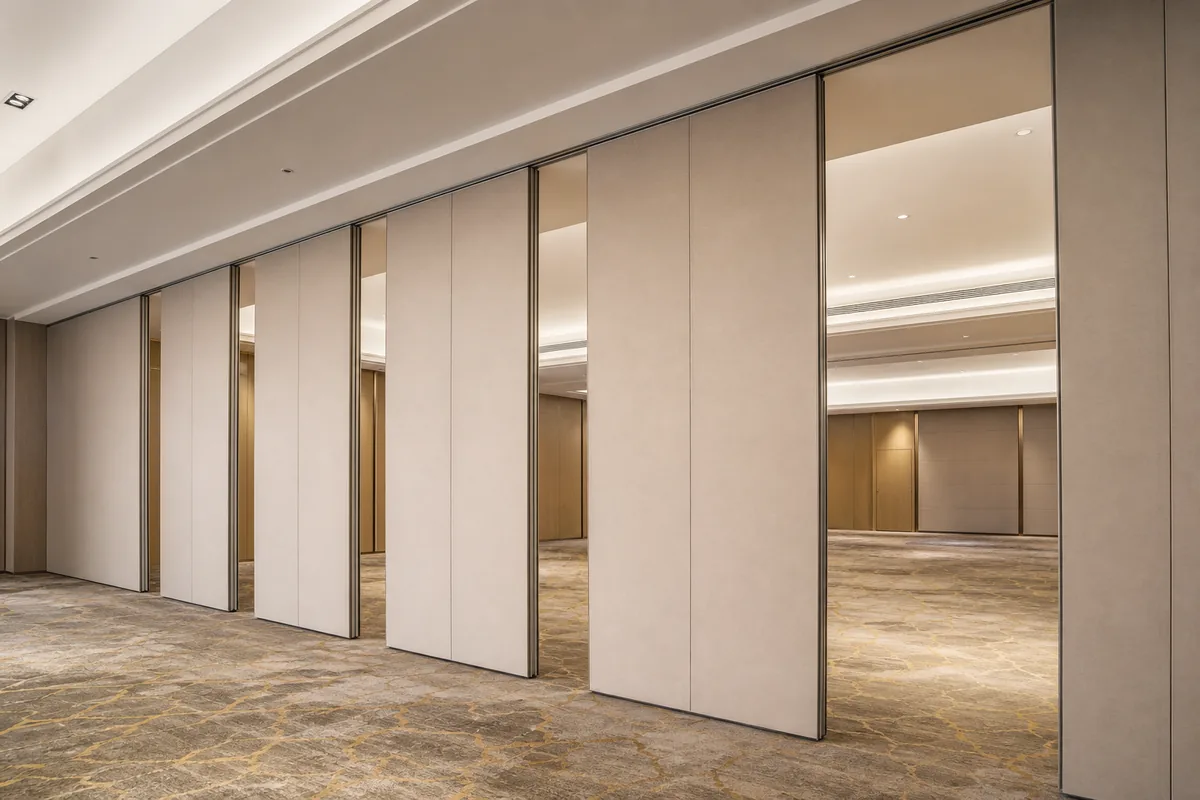
Floor outlets can interrupt the bottom seal, creating a sound leak path. The impact on the overall STC/Rw rating depends on the size of the gap and the frequency of sound.
Should the electrical contractor be involved in the pre-installation meeting?
Yes. Early coordination with the electrical contractor is essential to ensure outlet boxes are set at the correct depth and covers are flush. This prevents rework later.
What documentation should be kept for floor outlet checks?
Keep a log with photos, measurements, and decisions.
Conclusion and Next Steps
Pre-installation checks for floor-mounted conduit outlets are a critical part of any school auditorium movable partition project. Remember that every project is unique.
If you are planning a school auditorium partition and need guidance on floor conduit outlet coordination, contact the EBUNGE team. We can review your layout and discuss how our movable partitions can meet your needs. Contact us today to start the conversation.
Continue Exploring
More Acoustic Partition Guides
- Newer guideWhat Maintenance Checklist Applies to Function Room Partition Seals at Floor Power Wells
- Earlier guideWhy School Auditorium Partition Seals Need Detailing at Wall-Mounted Organ Console Recesses
- Related guideHow to Coordinate Office Meeting Suite Partition Seals with Wall-Mounted Video Bar Swing Paths
- Related guideHow to Coordinate Hotel Banquet Partition Seals with Ceiling-Mounted Rigging Point Access Panels