
When your project team asks what maintenance inspection checklist applies to school auditorium partition manual crank mechanisms, the answer depends on the specific system configuration, the route it travels, and the documentation your supplier provides. A school auditorium partition manual crank maintenance checklist is not a generic list of tasks; it is a coordinated plan that ties the partition’s operating principle to the building’s layout and the manufacturer’s project-specific guidance.
This article gives procurement and facility teams an evidence-bounded framework for developing such a checklist. It explains what to verify, what to document, and how to work with your supplier so that inspections reflect the actual installed system rather than assumptions.
Understanding the Operating Principle Behind the Checklist
EBUNGE movable partitions are designed as top-hung systems. Each panel is individually movable and suspended from an overhead track. The panels cross the opening without a continuous floor track or floor hardware along the partition line. This fundamental design affects what a maintenance inspection must cover.
The suitability of each route and parking arrangement depends on the approved layout, circulation, ceiling interfaces and operating sequence. A manual crank mechanism—when specified—is the human interface for moving or locking panels.
Why the Absence of a Floor Track Changes Inspection Priorities

Without a floor track, there is no debris accumulation in a floor channel, no floor-mounted rollers to clean, and no trip hazard along the partition line. However, this also means that the overhead track alignment and the panel hangers must be checked more carefully. Any misalignment or wear in the overhead system directly affects how easily the panels move and how well they seal when closed.
Your checklist should include visual checks of the overhead track for obstructions, damage, or foreign objects. The exact overhead route and support arrangement must be confirmed by the responsible project team from coordinated drawings. These checks are part of a responsible maintenance routine, but the exact frequency and method should be confirmed with your supplier based on the project’s usage and environmental conditions.
Core Components of a Maintenance Inspection Checklist
A maintenance inspection checklist for a manual crank partition typically covers several areas. While the specific items may vary, the following categories are common starting points.
Overhead Track and Support Structure
- Visual inspection of the track for bends, dents, or corrosion.
- Check that all track connections and splices are secure.
- Verify that the track is level and aligned according to the approved layout.
Share the opening dimensions, room layout and intended operating sequence for review.
Panel Suspension and Hangers
- Examine each panel’s suspension brackets and rollers for wear or damage.
- Confirm that all fasteners are tight and that no parts are missing.
- Check that panels hang plumb and at the correct height.
Manual Crank Mechanism
- Operate the crank through a full cycle to feel for smoothness or resistance.
- Listen for unusual noises that may indicate a need for adjustment.
- Inspect the crank handle, gears, and any connecting rods for wear or damage.
- Verify that the crank mechanism engages and disengages properly.
Panel-to-Panel and Panel-to-Building Seals
- Check the condition of perimeter seals and gaskets for cuts, tears, or compression loss.
- Ensure that seals are correctly positioned and not preventing the panels from closing fully.
- Look for gaps or light leaks that may indicate a sealing problem.
Finish and Surface Condition
- Inspect laminate, melamine, fabric, leather, glass, or other approved finishes for damage.
- Clean surfaces according to the manufacturer’s recommendations for the specific finish.
- Note any scratches, chips, or stains that may require repair.
Why the Layout and Stacking Route Matter
The maintenance checklist is not just about the partition itself; it is also about the space it operates in. EBUNGE partitions can be designed to follow straight, turning, or stacking routes. The parking position is customized to the project layout. This means that the inspection must consider the entire path the panels travel.
For example, if the partition stacks in a curved or angled parking area, the track in that zone may experience different stresses. The checklist should include a review of the stacking area to ensure that panels can park without obstruction and that the track there is clean and clear.
Coordinating with the Project Layout
Before finalizing any maintenance checklist, your team should review the project’s layout drawings with the supplier. This review confirms the exact track route, the number of panels, the location of the manual crank mechanism, and the stacking configuration. Without this coordination, the checklist may miss critical elements or include irrelevant ones.
During this review, you can also discuss pass-door requirements if the partition includes an integrated door. Pass doors have their own hinges, locks, and seals that may need separate inspection items.
Developing a Project-Specific Inspection Schedule
How often should you perform these inspections? The answer depends on usage frequency, the environment, and the supplier’s recommendations. A school auditorium that is used daily will require more frequent checks than a partition in a seldom-used conference room.
Rather than guessing, work with your supplier to establish an inspection schedule based on the expected number of cycles per day or week. The supplier can provide guidance on what to check monthly, quarterly, or annually, but the final schedule should be confirmed for your specific project.
Documentation and Record Keeping
Every inspection should be documented. Keep a log that records the date, the inspector’s name, any issues found, and the corrective action taken.
Your supplier may provide a template for inspection logs. If not, create your own that includes the checklist items and space for notes. Consistent documentation helps identify trends, such as a particular panel that repeatedly requires adjustment.
Common Issues to Look For
While every installation is unique, some issues are more common than others. Being aware of these can help you spot problems early.
Misalignment of Panels
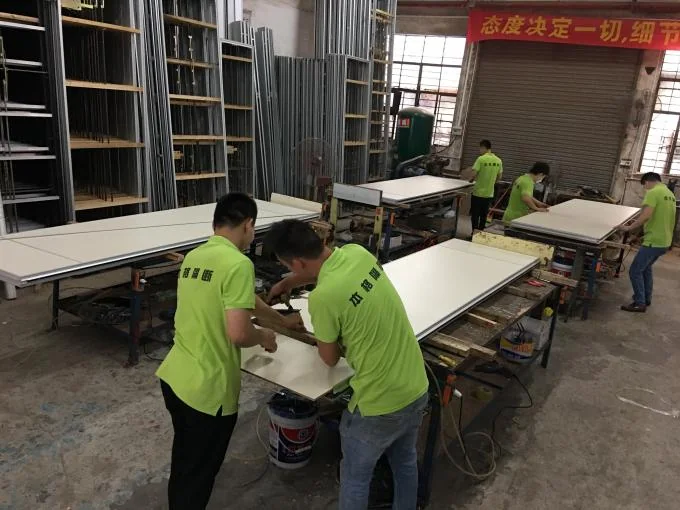
Address alignment issues promptly to prevent further damage.
Wear on Moving Parts
The manual crank mechanism and the panel rollers are subject to wear. Regular lubrication, as recommended by the supplier, can extend their life. However, do not use lubricants that are not approved, as they may attract dust or damage seals.
Damage to Seals
Seals can be damaged by impact or by being pinched during operation. Inspect them regularly and replace any that are torn or compressed.
Acoustic Considerations in Maintenance
Visible references can support layout discussion but do not verify hidden construction or performance. These ratings are determined under controlled laboratory conditions and may not directly translate to field performance.
Review the ceiling interface, panel route and stacking position together.
If seals are damaged or panels are misaligned, sound can leak through gaps.
Seal Inspection and Replacement
Inspect all perimeter seals, including those at the top, bottom, and sides of the panels. Look for signs of wear, such as cracking or flattening. Replace seals as needed, using only parts supplied or approved by the manufacturer. The exact seal material is not specified here; consult your project documentation.
Training and Operator Responsibility
The people who operate the partition should be trained on its correct use. Training should include how to use the manual crank mechanism smoothly, how to avoid forcing panels, and what to do if an obstruction is encountered.
Maintenance staff should also be trained on the inspection checklist. They need to know what to look for and how to report issues. A well-trained team is the first line of defense against minor problems becoming major repairs.
Creating an Operator Manual
If not, request one. This manual should include the inspection checklist, troubleshooting tips, and contact information for technical support. Keep it accessible to the maintenance team.
Working with Your Supplier for Documentation
Project documentation is essential for a successful maintenance program. This includes layout drawings, product data sheets, and installation manuals. EBUNGE can discuss project documentation requirements with you to ensure you have what you need.
When you contact EBUNGE, be prepared to share your project details, such as the room dimensions, the desired stacking configuration, and any pass-door requirements.
Frequently Asked Questions
What is the most important part of a manual crank maintenance checklist?
Regular visual checks and ensuring that all fasteners are tight are critical. However, the specific priorities should be confirmed with your supplier based on your system’s design.
How often should we inspect the manual crank mechanism?
The frequency depends on usage. A school auditorium that is used daily may require monthly inspections, while a less-used space might only need quarterly checks. Your supplier can recommend a schedule based on expected cycles, but you should confirm this for your project.
Can we use any lubricant on the crank mechanism?
No. Only use lubricants recommended by the supplier. Panel handling and the operating sequence must be confirmed for the selected layout and project conditions. Check your operation manual or ask your supplier for approved products.
What should we do if a panel becomes difficult to move?
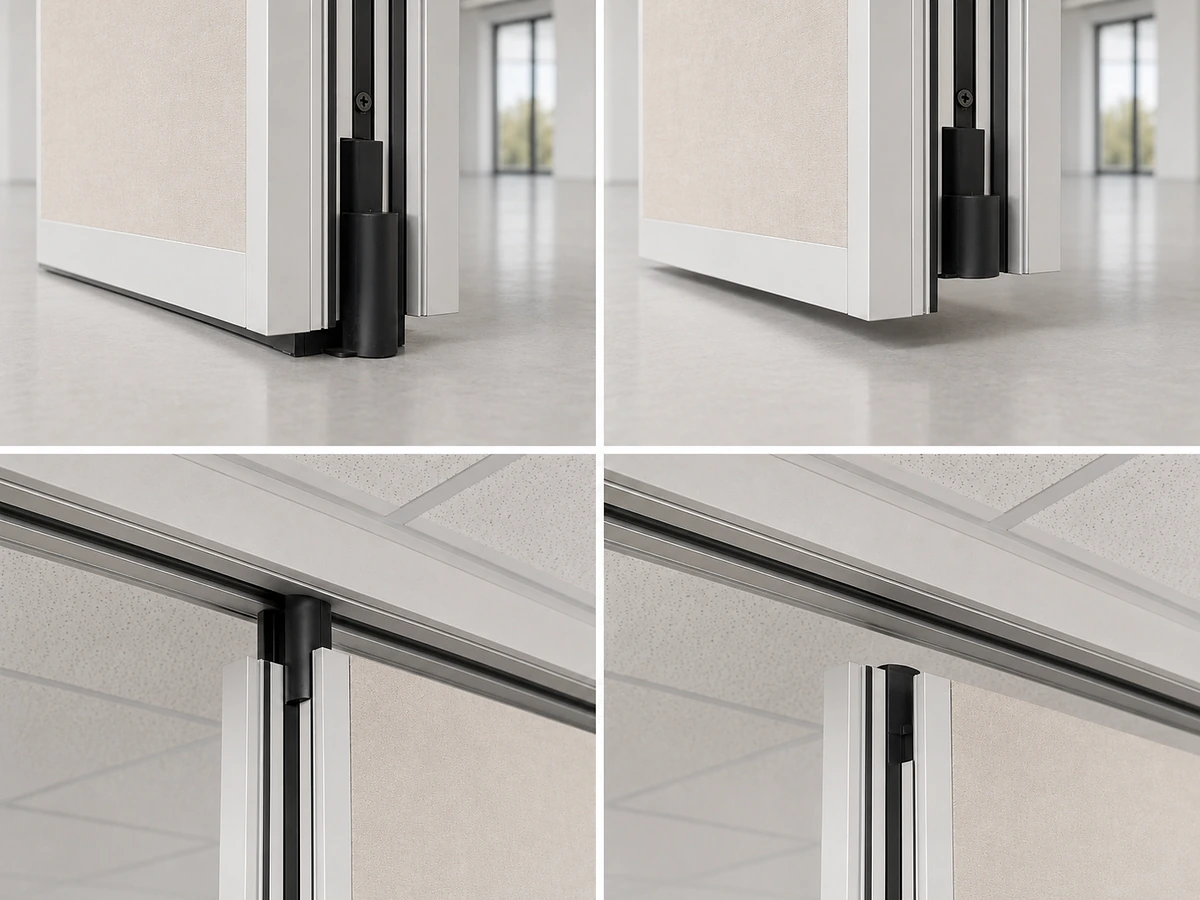
First, check for obstructions in the track or on the floor. If nothing is visible, do not force the panel. Contact your supplier for guidance. Forcing a panel can cause damage to the track, hangers, or the crank mechanism.
Does the maintenance checklist affect acoustic performance?
Conclusion and Next Steps
Developing a school auditorium partition manual crank maintenance checklist requires a clear understanding of your specific system. EBUNGE movable partitions are top-hung, floor-track-free systems that demand attention to the overhead route and the manual crank mechanism. By coordinating with your supplier, reviewing project drawings, and documenting inspections, you can keep your partition operating smoothly for years.
Remember that every project is unique. The information in this article is a starting point, not a substitute for professional advice.
If you are planning a new installation or need to update your maintenance procedures, contact EBUNGE today. Our team can discuss your project documentation needs and help you create a maintenance plan that fits your facility. Explore our operable wall system for more details, and see how we have helped other clients in our project portfolio.
Continue Exploring
More Maintenance Guides
- Newer guideWhat Maintenance Inspection Checklist Applies to Exhibition Partition Track at Ceiling-Mounted Hoist Junctures
- Earlier guideWhat Maintenance Inspection Checklist Applies to Office Meeting Suite Partition Track at Wall-Mounted Door Stop Junctures
- Related guideWhat Maintenance Inspection Checklist Applies to Office Meeting Suite Partition Track at Ceiling-Mounted Rigging Point Zones
- Related guideWhat Maintenance Inspection Checklist Applies to University Auditorium Partition Stacking at Floor-Mounted Stage Pockets