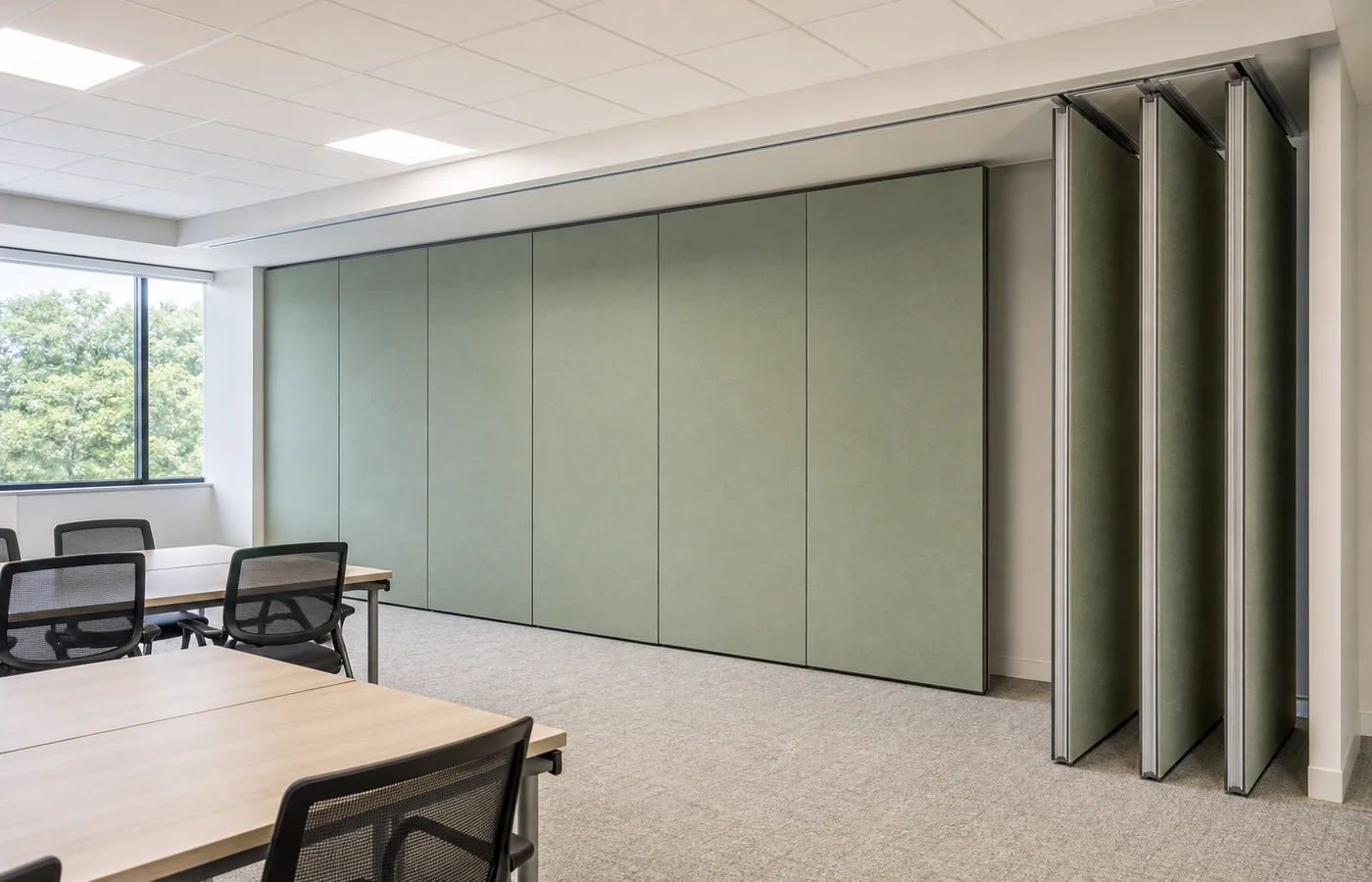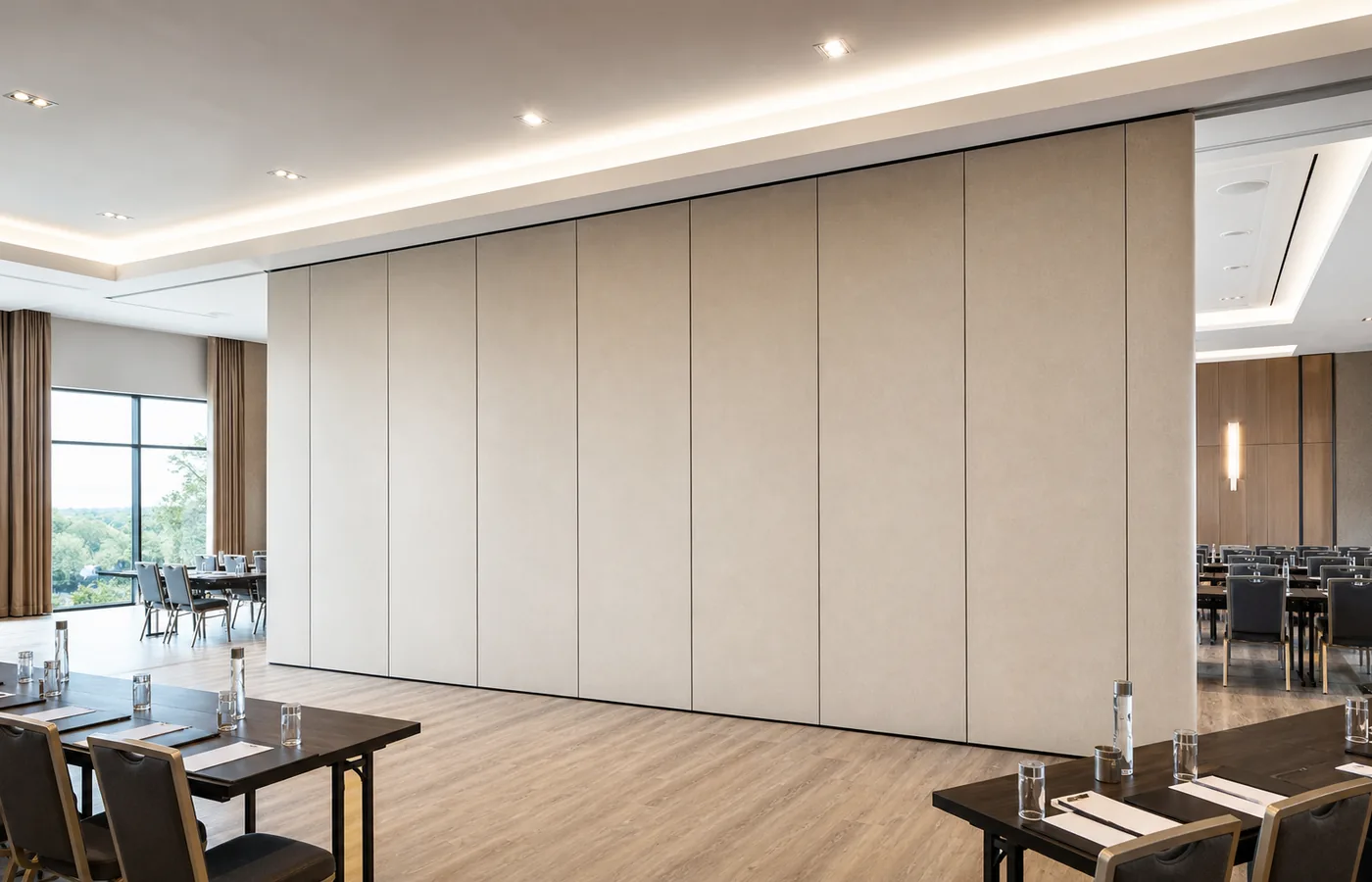
When a school auditorium must serve both drama productions and lecture-style teaching, the acoustic demands can pull in different directions. The school auditorium partition seals drama lecture comparison is not about picking a single “best” seal, but about understanding how sealing strategies affect sound isolation for different uses. This article helps architects, contractors, and facility managers compare options and ask the right questions during planning.

Understanding the Acoustic Needs of Drama vs. Lecture
Drama performances and lectures have very different acoustic profiles. Drama involves dynamic sound levels, music, dialogue, and sometimes amplified effects. Lectures rely on clear speech intelligibility, with a focus on consistent vocal projection. The partition must control sound transfer in both directions, but the critical frequencies and acceptable background noise levels differ.
For drama, the partition should minimize sound leakage at low frequencies (e.g., bass from music) and prevent loud peaks from disturbing adjacent spaces. For lectures, the priority is reducing mid-frequency noise that can mask speech. A partition that performs well for drama may not automatically be ideal for lectures, and vice versa. Therefore, the sealing strategy must be tailored to the dominant use or designed to handle both.
Speech Intelligibility vs. Dynamic Range
Lectures demand high speech intelligibility. This means the partition should reduce mid-frequency sound transmission, typically in the 250 Hz to 4 kHz range. Seals that create airtight perimeters help prevent flanking paths that carry speech sounds. Drama, on the other hand, requires a wider frequency range, including low bass. Seals that are effective at low frequencies often need to be heavier or more robust, but the exact performance depends on the entire partition system.
What Are Partition Seals and Why Do They Matter?
Partition seals are the components that close the gaps between movable panels, and between panels and the surrounding structure (floor, ceiling, walls). In an acoustic movable partition, seals are critical because even small gaps can create flanking paths—routes for sound to bypass the panel. For school auditoriums, where sound isolation is essential for both performances and learning, the quality and configuration of seals are key.
It is important to understand that acoustic performance is not measured by a simple decibel count. Instead, ratings like STC (Sound Transmission Class) and Rw (Weighted Sound Reduction Index) are used to describe how well a partition reduces sound. These ratings are determined by laboratory tests and are influenced by the entire partition system, including seals. A higher rating generally means better sound reduction, but the real-world performance depends on installation quality and the specific acoustic environment.
Share the track plan, ceiling plan and fixed-service locations.
Types of Seals Commonly Discussed
While we cannot specify materials, we can discuss generic types: perimeter seals (at the top, bottom, and sides) and inter-panel seals (between adjacent panels). Some seals are fixed, while others are automatic or retractable. The choice affects ease of operation and long-term effectiveness. For school auditoriums, consider how often the partition will be moved and whether seals can be easily inspected and maintained.
Comparing Sealing Strategies for Drama and Lecture
When comparing sealing strategies, think about the following aspects: the number of seals, their placement, and their adjustability. For drama, you might prioritize a continuous, robust perimeter seal to block low-frequency sound. For lectures, you might focus on inter-panel seals that prevent speech-frequency leakage. However, a well-designed partition can incorporate multiple seal layers to address both.
Perimeter Seals: Top and Bottom
The top and bottom seals are crucial because they close the largest gaps. In a school auditorium, the partition often spans from floor to ceiling. A bottom seal that drops to the floor creates a tight closure, but it must be carefully aligned to avoid gaps. Top seals similarly need to press against the ceiling structure. For drama, a heavy, continuous seal may be beneficial; for lectures, a lighter but airtight seal might suffice. The key is to ensure that the seals are consistent and do not leave any gaps.
Inter-Panel Seals: Vertical Joints
Between panels, vertical seals prevent sound from passing through the narrow gaps. These seals are often double or triple layers to create a labyrinth effect. For lectures, the priority is to eliminate any gaps that could let speech through. For drama, the same seals help, but the challenge is maintaining pressure across the full height. If panels are not perfectly aligned, gaps can appear, reducing performance.
Stacking and Parking: Impact on Seals
Movable partitions are designed to park at a planned stacking position. The stacking route must be reviewed from the layout to ensure that panels can be moved without damaging seals. For school auditoriums, where the partition may be moved frequently, the seals should be durable and easy to maintain. If the stacking area is tight, consider how seals will be protected during storage.
Acoustic Concepts: STC and Rw Explained
STC and Rw are both single-number ratings that describe sound insulation. STC is commonly used in North America, while Rw is used internationally. They are derived from laboratory measurements across a range of frequencies. A higher number indicates better insulation, but they do not tell the whole story. For example, a partition with a high STC might still have weak low-frequency performance, which is critical for drama.
When comparing partitions for school auditoriums, ask for the full frequency spectrum data, not just the single-number rating. This helps you understand how the partition performs for both drama and lecture scenarios. Also, be aware that real-world performance can be lower than laboratory ratings due to installation issues, flanking paths, and structural vibrations.
Flanking Paths and How Seals Help
Flanking paths are indirect routes that sound can take around the partition. Common flanking paths include gaps above a suspended ceiling, gaps at the floor, and even ductwork. Seals are designed to block direct gaps, but they cannot stop flanking through the building structure. Therefore, it is essential to coordinate with the building design to minimize flanking paths. For example, ensure that the partition extends to the structural slab, not just the ceiling tile.

In school auditoriums, flanking paths can be significant because of complex ceiling geometries and HVAC systems. A thorough review of the layout can identify potential flanking paths and allow for corrective measures. Seals alone cannot solve all acoustic problems, but they are a critical component.
Operational Considerations for School Auditoriums
School auditoriums often require flexibility: the partition may be used daily for classes and occasionally for performances. Therefore, ease of operation is important. But we cannot discuss specific operating tools or manpower. Instead, consider how the sealing system affects the speed of opening and closing. A partition with many manual seals may be time-consuming to set up. Some systems may have automatic seals that simplify operation, but we cannot confirm that for EBUNGE. Discuss your operational needs with the manufacturer.
Check the route, supports and clearances on coordinated drawings.
Pass Doors and Their Sealing
If the partition includes a pass door (a door within the partition), the door’s seals are equally important. A poorly sealed door can undermine the entire partition’s performance. When planning, discuss the pass-door requirements and how the door seals will integrate with the rest of the partition. The door should be treated as part of the acoustic barrier.
Finish Options and Their Role in Acoustics
While finishes like laminate, melamine, fabric, leather, or glass are primarily aesthetic, they can have a minor effect on acoustic performance. For example, fabric or leather surfaces may provide some sound absorption, reducing reflections within the space, but they do not significantly affect sound transmission. The core structure and seals are the primary determinants of sound insulation. However, the choice of finish can affect maintenance and durability, which is important in a school environment.
Planning Your School Auditorium Partition
When planning an acoustic movable partition for a school auditorium, consider the following steps:
- Define the acoustic goals: Determine the required sound isolation for both drama and lecture scenarios. Consult with an acoustician if possible.
- Review the layout: Straight, turning, and stacking routes must be reviewed from the layout to ensure the partition can be stored efficiently and without compromising seals.
- Discuss pass doors: If a pass door is needed, discuss its sealing and how it affects the overall performance.
- Request documentation: Ask for project-specific documentation, including installation details and sealing diagrams.
Remember that every project is unique. Confirm project-specific support, acoustic, and dimensional requirements with the manufacturer. The information provided here is educational and should be validated with expert advice.
Frequently Asked Questions
What is the difference between STC and Rw ratings?
STC (Sound Transmission Class) and Rw (Weighted Sound Reduction Index) are both single-number ratings that summarize a partition’s sound insulation performance. STC is more common in North America, while Rw is used internationally. They are calculated from laboratory measurements across various frequencies. A higher rating generally means better sound insulation, but they do not capture performance at specific frequencies, which is why you should request detailed frequency data.
Why are perimeter seals important for drama acoustics?
Perimeter seals close the gaps around the top, bottom, and sides of the partition. For drama, which often includes low-frequency sounds like bass, a tight perimeter seal is essential to prevent low-frequency sound leakage. If there are gaps, sound can easily bypass the panel, reducing the overall acoustic performance.
Can a single partition serve both drama and lecture needs effectively?
Yes, a well-designed partition with robust sealing can serve both purposes. However, you need to consider the specific acoustic requirements of each use. For lectures, focus on mid-frequency speech intelligibility; for drama, focus on low-frequency and dynamic range. A partition with multiple seal layers and a solid structure can address both, but you should verify the performance with the manufacturer.
How do flanking paths affect partition performance?
Flanking paths are indirect sound routes around the partition, such as gaps above a dropped ceiling or through ductwork. Even with perfect seals, flanking paths can significantly reduce the effective sound insulation. It is crucial to coordinate with the building design to minimize these paths.
What should we ask the manufacturer about partition seals?
Ask about the types of seals used (perimeter, inter-panel), whether they are automatic or manual, and how they are maintained. Also, request detailed acoustic data, including frequency-specific performance, and discuss how the seals perform in real-world conditions. Confirm that the sealing system is compatible with your layout and stacking requirements.
Are there different sealing requirements for a pass door?
Yes, a pass door within the partition requires its own sealing system. The door seals must be airtight when closed and must be integrated with the partition’s perimeter seals. If the door is not properly sealed, it can become a weak point in the acoustic barrier. Discuss pass-door requirements with the manufacturer to ensure they meet your acoustic goals.
Conclusion and Next Steps
Comparing school auditorium partition seals for drama versus lecture acoustics is not about finding a one-size-fits-all solution. It is about understanding the different acoustic demands and ensuring that the partition system, including its seals, is designed to meet those needs. By focusing on sealing strategies, considering flanking paths, and reviewing the layout, you can make an informed decision.

For your next school auditorium project, we invite you to contact us to discuss your specific requirements. Our team can help you review your layout, discuss pass-door needs, and provide project documentation. Visit our acoustic movable partition page to learn more about our solutions, and check out our projects for inspiration. Remember to confirm project-specific support, acoustic, and dimensional requirements with our experts.
Continue Exploring
More Acoustic Partition Guides
- Newer guideHow to Compare Restaurant Partition Seals for Private Dining vs Open-Air Patio Interfaces
- Earlier guideWhy School Auditorium Operable Wall Seals Need Coordination with HVAC Grilles
- Related guideHow to Compare University Exam Hall Partition Seals for Floor-Mounted Power Outlet Junctures
- Related guideWhat Drawings Specify University Training Center Partition Seals at Wall-Mounted Whiteboard Junctures