
Understanding the Top-Hung Principle
Quick project answer
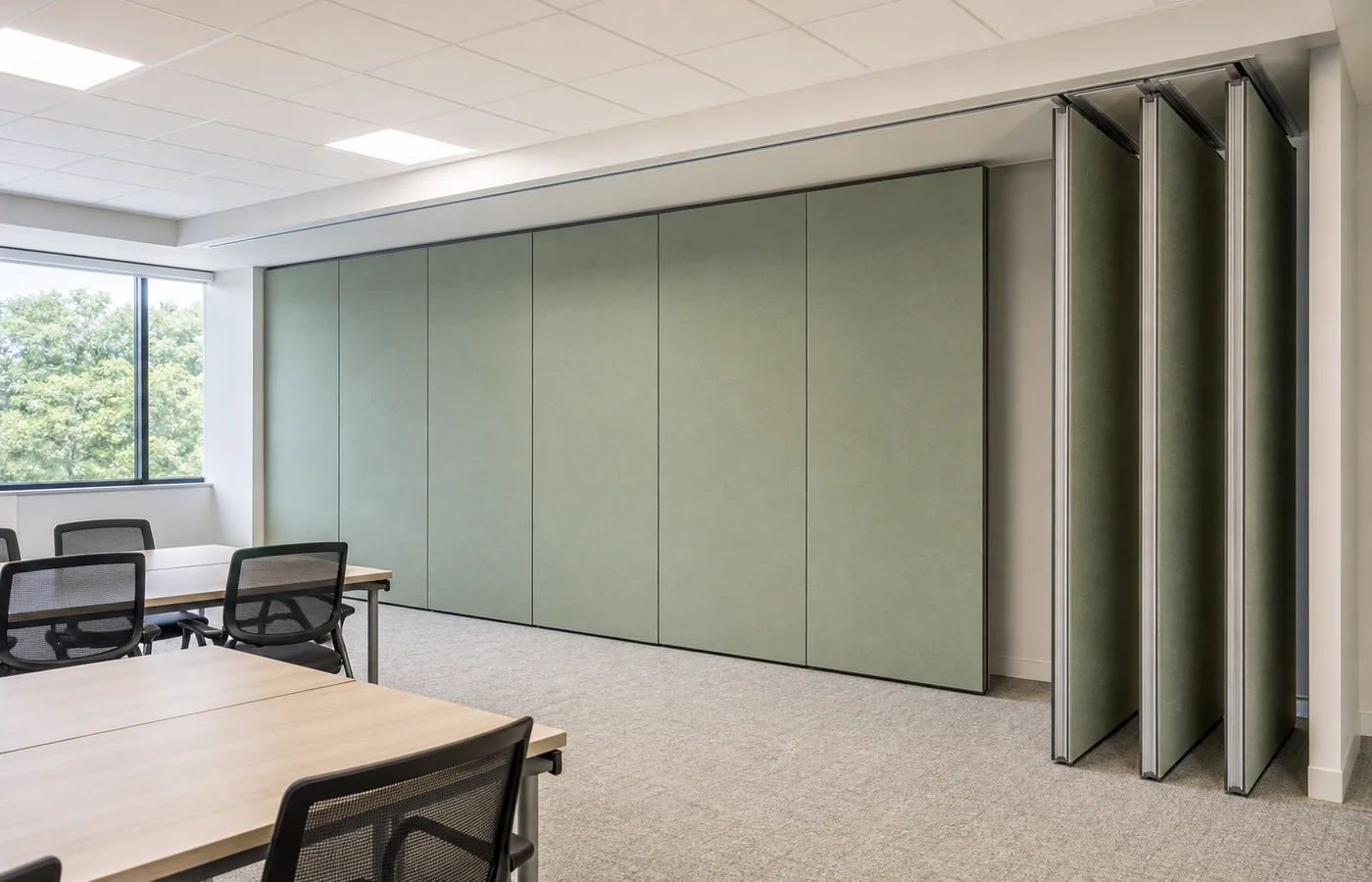
The EBUNGE movable partition system is top-hung. That single fact shapes how a school auditorium partition seals stage planning should begin. Because the panels hang from an overhead structure, there is no continuous floor running track and no operating hardware set into the finished floor along the partition line. The floor is not cut or damaged for a floor track.
For a school auditorium partition seals stage discussion, this matters because the stage and seating floor can remain physically uninterrupted by the maintained EBUNGE top-hung system. The exact route, junction arrangement, continuous overhead path and parking position must be confirmed from the coordinated project drawings.
Movable partitions can be used wherever flexible space division, combination or reconfiguration is required. Application examples are not limiting. A school auditorium partition seals stage project may combine daily teaching use with evening events, so the partition line and the stage pin rail area need to be read together on the same drawing set.

Why a Physically Uninterrupted Floor Matters
In many venues, a floor track creates a visible line and a maintenance point across the walking surface. With the confirmed EBUNGE top-hung arrangement, the floor along the partition line is not cut or damaged for a floor track. The floor remains physically uninterrupted by the maintained EBUNGE top-hung system.
For a school auditorium partition seals stage layout, an uninterrupted floor can simplify how the room is used between configurations. Chairs, staging elements and temporary equipment can be placed without working around a recessed track. The exact route, junction arrangement, continuous overhead path and parking position must be confirmed from the coordinated project drawings.
This does not mean every project is identical. The confirmed fact is limited to the top-hung principle and the absence of a continuous floor running track or operating hardware in the finished floor along the partition line. Any other condition belongs to the coordinated drawings.
Parking Planning for Panels and Stage Zones
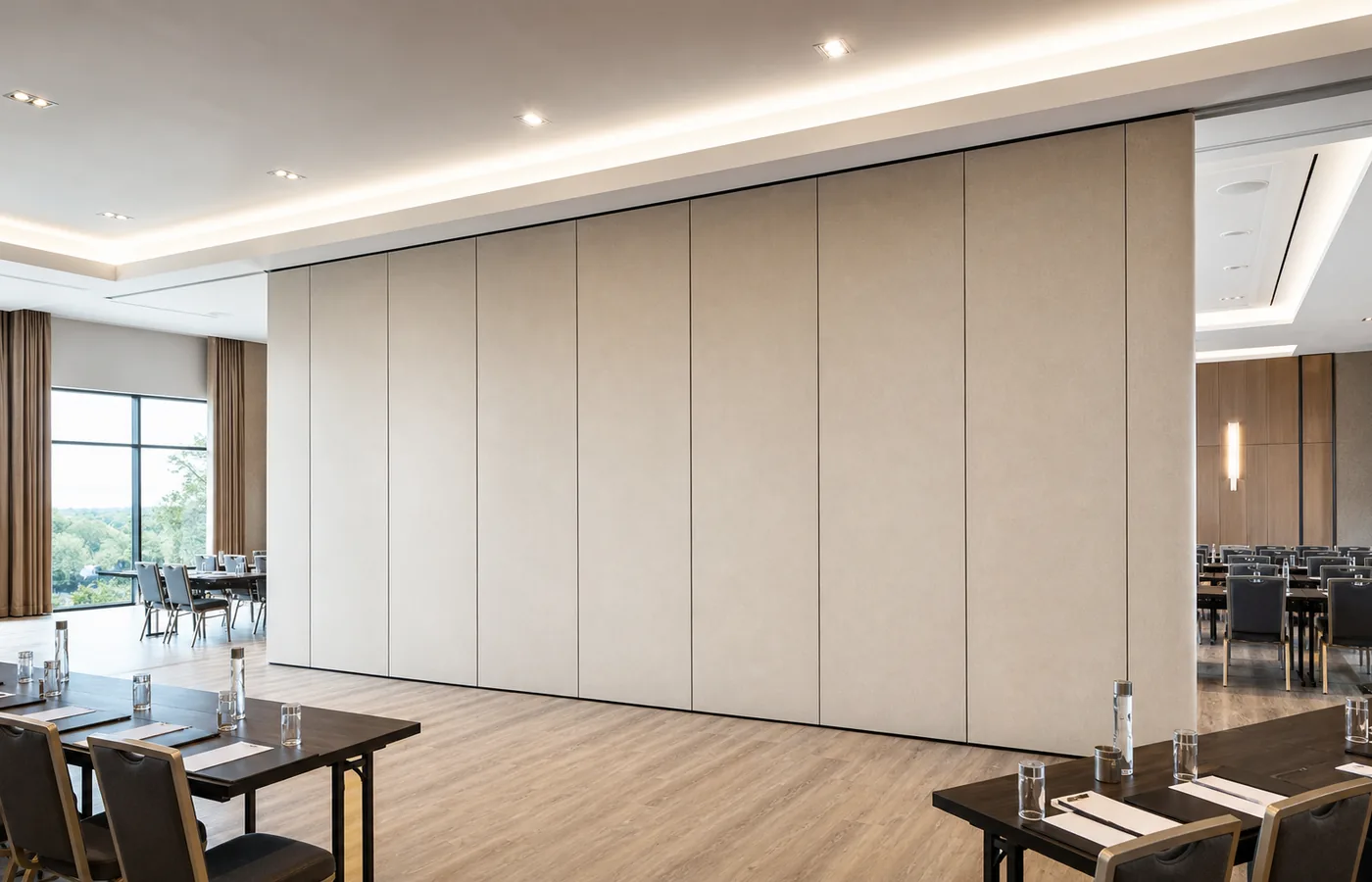
Panel parking style can be customized to the customer layout and project requirements, subject to coordinated drawings. A suitable approved parking arrangement can use the stacking area more compactly and coordinate with the space design. The exact track, support and panel layout still require project drawings.
In a school auditorium partition seals stage context, parking planning often interacts with the stage pin rail zone, side stages and backstage circulation. The goal is to describe where panels rest when the room is open, not to prescribe a universal sequence. The exact route, junction arrangement, continuous overhead path and parking position must be confirmed from the coordinated project drawings.
Buyers should bring layout priorities to the drawing review. Parking style, stacking area use and coordination with the space design are all project-specific inputs. No customer names, locations, quantities, ratings, certifications or outcomes may be inferred from EBUNGE project experience.
Finish Selection and Care Coordination
Finish materials can be customized, and cleaning and maintenance methods vary with the selected finish. That confirmed fact is important for a school auditorium partition seals stage project because the visible faces of the panels sit inside an educational environment with regular cleaning routines.
Because care methods vary by finish, the finish decision and the care plan should be reviewed together. The suitability of each route and parking arrangement depends on the approved layout, circulation, ceiling interfaces and operating sequence. Only the customizable-finish and finish-specific-care facts are confirmed here.
For a school auditorium partition seals stage installation, finish coordination also touches how the partition line reads against adjacent surfaces. The exact route, junction arrangement, continuous overhead path and parking position must be confirmed from the coordinated project drawings.
Non-Limiting Application Examples
Movable partitions can be used wherever flexible space division, combination or reconfiguration is required. Application examples are not limiting. EBUNGE has completed many types of hotel-related movable-partition projects; ballrooms, wedding halls and multifunction halls are non-limiting examples.
A school auditorium partition seals stage project is another context where flexible division may be considered. The same confirmed top-hung principle applies, and the same drawing-based coordination applies. No customer names, locations, quantities, ratings, certifications or outcomes may be inferred.
The exact overhead route and support arrangement must be confirmed by the responsible project team from coordinated drawings. Those pages support orientation, not project-specific conclusions.
Buyer Inputs Before Drawing Approval
A productive school auditorium partition seals stage review starts with clear buyer inputs. The list below groups the practical items that help a drawing team coordinate the partition line with the stage pin rail zone and the surrounding room.
- Room configurations required across the school year.
- Preferred parking style and stacking area location.
- Finish direction and the care method that fits it.
- Stage pin rail zone and adjacent circulation to be coordinated.
- Drawing approvals needed before any production step.
These inputs do not replace coordinated drawings. The exact route, junction arrangement, continuous overhead path and parking position must be confirmed from the coordinated project drawings.
Drawing Approval and Coordination Sequence
Approval is a coordination milestone, not a product claim. The table below separates confirmed facts from items that require project drawings, which helps a school auditorium partition seals stage review stay grounded.
| Item | Status |
|---|---|
| Top-hung partition principle | Confirmed |
| No continuous floor running track along the partition line | Confirmed |
| Floor not cut or damaged for a floor track | Confirmed |
| Customizable finish and finish-specific care | Confirmed |
| Exact route, junction arrangement, overhead path and parking position | From coordinated project drawings |
Panel parking style can be customized to the customer layout and project requirements, subject to coordinated drawings. A suitable approved parking arrangement can use the stacking area more compactly and coordinate with the space design. The exact track, support and panel layout still require project drawings.
Common Questions
For further context, review related project guidance and additional planning resources before preparing the coordinated project brief.
What does top-hung mean for a school auditorium partition seals stage project?
It means the EBUNGE movable partition system hangs from an overhead structure. There is no continuous floor running track or operating hardware in the finished floor along the partition line. The exact route, junction arrangement, continuous overhead path and parking position must be confirmed from the coordinated project drawings.
Is the floor cut for a track in this arrangement?
No. The floor is not cut or damaged for a floor track and remains physically uninterrupted by the maintained EBUNGE top-hung system. Any further detail belongs to the coordinated project drawings.
Can panel parking be adapted to the room layout?
Panel parking style can be customized to the customer layout and project requirements, subject to coordinated drawings. A suitable approved parking arrangement can use the stacking area more compactly and coordinate with the space design. The exact track, support and panel layout still require project drawings.
Can finishes be customized, and how is care handled?
Finish materials can be customized, and cleaning and maintenance methods vary with the selected finish. Because care methods vary by finish, the finish choice and care approach should be reviewed together during coordination.
Where can movable partitions be used?
Movable partitions can be used wherever flexible space division, combination or reconfiguration is required. Application examples are not limiting. EBUNGE has completed many types of hotel-related movable-partition projects, with ballrooms, wedding halls and multifunction halls as non-limiting examples.
What should buyers prepare before drawing approval?
Buyers should prepare room configurations, preferred parking style, finish direction and the stage pin rail zone to be coordinated. The exact route, junction arrangement, continuous overhead path and parking position must be confirmed from the coordinated project drawings.
Continue Exploring
More Acoustic Partition Guides
- Newer guideRestaurant Room Partition Seals: Floor Junctures Inspection
- Earlier guideManual Partition Seals: School Auditorium HVAC Noise vs Crowd Noise
- Related guideAcoustic Partition Ceiling Interface Zone Confirmation
- Related guideWho Confirms Ceiling Grid Line Before Acoustic Partition Track