Quick project answer
School auditorium partition track control begins with understanding how a top-hung movable partition interacts with the building structure and wall panels. Unlike floor-supported systems, a top-hung partition carries its weight from an overhead track, leaving the floor free of running hardware. This principle shapes every interface detail, from the wall panel junction to the parking area. For school auditoriums, where flexible space division is often required, the top-hung approach supports reconfiguration without cutting or damaging the finished floor. The exact route, junction arrangement, continuous overhead path and parking position must be confirmed from the coordinated project drawings.
Top-Hung Principle and Wall Panel Interfaces

In a top-hung movable partition, the operating hardware is located above the partition line. The floor remains physically uninterrupted because no continuous floor track or operating hardware is installed in the finished floor. This is a core advantage for school auditoriums, where a smooth floor is often needed for events, seating, or movement. The exact overhead route and support arrangement must be confirmed by the responsible project team from coordinated drawings. This junction requires careful detailing to accommodate the overhead track while maintaining a clean visual line. School auditorium partition track control depends on coordinating this interface with the overall room design.
Because the system is top-hung, the wall panel interface does not need to conceal a floor track. Instead, it focuses on aligning the partition edge with the wall surface and ensuring the overhead track is properly supported. The exact junction geometry must be confirmed from the coordinated project drawings. This means that architects, contractors, and partition specialists should review the wall panel details together. The goal is to create a functional and visually coherent transition that supports the top-hung operation.
Physically Uninterrupted Floor Benefits
The absence of a floor track means the floor is not cut or damaged for a floor track. This keeps the floor physically uninterrupted by the maintained EBUNGE top-hung system. The suitability of each route and parking arrangement depends on the approved layout, circulation, ceiling interfaces and operating sequence. It also allows the floor finish to run continuously beneath the partition line. When the partition is parked, the floor remains a single, unbroken surface. This supports flexible use of the space, from assemblies to examinations.
School auditorium partition track control also benefits from the fact that no operating hardware sits in the finished floor along the partition line. This reduces the need for floor-level maintenance and avoids potential damage from heavy equipment or foot traffic. The top-hung design keeps the floor clear, which is particularly useful in multipurpose school environments. However, the exact route, junction arrangement, continuous overhead path and parking position must be confirmed from the coordinated project drawings.
Parking Planning and Stacking Area Coordination
Panel parking style can be customized to the customer layout and project requirements, subject to coordinated drawings. A suitable approved parking arrangement can use the stacking area more compactly and coordinate with the space design. In a school auditorium, the parking area might be located near a wall or in a dedicated alcove. The goal is to integrate the parked panels with the room’s architecture without obstructing circulation or sightlines. School auditorium partition track control includes planning how the panels will stack and how the track will route to that area.
The exact track, support and panel layout still require project drawings. This means that parking planning is not a one-size-fits-all solution. A compact parking arrangement can help preserve floor space, but it must be coordinated with the overhead track and the wall panel interfaces. The exact route, junction arrangement, continuous overhead path and parking position must be confirmed from the coordinated project drawings.
Finish and Care Coordination
Finish materials can be customized, and cleaning and maintenance methods vary with the selected finish. For school auditoriums, the finish should align with the room’s aesthetic and functional requirements. Some finishes may require specific cleaning products or techniques. It is important to coordinate the finish selection with the maintenance team to ensure that care methods are compatible with the chosen material. School auditorium partition track control also involves considering how the finish interacts with the wall panel interface and the overhead track.
Because cleaning and maintenance methods vary, the project team should document the recommended care for each finish. This helps avoid damage and maintains the appearance of the partition over time. The finish selection should also consider the visual transition at the wall panel interface. A well-coordinated finish can make the partition blend with the surrounding walls when parked. The exact route, junction arrangement, continuous overhead path and parking position must be confirmed from the coordinated project drawings.
Non-Limiting Applications in Educational Settings
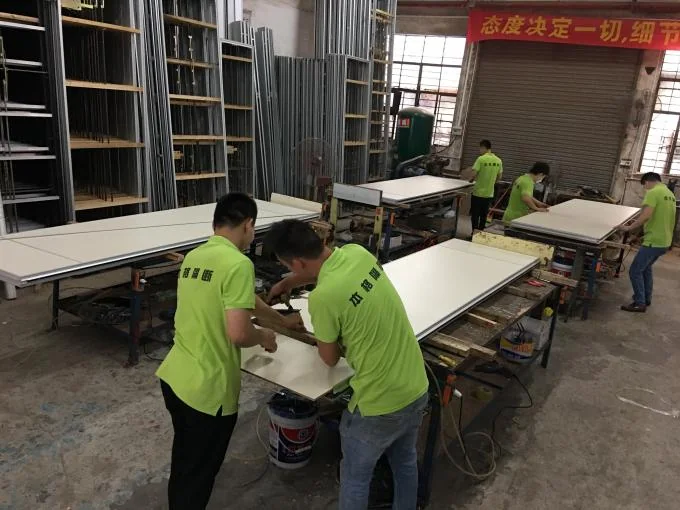
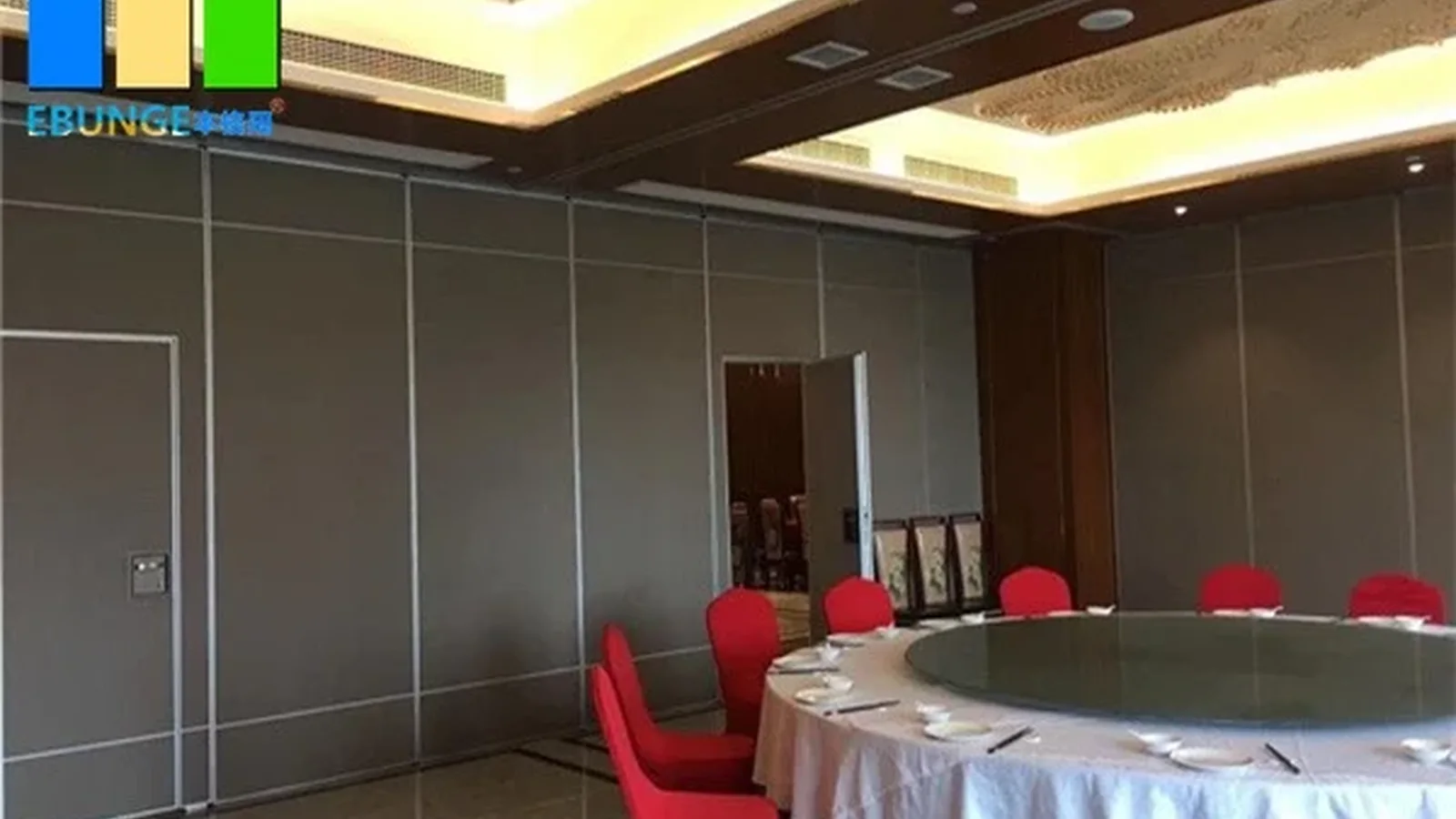
Movable partitions can be used wherever flexible space division, combination or reconfiguration is required; application examples are not limiting. In schools, this might include auditoriums, gymnasiums, cafeterias, or multipurpose halls. The top-hung system is suitable for these environments because it keeps the floor clear and supports flexible layouts. School auditorium partition track control is just one aspect of a broader approach to adaptable spaces. EBUNGE has completed many types of hotel-related movable-partition projects; ballrooms, wedding halls and multifunction halls are non-limiting examples.
These examples show the versatility of movable partitions, but they do not define the limits of the system. Schools can benefit from the same principles of top-hung operation and uninterrupted floors. The key is to coordinate the partition design with the specific needs of the educational facility. This includes considering how the space will be used, how often it will be reconfigured, and what finishes are appropriate. School auditorium partition track control should be part of a holistic design strategy.
Buyer Inputs and Drawing Approvals
Successful projects depend on clear buyer inputs and coordinated drawings. They should also indicate any preferences for parking style and finish materials. School auditorium partition track control requires that these inputs are translated into detailed drawings. The drawings should show the overhead track route, the wall panel interfaces, and the parking area.
Approval of these drawings is a critical step before production. The exact track, support and panel layout still require project drawings. The project team should review the drawings together to ensure that all interfaces are properly detailed. School auditorium partition track control is a collaborative process that benefits from early and ongoing communication.
- Confirm room dimensions and desired opening size.
- Select parking style based on available stacking area.
- Choose finish materials and document care methods.
- Review and approve coordinated drawings before production.
Frequently Asked Questions
What is school auditorium partition track control?
School auditorium partition track control refers to the planning and coordination of the overhead track system that supports a top-hung movable partition. It includes the track route, wall panel interfaces, and parking area, all of which must be confirmed from coordinated project drawings.
Does a top-hung partition require a floor track?
No. The EBUNGE movable partition system is top-hung and has no continuous floor running track or operating hardware in the finished floor along the partition line. The floor is not cut or damaged for a floor track and remains physically uninterrupted by the maintained EBUNGE top-hung system.
Can the parking style be customized?
Yes. Panel parking style can be customized to the customer layout and project requirements, subject to coordinated drawings. A suitable approved parking arrangement can use the stacking area more compactly and coordinate with the space design.
How are finishes and cleaning handled?
Finish materials can be customized, and cleaning and maintenance methods vary with the selected finish. It is important to coordinate finish selection with the maintenance team to ensure compatible care methods.
What information is needed from the buyer?
These inputs are used to create coordinated drawings for approval before production.
The exact route, junction arrangement, continuous overhead path and parking position must be confirmed from the coordinated project drawings.
For more information on movable partitions, visit movable partition wall and see our projects. School auditorium partition track control is a detailed process that benefits from early collaboration and precise documentation.
Continue Exploring
More Project Applications Guides
- Newer guideRestaurant Partition Track Interface at Fire Extinguisher Cabinets
- Earlier guideOffice Suites Partition Track: Ceiling Speaker Arrays
- Related guideOffice Glass Partition Selection Guide for Fit-Out Contractors
- Related guideOffice Meeting Suite Partition Tracks Need Clearance at Ceiling-Mounted