
Why a School Writable Partition Finish Review Matters
When planning flexible learning spaces, a school writable partition finish review is an essential early step. Movable partition walls allow schools to divide or combine rooms, but the finish you choose affects daily teaching, maintenance, and long-term satisfaction. This guide helps project teams—architects, interior designers, facility managers, and school administrators—understand what to examine before finalizing writable finishes.
EBUNGE movable partition panels are individually movable, suspended from a top track, and cross the opening without a floor track. They park at a planned stacking position when not in use. This design offers flexibility, but the finish selection requires careful thought. The following sections outline key review areas, from layout coordination to surface options and maintenance planning.
Understanding Movable Partition Systems for Schools
Movable partitions are not permanent walls. They are engineered to move along overhead tracks, allowing spaces to be reconfigured as needed. In schools, this supports varied teaching modes: open collaboration, small group work, or private study.
Key Features of EBUNGE Movable Partitions
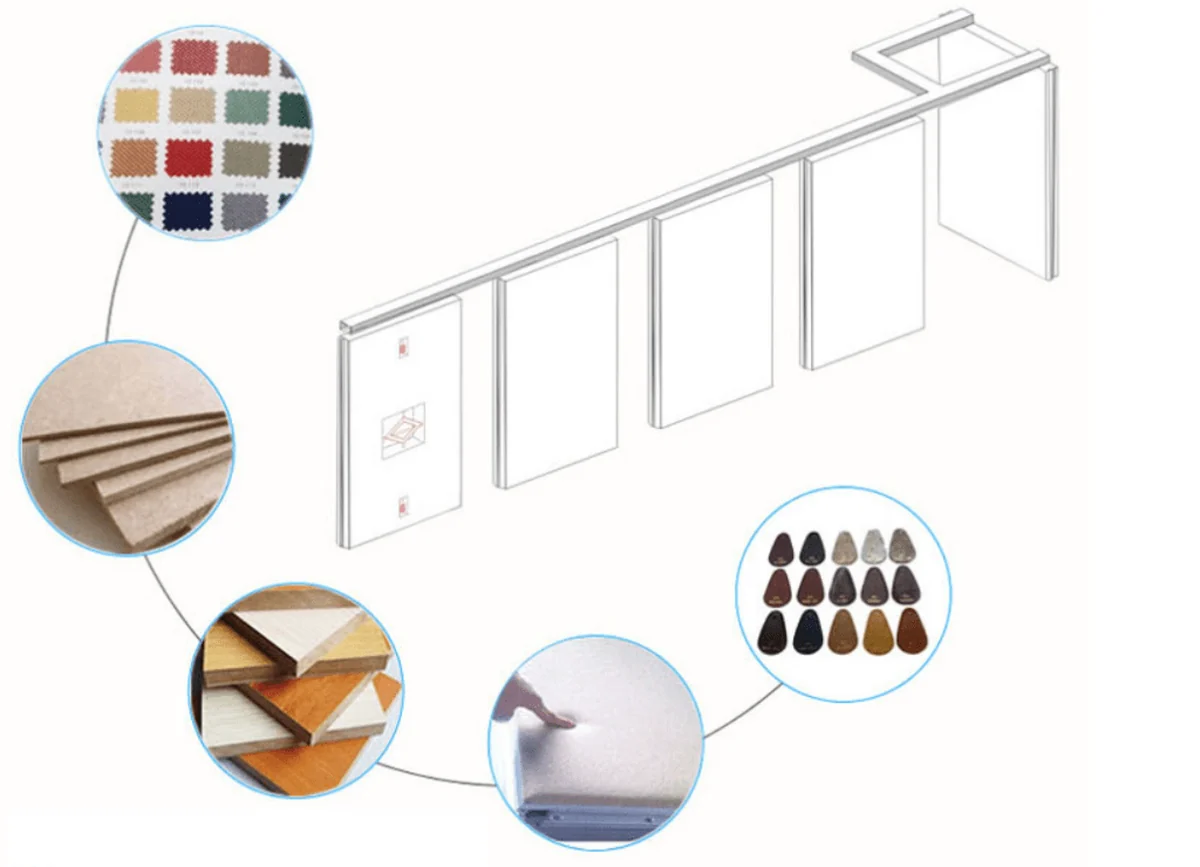
- Panels are individually movable, offering flexibility in how spaces are divided.
- They are suspended from a top track, so no floor track interrupts the walking surface.
- Panels cross the opening without a floor track, maintaining a clear floor line.
- Parking occurs at a planned stacking position, customized to the layout.
These features make movable partitions attractive for schools, but they also mean that the finish must withstand movement, handling, and daily use. A school writable partition finish review should start with understanding how the system operates and how that affects surface wear.
Project Layout and Route Planning
Before selecting a writable finish, the project team must review the proposed layout. The movement path—straight, turning, or stacking—affects how panels are handled and where they park. The suitability of each route and parking arrangement depends on the approved layout, circulation, ceiling interfaces and operating sequence.
Straight, Turning, and Stacking Routes
Share the opening dimensions, room layout and intended operating sequence for review.
Every movable partition installation requires a continuous overhead track. The exact route, junction arrangement, continuous overhead path and parking position must be confirmed from the coordinated project drawings. Stacking routes determine where panels gather when not in use. These routes must be reviewed from the layout to ensure smooth operation and to identify potential wear points.
For example, if panels stack in a tight area, the finish on the edges might be more prone to scuffs. Similarly, turning sections may cause more friction on panel edges. The project team should examine these areas and discuss with the manufacturer how the finish will hold up.
No Floor Track: Implications for Finish
Because EBUNGE partitions do not require a floor track, there is no floor guide to protect the bottom edge. This means the bottom of the panel is exposed to potential kicks or bumps from carts. The finish at the base should be durable and easy to clean. This is a key point in the school writable partition finish review.
Finish Options for Writable Surfaces
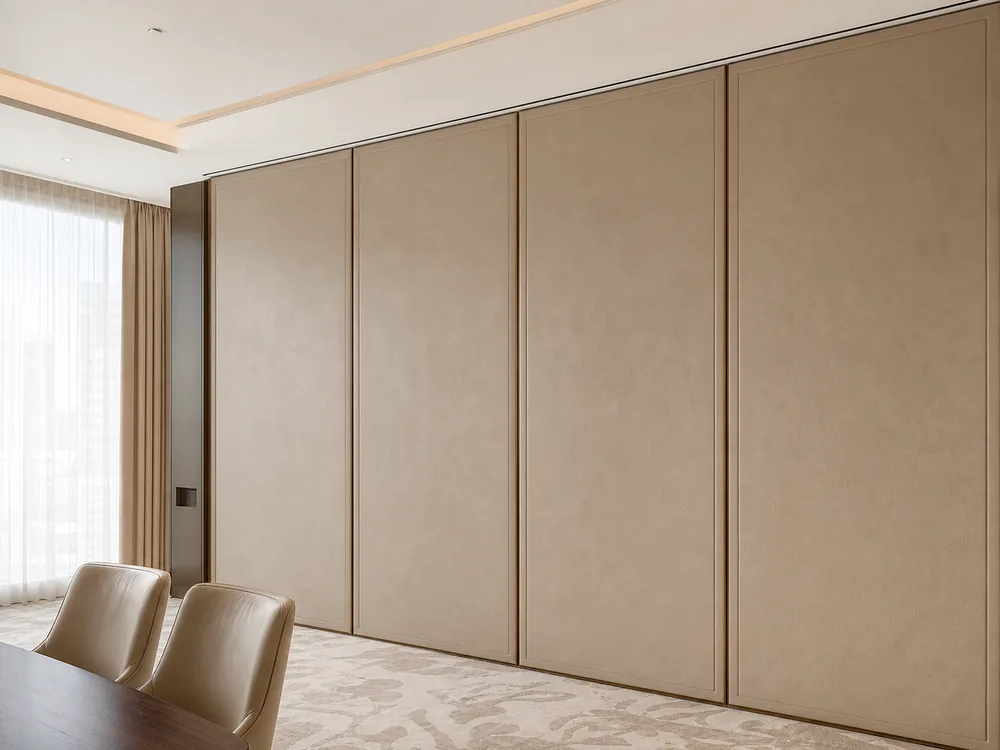
EBUNGE offers a range of finish options, including laminate, melamine, fabric, leather, glass, and other approved surfaces. Cost and maintenance requirements depend on the selected configuration, finish and project conditions and require project-specific confirmation. Not all finishes are suitable for writing, so the review must confirm which options are truly writable.
Laminate and Melamine
Laminate and melamine are common choices for writable surfaces. They are smooth, non-porous, and can be manufactured with a dry-erase coating. However, the quality of the writable surface varies. Some laminates are designed specifically for whiteboard use, while others may stain or ghost. The review should ask for samples and test them with actual markers.
Glass
Glass panels offer a premium writable surface. Tempered glass can be used as a dry-erase board, providing a sleek look and easy cleaning. Glass is durable but may show fingerprints. The project team should confirm that the track system can support the weight of glass panels.
Fabric and Leather
Fabric and leather finishes are not typically writable. If a school wants a writable surface on one side and fabric on the other, the review must ensure that the writable finish is only on the intended side. This is a common configuration in classrooms where one side faces a corridor.
Maintenance and Cleanability
Writable surfaces require regular cleaning to prevent ghosting and staining. The review should include a maintenance plan. The finish must withstand cleaning chemicals and frequent erasing.
Cleaning Compatibility
Not all finishes react the same to cleaning agents. Some laminates may dull with harsh chemicals, while glass is resistant. The project team should obtain cleaning guidelines from the manufacturer and test them on samples. This is part of a thorough school writable partition finish review.
Durability Over Time
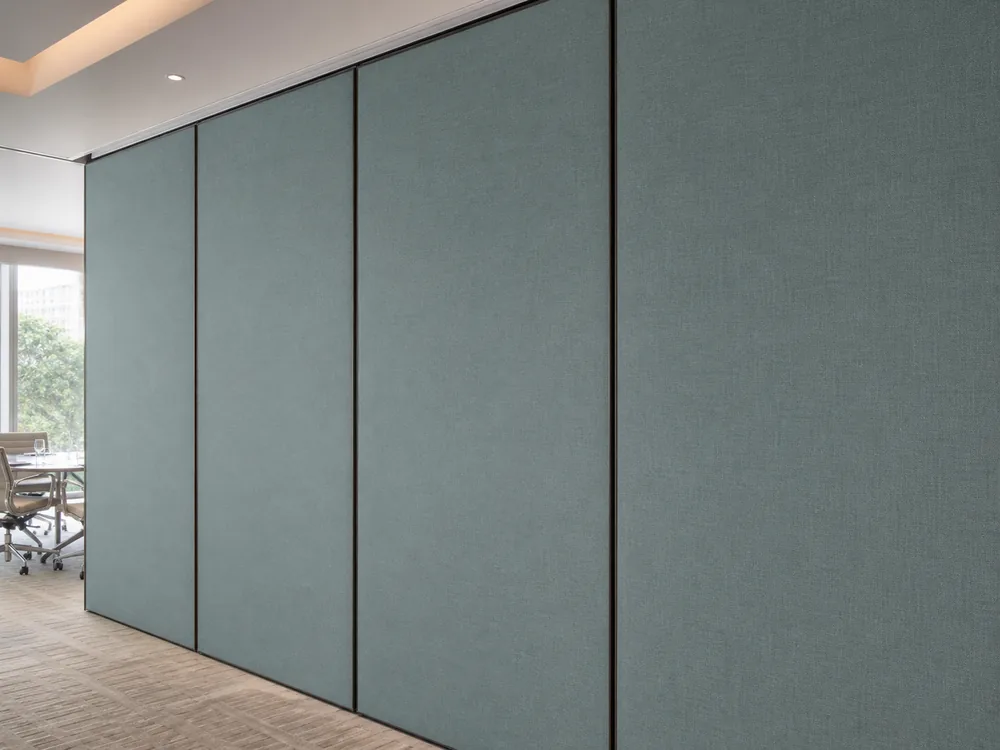
Writable surfaces are subject to scratches, marker residue, and impact. The finish should be durable enough to handle daily use. However, no finish is indestructible. The review should set realistic expectations and plan for periodic refinishing or replacement. The manufacturer can provide guidance on expected lifespan, but project-specific conditions matter.
Acoustic Considerations
). These ratings indicate how much sound is reduced, but they are not a simple decibel count.
A music room requires higher sound insulation than a standard classroom.
Review the ceiling interface, panel route and stacking position together.
Coordination with Project Documentation
Selecting a writable finish is not a standalone decision. The review should involve all stakeholders.
Ceiling and Track Integration
The top track must be integrated into the ceiling structure. The finish of the panels must align with the ceiling design. The project team should review the track route and ensure that the finish does not interfere with operation. This is a technical coordination point that requires manufacturer input.
Pass-Door Requirements
If a pass-door is needed within the partition, the finish must accommodate the door frame and hardware. The review should confirm that the writable surface is not interrupted by the door. The exact overhead route and support arrangement must be confirmed by the responsible project team from coordinated drawings.
Project-Specific Support and Confirmation
Every school project is unique. The review should not rely on generic assumptions. The manufacturer should provide project-specific support, including layout review, finish samples, and technical documentation.
What to Ask the Manufacturer
- Can you provide samples of writable finishes for testing?
- What are the recommended cleaning products?
- How does the finish perform on turning routes?
- Can you supply acoustic data for the proposed assembly?
- What is the lead time for custom finishes?
These questions help ensure that the chosen finish meets the school’s needs. The manufacturer should be willing to discuss project-specific requirements.
Frequently Asked Questions
What is a school writable partition finish review?
It is a structured evaluation of the surface finish on movable partition panels used in schools, focusing on writability, durability, maintenance, and coordination with the partition system.
Can any EBUNGE finish be used as a writable surface?
No. Only certain finishes are designed for writing. Laminate, melamine, and glass can be writable, but fabric and leather are not. Confirm with the manufacturer which finishes are writable.
How does the lack of a floor track affect finish selection?
Without a floor track, the bottom edge of the panel is more exposed to impact. Choose a durable finish that can withstand kicks and bumps, and ensure easy cleaning.
Does the finish affect acoustic performance?
What should be included in project documentation for finish selection?
Documentation should include layout drawings showing track routes, stacking positions, finish specifications, cleaning guidelines, and any pass-door details. This ensures all parties are aligned.
Conclusion and Next Steps
A school writable partition finish review is a critical step in creating flexible learning environments. EBUNGE movable partitions offer design flexibility, but the finish must be chosen with care.
Contact EBUNGE to discuss your project’s specific requirements. Our team can review your layout, provide finish samples, and offer project-specific support. Contact us today to start the conversation. For more information on movable partition systems, visit our movable partition wall page. You can also explore project examples to see how others have implemented writable surfaces.
Continue Exploring
More Materials and Finishes Guides
- Newer guideWhat Designers Should Confirm for Two-Sided Partition Finish Schemes
- Earlier guideWhat Buyers Should Include in a Movable Wall Finish Schedule
- Related guideComparing Healthcare Training Room Partition Finishes for Wall-Mounted Whiteboard vs Tackable Zones
- Related guideWhy Sports Hall Partition Finishes Need Abrasion Mapping for Wall-Mounted Hurdle Storage Racks