
Why sports hall partition seals hoist inspections need a drawing-led checklist
Quick project answer
Sports halls often need flexible space division, combination or reconfiguration. A top-hung movable partition can support that flexibility when the project is planned around coordinated drawings. This article gives buyers and project teams a practical checklist for reviewing sports hall partition seals hoist cable penetrations without assuming unconfirmed performance.
The focus is on visible coordination items: the top-hung principle, the physically uninterrupted floor, parking planning, finish and care, and the inputs needed before drawings are approved. Every product statement below is limited to confirmed EBUNGE facts.
Start with the top-hung principle and what it means for the floor
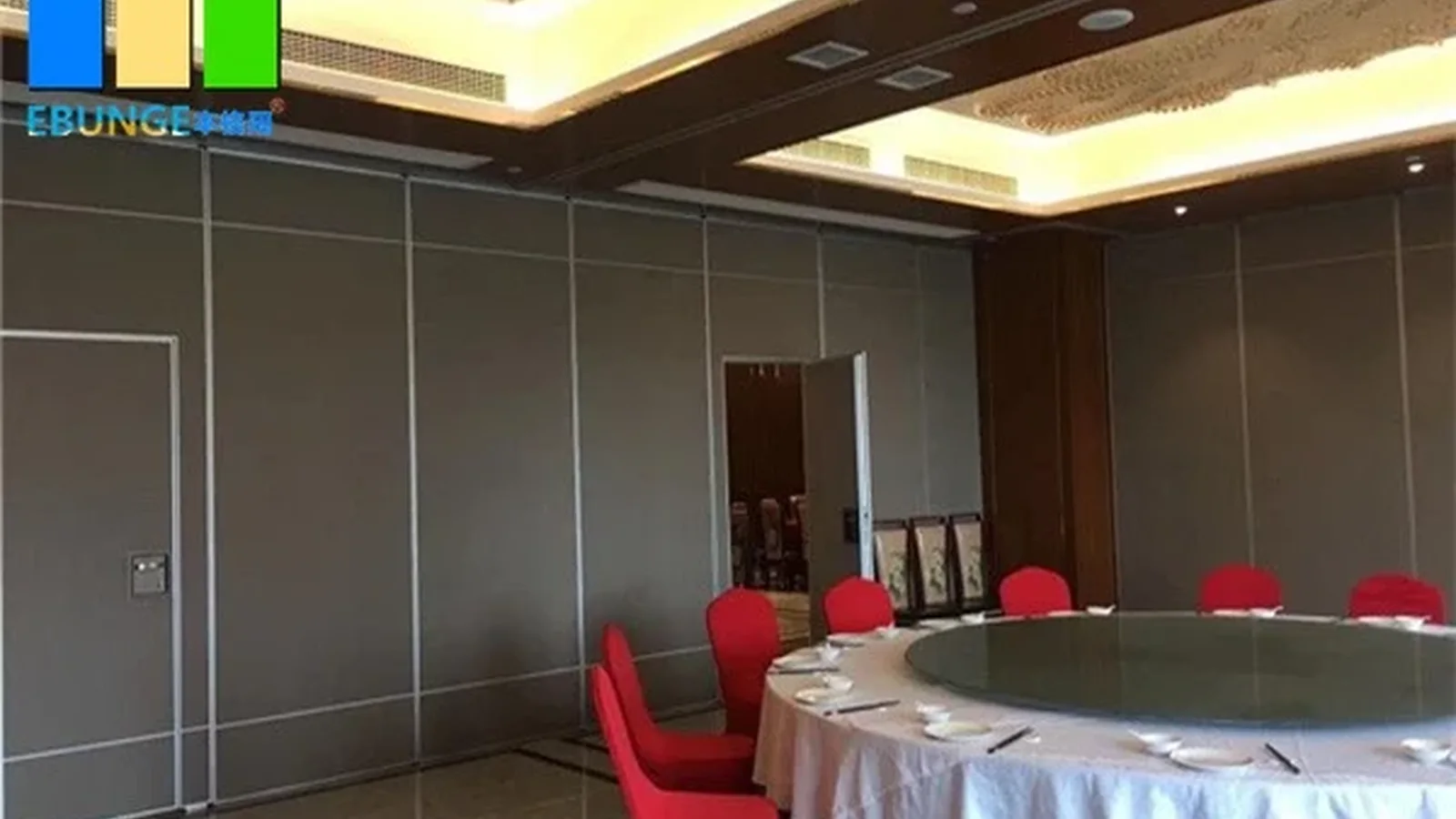
The EBUNGE movable partition system is top-hung. It has no continuous floor running track or operating hardware in the finished floor along the partition line. That single principle shapes how a sports hall partition seals hoist inspection should be framed.
Because the system is top-hung, the floor is not cut or damaged for a floor track. The floor remains physically uninterrupted by the maintained EBUNGE top-hung system. For a sports hall, that continuity matters when the floor is used for multiple activities across the day.

Inspection attention therefore moves to the overhead zone, where the ceiling hoist cable penetrations and partition seals are coordinated. The exact route, junction arrangement, continuous overhead path and parking position must be confirmed from the coordinated project drawings.
Do not treat any single inspection point as a universal operating sequence. The checklist is a review aid, not a substitute for project-specific drawings and approvals.
Review the physically uninterrupted floor condition
A top-hung system keeps the finished floor free of a continuous running track. The floor is not cut or damaged for a floor track, and it remains physically uninterrupted by the maintained EBUNGE top-hung system. This is a confirmed product fact.
For sports hall partition seals hoist reviews, the floor check is about confirming that no floor track or operating hardware is expected along the partition line. The exact overhead route and support arrangement must be confirmed by the responsible project team from coordinated drawings.
Where the floor finish changes or where different activities meet, the project drawings should show how the top-hung partition relates to the finished floor. The exact route, junction arrangement, continuous overhead path and parking position must be confirmed from the coordinated project drawings.
Plan the parking position before approving drawings
Panel parking style can be customized to the customer layout and project requirements, subject to coordinated drawings. A suitable approved parking arrangement can use the stacking area more compactly and coordinate with the space design.
The exact track, support and panel layout still require project drawings. For a sports hall, the parking area may compete with court margins, storage or circulation. Early coordination helps the project team review those relationships on paper.
When reviewing sports hall partition seals hoist cable penetrations, confirm that the parking position is shown in relation to the ceiling route and the partition line. The exact route, junction arrangement, continuous overhead path and parking position must be confirmed from the coordinated project drawings.
Coordinate finish selection with care and cleaning methods
Finish materials can be customized, and cleaning and maintenance methods vary with the selected finish. That means the finish choice and the care approach should be reviewed together, not separately.
For a sports hall, the selected finish may need to suit the room’s use and the cleaning methods already in place. Because care methods vary by finish, the project team should confirm the appropriate approach for the chosen material.
The suitability of each route and parking arrangement depends on the approved layout, circulation, ceiling interfaces and operating sequence. Only the customizable-finish and finish-specific-care facts are confirmed here.
When reviewing sports hall partition seals hoist cable penetrations, note that finish care is a separate coordination item from the overhead route. The exact route, junction arrangement, continuous overhead path and parking position must be confirmed from the coordinated project drawings.
Use non-limiting application examples to frame the review
Movable partitions can be used wherever flexible space division, combination or reconfiguration is required. Application examples are not limiting. EBUNGE has completed many types of hotel-related movable-partition projects.
Ballrooms, wedding halls and multifunction halls are non-limiting examples. No customer names, locations, quantities, ratings, certifications or outcomes may be inferred from those examples.
A sports hall is another context where flexible division may be considered. The same drawing-led review applies: confirm the top-hung principle, the uninterrupted floor, the parking position and the finish care approach.
It does not replace the coordinated project drawings.
Collect buyer inputs before the drawing review
A useful review starts with clear inputs. The project team should gather the room layout, the intended space division or combination, the preferred parking area and the selected finish direction.
These inputs help the team review the top-hung system against the sports hall’s daily use. They also help identify where the ceiling hoist cable penetrations and partition seals need coordination.
Because panel parking style can be customized to the customer layout and project requirements, the inputs should describe how the stacking area is expected to work. The exact track, support and panel layout still require project drawings.
When preparing for sports hall partition seals hoist cable penetrations inspection, keep the inputs factual and drawing-based. The exact route, junction arrangement, continuous overhead path and parking position must be confirmed from the coordinated project drawings.
Confirm drawing approvals and open coordination points
Drawing approval is the point where the top-hung principle, the uninterrupted floor, the parking position and the finish care approach come together. The project team should confirm that each item is shown consistently.
Open coordination points should be listed clearly. Examples include the overhead route, the parking position and the relationship between the partition line and the finished floor.
Those matters require project-specific evidence and approvals.
The exact route, junction arrangement, continuous overhead path and parking position must be confirmed from the coordinated project drawings. Use that boundary sentence whenever an engineering detail falls outside the confirmed facts.
Scannable review modules for the project team
- Confirm the system is top-hung and has no continuous floor running track or operating hardware in the finished floor along the partition line.
- Confirm the floor is not cut or damaged for a floor track and remains physically uninterrupted by the maintained EBUNGE top-hung system.
- Confirm the parking style is customized to the customer layout and project requirements, subject to coordinated drawings.
- Confirm finish materials are customizable and that cleaning and maintenance methods vary with the selected finish.
- Confirm the exact track, support and panel layout are shown in the project drawings.
For sports hall partition seals hoist cable penetrations, the drawing set is the reference point. The exact route, junction arrangement, continuous overhead path and parking position must be confirmed from the coordinated project drawings.
| Review area | What to confirm | Drawing dependency |
|---|---|---|
| Top-hung principle | No continuous floor running track or operating hardware in the finished floor along the partition line | Coordinated project drawings |
| Floor condition | Floor is not cut or damaged for a floor track and remains physically uninterrupted | Coordinated project drawings |
| Parking planning | Parking style customized to layout and project requirements | Coordinated project drawings |
| Finish and care | Finish materials customizable; cleaning and maintenance methods vary with finish | Coordinated project drawings |
Frequently asked questions
What does a sports hall partition seals hoist inspection cover?
It covers the drawing-led review of the top-hung system, the physically uninterrupted floor, the parking position and the finish care approach. The exact route, junction arrangement, continuous overhead path and parking position must be confirmed from the coordinated project drawings.
Does the EBUNGE top-hung system require a floor track?
No. The EBUNGE movable partition system is top-hung and has no continuous floor running track or operating hardware in the finished floor along the partition line. The floor is not cut or damaged for a floor track.
Can the parking style be customized for a sports hall?
Panel parking style can be customized to the customer layout and project requirements, subject to coordinated drawings. A suitable approved parking arrangement can use the stacking area more compactly and coordinate with the space design.
How should finish care be coordinated?
Finish materials can be customized, and cleaning and maintenance methods vary with the selected finish. The project team should confirm the care approach for the chosen finish as part of the drawing review.
Are sports halls the only application for movable partitions?
No. Movable partitions can be used wherever flexible space division, combination or reconfiguration is required. Application examples are not limiting, and EBUNGE has completed many types of hotel-related movable-partition projects.
Where can I review related products and projects?
You can review the products and projects pages for general context. Project-specific details still require coordinated drawings and approvals.
Continue Exploring
More Acoustic Partition Guides
- Newer guideSports Hall Partition Seals: Emergency Stop Button Drawings
- Earlier guideCompare Community Hall Partition Seals: Boiler Flue vs Air Intake
- Related guideAcoustic Partition Ceiling Interface Zone Confirmation
- Related guideWho Confirms Ceiling Grid Line Before Acoustic Partition Track