
Quick project answer
A sports hall partition track volleyball arrangement often sits alongside ceiling volleyball nets and badminton posts. Each element has a different relationship with the floor and the ceiling. This article explains how a top-hung movable partition system works in that context, using only confirmed product facts and drawing-based planning language.
Why the sports hall partition track volleyball question arises
Sports halls host volleyball, badminton and many other activities. Dividing a large hall into smaller courts or activity zones can require a movable partition. The sports hall partition track volleyball discussion usually begins when a facility wants flexible court layouts without cutting the finished floor.
Ceiling volleyball nets hang from overhead structures. Badminton posts may be floor-fixed or ceiling-supported depending on the hall design. A movable partition introduces another overhead element. Coordinating these systems is a planning task, not a product default.
The top-hung principle behind the EBUNGE movable partition system

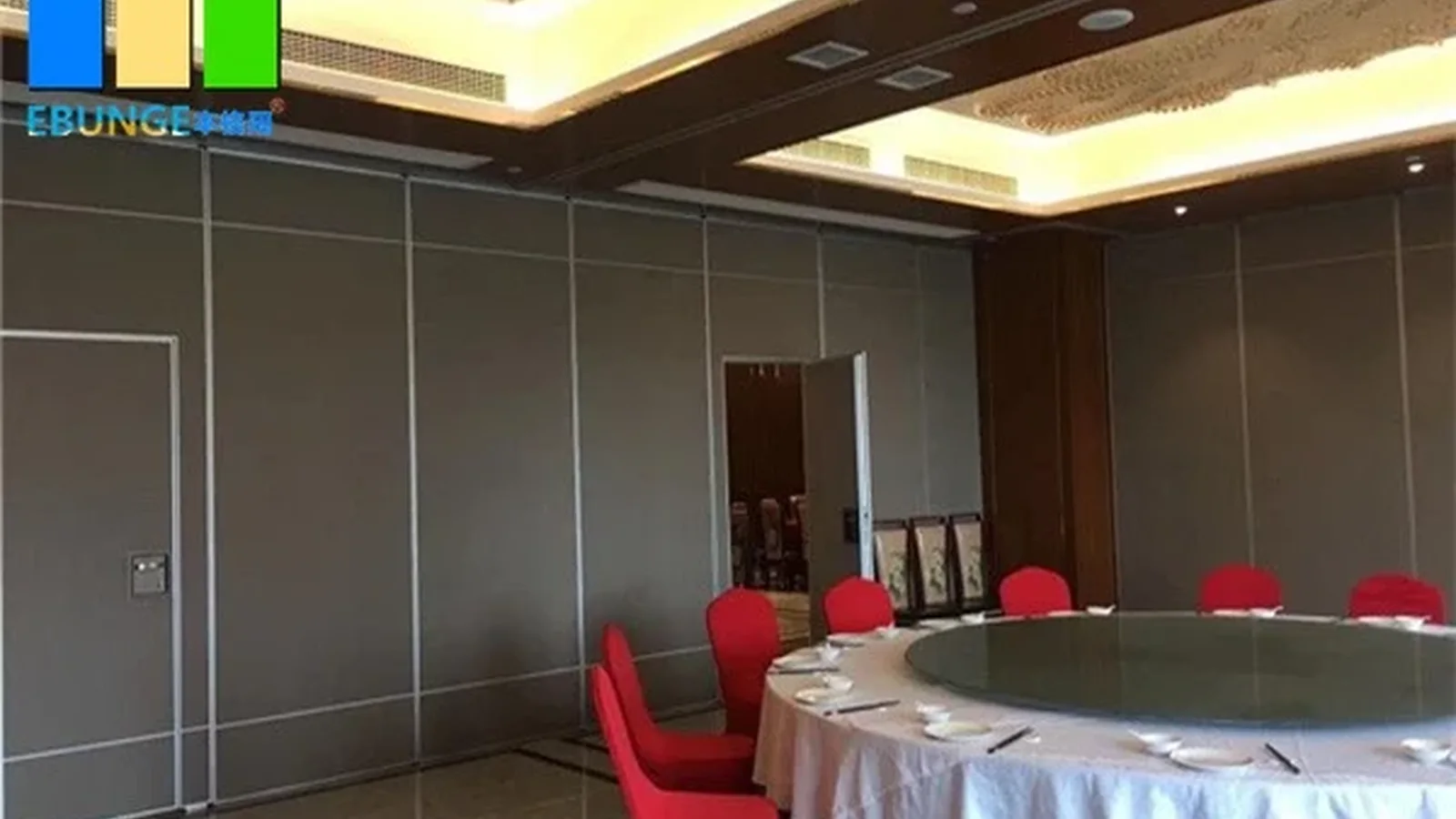
The EBUNGE movable partition system is top-hung. It has no continuous floor running track or operating hardware in the finished floor along the partition line. The floor is not cut or damaged for a floor track and remains physically uninterrupted by the maintained EBUNGE top-hung system.
This principle matters in sports halls because the playing surface stays continuous. There is no floor channel to cross during a volleyball game or badminton session. The partition line is defined overhead rather than through the floor.
The exact route, junction arrangement, continuous overhead path and parking position must be confirmed from the coordinated project drawings.
Ceiling volleyball nets and badminton posts in the same hall
Ceiling volleyball nets and badminton posts are sports equipment systems. They are not partition components. The exact overhead route and support arrangement must be confirmed by the responsible project team from coordinated drawings.
A top-hung partition also occupies overhead space. Planning should show how the partition route relates to net positions and post locations. This is a coordination exercise across disciplines.
The exact route, junction arrangement, continuous overhead path and parking position must be confirmed from the coordinated project drawings.
Physically uninterrupted floor and sports use
Because the EBUNGE top-hung system does not cut the floor, the sports surface remains physically uninterrupted along the partition line. That supports normal sports hall use when the partition is not dividing the space.
Floor markings for volleyball and badminton can remain visible. The absence of a continuous floor track means there is no channel to protect or clean around along that line.
Cleaning and maintenance methods vary with the selected finish. Finish materials can be customized, so care instructions should follow the chosen finish rather than a single universal method.
Parking planning for a sports hall partition track volleyball layout
Panel parking style can be customized to the customer layout and project requirements, subject to coordinated drawings. A suitable approved parking arrangement can use the stacking area more compactly and coordinate with the space design.
In a sports hall, parking location affects court boundaries and equipment zones. The parking area should be shown on the coordinated drawings together with the partition route and the sports equipment layout.
The exact track, support and panel layout still require project drawings. The exact route, junction arrangement, continuous overhead path and parking position must be confirmed from the coordinated project drawings.
Finish and care coordination for sports environments
Finish materials can be customized. Cleaning and maintenance methods vary with the selected finish. For a sports hall, the finish choice should be coordinated with the overall interior design and the care regime the facility can follow.
Because care depends on the finish, the project team should record the selected finish and its care method. This is a coordination item, not a universal product statement.
The exact route, junction arrangement, continuous overhead path and parking position must be confirmed from the coordinated project drawings.
Non-limiting applications for movable partitions
Movable partitions can be used wherever flexible space division, combination or reconfiguration is required. Application examples are not limiting. Sports halls are one context among many.
EBUNGE has completed many types of hotel-related movable-partition projects. Ballrooms, wedding halls and multifunction halls are non-limiting examples. No customer names, locations, quantities, ratings, certifications or outcomes may be inferred.
For sports facilities, the same top-hung principle applies, but the layout must respond to the specific hall, equipment and drawing set.
Buyer inputs needed before drawings are coordinated
Buyers should gather the hall layout, the intended sports uses, and the positions of ceiling volleyball nets and badminton posts. They should also identify where the partition should divide the space and where panels should park.
Finish preferences and the expected care approach are useful inputs. These items feed into the coordinated drawings rather than into a fixed catalog answer.
The exact route, junction arrangement, continuous overhead path and parking position must be confirmed from the coordinated project drawings.
Drawing approvals and project-specific confirmation
Approval should be based on coordinated drawings that show the partition route, parking position and related interfaces. The drawings are the reference for the project-specific arrangement.
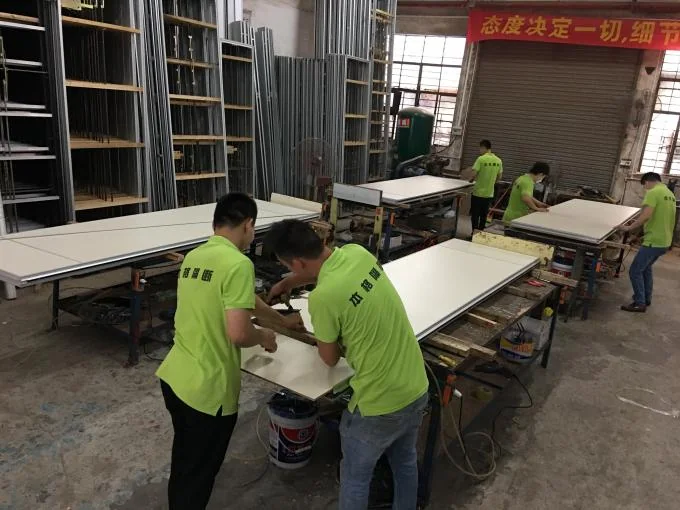
Because the EBUNGE system is top-hung, the overhead path and support arrangement are drawing items. They are not universal defaults. Review should confirm the layout against the hall and the sports equipment plan.
The exact route, junction arrangement, continuous overhead path and parking position must be confirmed from the coordinated project drawings.
Scannable planning checklist
- Confirm the sports hall partition track volleyball layout on coordinated drawings.
- Show ceiling volleyball net positions and badminton post locations.
- Confirm the top-hung partition route and parking position.
- Record the selected finish and its care method.
- Review the drawing set before approval.
Comparison snapshot
| Element | Relationship to floor | Planning reference |
|---|---|---|
| EBUNGE top-hung partition | Floor remains physically uninterrupted | Coordinated project drawings |
| Ceiling volleyball net | Overhead sports equipment | Sports equipment design |
| Badminton post | Depends on hall design | Sports equipment design |
Frequently asked questions
Does a sports hall partition track volleyball setup need a floor track?
The EBUNGE movable partition system is top-hung and has no continuous floor running track or operating hardware in the finished floor along the partition line. The floor is not cut or damaged for a floor track.
Can ceiling volleyball nets and badminton posts share the same hall as a movable partition?
They can be planned in the same hall, but their positions and support methods belong to the sports equipment design. The exact route, junction arrangement, continuous overhead path and parking position must be confirmed from the coordinated project drawings.
How is panel parking decided for a sports hall?
Panel parking style can be customized to the customer layout and project requirements, subject to coordinated drawings. A suitable approved parking arrangement can use the stacking area more compactly and coordinate with the space design.
Can the partition finish be customized for a sports hall?
Finish materials can be customized. Cleaning and maintenance methods vary with the selected finish, so the care approach should follow the chosen finish.
Where can movable partitions be used?
Movable partitions can be used wherever flexible space division, combination or reconfiguration is required. Application examples are not limiting.
What should buyers prepare before drawing approval?
Buyers should prepare the hall layout, sports use information, equipment positions, partition route intent and parking intent. The exact track, support and panel layout still require project drawings.
For related system information, see the operable wall system page and the projects page. The sports hall partition track volleyball question is ultimately resolved through coordinated drawings that show the top-hung route, parking position and interfaces with sports equipment.
Continue Exploring
More Operable Wall System Guides
- Newer guideCommunity Hall Partition Stacking: Fire Extinguisher Cabinets Clearance
- Earlier guideCompare Community Hall Partition Track: Projector Lifts vs Stage Lights
- Related guideEvacuation Chair Routes Where Operable Walls Cross Accessible Paths
- Related guidePhase Operable Wall Work When a Renovation Adds a New Wing