
Understanding the Top-Hung Principle for Sports Hall Partitions
Quick project answer
The EBUNGE movable partition system is top-hung and has no continuous floor running track or operating hardware in the finished floor along the partition line. This means the floor is not cut or damaged for a floor track and remains physically uninterrupted by the maintained EBUNGE top-hung system.
For sports halls, this top-hung approach allows the floor to stay continuous for volleyball and other activities. The sports hall partition track volleyball coordination focuses on overhead support rather than floor-mounted hardware.

The exact route, junction arrangement, continuous overhead path and parking position must be confirmed from the coordinated project drawings.
Why a Physically Uninterrupted Floor Matters for Sports Halls
A physically uninterrupted floor is important in sports halls because athletes need a consistent surface for movement. With a top-hung system, there is no floor track to create a trip hazard or disrupt play.
The floor remains intact, which can help with cleaning and maintenance of the sports surface. The suitability of each route and parking arrangement depends on the approved layout, circulation, ceiling interfaces and operating sequence.
When planning a sports hall partition track volleyball setup, confirm that the floor will not be cut or damaged. This is a key pre-installation check.
Parking Planning and Space Coordination
Panel parking style can be customized to the customer layout and project requirements, subject to coordinated drawings. A suitable approved parking arrangement can use the stacking area more compactly and coordinate with the space design.
The exact track, support and panel layout still require project drawings. For sports halls, parking may need to avoid volleyball post sleeves or other floor fixtures.
Consider how parked panels will interact with the sports hall partition track volleyball layout. The parking position must be confirmed from the coordinated project drawings.
Finish and Care Coordination for Sports Hall Partitions
Finish materials can be customized, and cleaning and maintenance methods vary with the selected finish. This means the care routine for your sports hall partition will depend on the finish you choose.
Before installation, confirm the finish selection and understand the cleaning requirements. Do not assume a universal cleaning method applies.
For sports hall partition track volleyball projects, coordinate finish choices with the overall hall design. The exact route, junction arrangement, continuous overhead path and parking position must be confirmed from the coordinated project drawings.
Non-Limiting Applications and Buyer Inputs
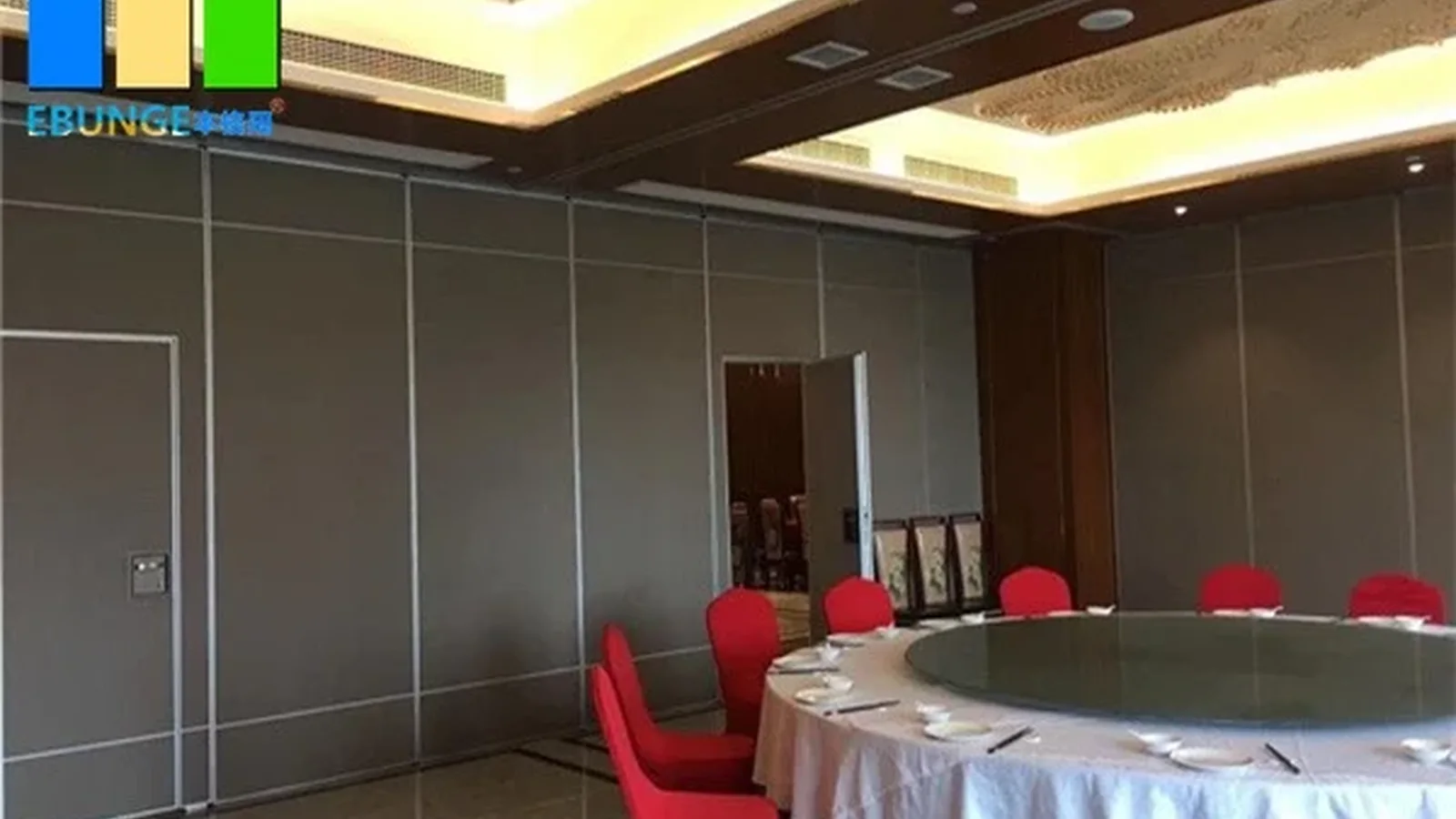
Movable partitions can be used wherever flexible space division, combination or reconfiguration is required; application examples are not limiting. Sports halls are one example, but the same principles apply to other spaces.
EBUNGE has completed many types of hotel-related movable-partition projects; ballrooms, wedding halls and multifunction halls are non-limiting examples. No customer names, locations, quantities, ratings, certifications or outcomes may be inferred.
Buyers should provide clear inputs about how the space will be used. For a sports hall partition track volleyball system, share details about volleyball post sleeves and floor markings.
Key Pre-Installation Checks Before Ordering
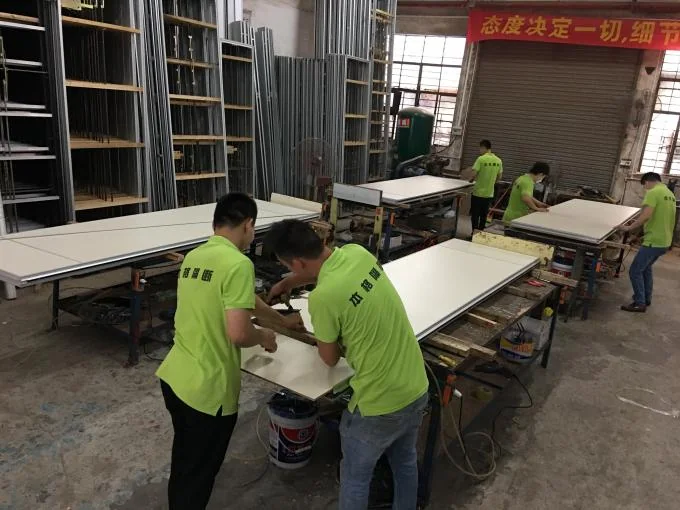
Before finalizing a sports hall partition track volleyball project, gather the necessary information. Use the following checklist to guide your preparation.
- Confirm that the partition will be top-hung with no floor track.
- Verify that the floor will remain physically uninterrupted.
- Review parking style options with the project team.
- Select finish materials and understand care requirements.
- Coordinate with volleyball post sleeve locations.
- Ensure all drawings are coordinated and approved.
These checks help align expectations. The exact route, junction arrangement, continuous overhead path and parking position must be confirmed from the coordinated project drawings.
Drawing Approvals and Project Coordination
Coordinated project drawings are essential for any movable partition installation. They define the track route, support locations, and parking arrangement.
For sports hall partition track volleyball projects, drawings must also account for volleyball post sleeves and other floor features. The floor should not be cut for a track.
Review and approve drawings before production. This step helps avoid misunderstandings. The exact route, junction arrangement, continuous overhead path and parking position must be confirmed from the coordinated project drawings.
Frequently Asked Questions
Does a sports hall partition require a floor track?
No. The EBUNGE movable partition system is top-hung and has no continuous floor running track or operating hardware in the finished floor along the partition line.
Will the floor be cut or damaged for the partition?
The floor is not cut or damaged for a floor track and remains physically uninterrupted by the maintained EBUNGE top-hung system.
Can the parking style be customized?
Panel parking style can be customized to the customer layout and project requirements, subject to coordinated drawings.
How do I coordinate with volleyball post sleeves?
Provide the locations of volleyball post sleeves to the project team so they can be considered in the coordinated drawings. The exact route, junction arrangement, continuous overhead path and parking position must be confirmed from the coordinated project drawings.
Are finish materials customizable?
Finish materials can be customized, and cleaning and maintenance methods vary with the selected finish.
What applications are suitable for movable partitions?
Movable partitions can be used wherever flexible space division, combination or reconfiguration is required; application examples are not limiting.
For more information on movable partitions, visit our products page or review our projects.
Continue Exploring
More Installation and Maintenance Guides
- Newer guideCommunity Hall Partition Track: Stage Curtain Controls
- Earlier guidePre-Installation Checks for University Auditorium Partition Stacking
- Related guideMovable Partition Renovation Phasing Reverse Handover
- Related guideHow Contractors Build a Movable Partition Installation Crew Plan Around